


Josephinum Medical Museum, Vienna, April 2019
The Josephinum Medical Museum in Vienna, Austria, represents a historically significant 19th-century medical teaching collection founded in 1785 by Emperor Joseph II as an advanced medical training facility for military surgeons and physicians. The gallery documents the museum's extensive anatomical and pathological specimen collection, featuring wax models, preserved human remains, and scientific artifacts that demonstrate medical research and educational practices from the late 18th through early 20th centuries, with 41 images revealing intricate preservation techniques and archival methodologies.
41 photos
Josephinum Medical Institute Gate and Entrance Sign in Vienna Architectural view of the Josephinum's ornate wrought-iron gate, featuring a stone pillar with decorative urn finial and a contemporary institutional sign. The image captures the institutional facade with its rigid vertical elements, set against a muted gray sky and partially visible neoclassical building in the background, conveying a sense of historical medical establishment and academic gravitas. 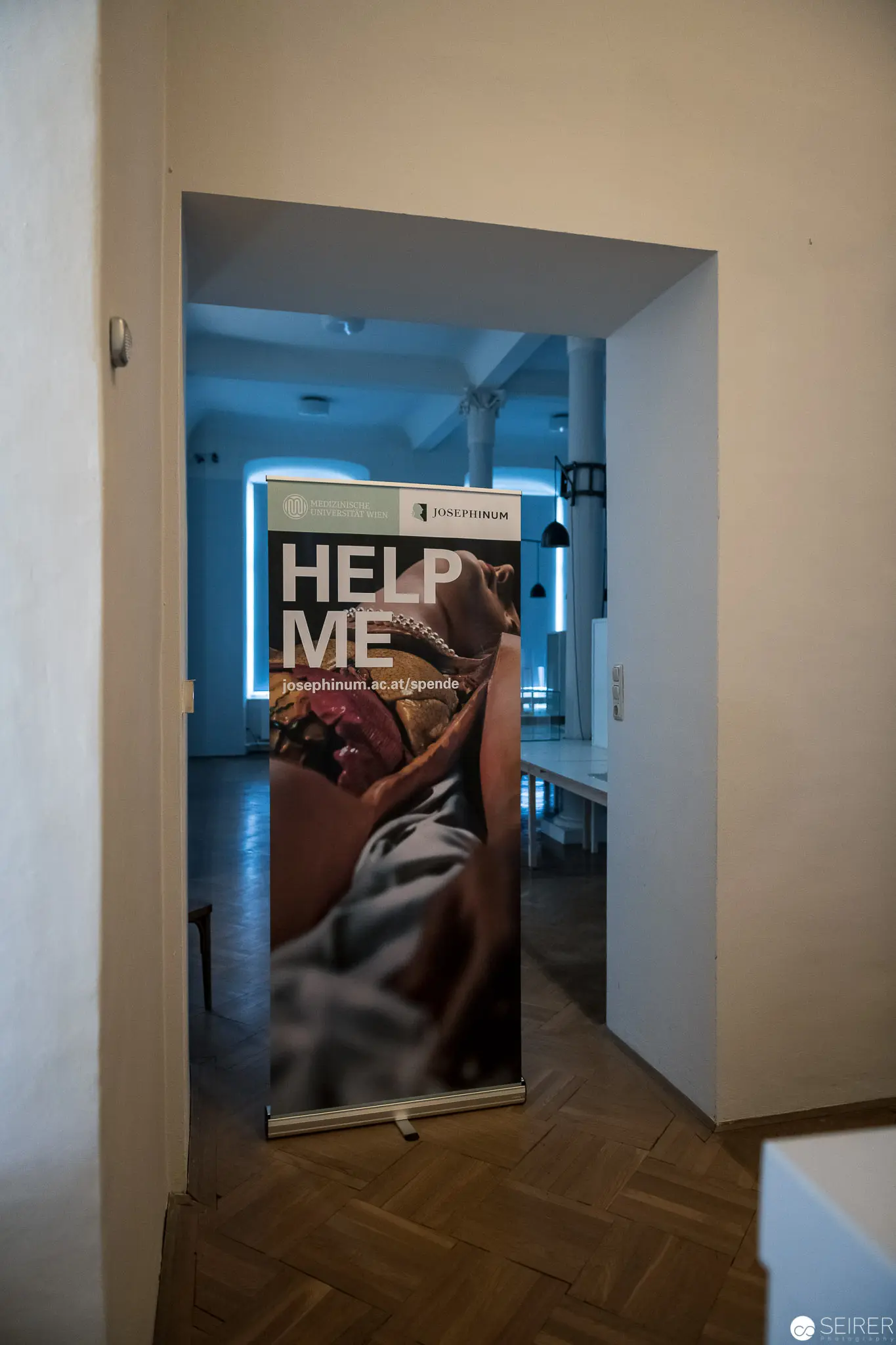 Help Me Campaign Poster Displayed in Architectural Interior Passageway Roll-up banner poster positioned within a minimalist interior architectural passage, framed by neutral-toned walls and featuring a parquet wooden floor. The poster, marked with large "HELP ME" typography, appears to be a public awareness or advocacy communication material, mounted in a transitional space with blue-tinted background lighting creating a subdued atmospheric context.
 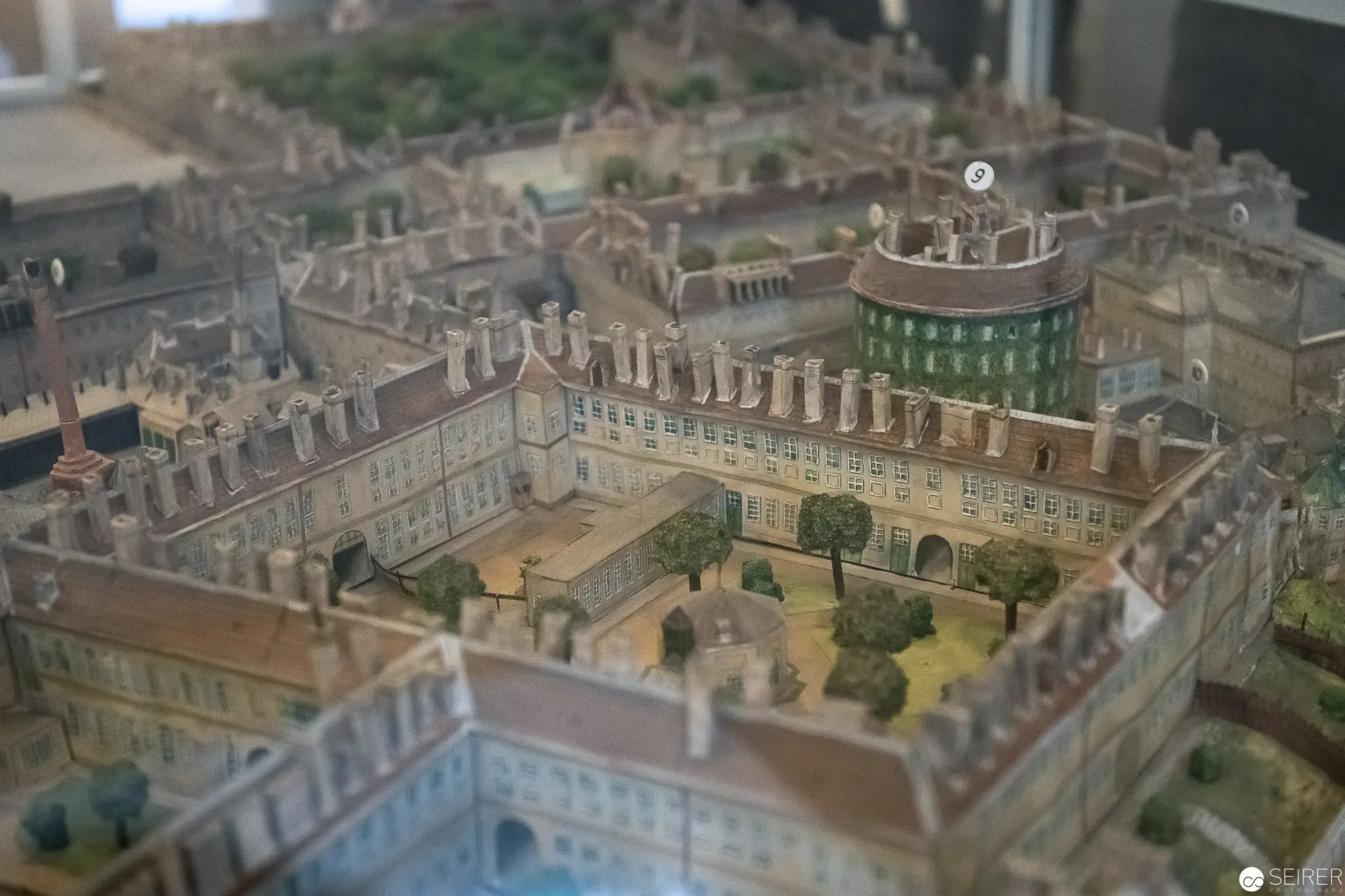 Architectural Scale Model of Historic European Urban Complex with Courtyard Precision-crafted architectural miniature depicting an intricate urban ensemble with multiple interconnected buildings, featuring a central green-toned circular structure and surrounding limestone-toned edifices with characteristic mansard roofs. The model reveals meticulous architectural detailing, including precisely positioned trees, interior courtyard spaces, and a tightly clustered urban layout suggestive of a European administrative or palatial complex, rendered with exceptional depth and perspectival complexity.
 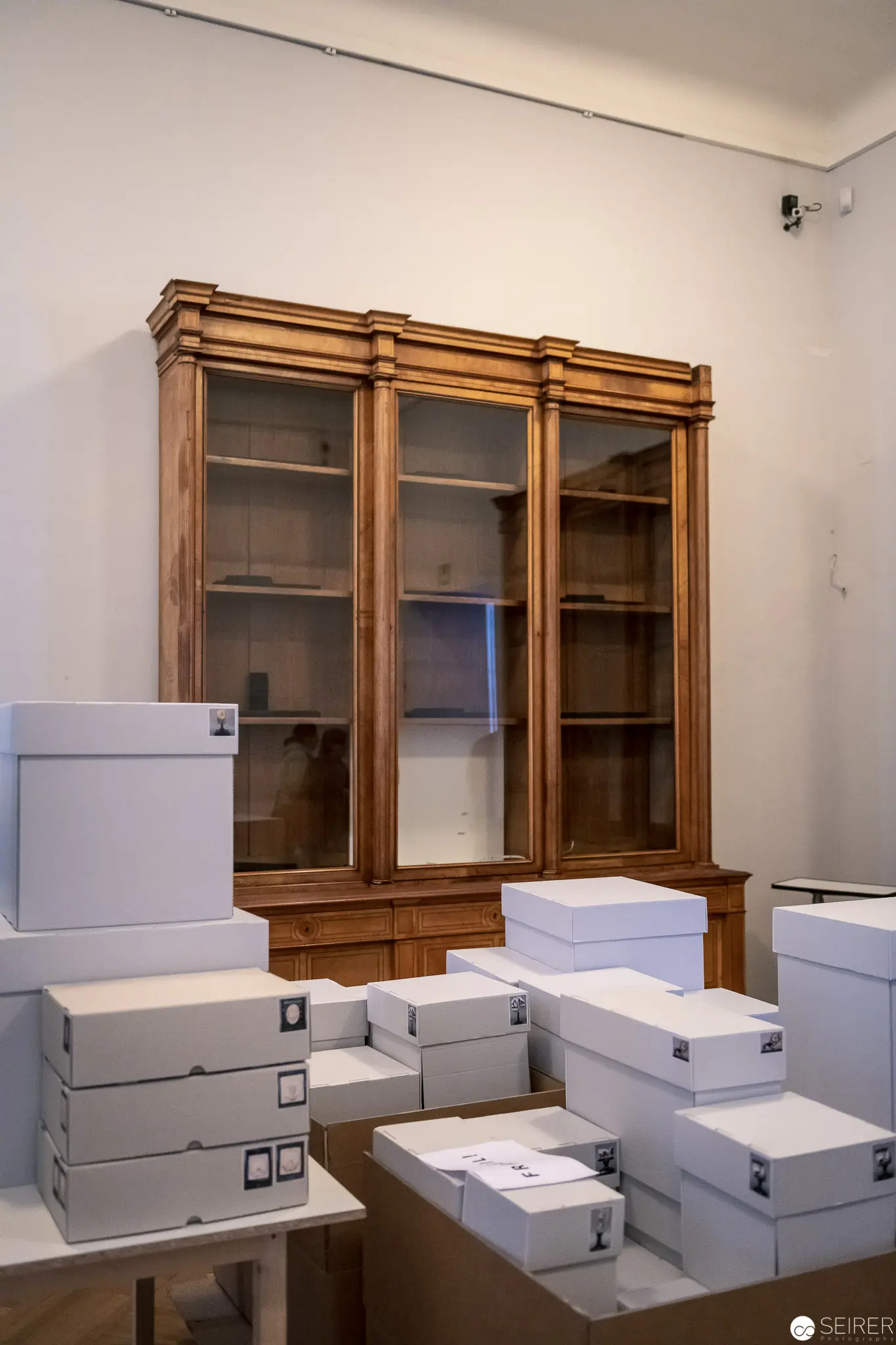 Archival Storage Room with Vintage Wooden Cabinet and White Document Boxes Institutional storage space displaying a richly grained wooden glass-fronted cabinet with three sections, positioned against a white wall. Multiple stacks of white archival storage boxes are arranged in the foreground, suggesting an organized preservation environment with systematic document management protocols. The wooden cabinet's warm brown tones contrast with the cool, uniform white boxes, creating a structured visual composition of archival preservation.
 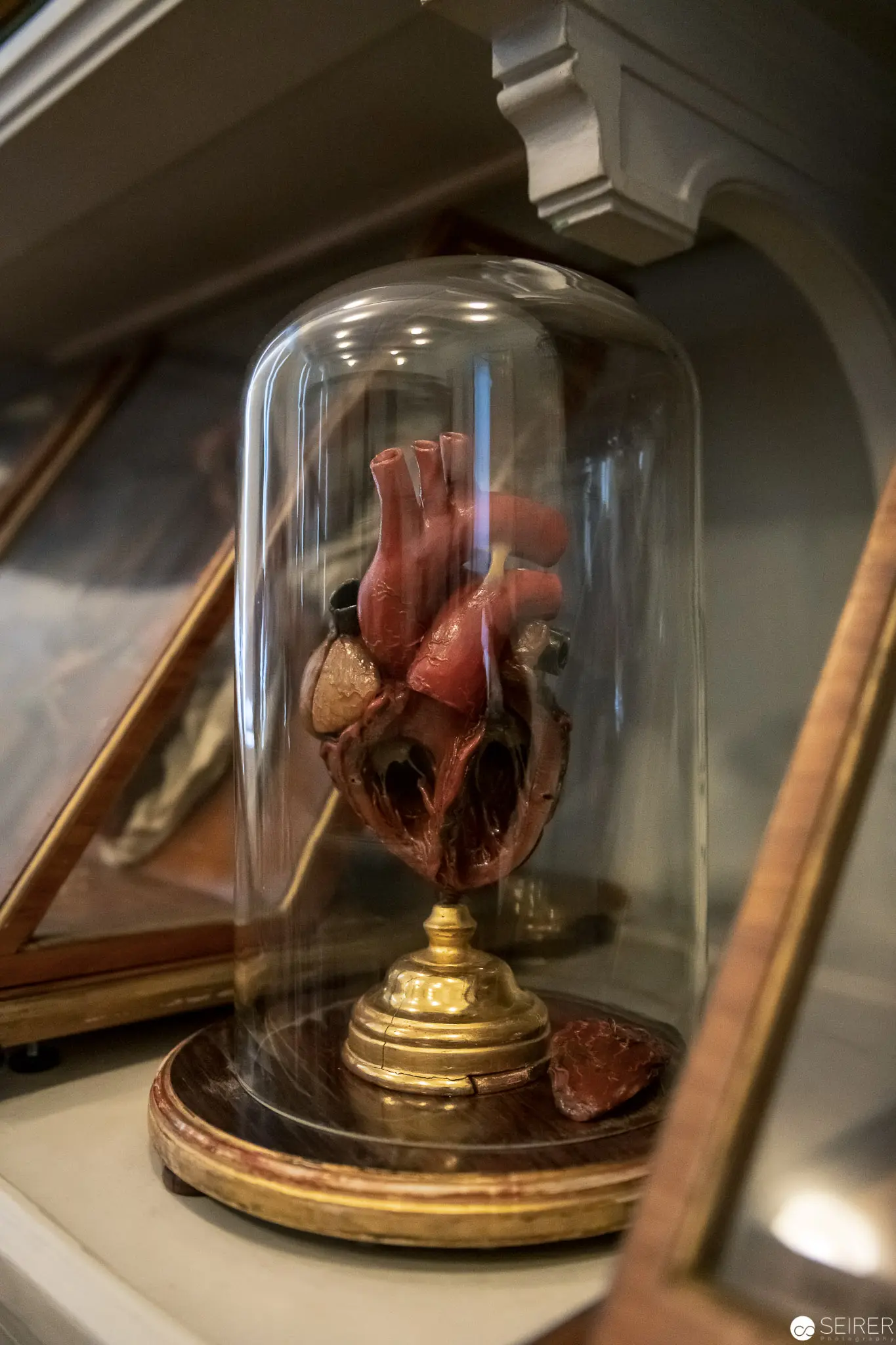 Anatomical Specimen of Human Heart Under Glass Dome on Gilded Stand Preserved biological specimen of a human heart, mounted on an ornate brass base and carefully displayed under a transparent glass bell jar. The anatomical sample appears reddish-brown, with detailed organic contours suggesting careful medical or scientific preservation. Architectural elements in soft focus frame the specimen, suggesting this is part of a curated collection or historical medical display.
 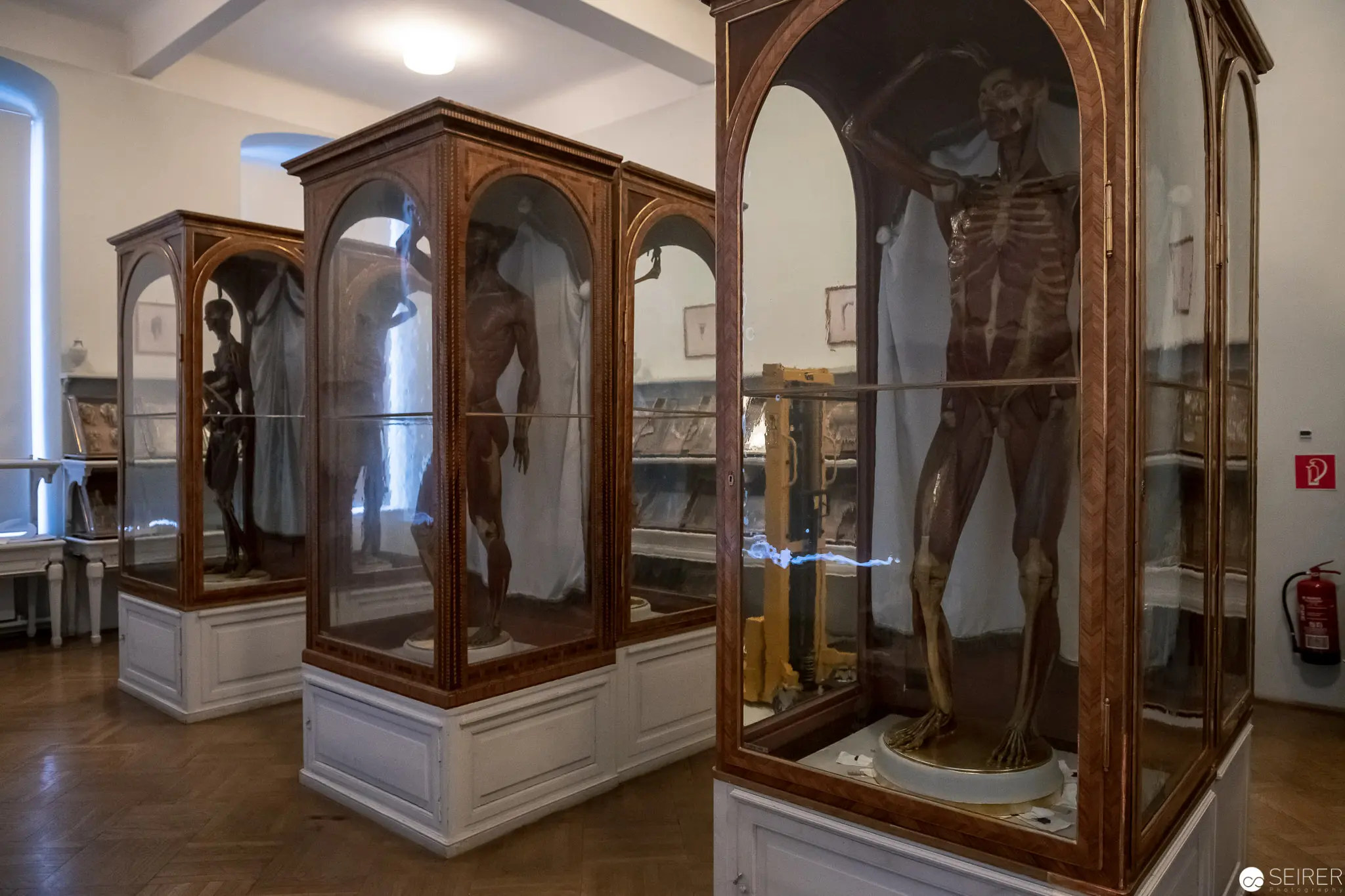 Skeletal Museum Display in Elegant Wooden Vitrines with Archaeological Specimens Forensic skeletal specimens displayed within intricately framed wooden and glass vitrines, positioned against white-paneled walls in a meticulously curated museum gallery setting. Mounted human skeletal remains are carefully arranged within multiple architectural display cases, revealing archaeological artifacts with precise spatial positioning and controlled ambient lighting. The wooden display cabinets feature elegant arched glass panels, creating a scholarly and contemplative atmosphere for scientific specimen preservation.
 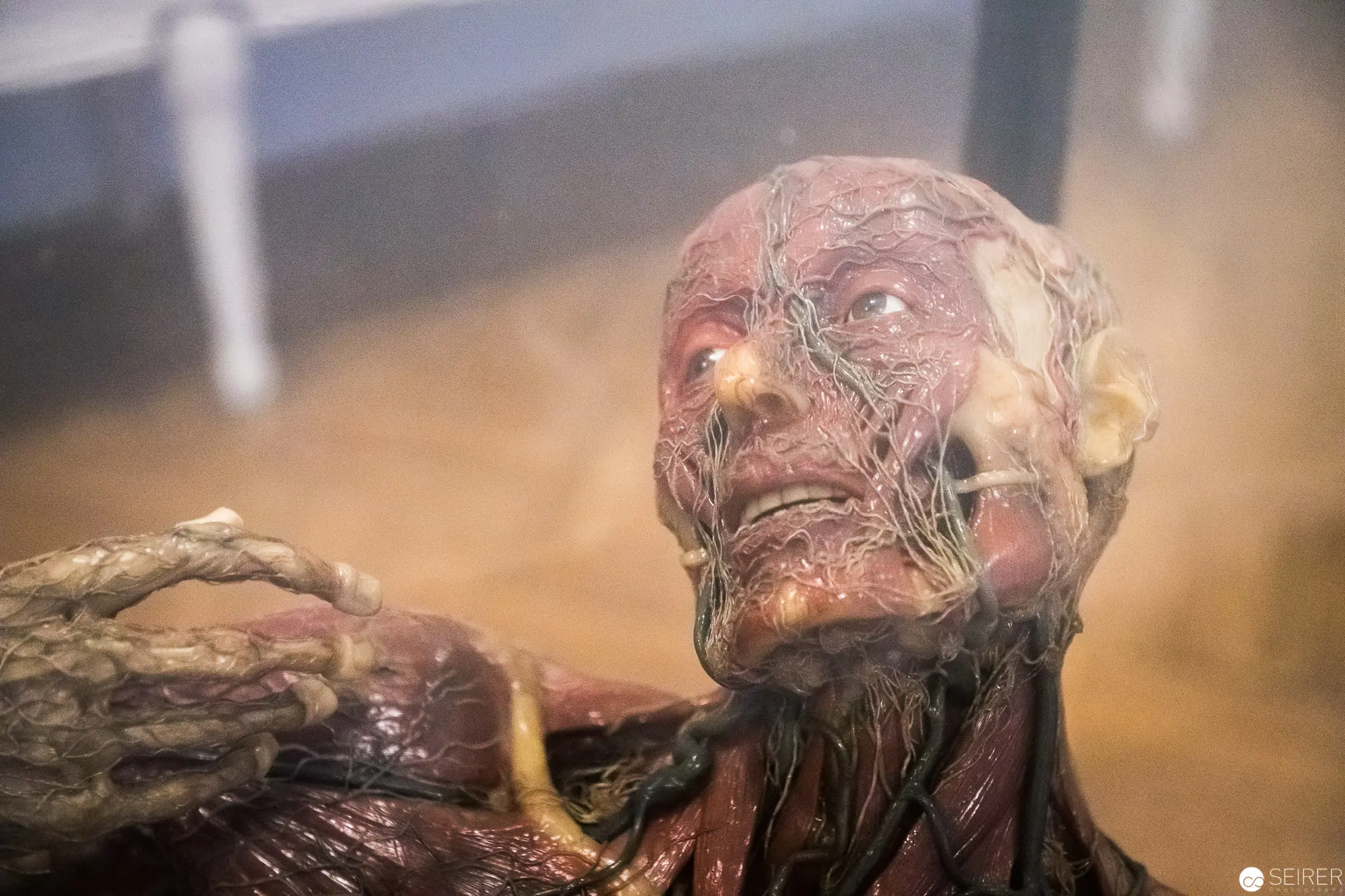 Grotesque Biomechanical Figure in Distressed Organic Transformation Highly detailed portrayal of a severely disfigured anthropomorphic form, displaying intricate textural variations of wounded, mutated flesh with pronounced organic-mechanical hybridization. The figure's distorted cranial structure and exposed musculature suggest an advanced state of biological metamorphosis, characterized by complex textural layering and an unsettling corporeal disintegration. Muted background tones enhance the visceral anatomical details of the central subject.
 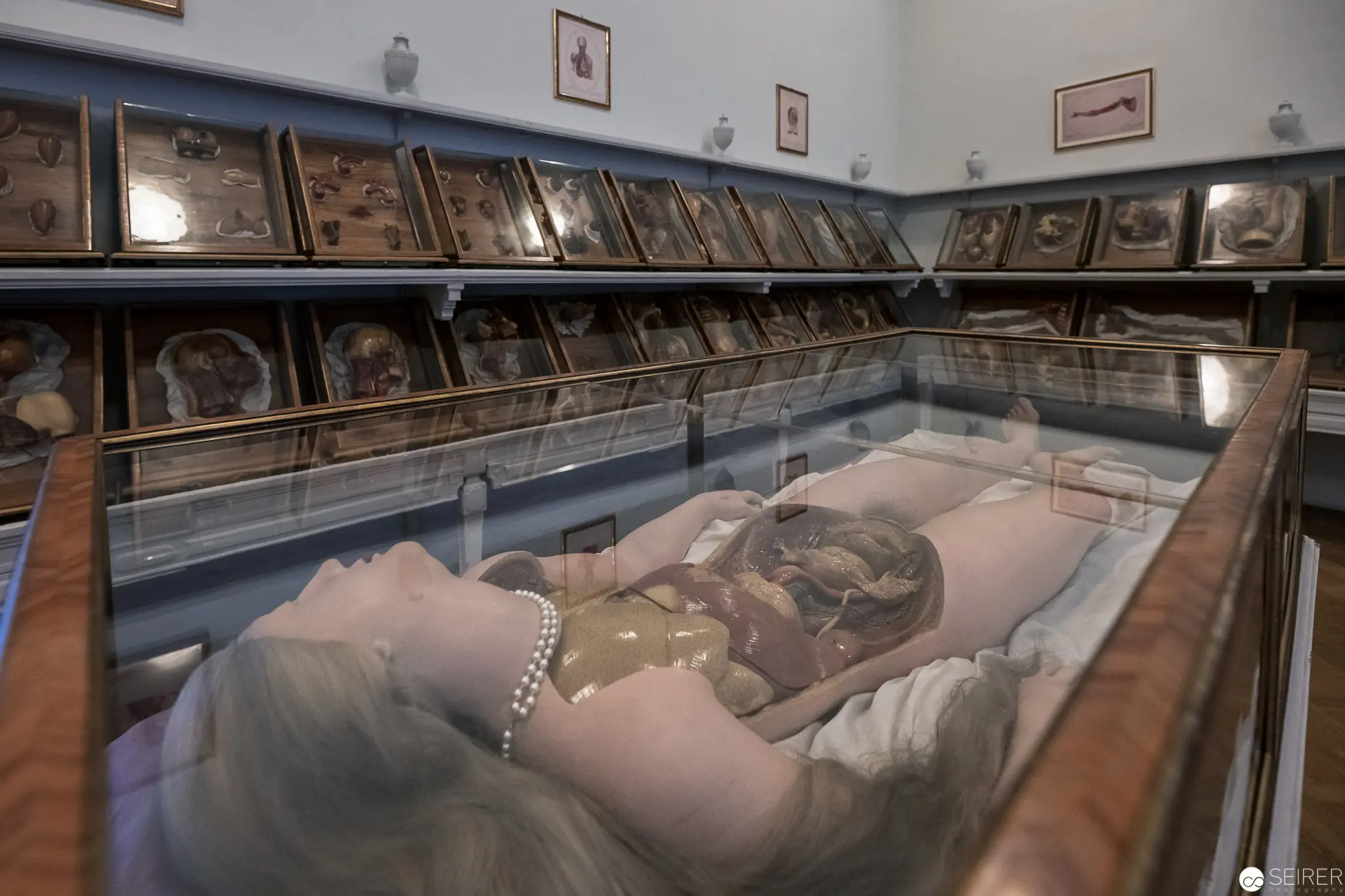 Museum Display of Archaeological Specimen with Ghostly Reflected Figure Elaborate museum vitrine containing an archaeological skeletal specimen positioned centrally, surrounded by framed exhibits along wall-mounted display cases. A translucent, spectral female figure with pearl necklace is reflected across the glass surface, creating a haunting superimposition that blends contemporary presence with historical artifact. Soft ambient lighting illuminates the carefully arranged archival space, suggesting contemplative museological presentation of human remains.
 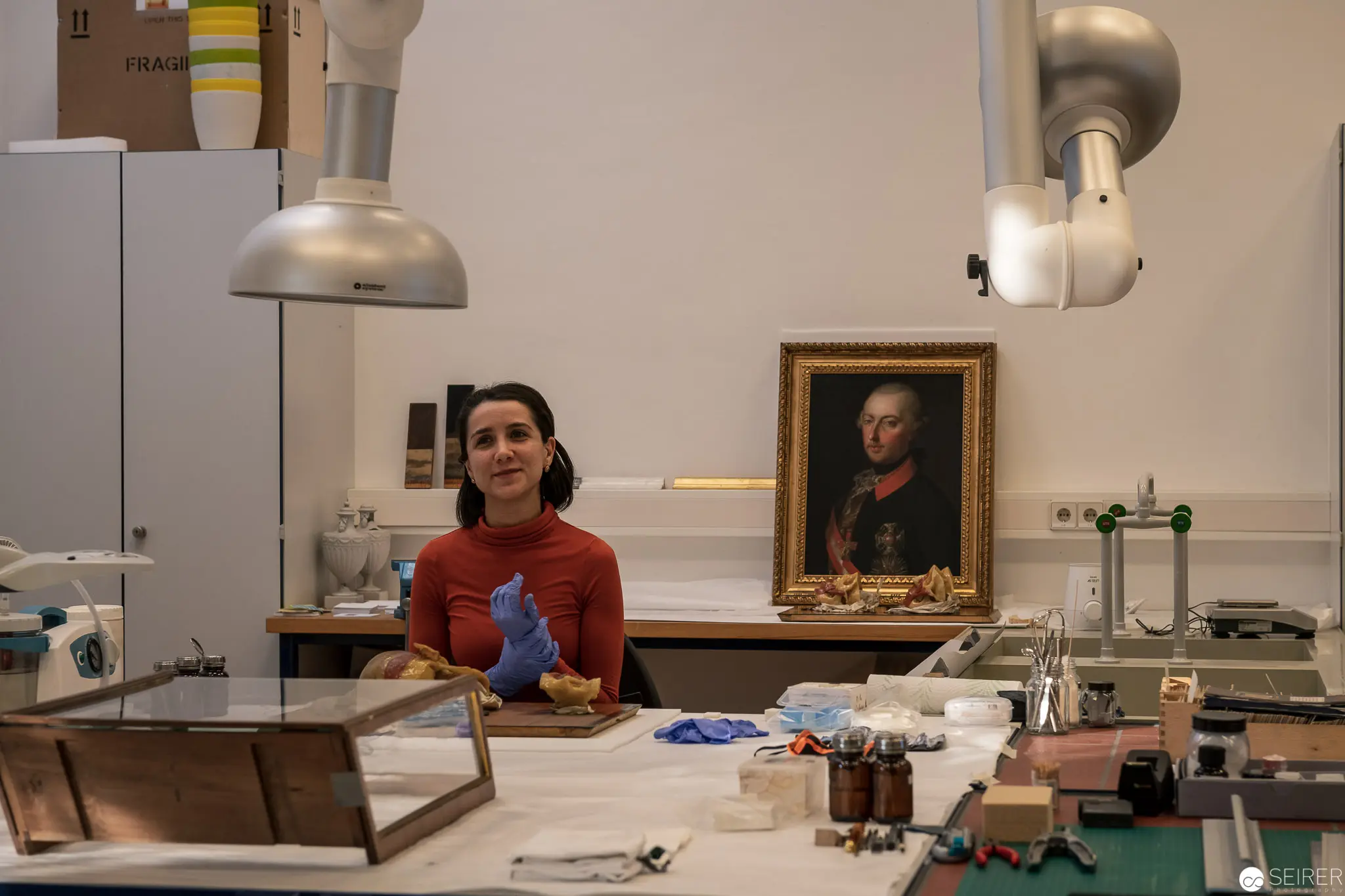 Conservator in Laboratory with Historical Portrait of Nobleman A laboratory setting reveals a professional art conservator wearing a red sweater and blue gloves, seated at a workspace surrounded by conservation tools and equipment. A gilded-framed historical portrait of a formally dressed nobleman hangs on the white wall behind her, creating a compelling juxtaposition between contemporary preservation techniques and historical artistic representation. Specialized lighting and technical apparatus suggest a professional conservation environment dedicated to art restoration and research.
 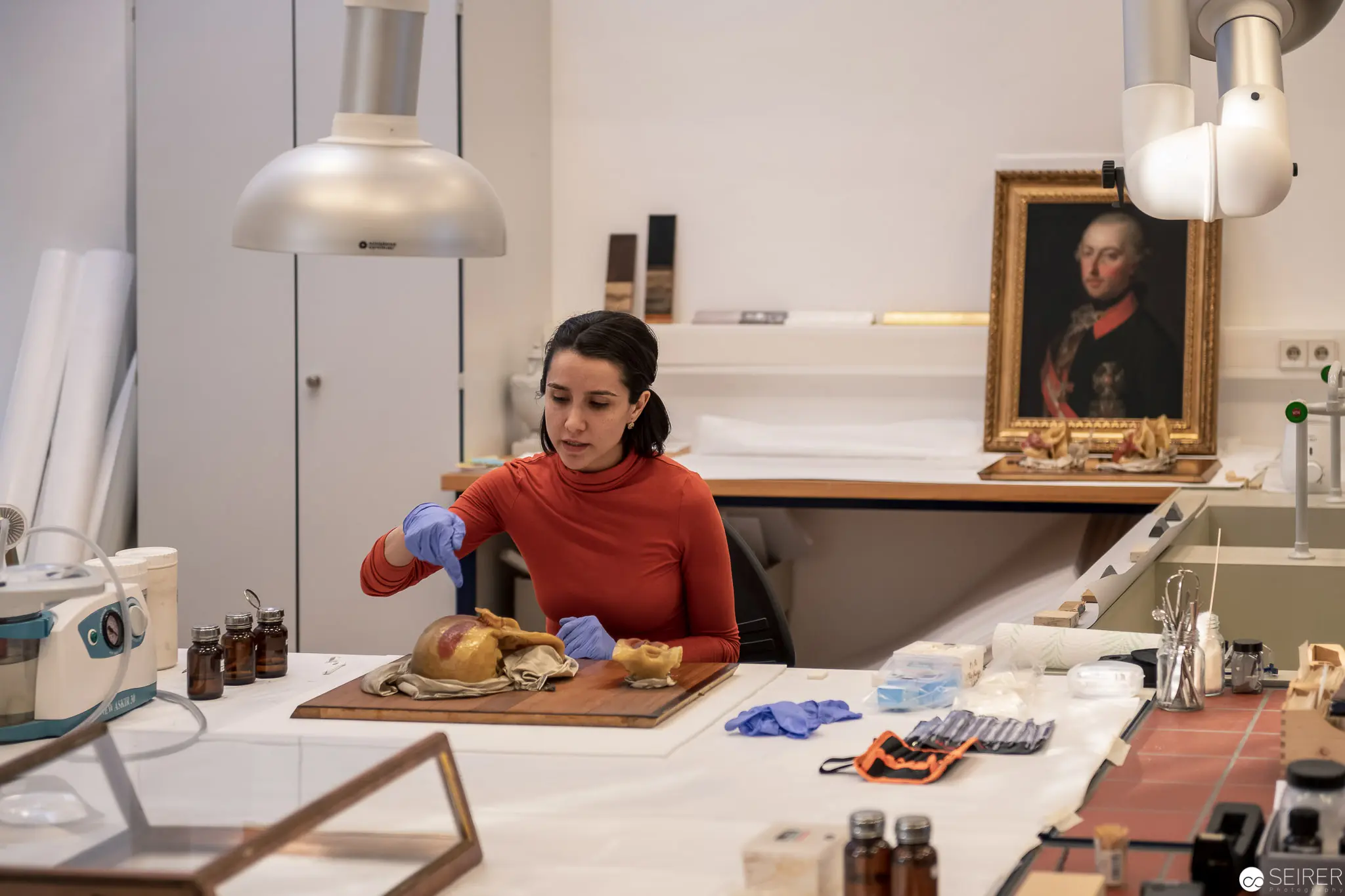 Art Conservator in Red Sweater Examining Historical Artifact Under Laboratory Lighting A professional art conservator wearing a red turtleneck and blue protective gloves meticulously examines a delicate object on a wooden cutting board within a controlled laboratory setting. The workspace is illuminated by overhead lamps, with scientific equipment and glass bottles arranged systematically, while a historical portrait of a uniformed figure in a gilded frame provides contextual backdrop to the precise conservation work in progress.
 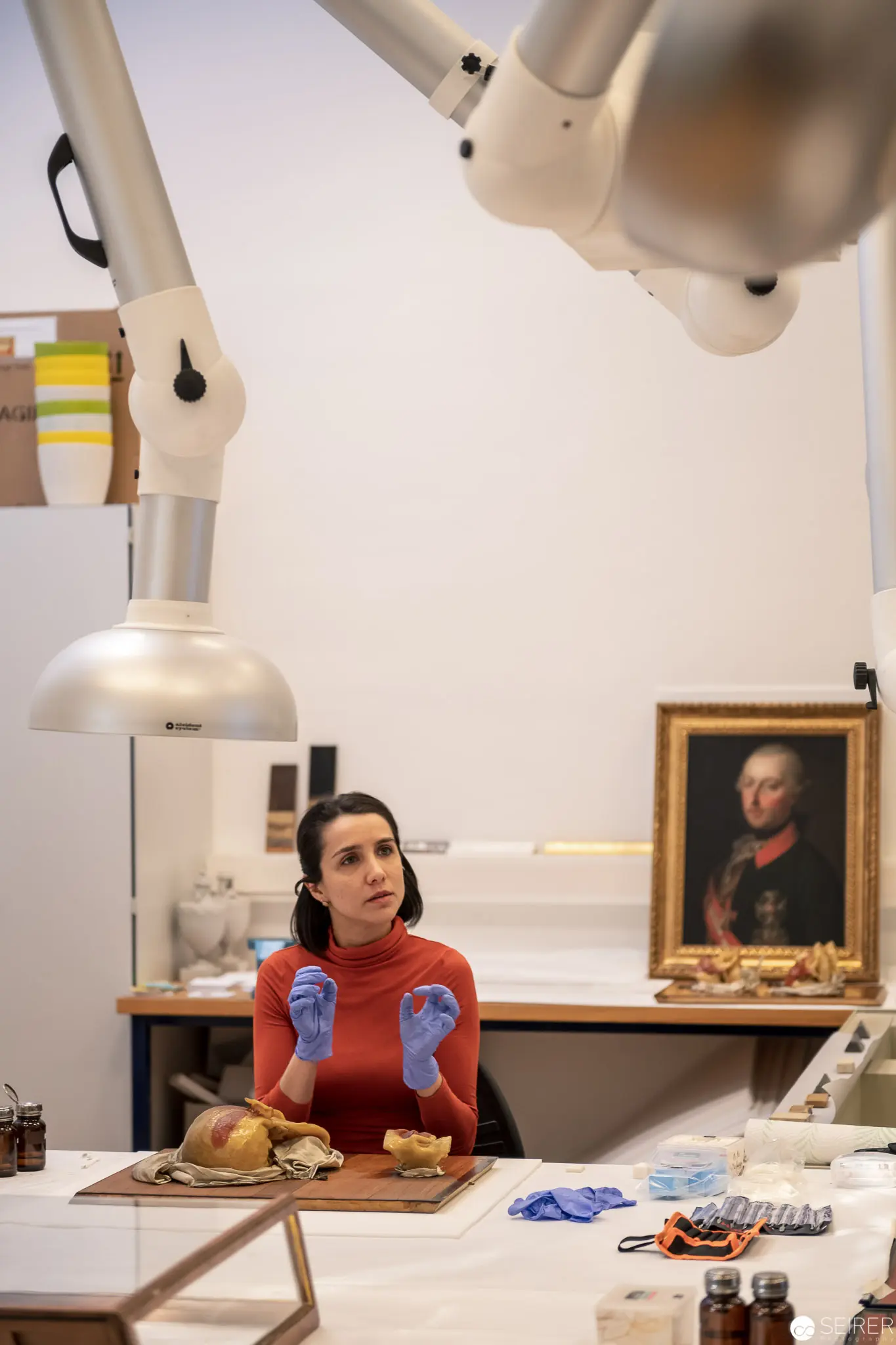 Art Conservator in Red Sweater Examining Historical Artifact with Scientific Precision A female conservator wearing blue protective gloves sits at a pristine work surface, surrounded by specialized conservation equipment and illuminated by an adjustable laboratory lamp. A historical portrait of a uniformed figure in an ornate frame occupies the background, suggesting an art restoration or research context with meticulous attention to scientific methodology and preservation techniques.
 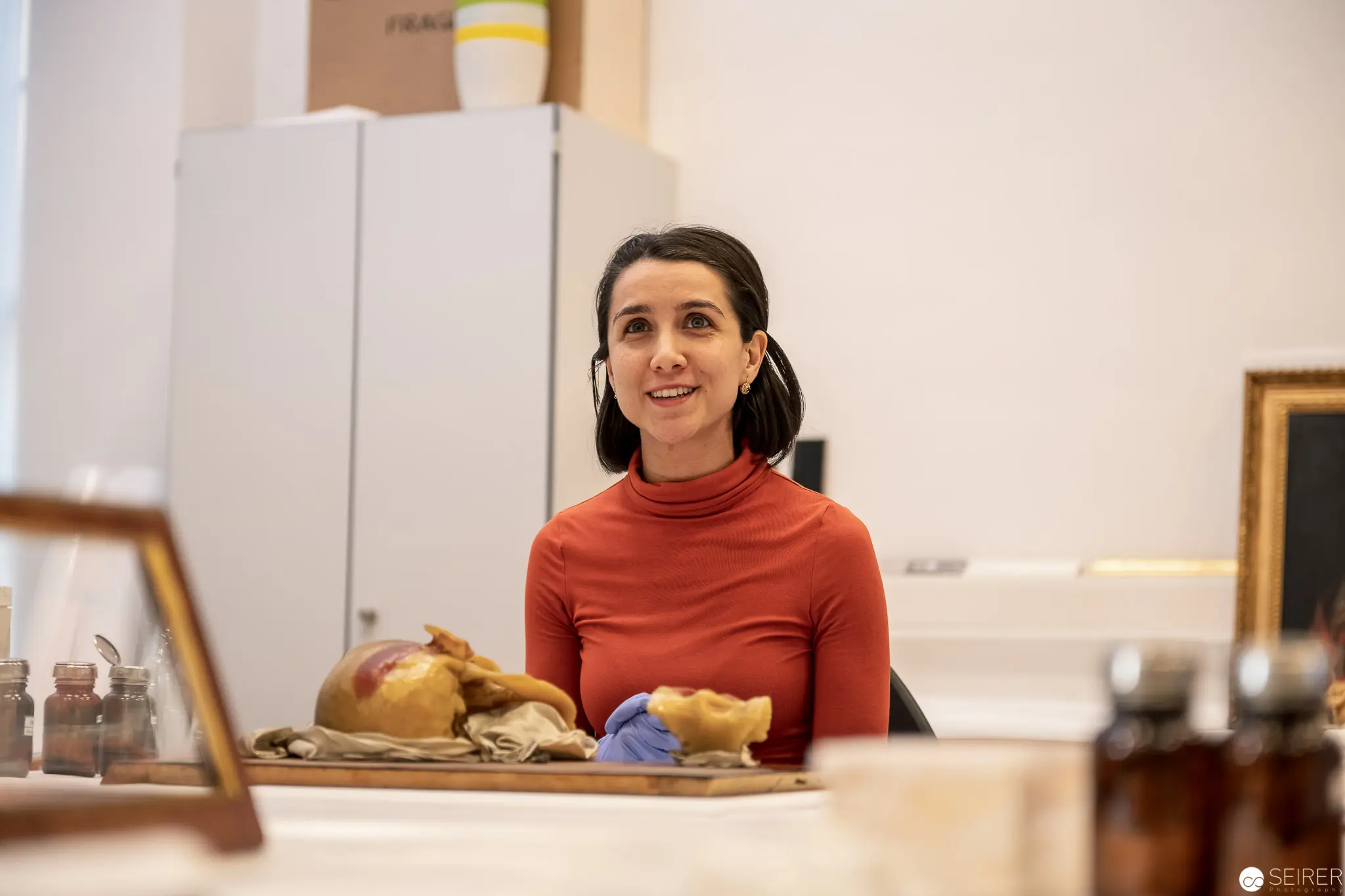 Conservation Specialist in Red Sweater Examining Archaeological Artifacts at Workstation A researcher in a rust-colored turtleneck sweater sits at a conservation workspace, surrounded by archival objects and scientific equipment. Pottery fragments and archaeological specimens are carefully arranged on a cloth-covered surface, with glass containers and framed elements visible in the foreground, suggesting a meticulous documentation and preservation process. Her attentive posture and engaged expression indicate focused scholarly examination of cultural heritage materials.
 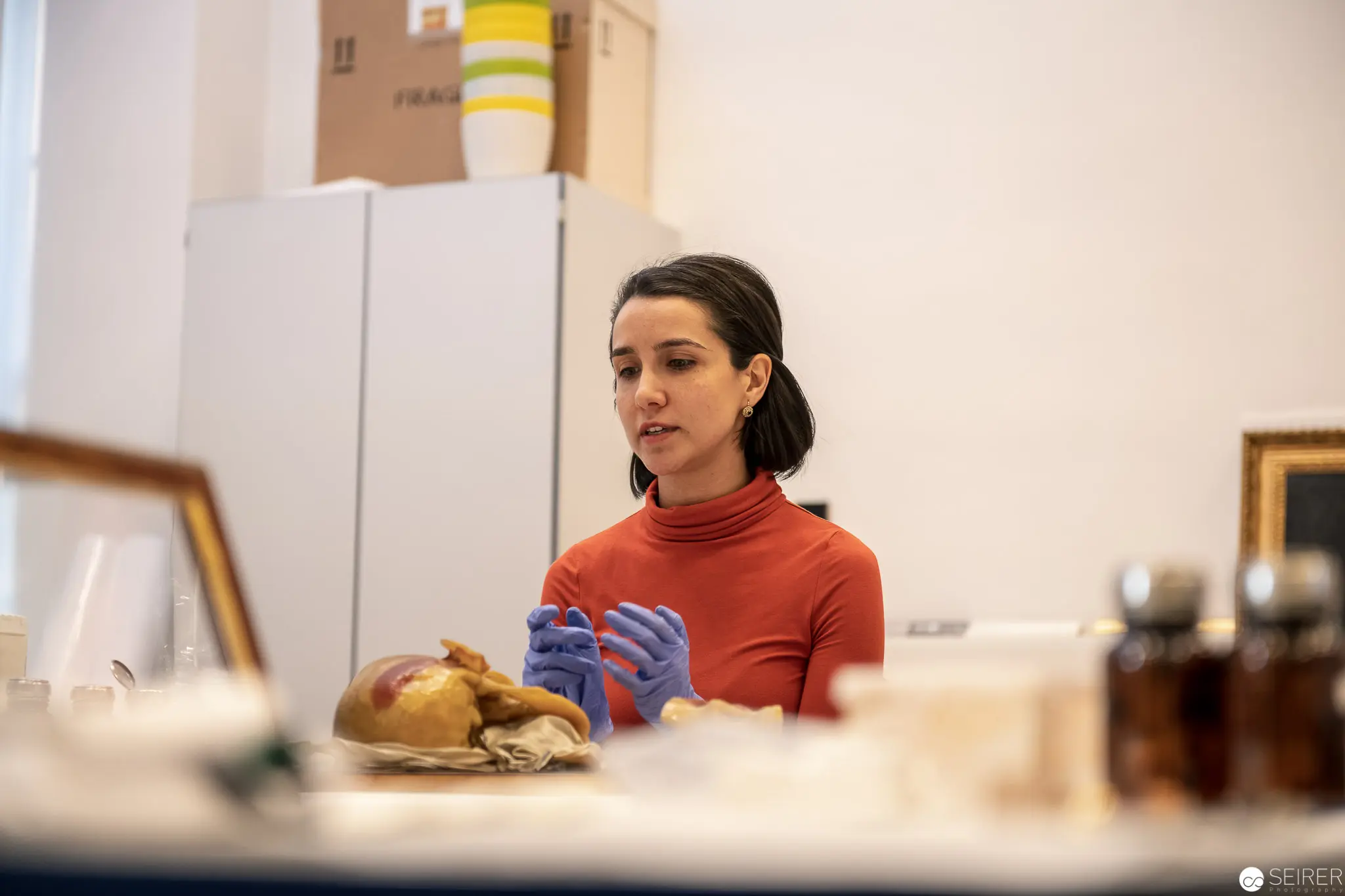 Conservation Specialist in Red Sweater Examining Artifact with Blue Gloves A professional in a rust-colored turtleneck examines a delicate artifact at a conservation workstation, wearing protective blue latex gloves. Archival storage boxes and research materials populate the background, suggesting a meticulous laboratory environment with neutral lighting and carefully arranged workspace. The subject's focused posture indicates careful scholarly analysis of the historical object before her.
 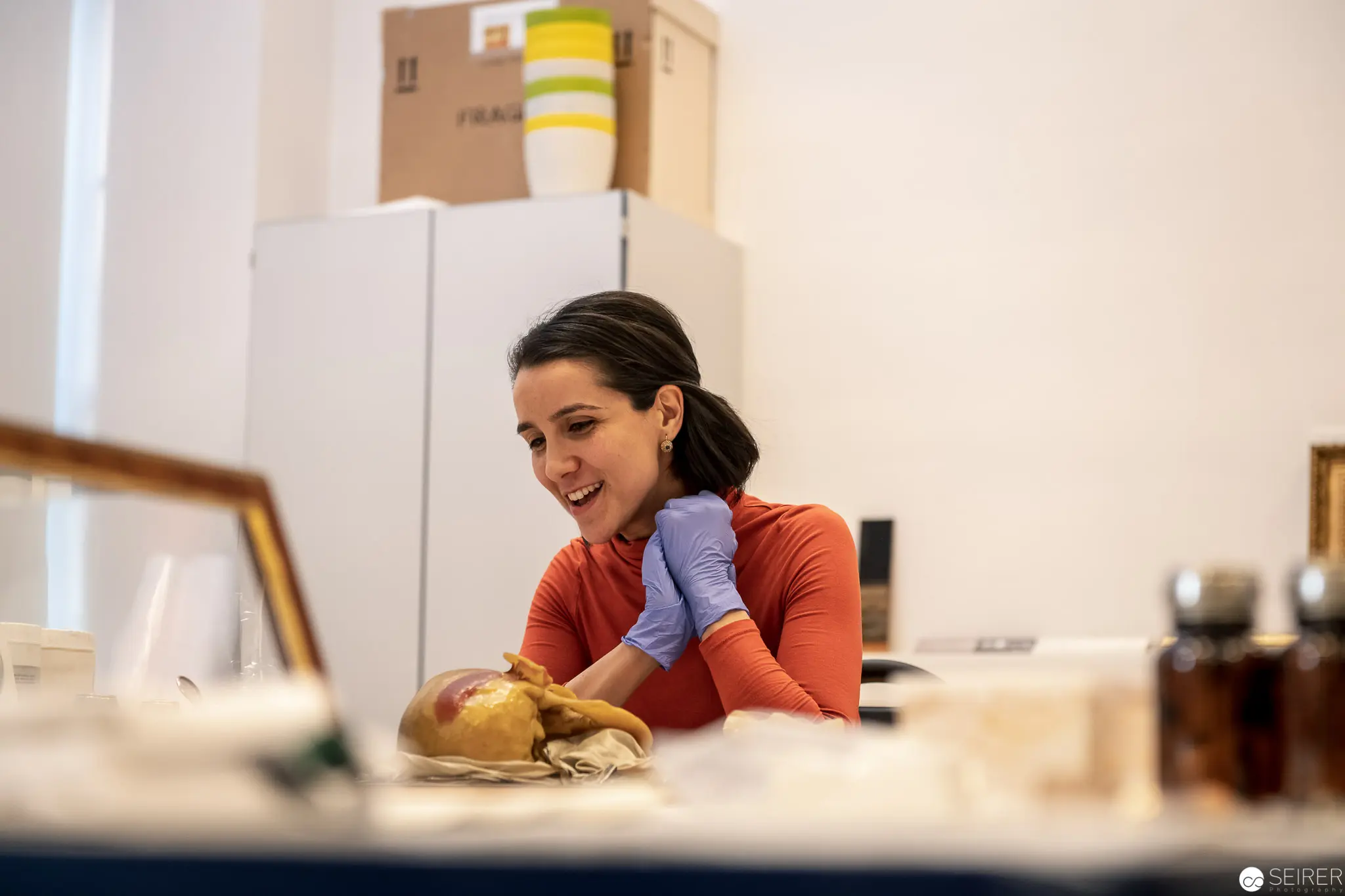 Laboratory Researcher Carefully Handles Specimen with Focused Concentration A researcher in a red top and blue protective gloves leans attentively over a specimen, her ponytailed hair pulled back as she examines an object on a workspace surrounded by archival boxes, scientific equipment, and blurred foreground elements. Her concentrated yet smiling expression suggests meticulous scientific observation in a controlled research environment.
 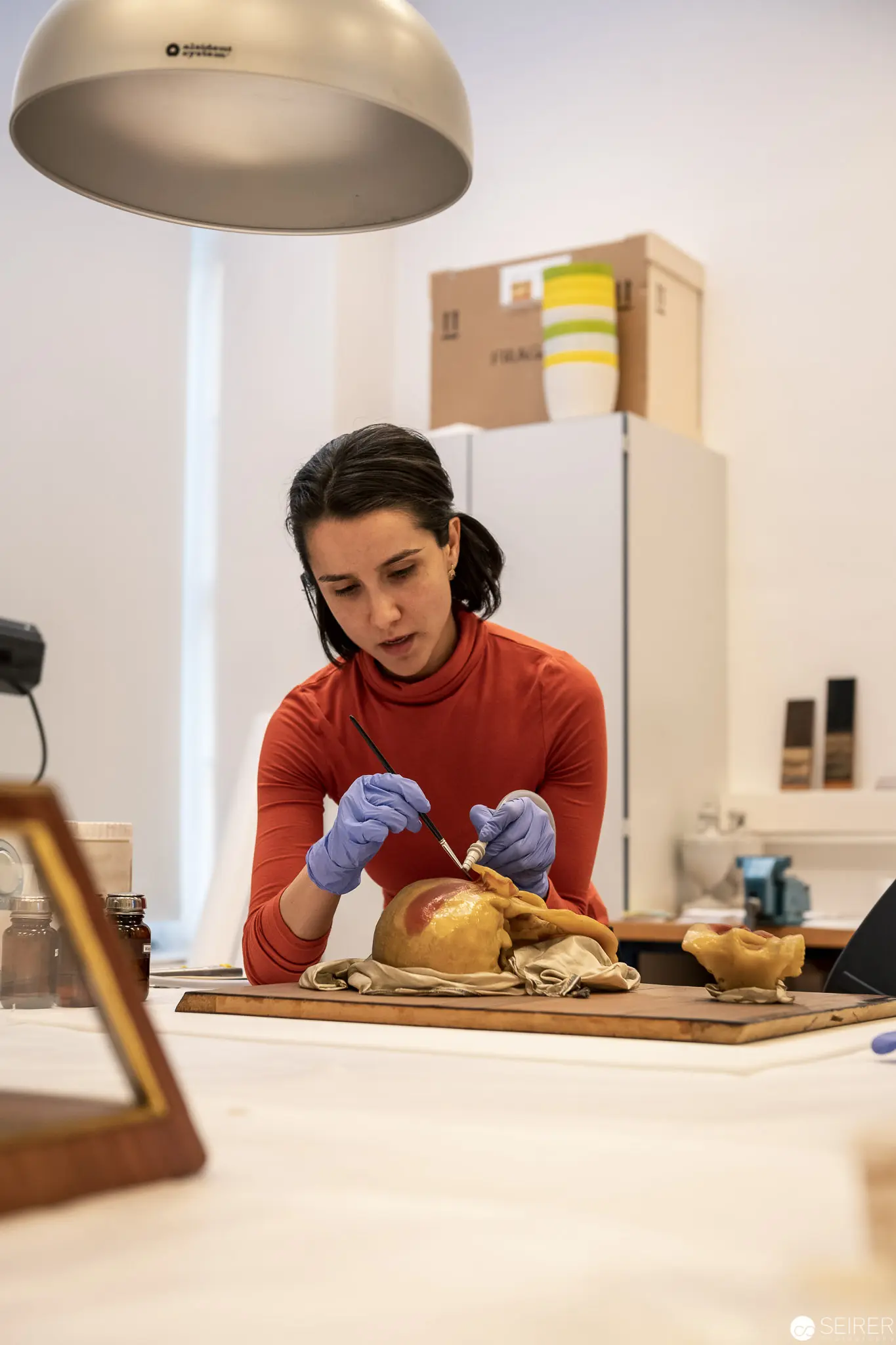 Conservator in Red Sweater Carefully Examining Artifact Under Archival Lighting A conservation specialist wearing a red turtleneck and blue protective gloves meticulously works on a golden-toned artifact positioned on a wooden surface. Positioned beneath an overhead archival lamp in a controlled workspace with storage boxes and technical equipment visible, the scene represents a precise moment of material cultural preservation and scholarly research. The image documents the delicate methodological approach of artifact handling in a professional conservation environment.
 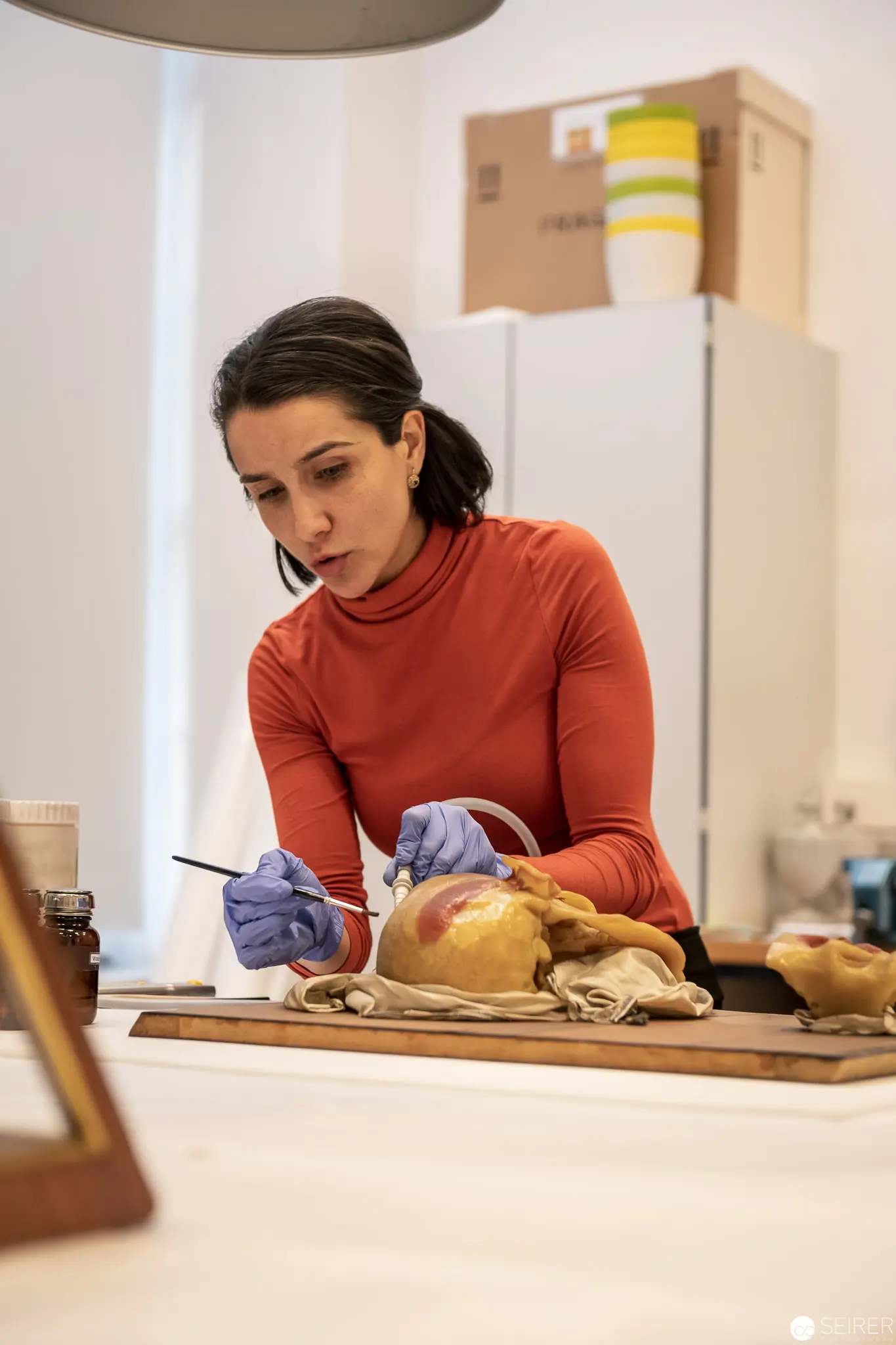 Woman in Red Sweater Preparing Culinary Specimen with Careful Precision A woman wearing a rust-colored turtleneck examines a food item on a wooden cutting board, wearing blue latex gloves and demonstrating methodical concentration. Positioned in a well-lit interior space with neutral walls and storage boxes visible in the background, she appears to be engaged in a careful preparatory process, possibly related to cooking, research, or documentation. Her posture suggests meticulous attention to detail in her current task.
 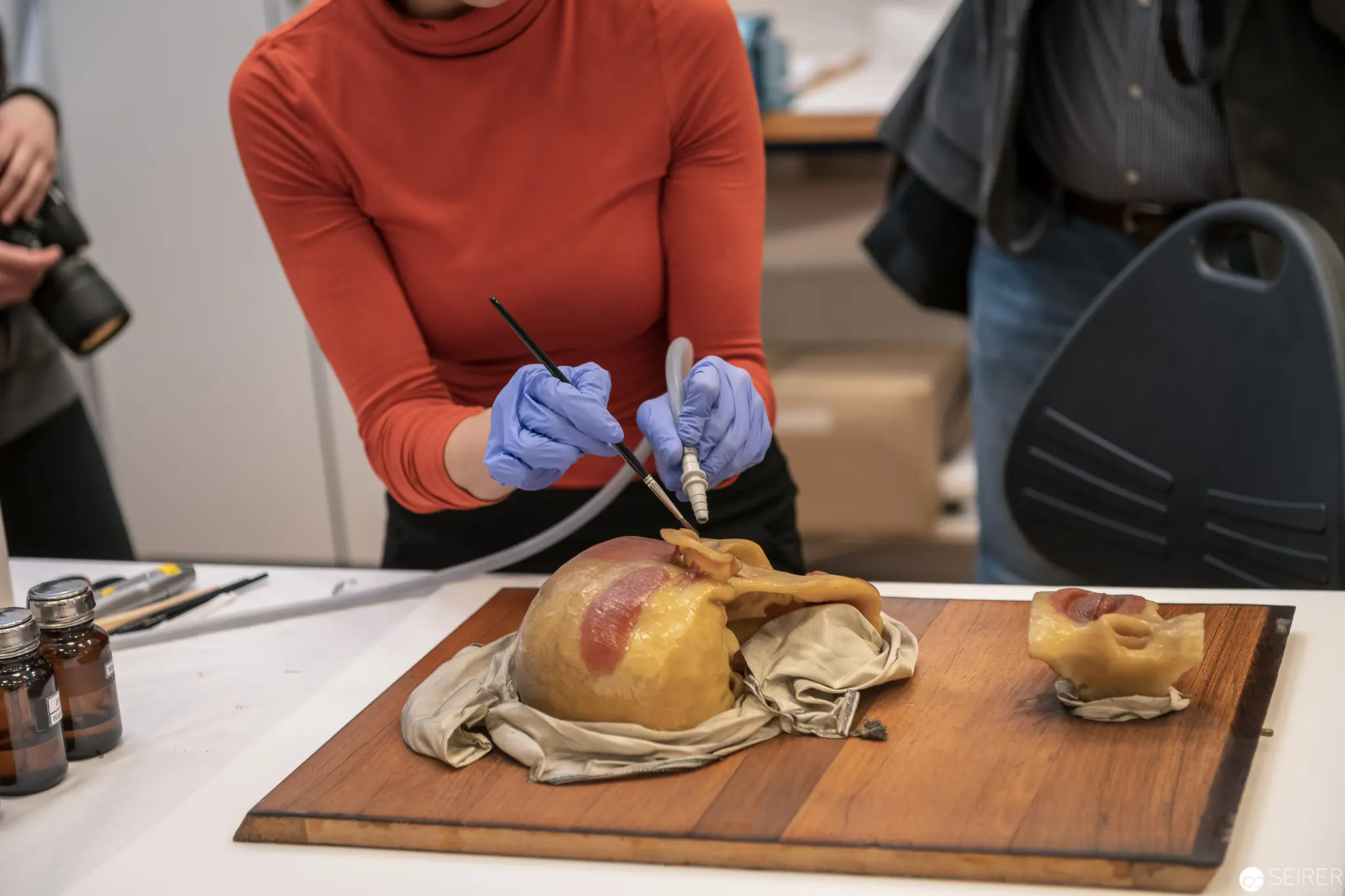 Conservation Laboratory Specimen Analysis with Gloved Technician Forensic or scientific preservation work depicted on a wooden board, featuring a spherical organic specimen draped with fabric. A technician wearing a rust-colored top and blue protective gloves carefully manipulates the specimen using precision tools, with glass specimen jars and additional equipment visible in the workspace's controlled environment. Meticulous documentary approach reveals careful examination and archival preservation techniques.
 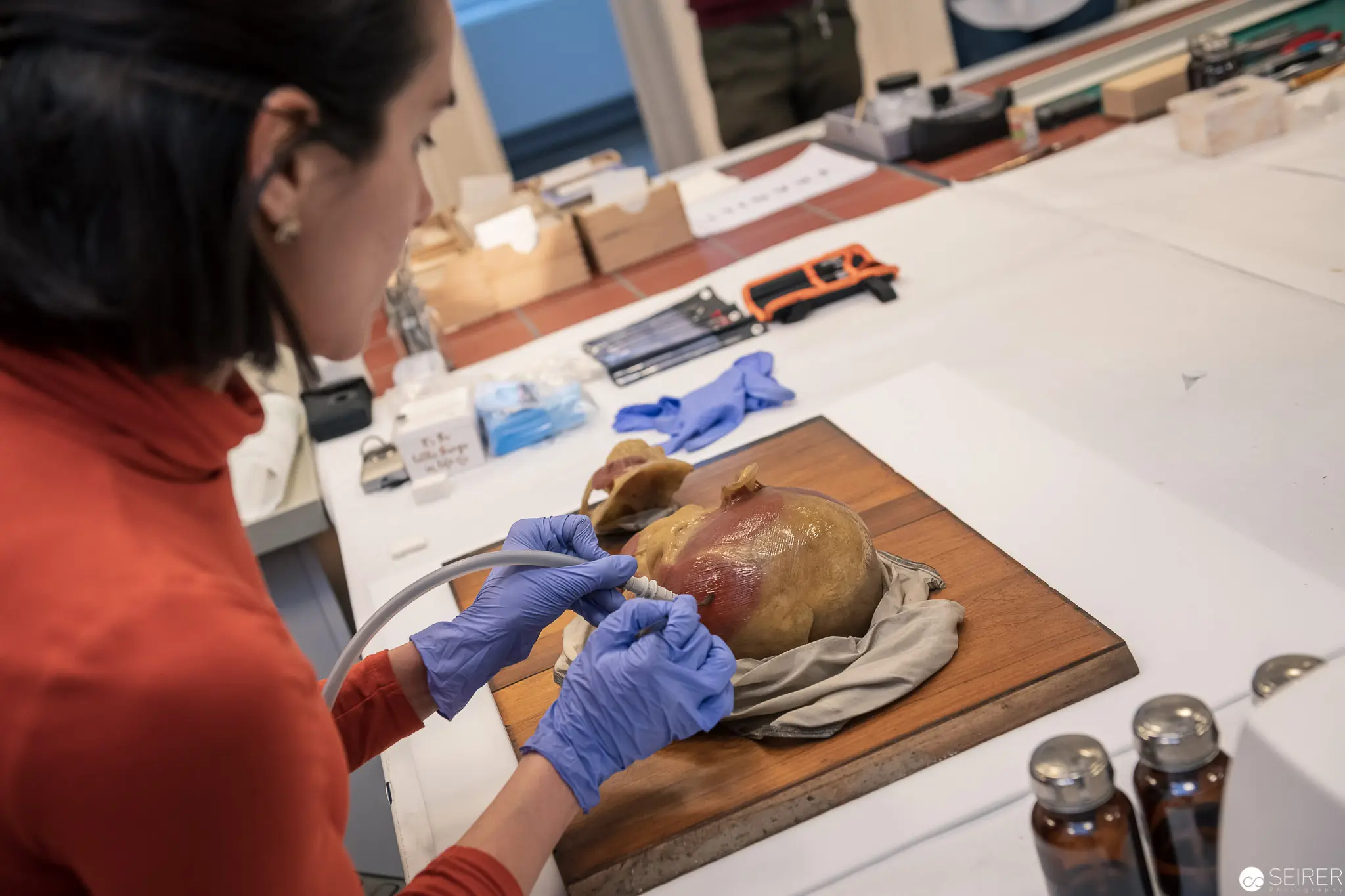 Laboratory Specimen Preparation with Gloved Hands on Wooden Surface Scientific workstation featuring a researcher in a red top and blue protective gloves carefully handling a spherical organic specimen on a wooden cutting board. Precision laboratory environment with glass containers, tools, and systematic workspace arrangement suggesting medical or biological research protocols.
 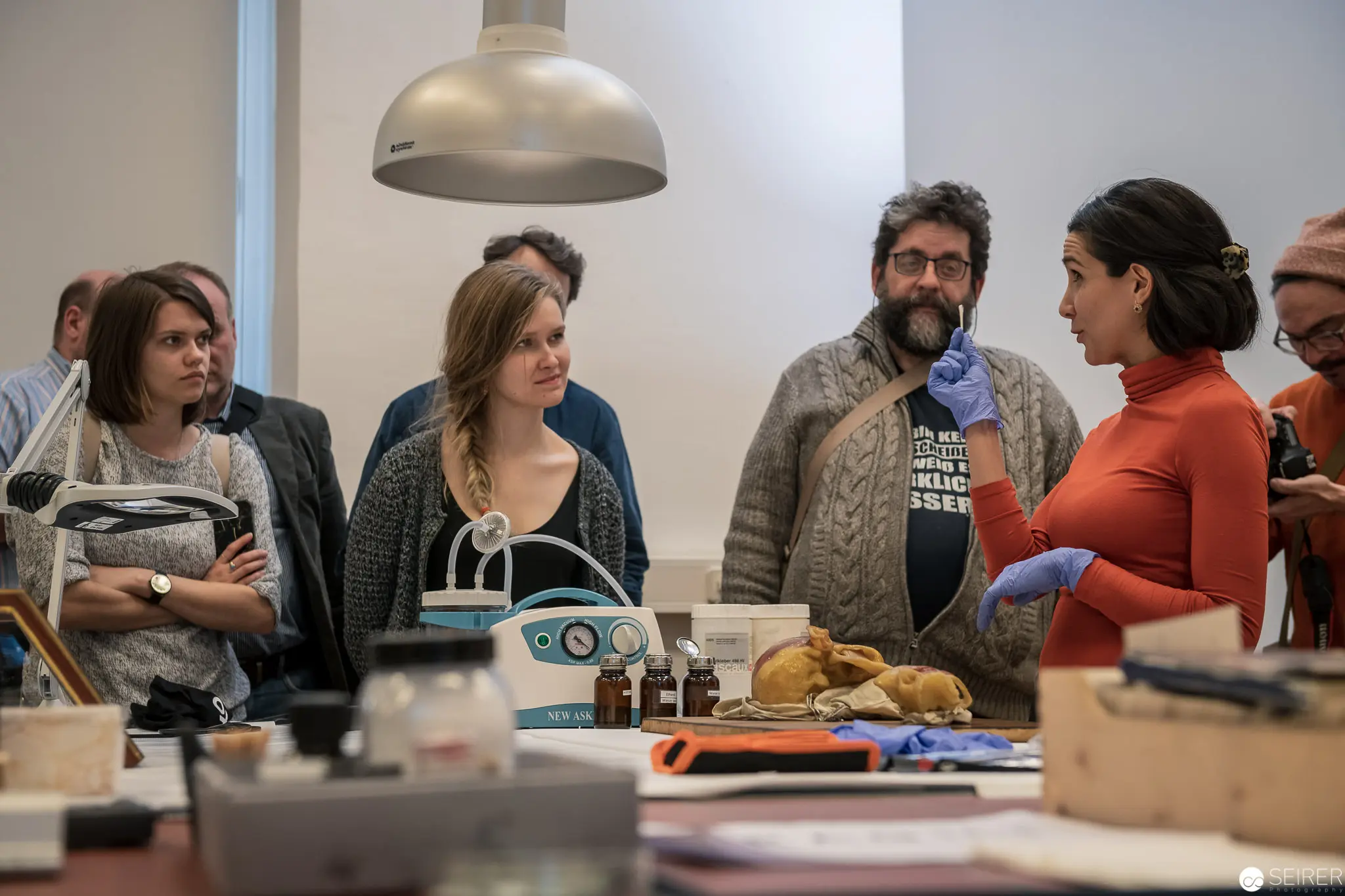 Workshop Seminar: Collaborative Discussion Around Research Materials and Equipment Interior academic setting depicting a group engaged in an investigative work session, with participants arranged around a central table featuring scientific instruments and preparatory materials. Soft overhead lighting illuminates a diverse group of researchers in casual academic attire, positioned in an open, attentive configuration suggesting active collaborative dialogue and shared intellectual inquiry. Visible laboratory equipment, reference materials, and an informal interpersonal dynamic suggest an interdisciplinary research environment.
 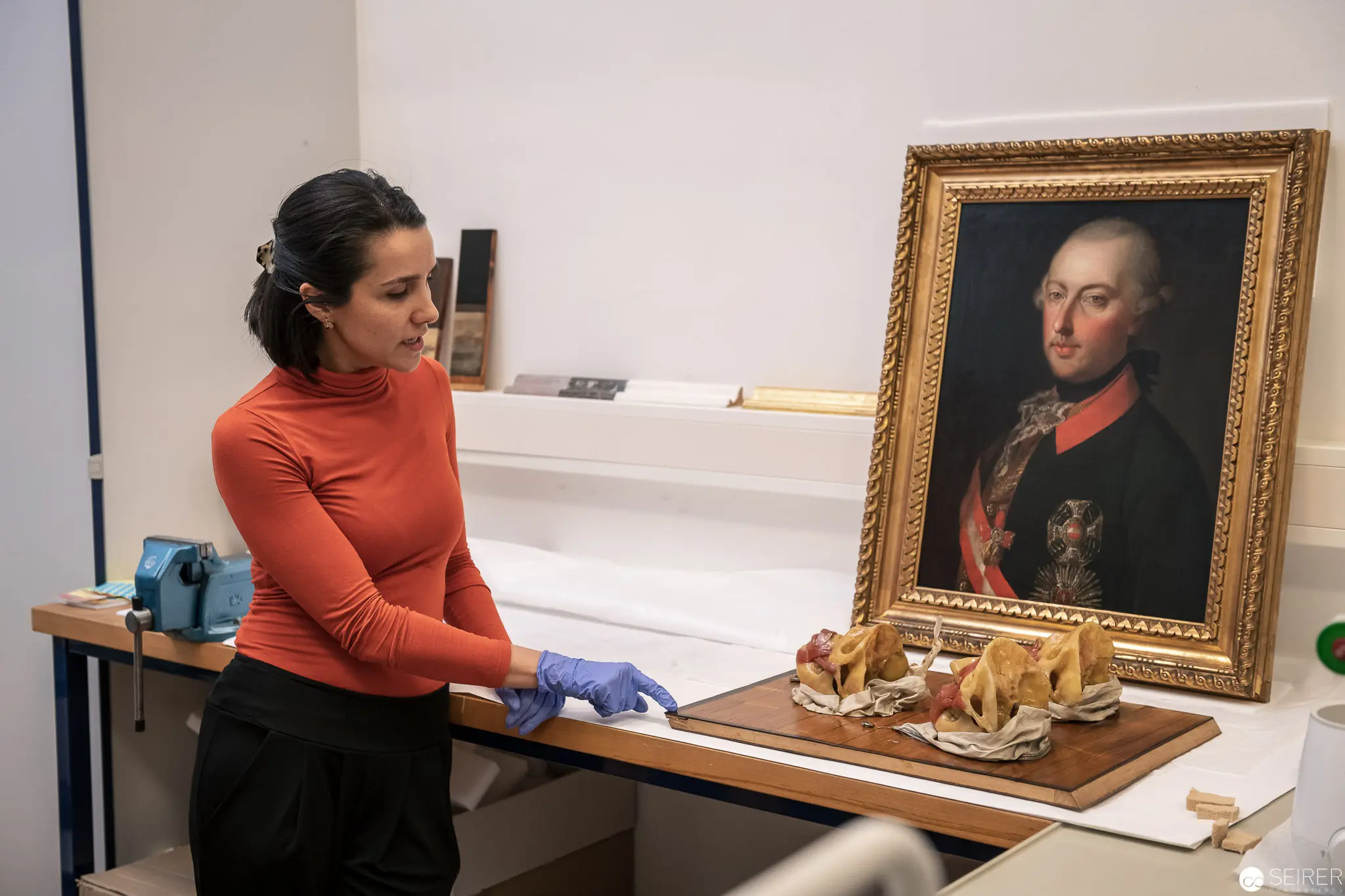 Museum Conservator Examining Historical Portrait with Protective Gloves A museum professional in a coral-red turtleneck and blue protective gloves carefully examines an artifact on a white-surfaced conservation table, with an ornate framed portrait of a historic military figure in an elaborate gold frame positioned adjacent to her workspace. The careful positioning and professional handling suggest a meticulous archival or restoration process in a museum or cultural heritage setting.
 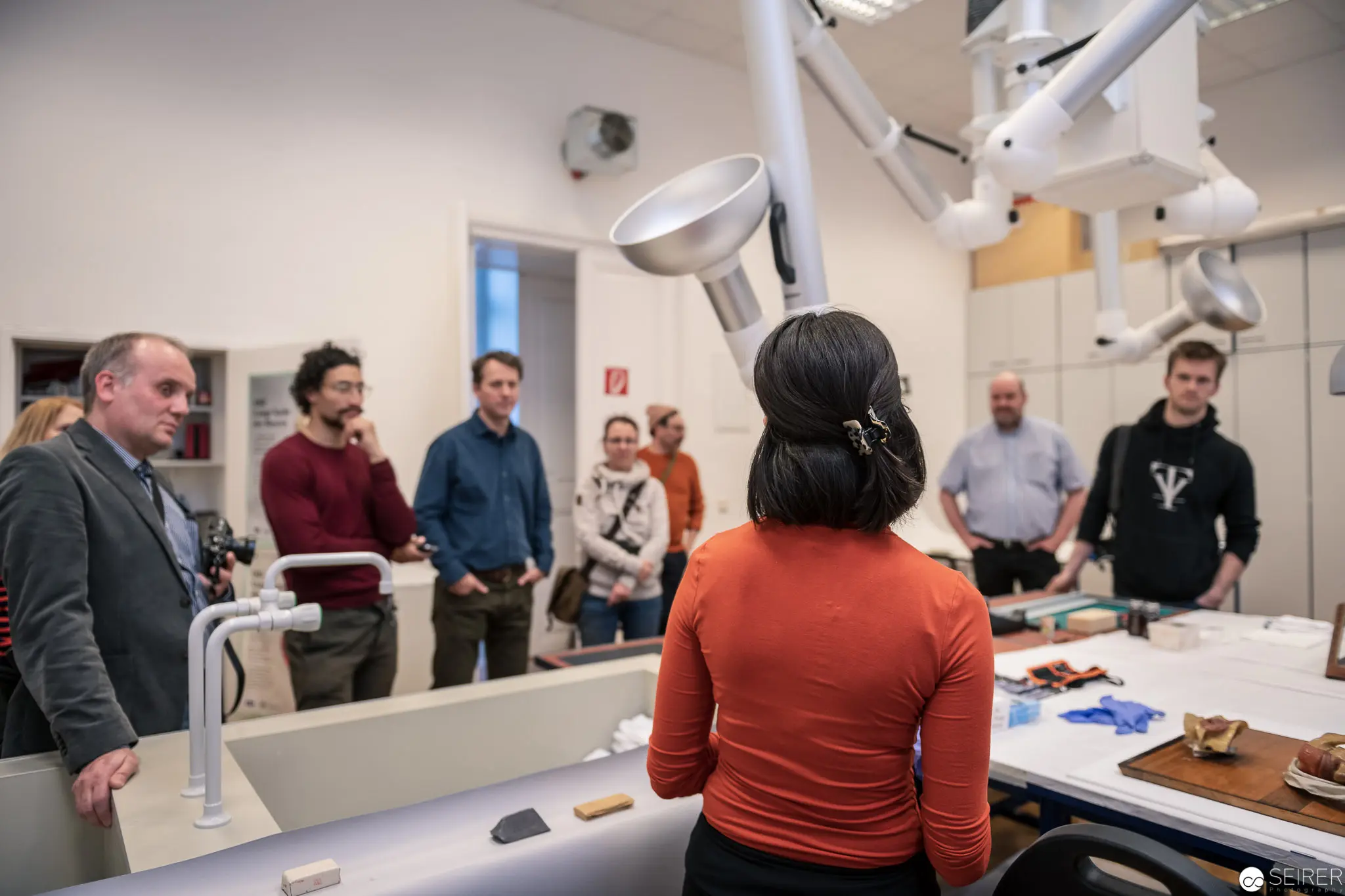 Research Laboratory Seminar with Participants Gathered Around Technical Workstation A group of professionals assembled in a clinical white laboratory environment, positioned around a central workstation with advanced technical equipment. A person in a rust-colored sweater stands with their back to the camera, facing colleagues dressed in varied casual and professional attire, suggesting an interdisciplinary research or training session with collaborative interaction. Overhead medical or scientific lighting fixtures and technical apparatus frame the methodical spatial arrangement.
 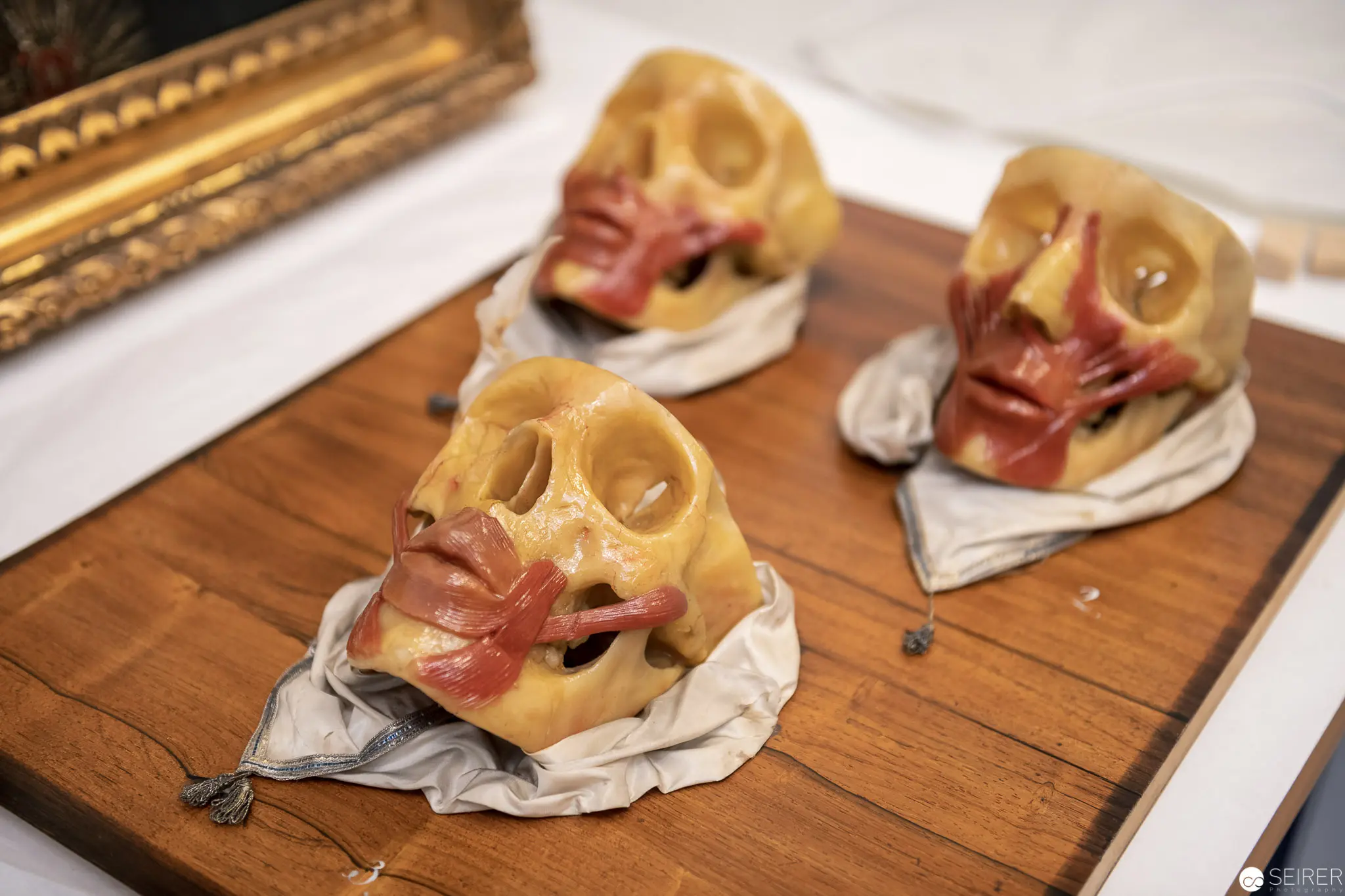 Anatomical Skull Models on Wooden Surface with Detailed Musculature Three anatomical skull models positioned on a wooden surface, each resting on a crumpled white cloth. The skulls are rendered in a pale yellow tone with detailed red-tinted muscular features, displaying intricate anatomical details of cranial and facial structures. An ornate gold-framed artwork is partially visible in the background, suggesting a scholarly or medical context.
 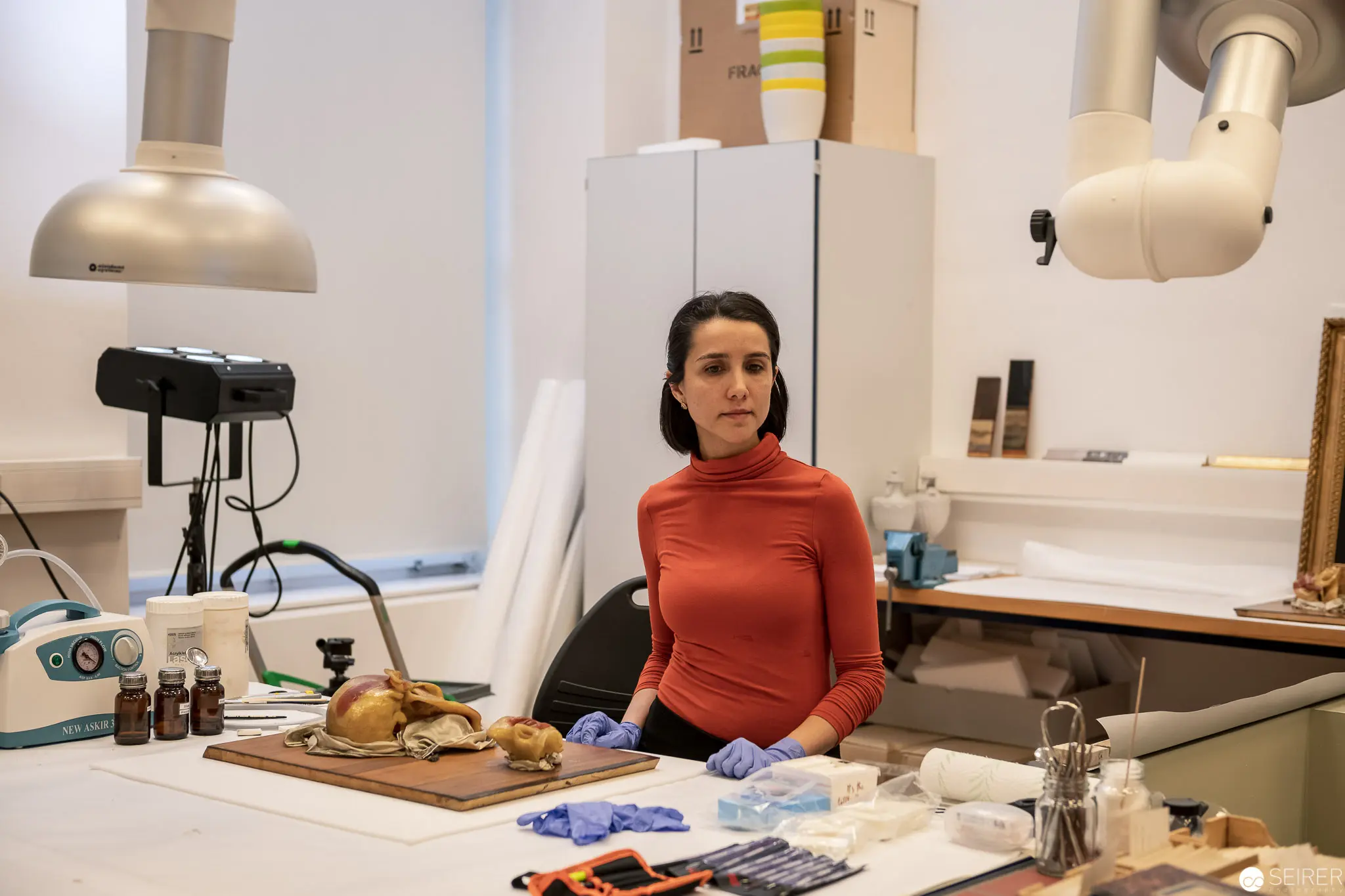 Scientific Laboratory Setting with Researcher in Red Turtleneck A forensic or medical research workspace with precise instrumental arrangement, featuring a researcher in a rust-colored turtleneck seated at a laboratory workstation. Metallic ventilation equipment, scientific apparatus, and experimental materials populate the sterile white interior, suggesting a controlled investigative environment with methodical spatial organization. Blue protective gloves and various technical instruments indicate ongoing specialized research or analytical procedures.
 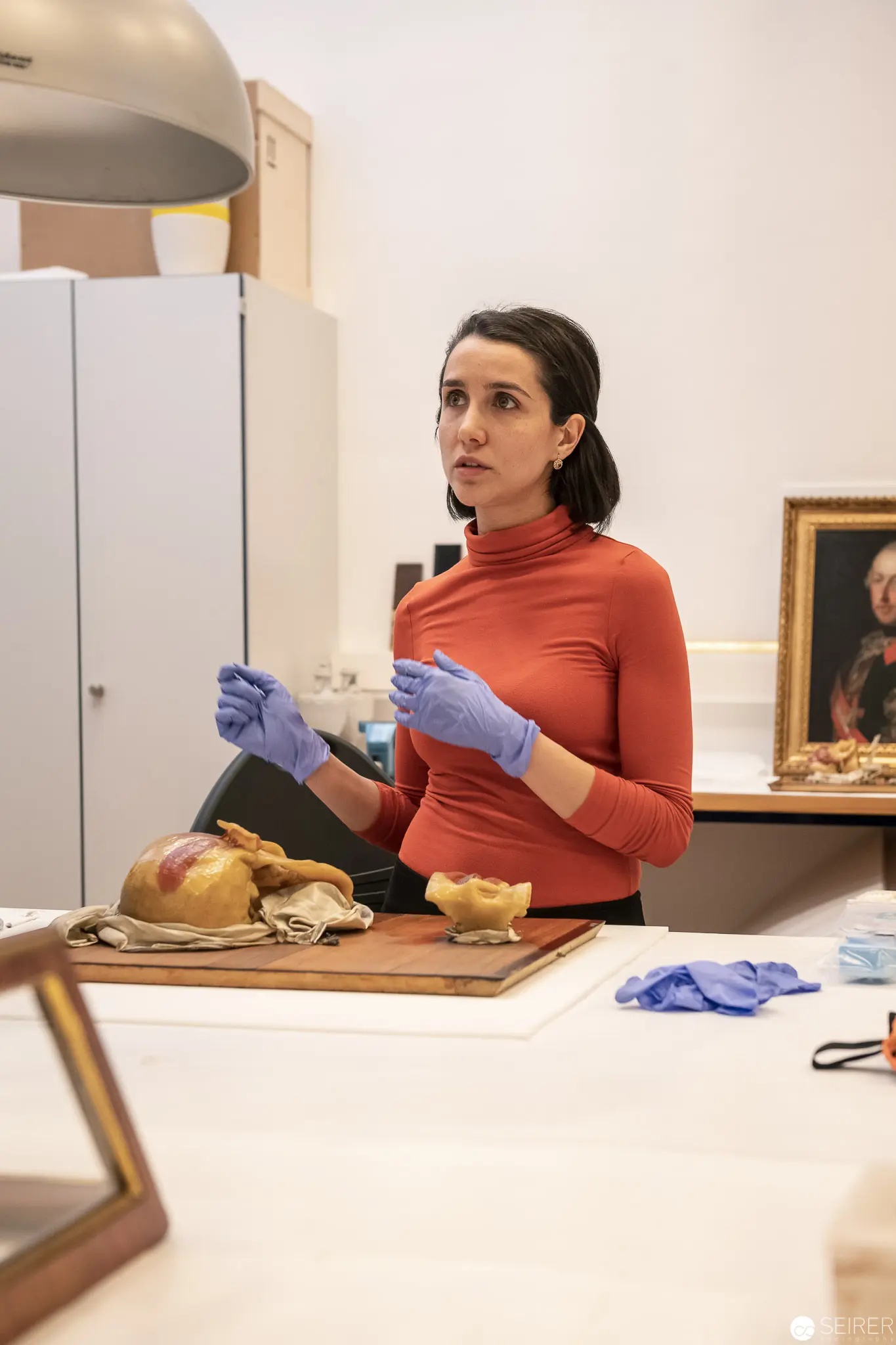 Forensic Scientist in Coral Turtleneck Examines Archaeological Specimens A forensic researcher wearing a coral-colored turtleneck and blue protective gloves meticulously analyzes archaeological artifacts arranged on a wooden surface. The image depicts a scientific workspace with carefully positioned objects, framed artwork in the background, and precise lighting that illuminates the analytical environment. The subject's concentrated posture suggests methodical investigation of historical materials.
 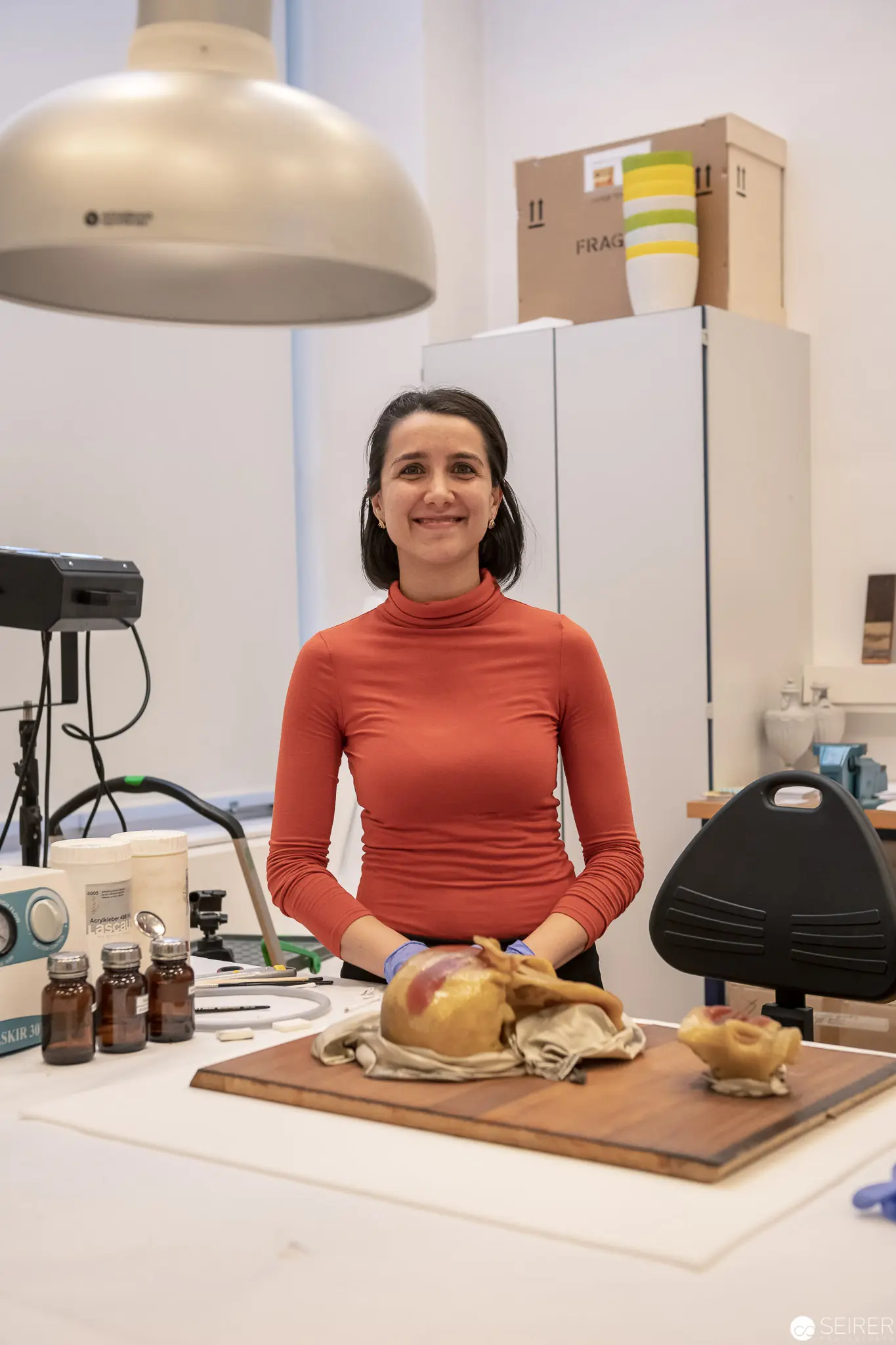 Woman in Coral Sweater Preparing Food in Research or Culinary Laboratory Setting A woman wearing a coral-colored turtleneck stands in a clean, white interior workspace surrounded by scientific and culinary equipment. She is positioned behind a wooden cutting board with various ingredients, with laboratory glassware, containers, and overhead lighting visible, suggesting a professional research or experimental food preparation environment. The composition emphasizes precise spatial arrangement and methodical workspace organization.
 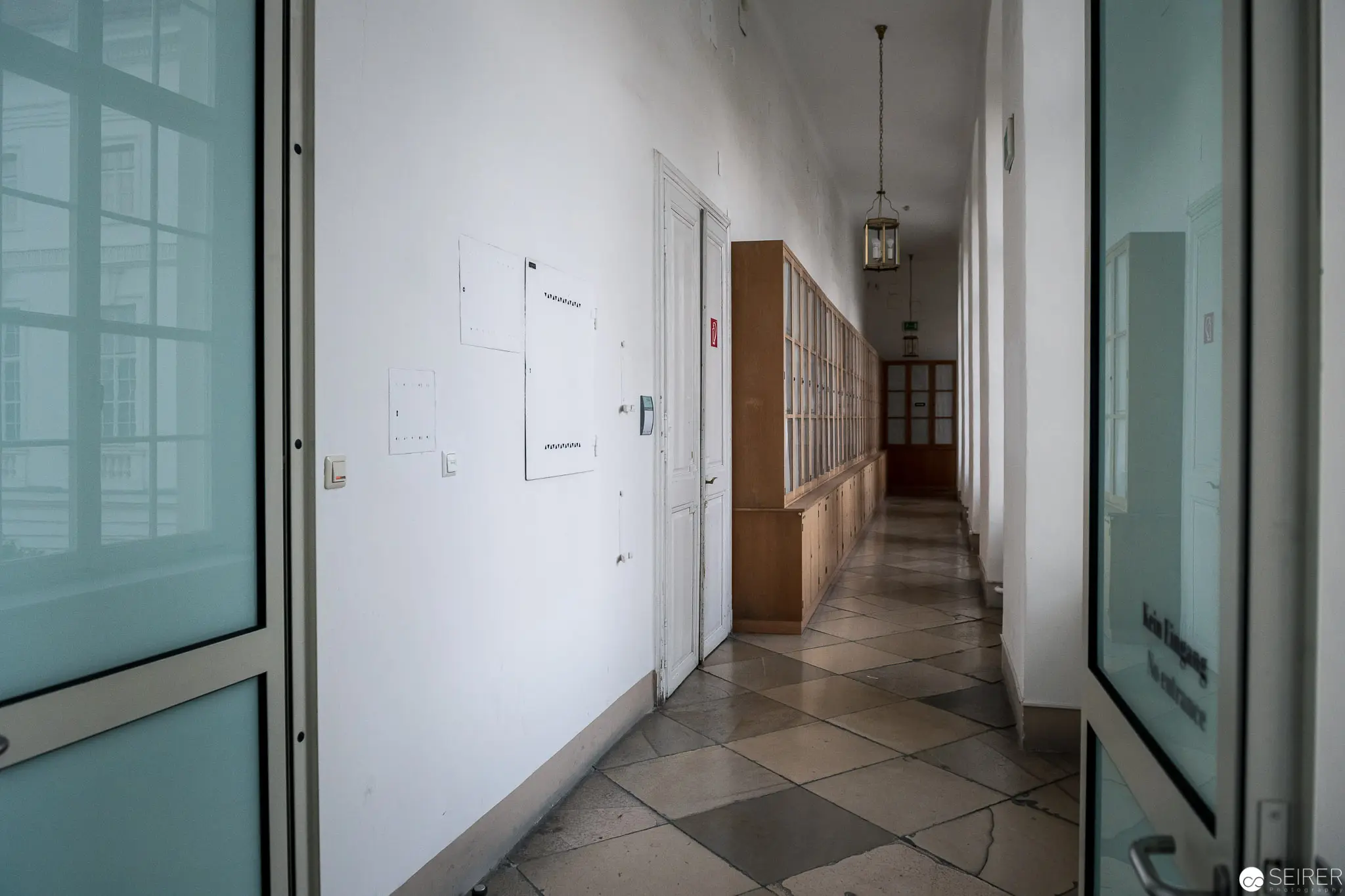 Institutional Corridor with Tiled Flooring and Glass Partition Doors Institutional interior documenting a longitudinal hallway with white walls, tiled diagonal floor pattern, and translucent blue-green glass partition doors. The corridor extends through architectural space, featuring wooden paneling along one wall, suspended overhead lighting, and multiple closed white doors, suggesting an administrative or educational setting with a modernist architectural aesthetic.
 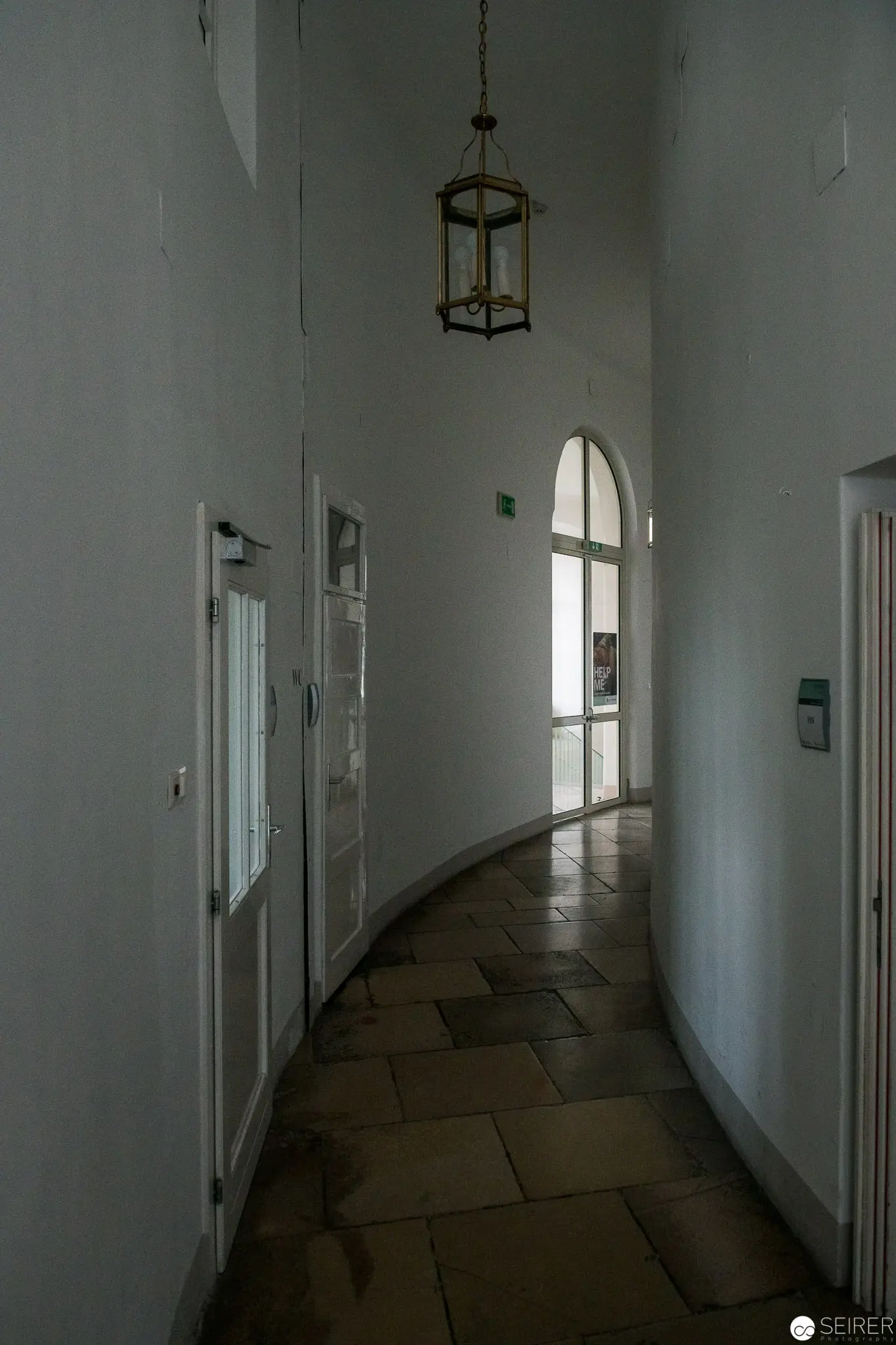 Arched Window and Curved Corridor in Minimalist Architectural Interior Architectural interior featuring a curved stone-tiled corridor with white walls and a suspended lantern-style light fixture. An arched window at the end of the passageway allows soft light to illuminate the space, creating a play of shadows and highlighting the geometric lines and subtle architectural details of the interior corridor. Doorways are visible along the curved wall, suggesting an institutional or historic building design.
 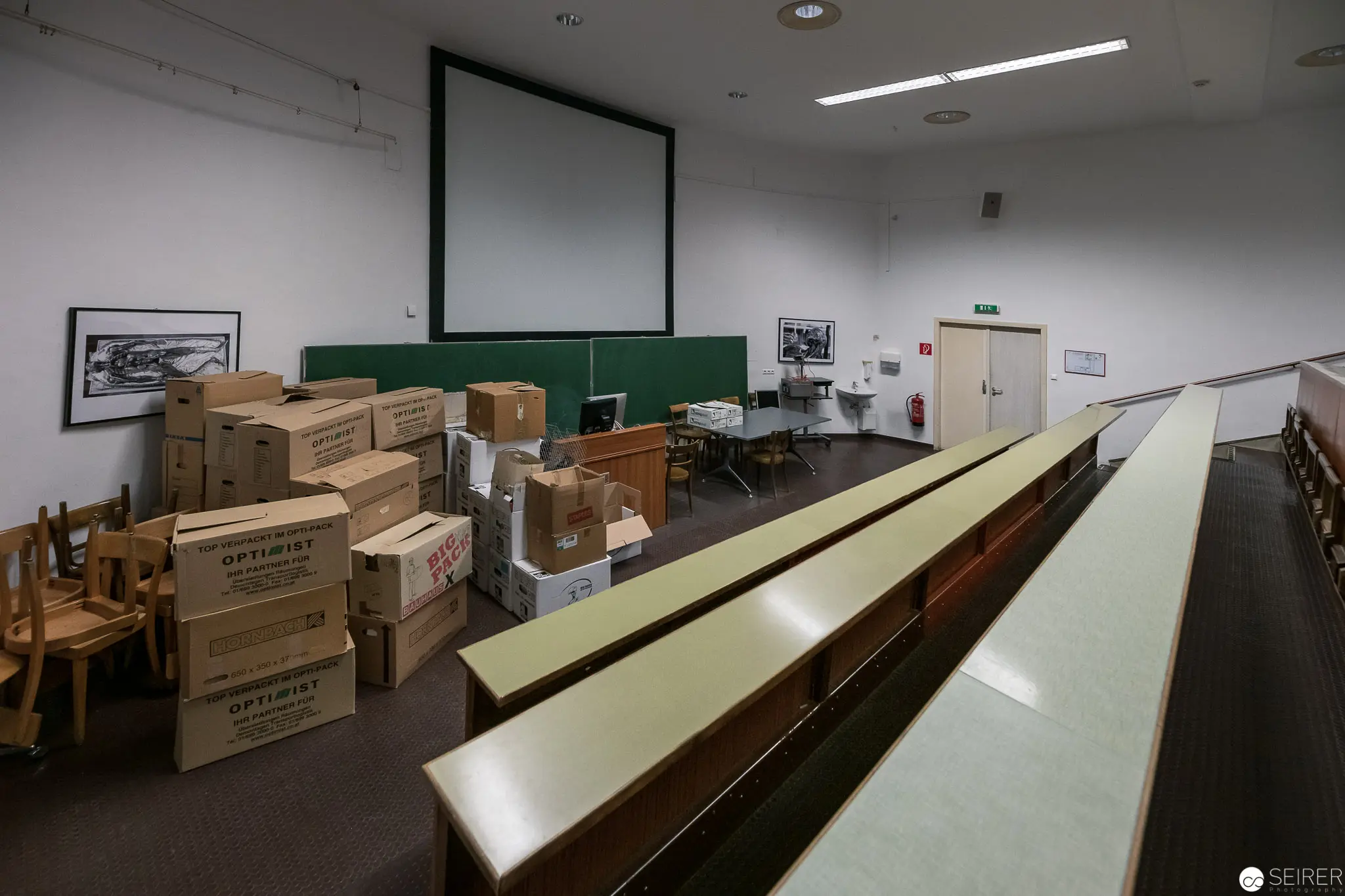 University Storage Room: Cardboard Boxes and Classroom Furniture in Transitional Space Institutional interior depicting a cluttered room with stacked cardboard moving boxes, wooden chairs, and minimalist furnishings. Sparse architectural elements include a green chalkboard, suspended projection screen, and neutral white walls, suggesting an academic or administrative setting in a state of relocation or reorganization. Fluorescent lighting and systematic spatial arrangement emphasize a bureaucratic, utilitarian environment.
 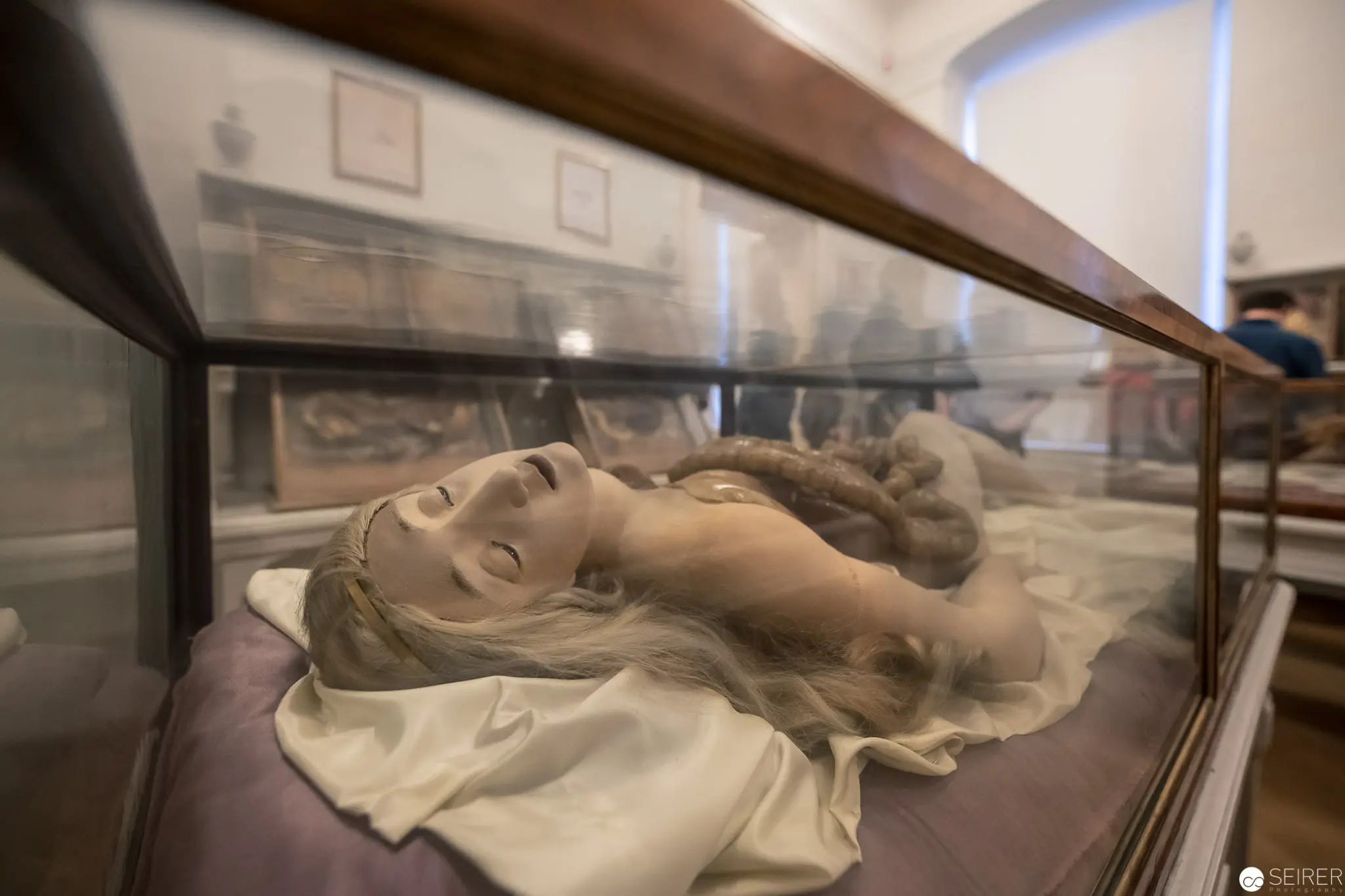 Marble Sculpture of Reclining Female Figure in Museum Display Case Delicate marble sculpture of a female figure lying recumbent, rendered with exquisite naturalistic detail and draped in soft fabric. The sculpture is carefully displayed within a glass-fronted exhibit case, positioned to highlight its serene facial expression and flowing form. Soft ambient lighting illuminates the pale marble, creating subtle shadows and emphasizing the sculptural nuances of the reclining form.
 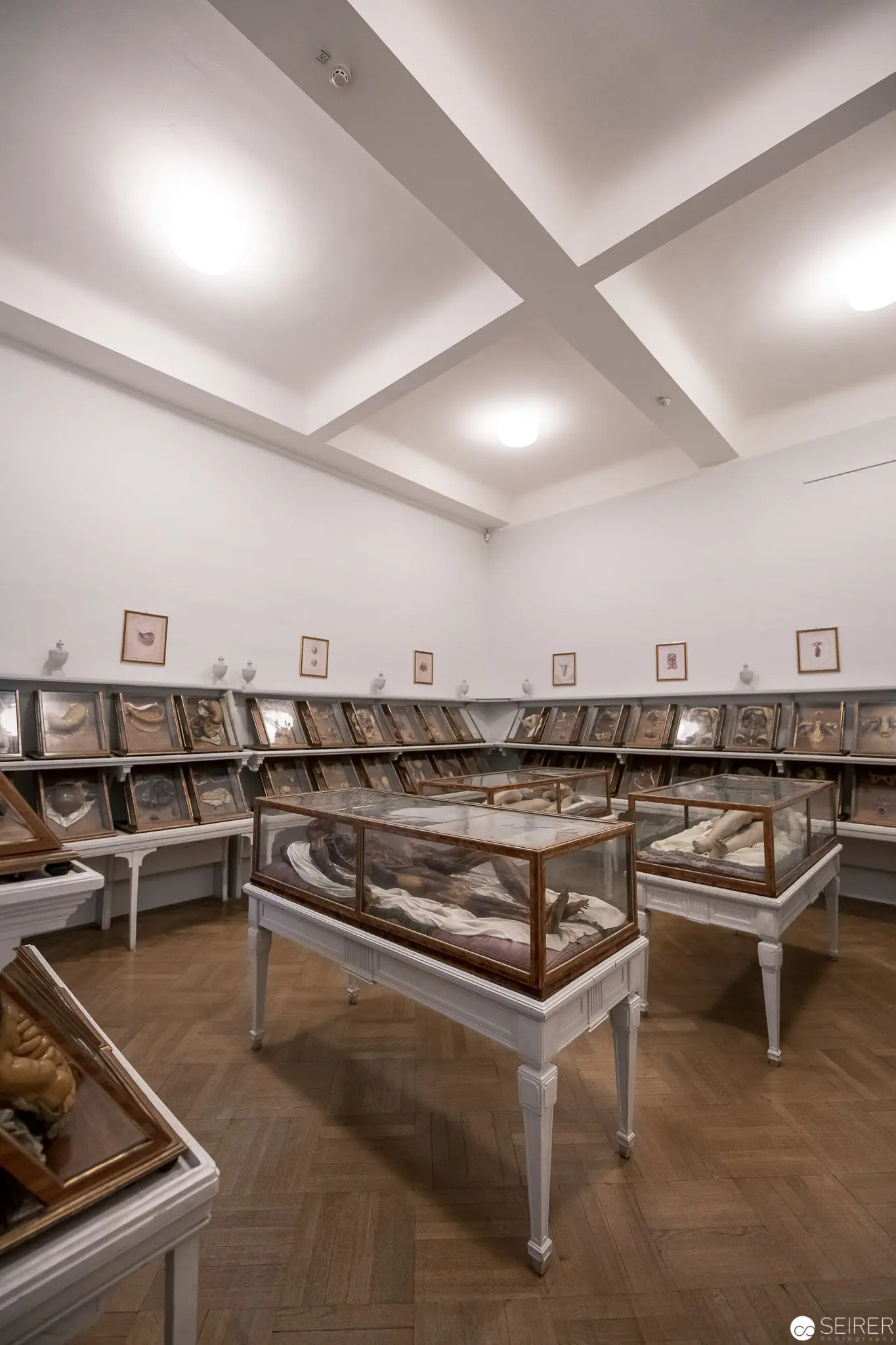 Museum Display of Framed Artifacts in Systematic Archival Storage Arrangement Pristine white-walled museum gallery with coffered ceiling and recessed lighting, featuring multiple display cases arranged in systematic rows. Wooden parquet flooring provides geometric counterpoint to the white-painted display tables, which house carefully positioned framed artifacts along angled display surfaces. Uniform illumination and precise architectural composition emphasize the methodical preservation and scholarly presentation of historical materials.
 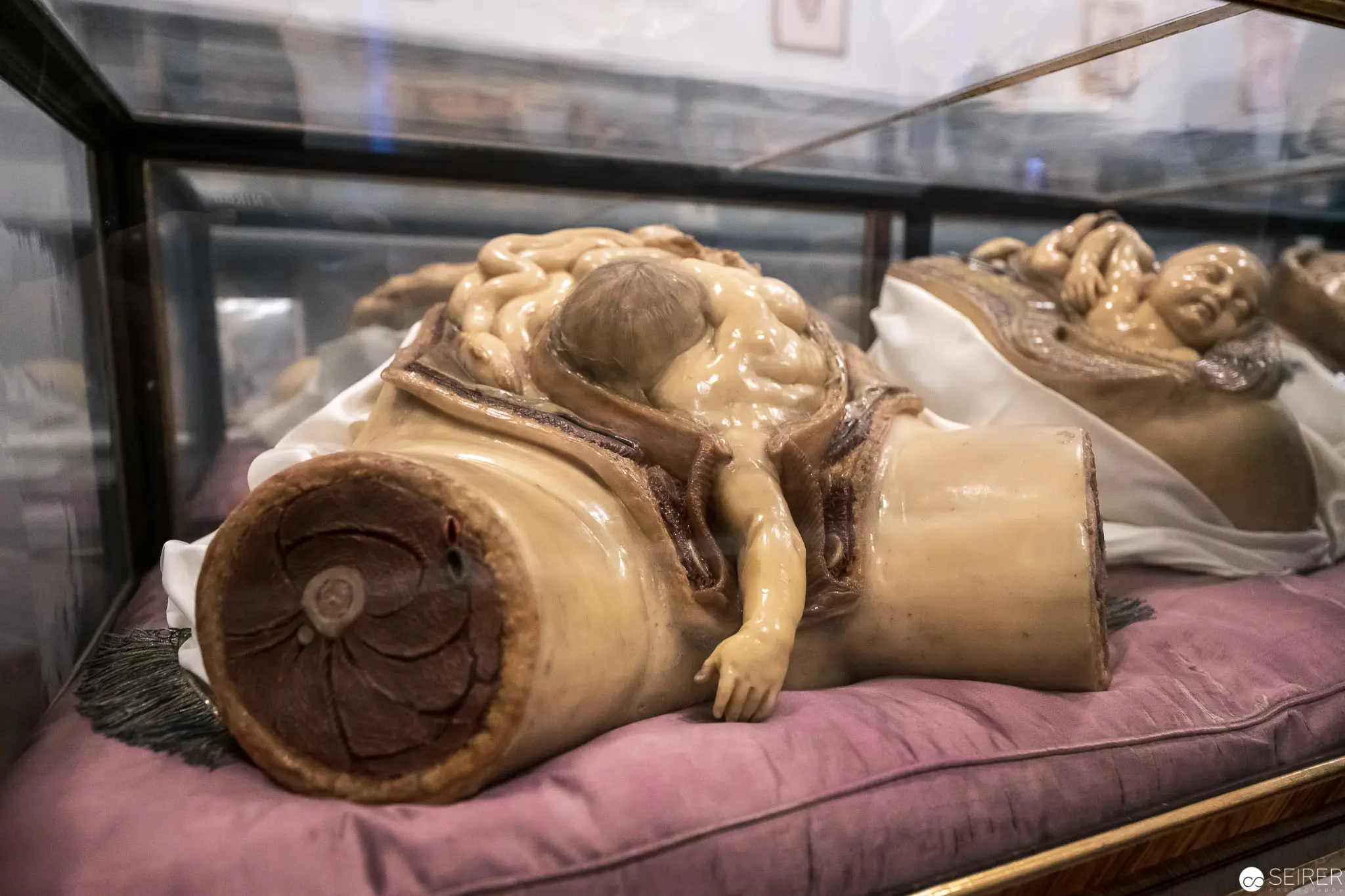 Anatomical Wax Model of Severed Body Part on Pink Cushion in Display Case Detailed anatomical wax sculpture depicting a truncated bodily form with exposed internal structures, positioned reclining on a soft pink fabric within a glass display enclosure. The specimen exhibits a naturalistic rendering of organic textures and biological cross-sectioning, highlighting the meticulous craftsmanship of medical or scientific visualization techniques. Pale, translucent coloration and carefully modeled details suggest a specimen from a historical medical or educational collection.
 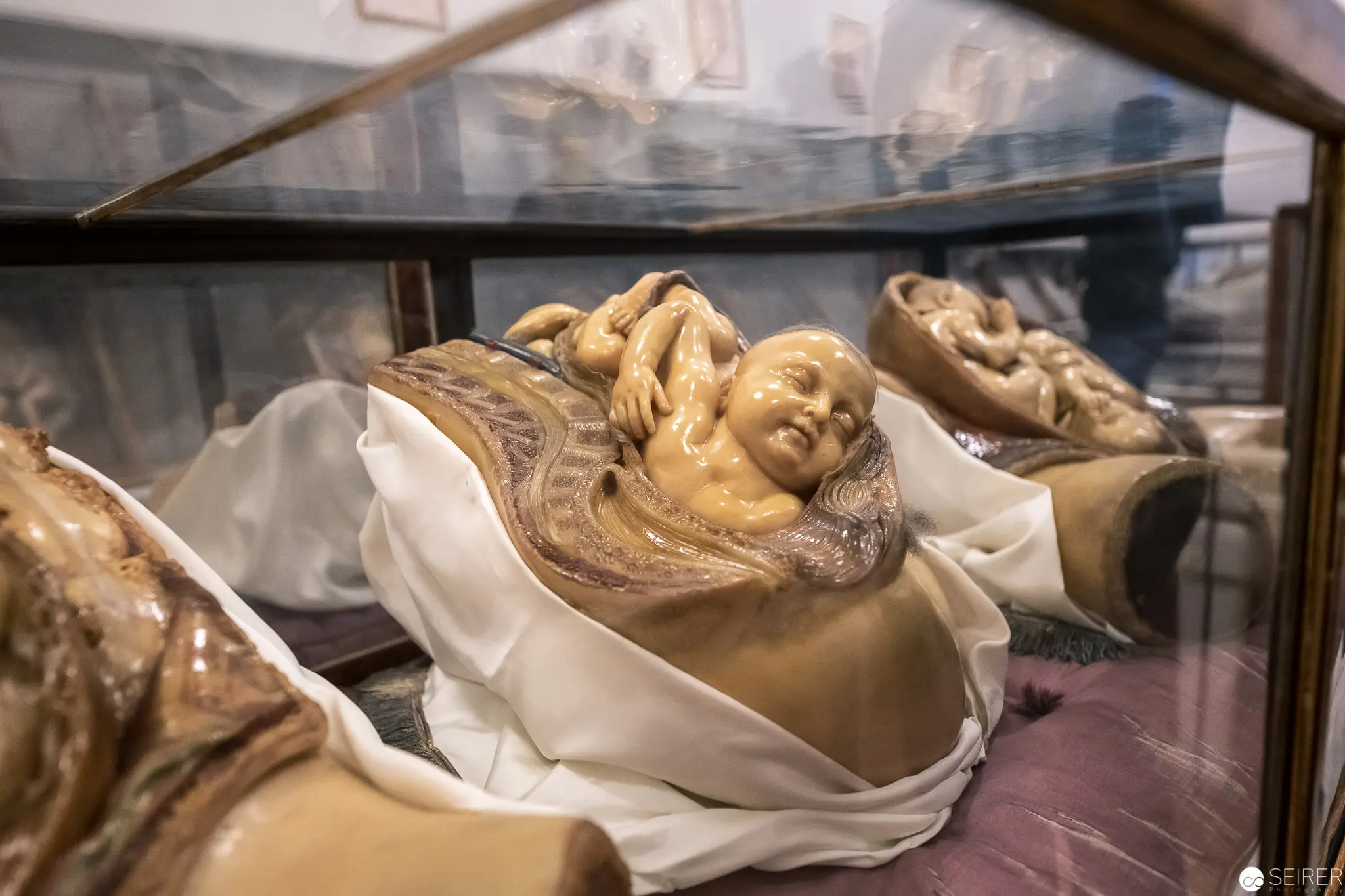 Wax Sculpture of Swaddled Infant in Museum Display Case Ornate ceramic or wax sculpture depicting a reclining infant, draped in white fabric and positioned within a glass museum vitrine. The sculpture exhibits a warm, golden-yellow tone with intricate modelling of the infant's form, creating a sense of delicate realism against the soft white textile backdrop. Partially visible are additional sculptural elements surrounding the central figure, suggesting part of a larger curatorial display.
 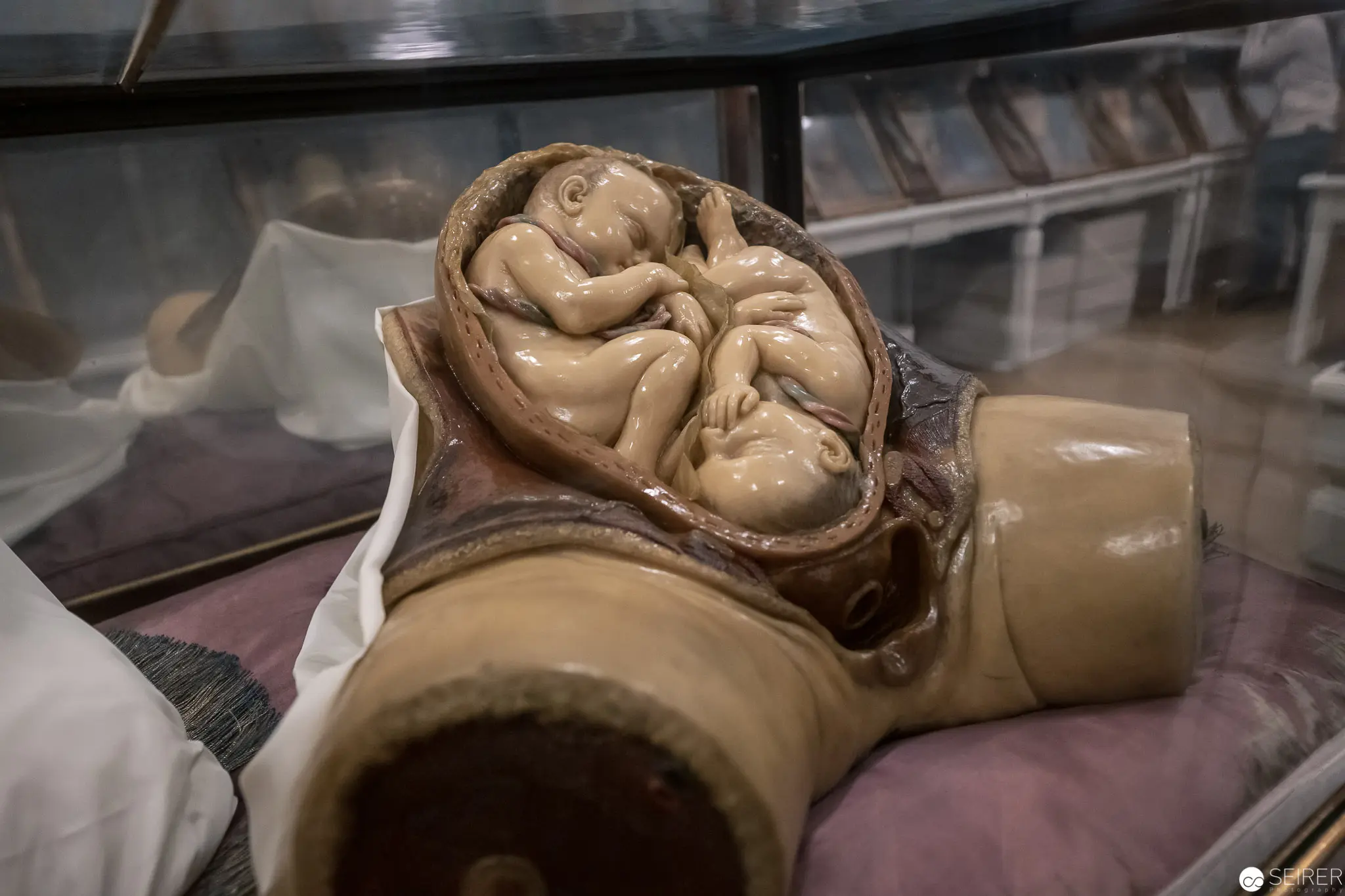 Anatomical Model of Fetal Development in Curled Prenatal Position Detailed wax anatomical model depicting a human fetus in utero, rendered in muted beige tones, tightly curled in a characteristic intrauterine positioning. The sculptural representation presents a hyperrealistic rendering of prenatal development, displayed within a museum or medical exhibition display case with carefully controlled ambient lighting and archival preservation techniques. Model demonstrates precise anatomical details of early human gestational formation.
 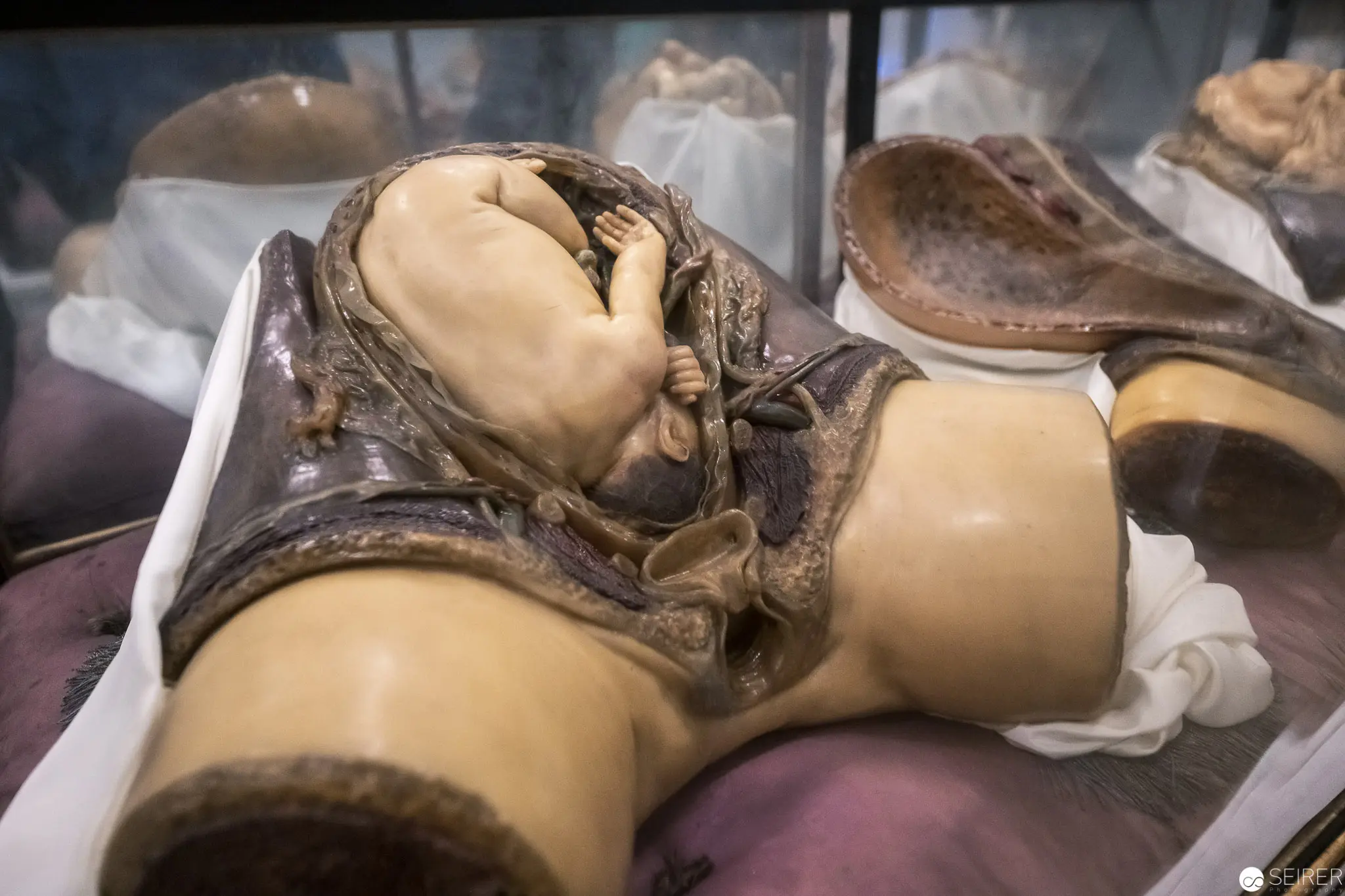 Anatomical Specimen of Fetal Development in Medical Museum Display Pale anatomical model of a fetus positioned within a darkened protective display case, rendered in cream and bronze tones with intricate detailed rendering of developmental stages. The specimen reveals complex biological morphology, carefully mounted on a cloth-covered surface with additional similar models visible in the peripheral background, suggesting a scientific or medical educational context. Precise museum-grade preservation techniques emphasize the specimen's educational and research significance.
 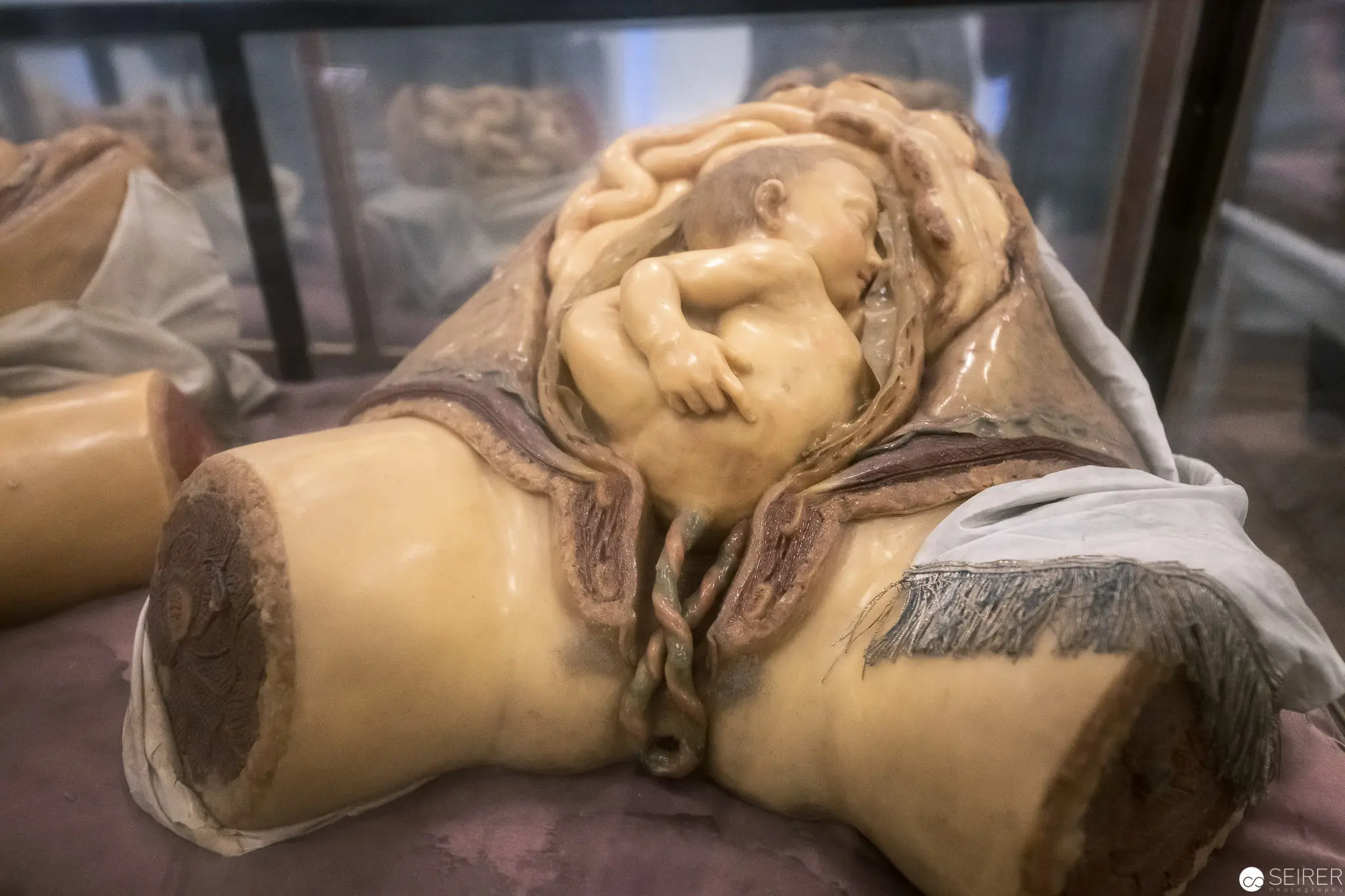 Wax Anatomical Model of Sleeping Figure with Detailed Physiological Representation Pale wax anatomical sculpture depicting a reclining human form with intricately modeled surface revealing internal muscular and tissue structures. The figure appears to be sleeping, with head resting on a cylindrical support, draped in muted fabric with textured edges. Displayed in a museum or medical exhibition setting behind glass, the model demonstrates remarkable sculptural detail and scientific precision.
 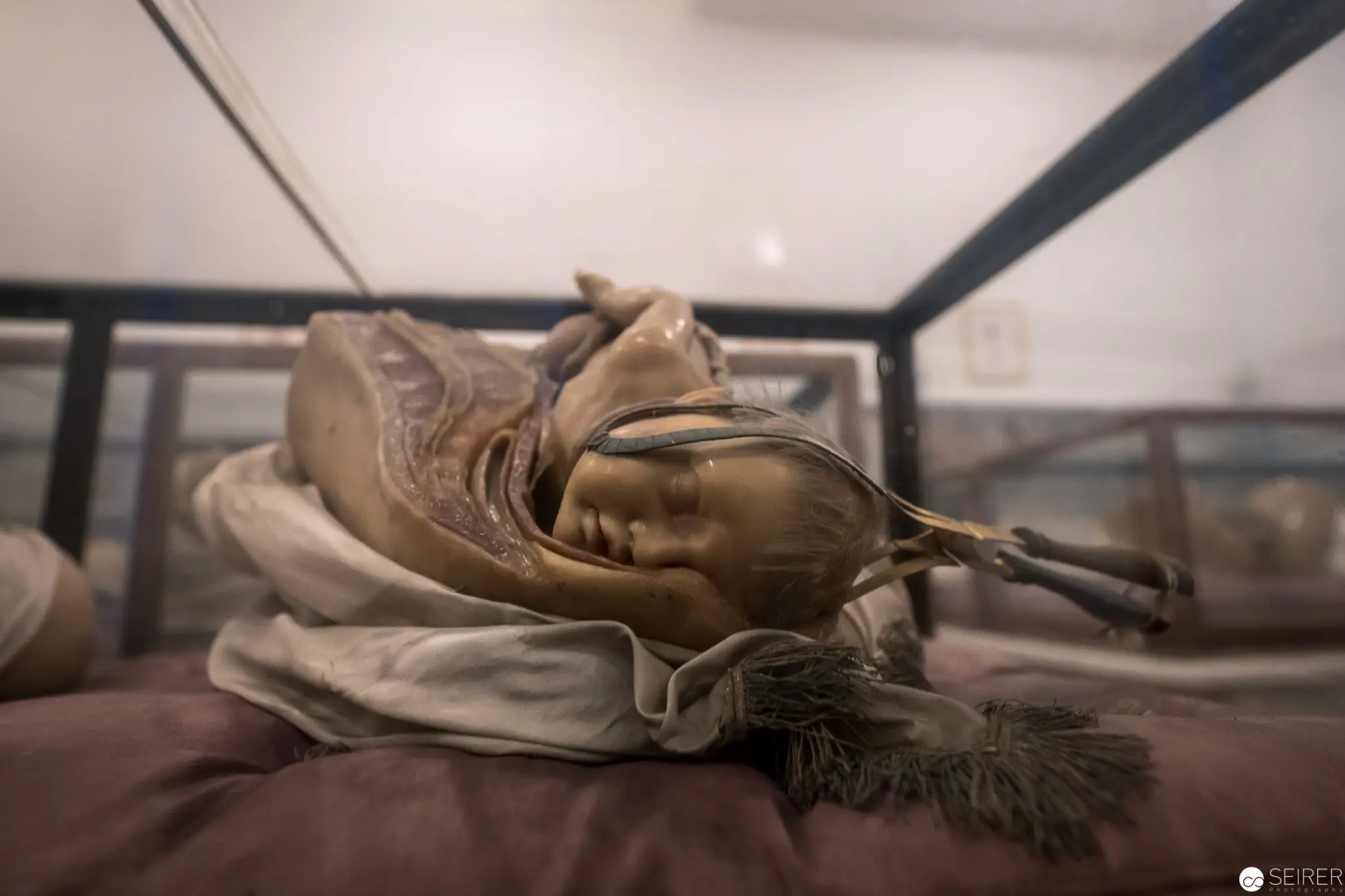 Ceramic Reclining Figure in Museum Display with Soft Textile Drapery Delicate ceramic sculpture of a reclining form, positioned on a soft burgundy textile with a fringed edge, enclosed within a glass display case with dark framing. The sculpture appears to be a stylized human figure, rendered with subtle organic contours and a muted, pale glazed finish, conveying a sense of repose and introspective stillness. Soft, diffused lighting emphasizes the sculpture's nuanced textures and gentle curves.
 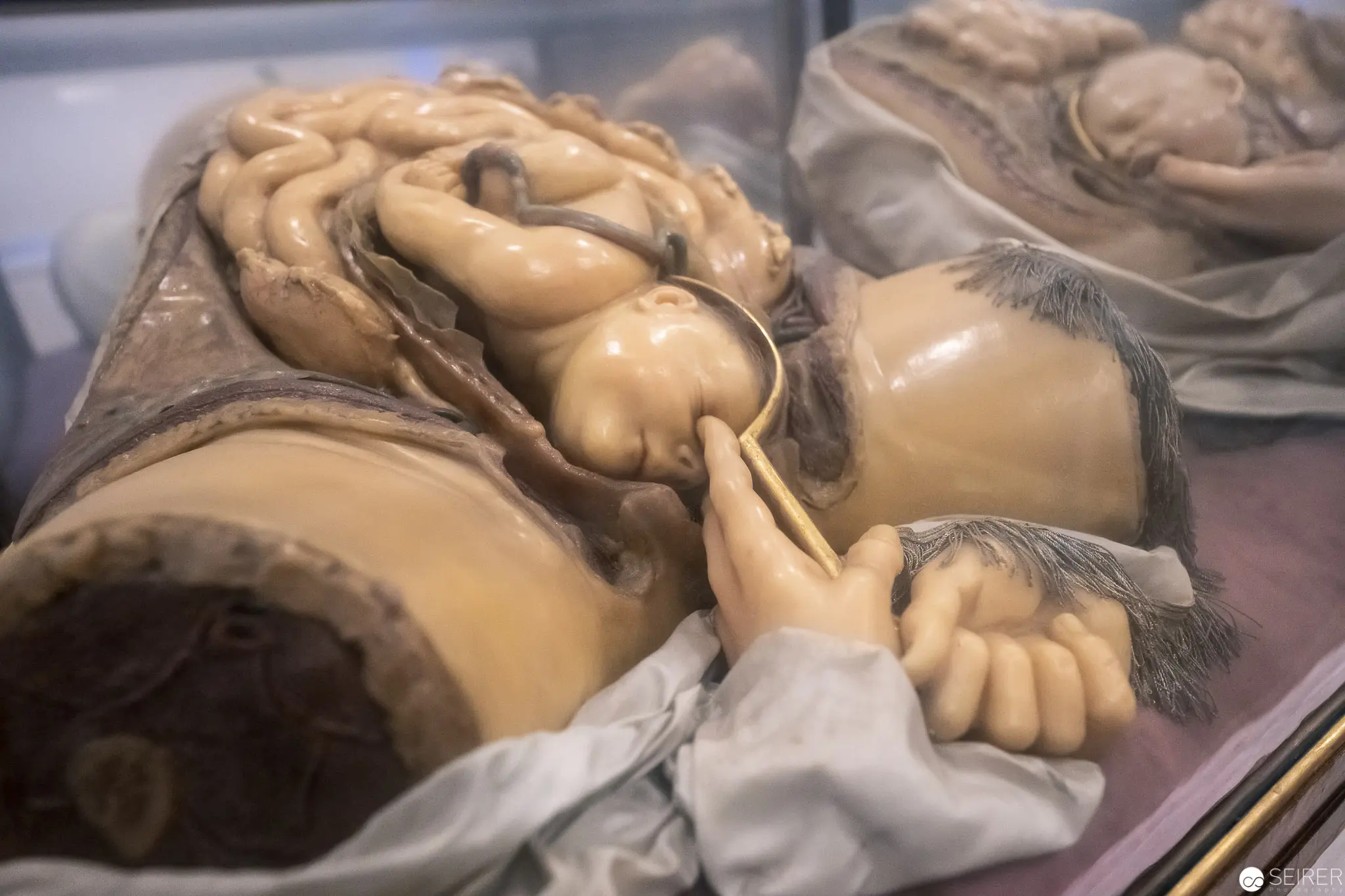 Anatomical Specimen of Developing Fetus in Medical Preservation Display Wax or silicone model depicting a human fetal form in utero, meticulously crafted to demonstrate intricate developmental stages. The specimen reveals complex neurological and physiological details, positioned within a clinical display case with soft lighting emphasizing its pale, translucent anatomical features. Delicate textural rendering highlights the specimen's organic contours and biological complexity.
 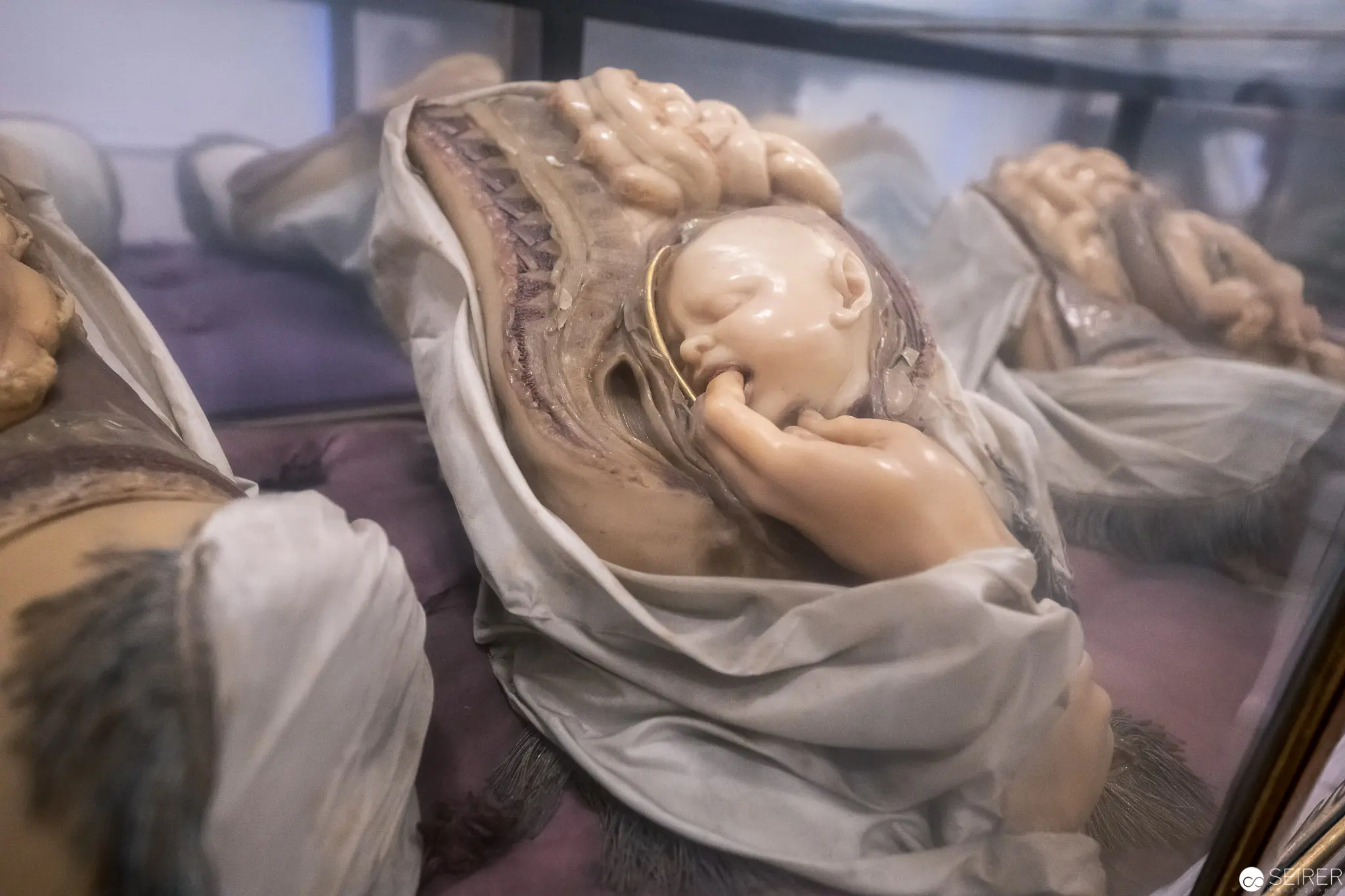 Anatomical Specimen of Fetal Development in Detailed Medical Model Pale wax or sculptural model of a human fetus, curled in utero position, enveloped in translucent fabric-like material. The anatomical specimen displays intricate physiological details, revealing the delicate form and developmental characteristics of prenatal human anatomy within a clinical preservation display. Soft lighting emphasizes the model's nuanced sculptural qualities and biological precision.
 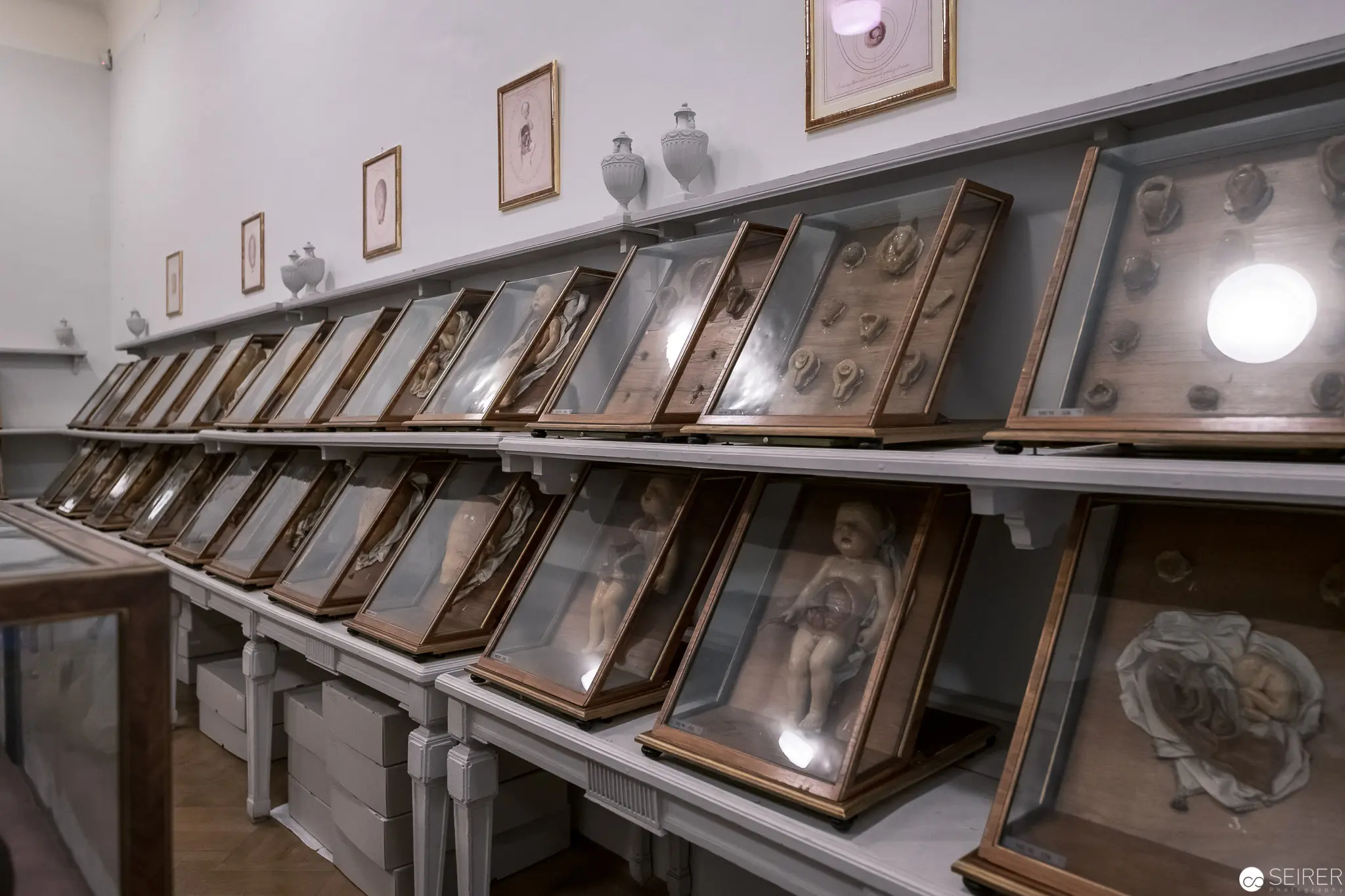 Scientific Archive Storage: Systematic Display of Anatomical Specimens in Museum Cases Methodical archival display featuring multiple tilted glass-fronted cases mounted on white tables, housing an extensive collection of preserved anatomical specimens. Precise grid-like arrangement of dark-framed display cases reveals carefully positioned scientific samples, creating a systematic visual taxonomy of biological research materials with uniform lighting and clinical presentation. Decorative urns and framed artworks punctuate the white wall above the specimen collection.
 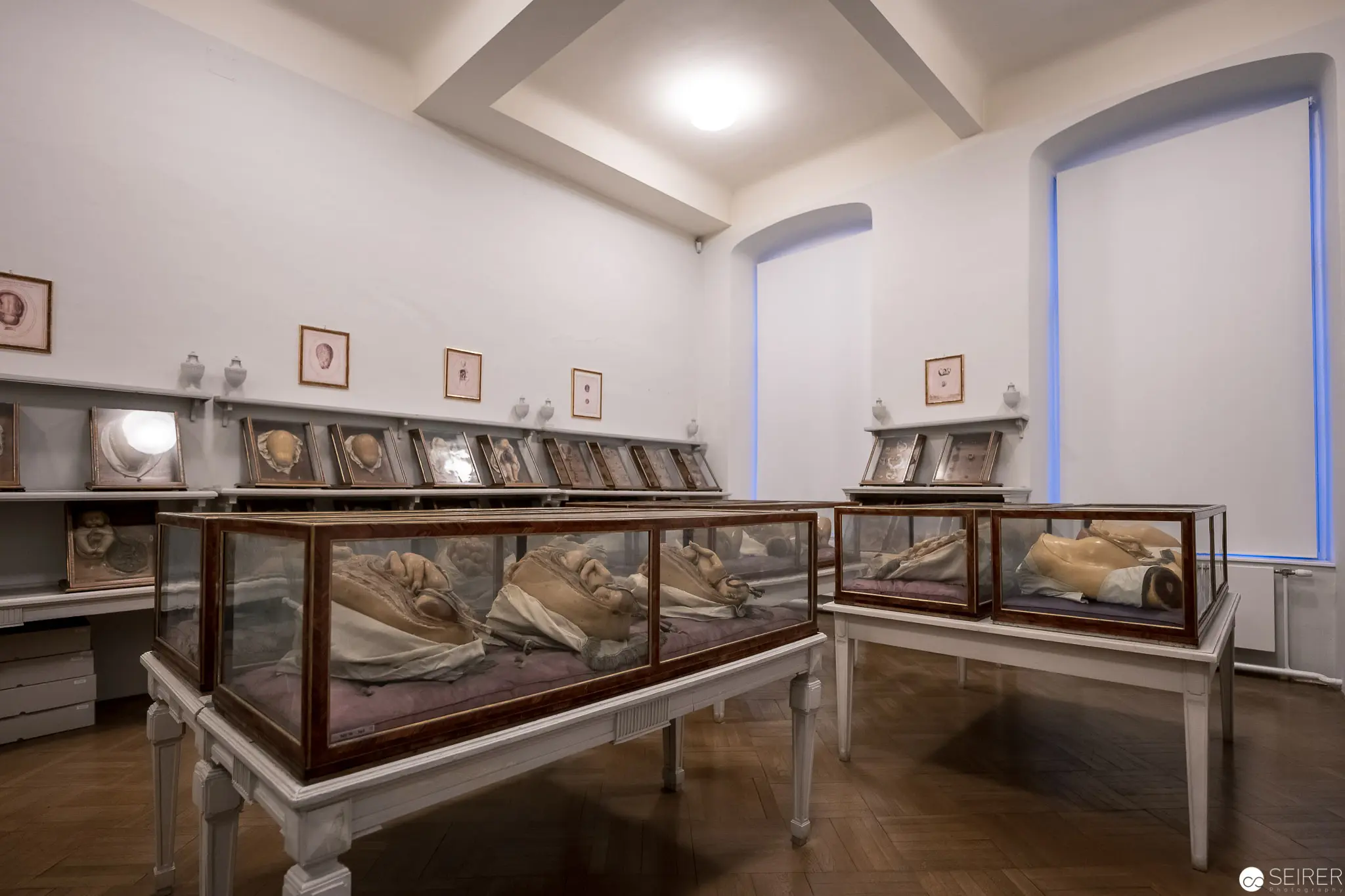 Museum Display of Historical Anatomical Specimens in Glass Cases Meticulously arranged glass-enclosed display cases house carefully preserved anatomical specimens, positioned on white-painted tables within a pristine white-walled gallery space. Mounted framed illustrations line the walls above the specimens, creating a scholarly archival atmosphere with precise herringbone wooden flooring and soft overhead illumination that highlights the delicate preservation of the scientific artifacts.
 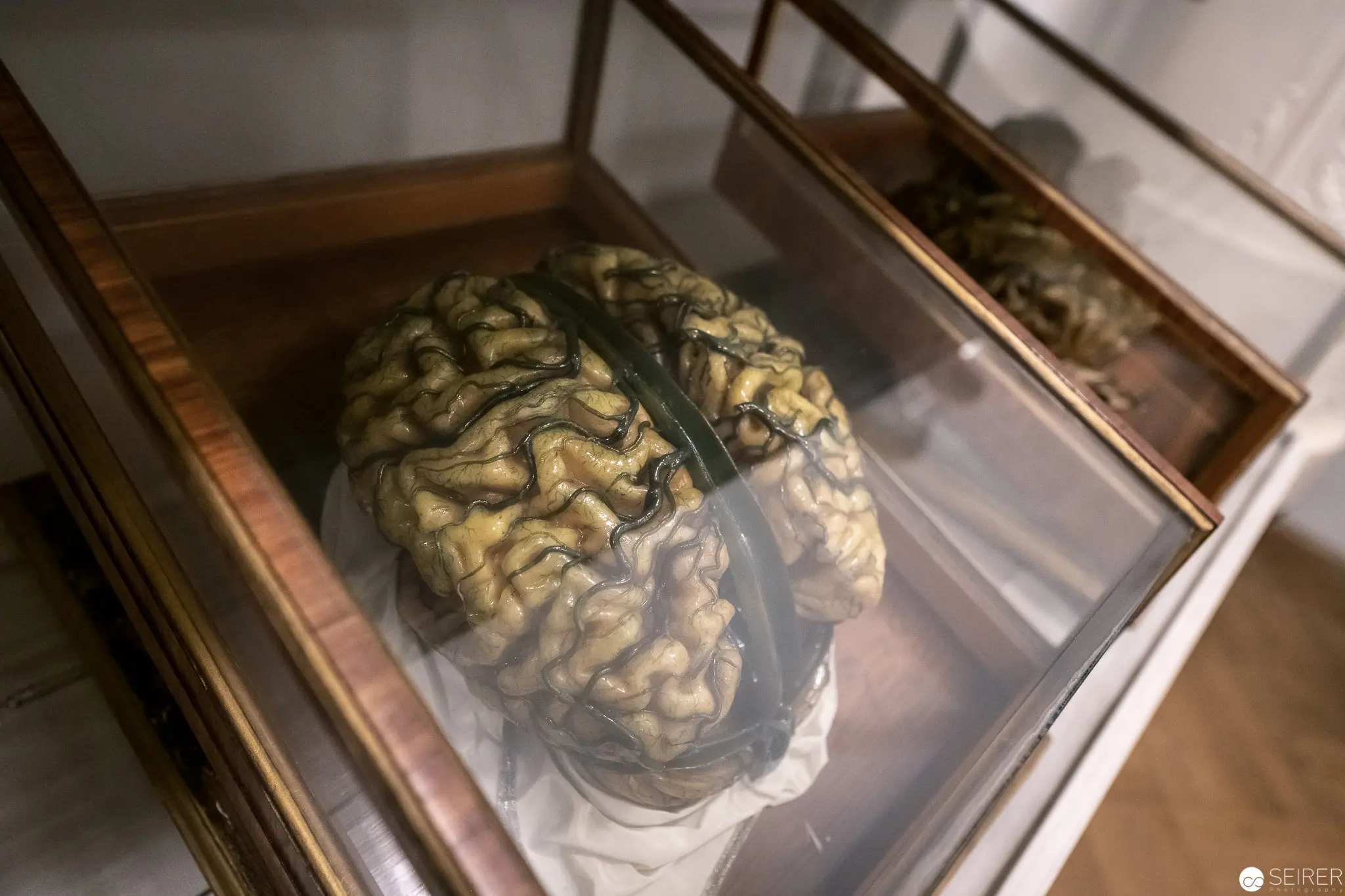 Preserved Human Brain in Glass Display Case: Scientific Specimen Archival Biological specimen of a human brain, yellowed and textured with distinct cerebral cortex folds, carefully positioned within a reflective glass-sided display case. The organ rests on what appears to be a white cloth or padding, creating a clinical yet reverent presentation that suggests scientific or medical preservation and study. Soft ambient lighting emphasizes the organic contours and intricate surface details of the neurological specimen.
 You might also like
- Open Studio Days - Vienna Art Week 2019 Blog
- Bücherpräsentation "Künstler!" von Wolfgang Ruppert Blog
- Das war der 12. Diversity Ball 2019 Blog
- Die Liebe ist ein seltsames Spiel - Ganymed in love im Kunsthistorischen Museum Wien Blog
- Der Klang von Hammer und Meißel - die Dombauhütte St. Stephan Blog
- 2019-03-27 Dombauhütte St. Stephan Gallery
- 2019-04-10 Ganymed In Love Gallery