

Commercial & Event Photography in Vienna
I create authentic, high-quality photography that brings your brand, events, and spaces to life. From dynamic corporate events and professional portraits to striking architectural shots, every image tells a clear visual story designed to resonate with your audience.
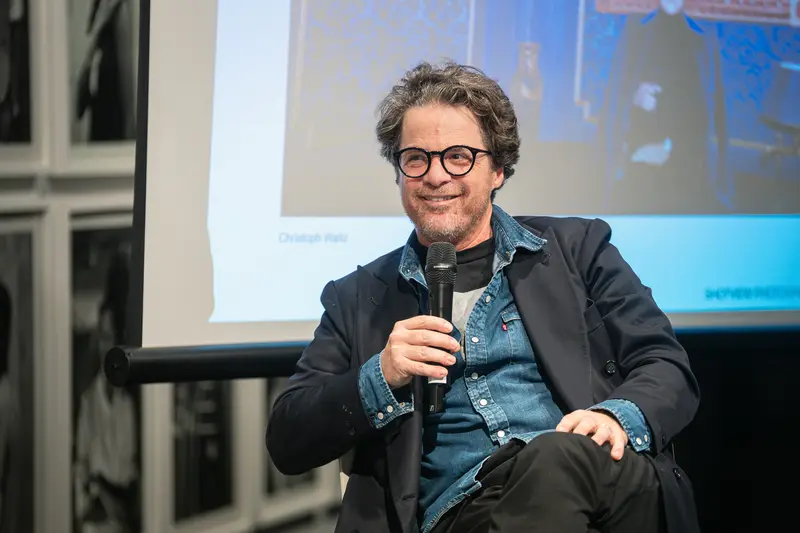 2026-10-16 Foto Arsenal Peter Rigaud
 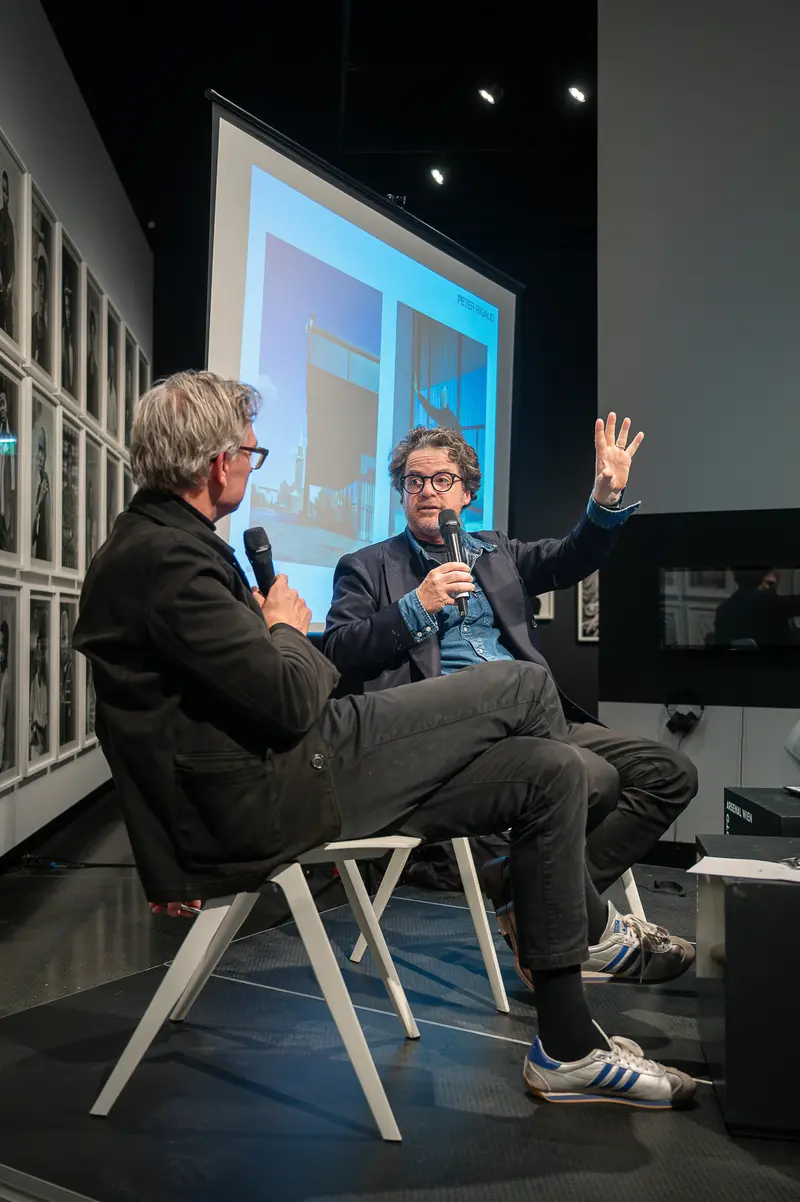 2026-10-16 Foto Arsenal Peter Rigaud
 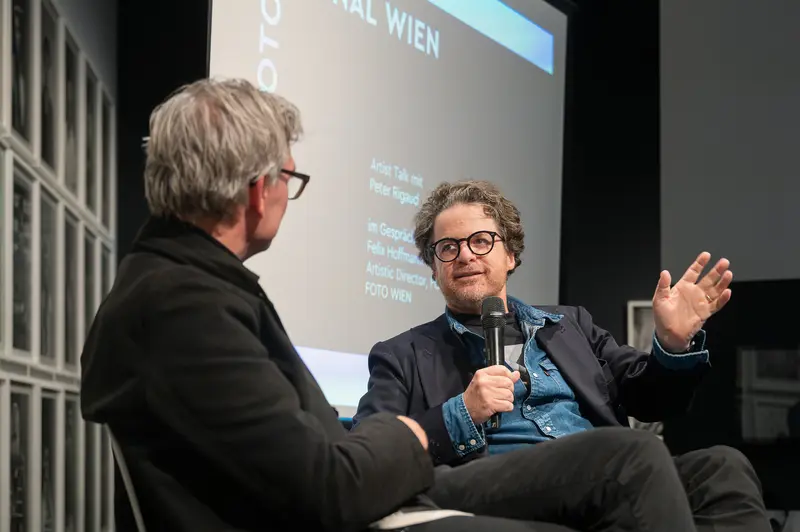 2026-10-16 Foto Arsenal Peter Rigaud
 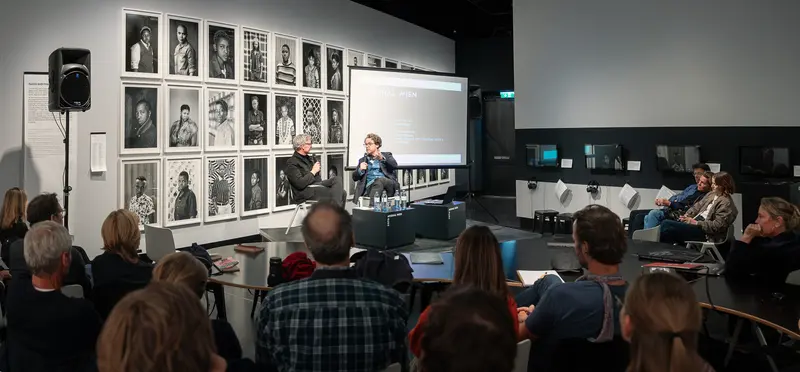 2026-10-16 Foto Arsenal Peter Rigaud
 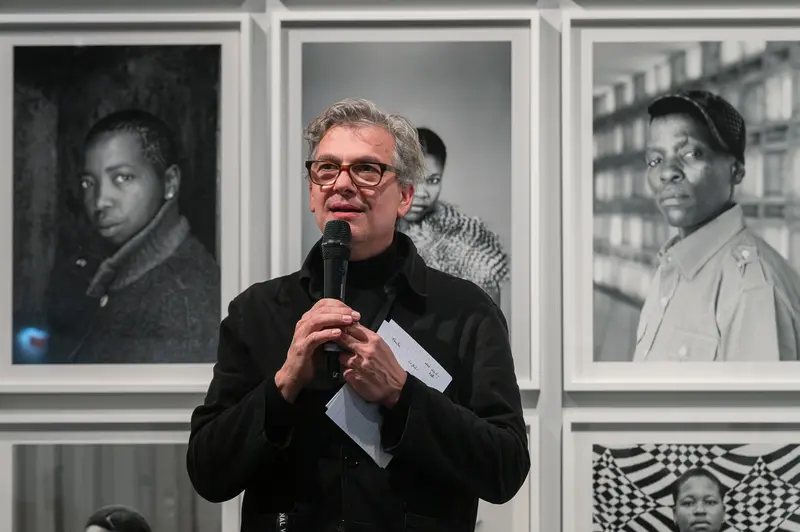 2026-10-16 Foto Arsenal Peter Rigaud
 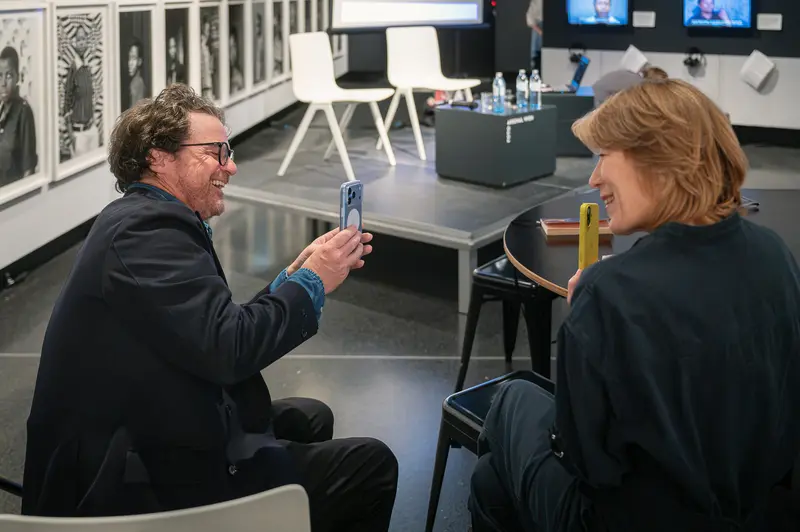 2026-10-16 Foto Arsenal Peter Rigaud
 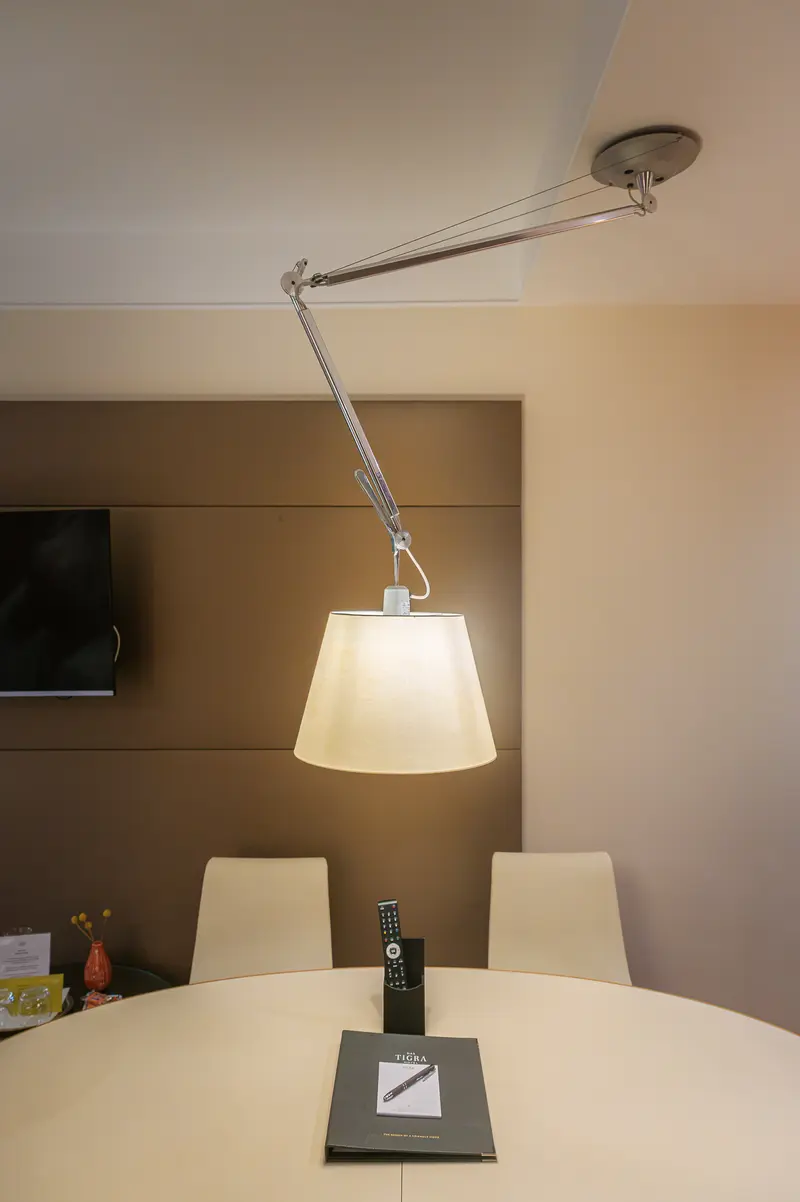 2026-10-14 Das Tigra An articulated ceiling-mounted lamp with a fabric shade hangs over a round table set with a Hotel Das Tigra guest directory and remote control in a room at Hotel Das Tigra, Tiefer Graben 18, Vienna, Austria, in October 2026. Hotel Das Tigra occupies the 16th-century building where Wolfgang Amadeus Mozart lodged in 1762.
 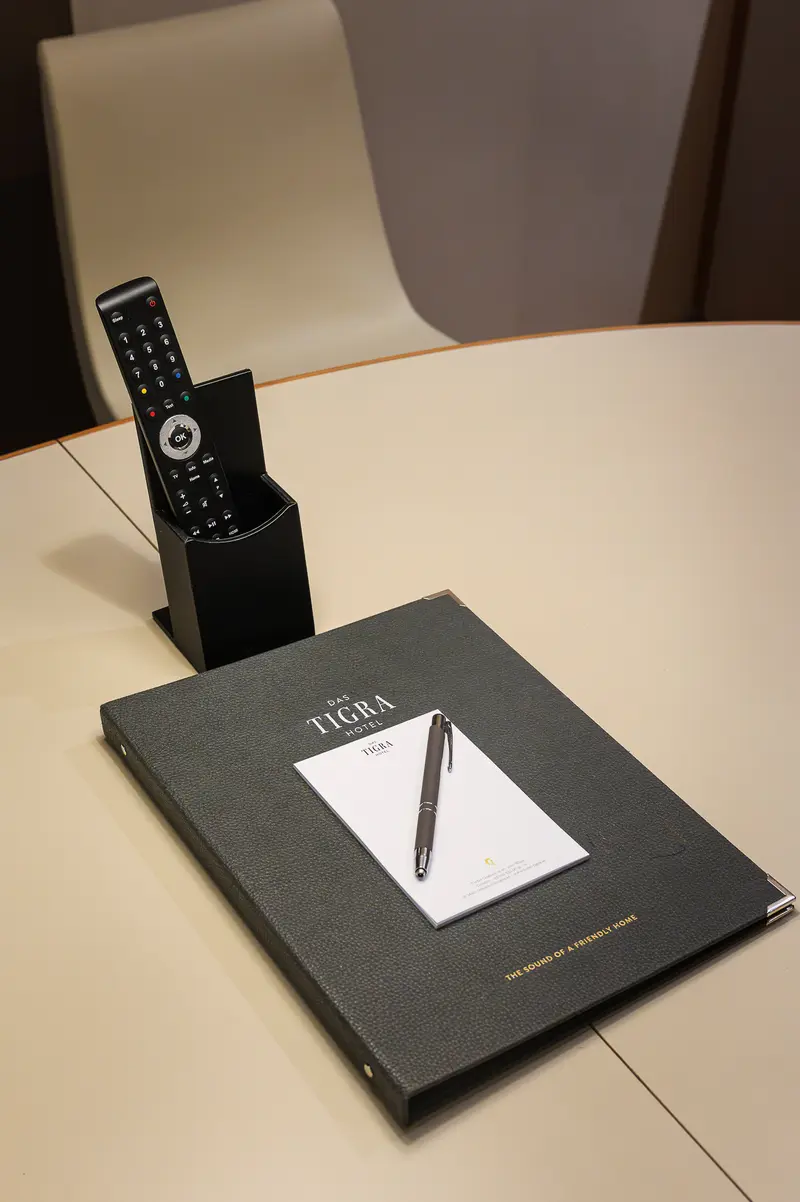 2026-10-14 Das Tigra A grey leather guest directory embossed "Das Tigra Hotel" rests with a branded notepad, pen and TV remote on a cream in-room desk at Hotel Das Tigra, Tiefer Graben 18, Vienna, Austria, in October 2026. The directory cover carries the hotel's motto "The Sound of a Friendly Home" in gold lettering.
 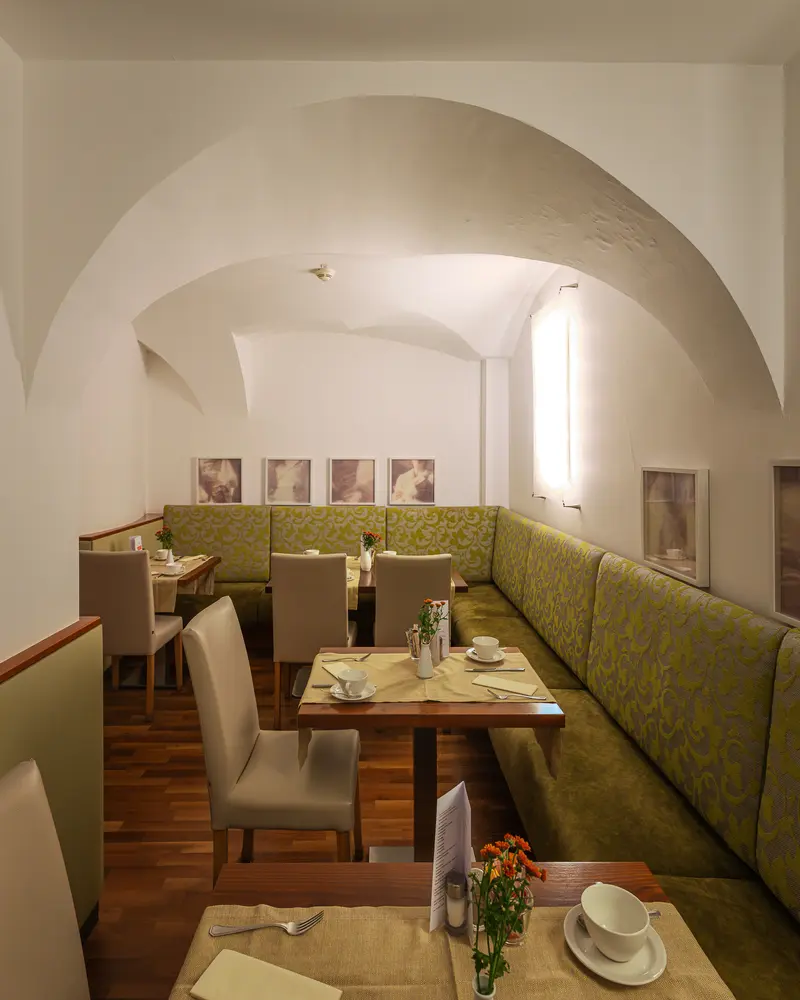 2026-10-14 Das Tigra The vaulted breakfast room at Hotel Das Tigra, Tiefer Graben 18, Vienna, Austria, is set for service with laid tables, coffee cups and a long olive-green damask banquette beneath framed prints. Hotel Das Tigra occupies a 16th-century building where Wolfgang Amadeus Mozart stayed with his father Leopold in 1762.
 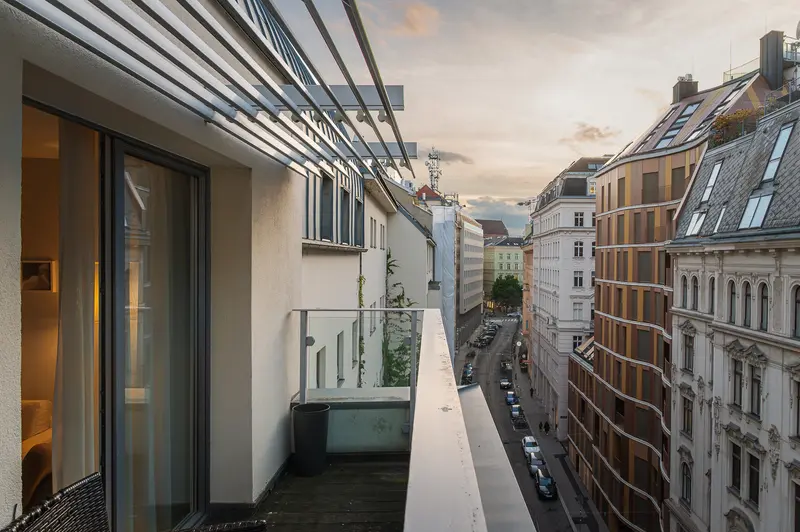 2026-10-14 Das Tigra A private rooftop terrace with sliding glass doors and a pergola at Hotel Das Tigra, Tiefer Graben 18, Vienna, Austria, looks down the street at dusk in October 2026. Hotel Das Tigra occupies the 16th-century building where six-year-old Wolfgang Amadeus Mozart stayed with his father Leopold and sister Nannerl from October to December 1762.
 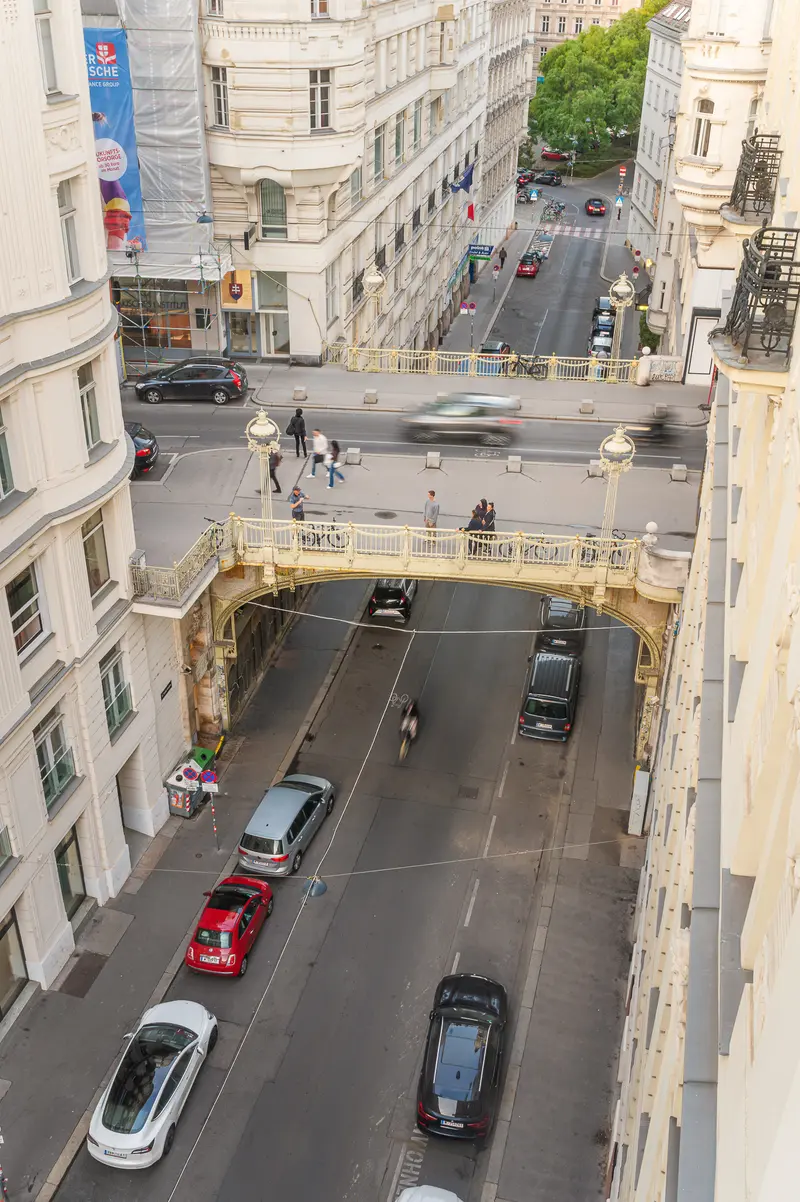 2026-10-14 Das Tigra Pedestrians cross the Jugendstil Hohe Brücke above Tiefer Graben in Vienna's Innere Stadt, viewed from an upper floor of Hotel Das Tigra in October 2026. The iron bridge, built 1903–1904 to designs by Josef Hackhofer, carries Wipplingerstraße over the sunken street where Wolfgang Amadeus Mozart lodged at Tiefer Graben 18 in 1762.
 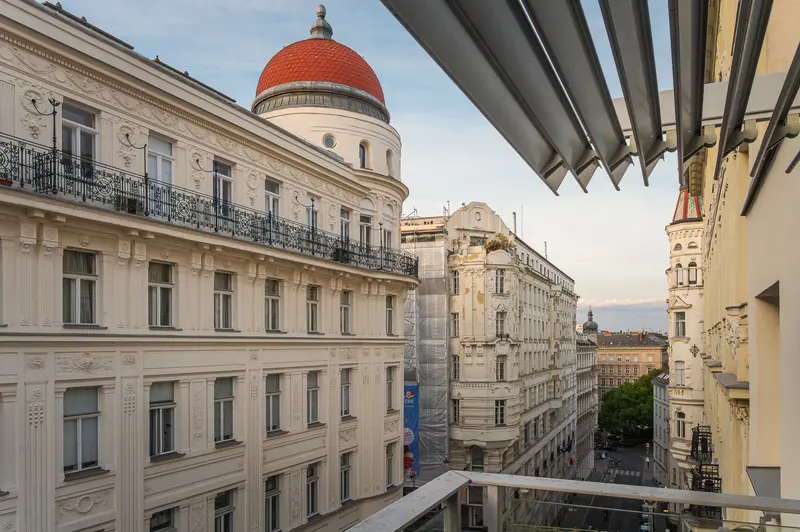 2026-10-14 Das Tigra View from an upper-floor terrace at Hotel Das Tigra, Tiefer Graben 18 in Vienna's Innere Stadt, looking along historic façades toward a red-tiled dome in October 2026. The 16th-century building housed Wolfgang Amadeus Mozart, his father Leopold and sister Nannerl from October to December 1762.
 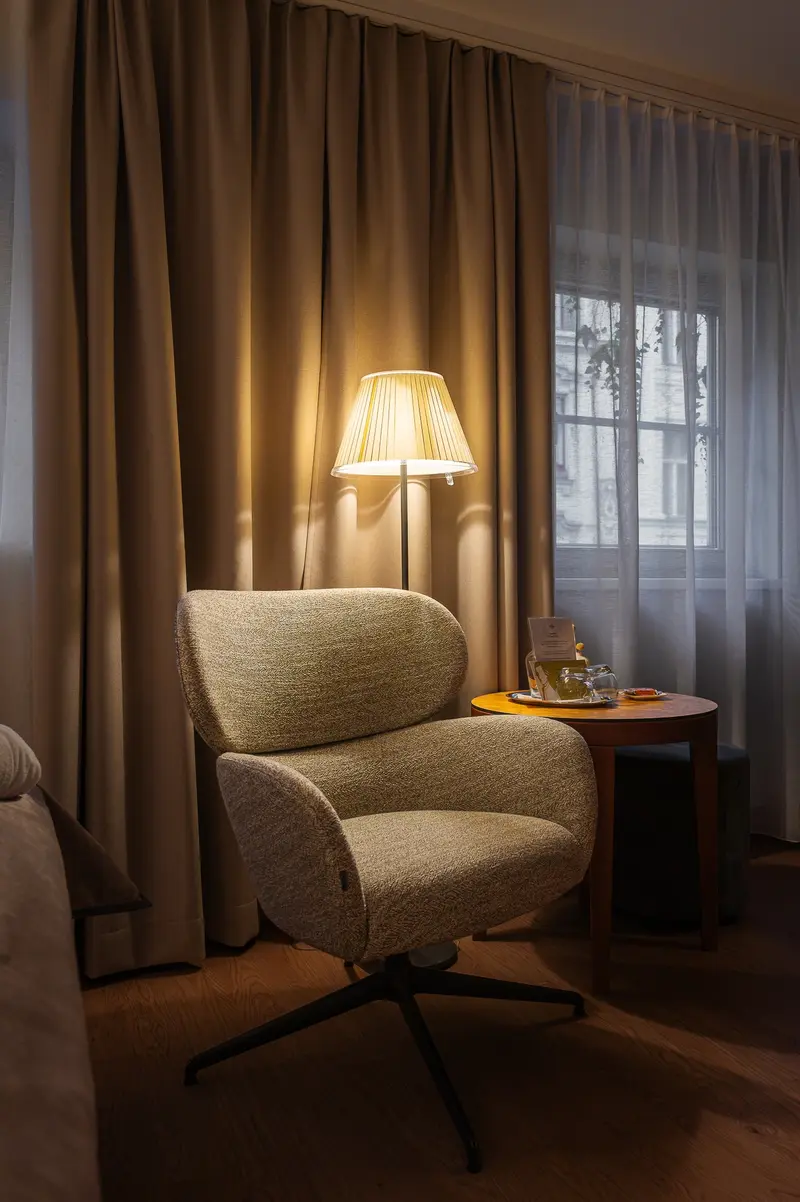 2026-10-14 Das Tigra A guest room at Hotel Das Tigra on Tiefer Graben in Vienna, Austria, photographed in October 2026, furnished with a swivel armchair, floor lamp and round wooden side table set with a welcome tea service. Hotel Das Tigra occupies the 16th-century building where Wolfgang Amadeus Mozart stayed in 1762 and again in 1773.
 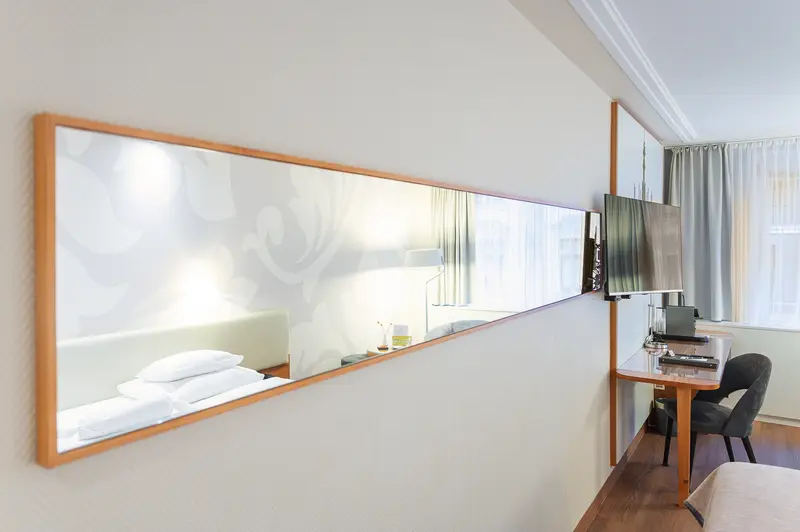 2026-10-14 Das Tigra A wood-framed horizontal mirror reflects the bed, damask-patterned wall and window of a guest room at Hotel Das Tigra, Tiefer Graben 18, Vienna, Austria, in October 2026. Hotel Das Tigra occupies the 16th-century house where Wolfgang Amadeus Mozart stayed with his father Leopold in 1762, and offers 78 rooms and suites.
 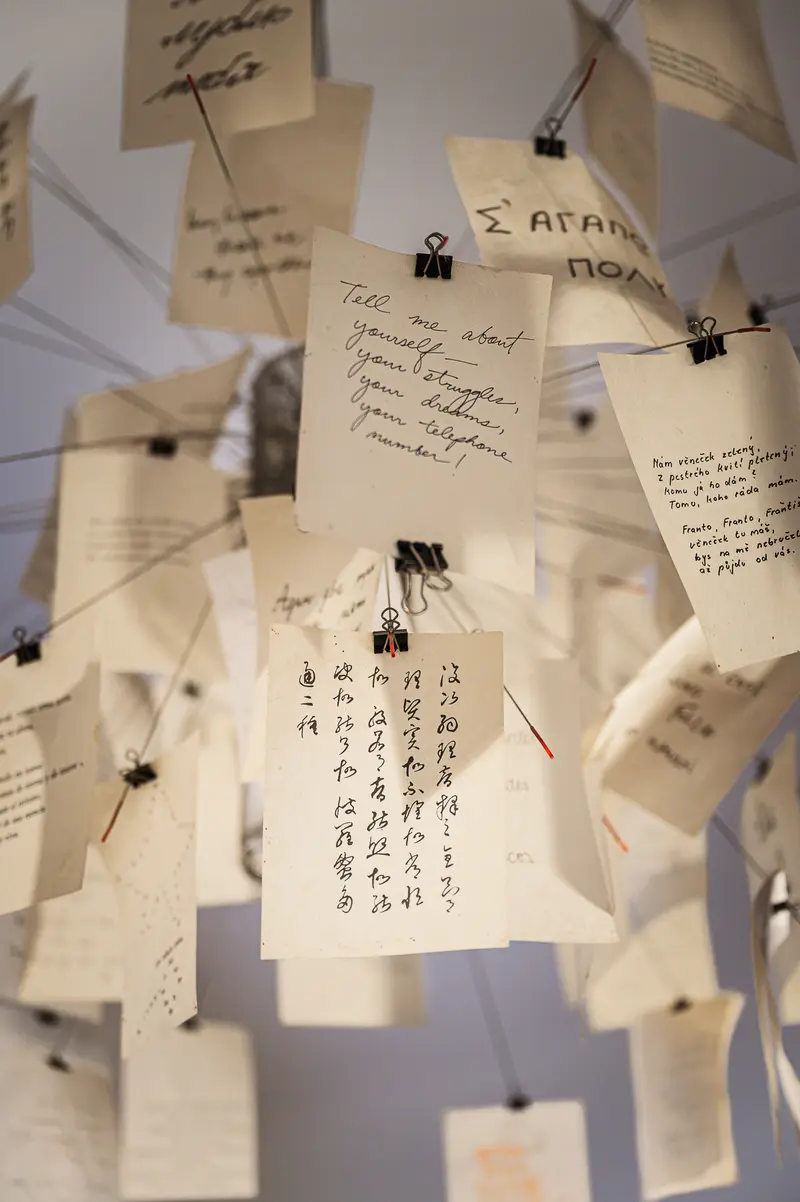 2026-10-14 Das Tigra Handwritten cards in English, Greek, Czech and Chinese hang from wires on black binder clips in a suspended paper installation at Hotel Das Tigra, Tiefer Graben 18, Vienna, Austria, in October 2026. One card in the foreground reads "Tell me about yourself — your struggles, your dreams, your telephone number!"
 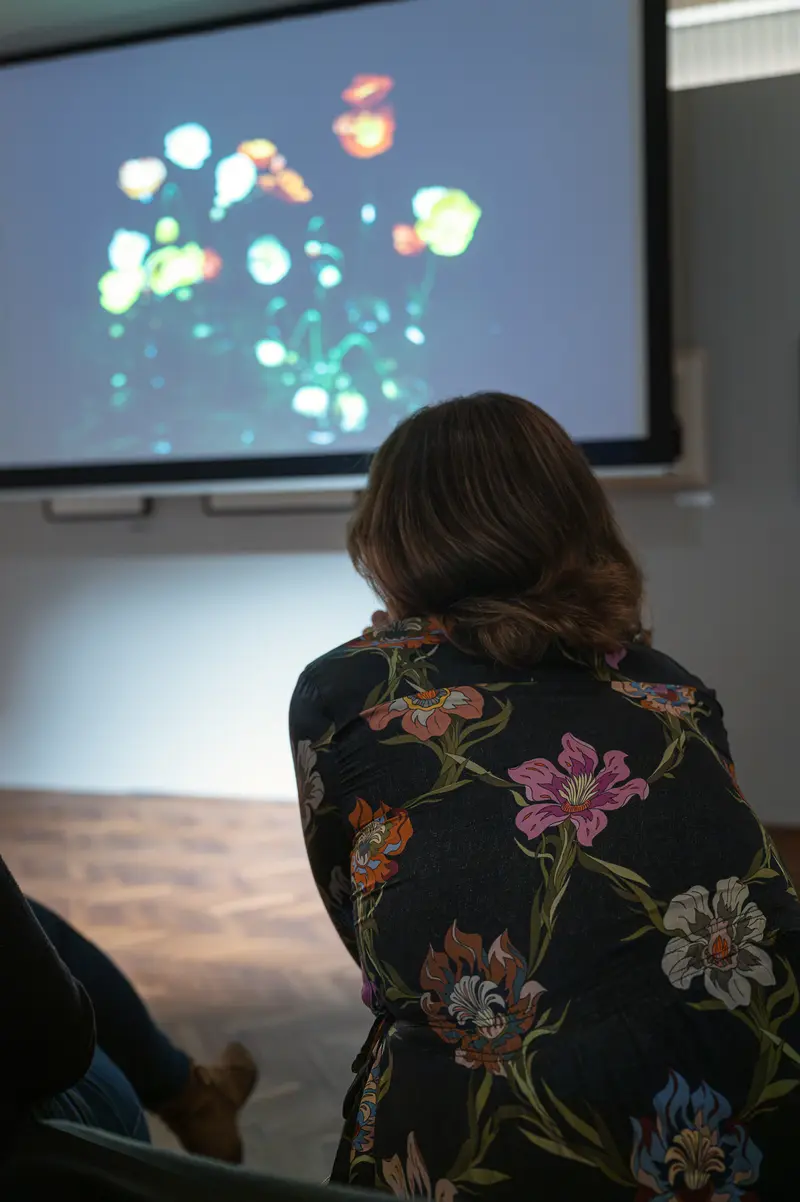 Cig Harvey Talk Leica Gallery Vienna, September 2026 An audience member, seen from behind in a floral-print dress, watches a projected photograph of illuminated flowers during the Cig Harvey artist talk at Leica Gallery Vienna, Austria, on 29 September 2026. The screened image shows glowing blossoms against a dark background, presented on a large wall-mounted display above a parquet floor.
 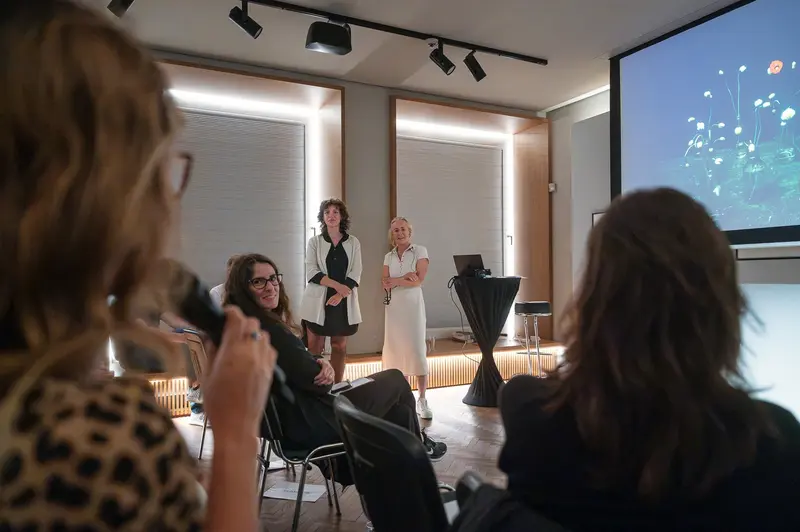 Cig Harvey Talk Leica Gallery Vienna, September 2026 Cig Harvey, in a white dress, and Leica Galleries curator Miriam Marzura speak to a seated audience at Leica Gallery Vienna, Austria, in September 2026. A projected screen beside Cig Harvey and Miriam Marzura shows one of Cig Harvey's flower photographs in low light.
 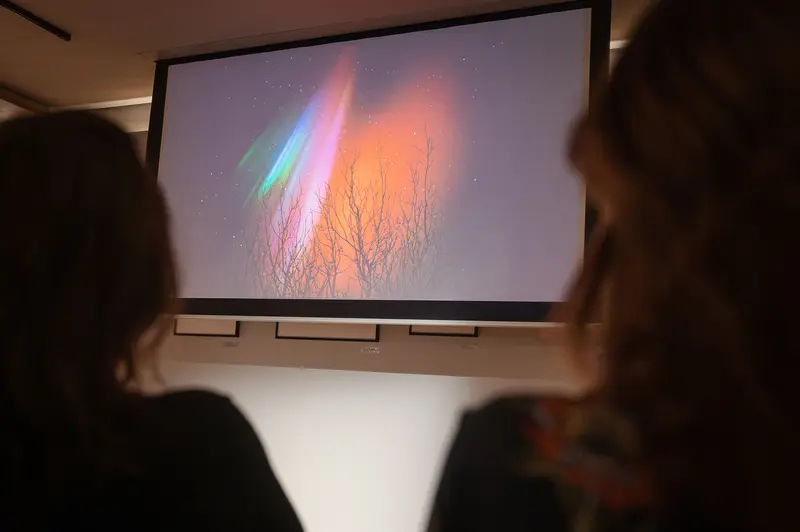 Cig Harvey Talk Leica Gallery Vienna, September 2026 Attendees watch a projected photograph of aurora-lit night sky above bare trees during the Cig Harvey artist talk at Leica Gallery Vienna, Austria, on 29 September 2026. The projection screen is mounted above framed prints hanging on the gallery wall.
 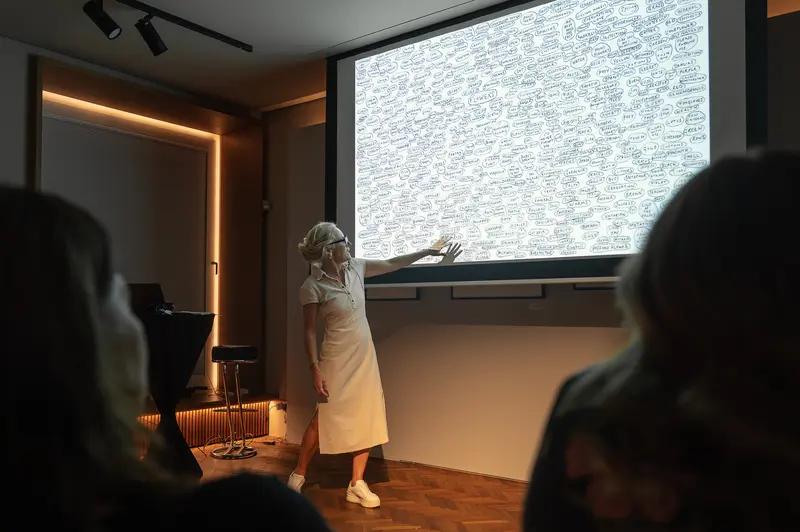 Cig Harvey Talk Leica Gallery Vienna, September 2026 Cig Harvey gestures toward a projection screen while giving an artist talk at Leica Gallery Vienna, Austria, in September 2026. The projected slide shows hundreds of handwritten words in overlapping ink circles, which Cig Harvey references while addressing a seated audience in the darkened gallery room.
 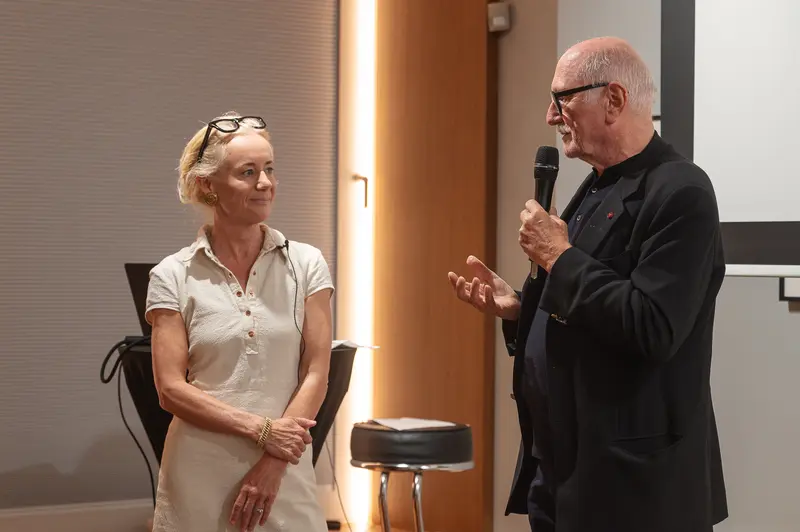 Cig Harvey Talk Leica Gallery Vienna, September 2026 Lois Lammerhuber of La Gacilly Baden speaks into a handheld microphone next to photographer Cig Harvey at Leica Gallery Vienna, Austria, in September 2026. Cig Harvey wears a pale linen dress with eyeglasses pushed into her hair while Lois Lammerhuber gestures beside a projection screen and bar stool.
 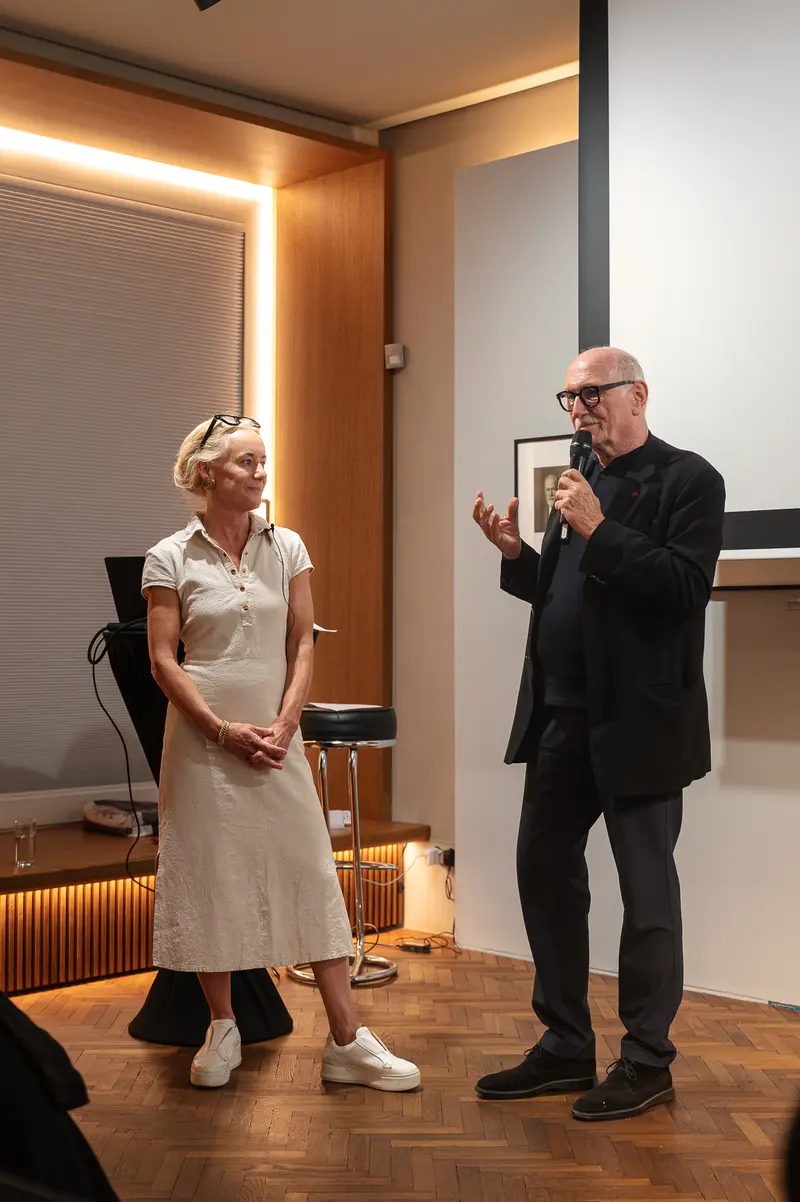 Cig Harvey Talk Leica Gallery Vienna, September 2026 Lois Lammerhuber of Festival La Gacilly-Baden Photo speaks into a handheld microphone beside photographer Cig Harvey during the Cig Harvey exhibition opening at Leica Gallery Vienna, Austria, in September 2026. Cig Harvey stands in a cream linen dress on the gallery's parquet floor while Lois Lammerhuber addresses the audience in a black suit.
 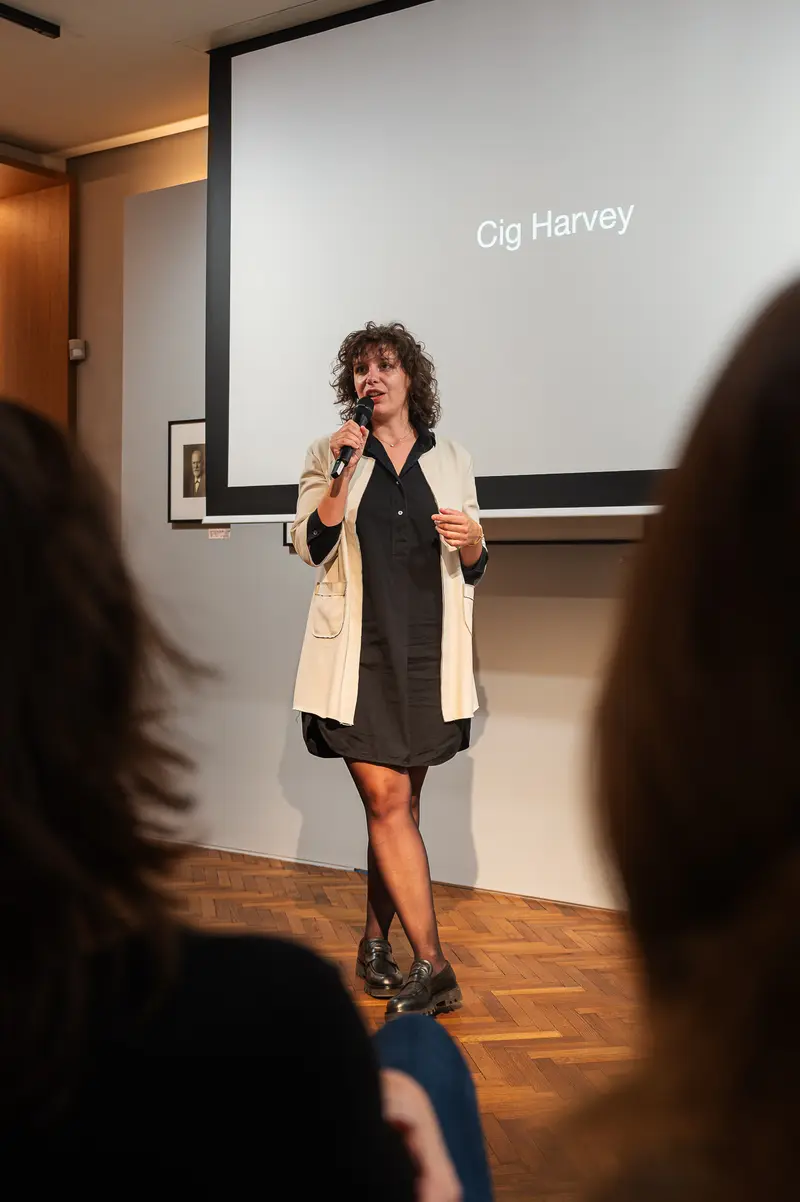 Cig Harvey Talk Leica Gallery Vienna, September 2026 Miriam Marzura, Curator at Leica Galleries, speaks into a handheld microphone to open the Cig Harvey artist talk at Leica Gallery Vienna, Austria, on 29 September 2026. Miriam Marzura stands on the parquet floor in front of a projection screen showing the title slide "Cig Harvey".
 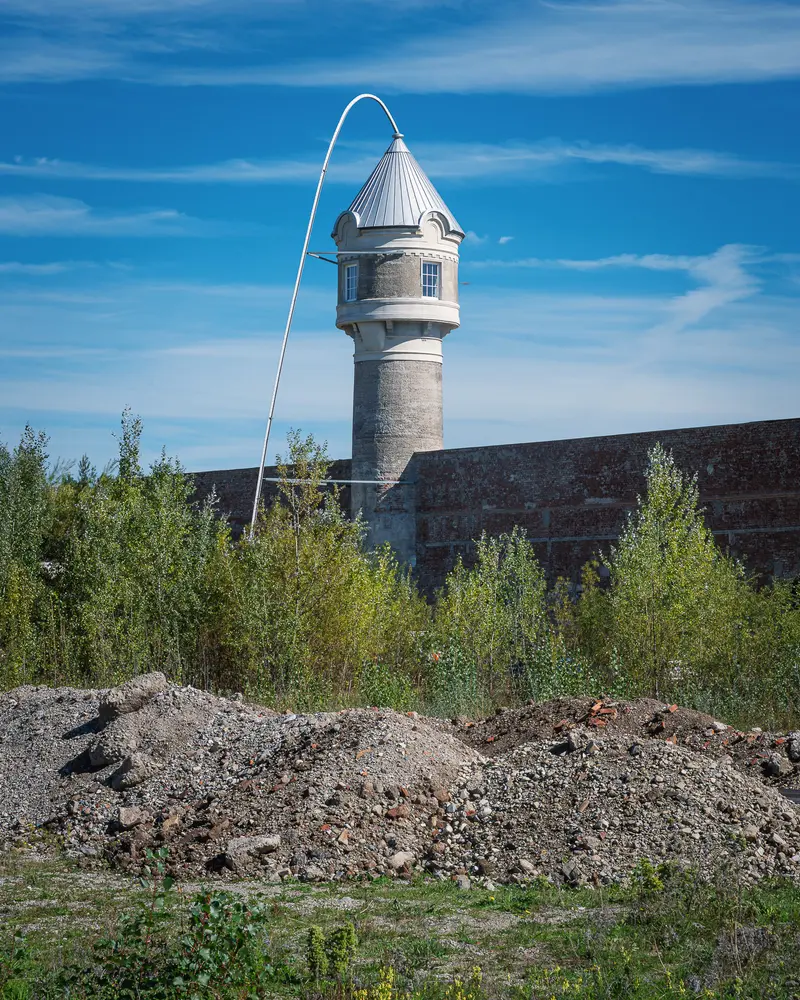 Glanzstoff St. Pölten Open House, September 2026 The listed water tower of the former Glanzstoff viscose factory in St. Pölten, Lower Austria, rises behind demolition rubble and self-seeded birch saplings during Open House 2026 in September 2026. A curved street lamp leans alongside the tower, which stands above the long brick perimeter wall of the disused industrial site.
 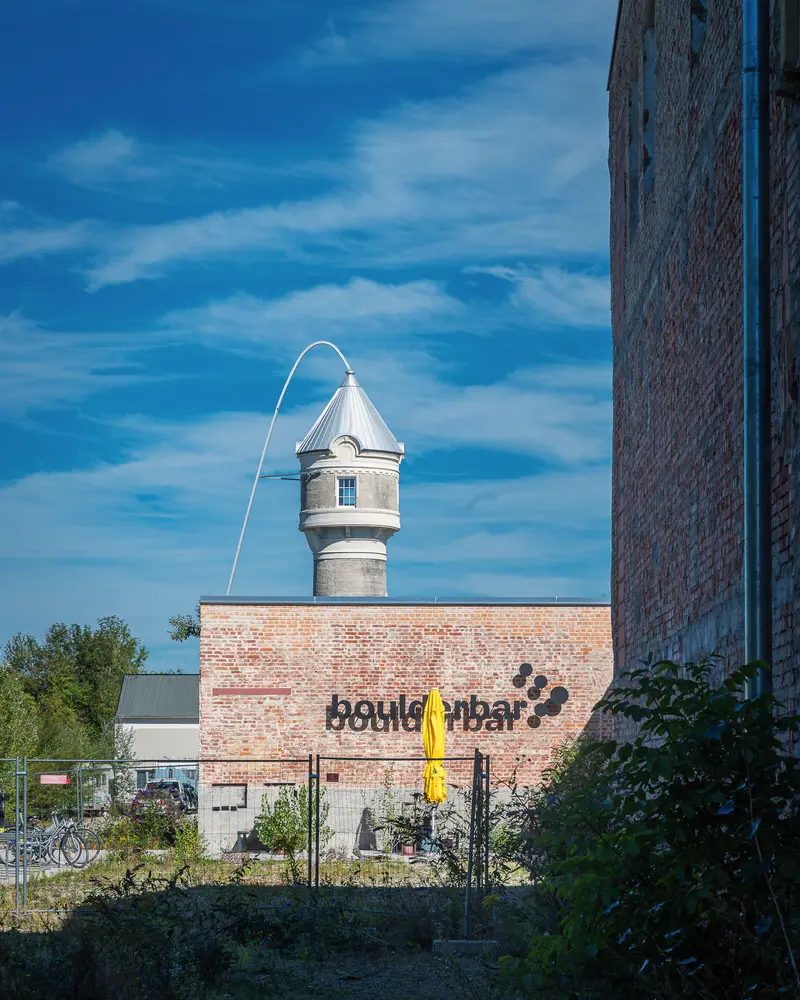 Glanzstoff St. Pölten Open House, September 2026 The Boulderbar climbing gym occupies a red-brick hall of the former Glanzstoff viscose factory in St. Pölten, Lower Austria, Austria, photographed during Open House 2026 in September 2026. The site's white-painted water tower, topped by a metal-clad conical roof, rises directly behind the brick facade carrying the Boulderbar lettering.
 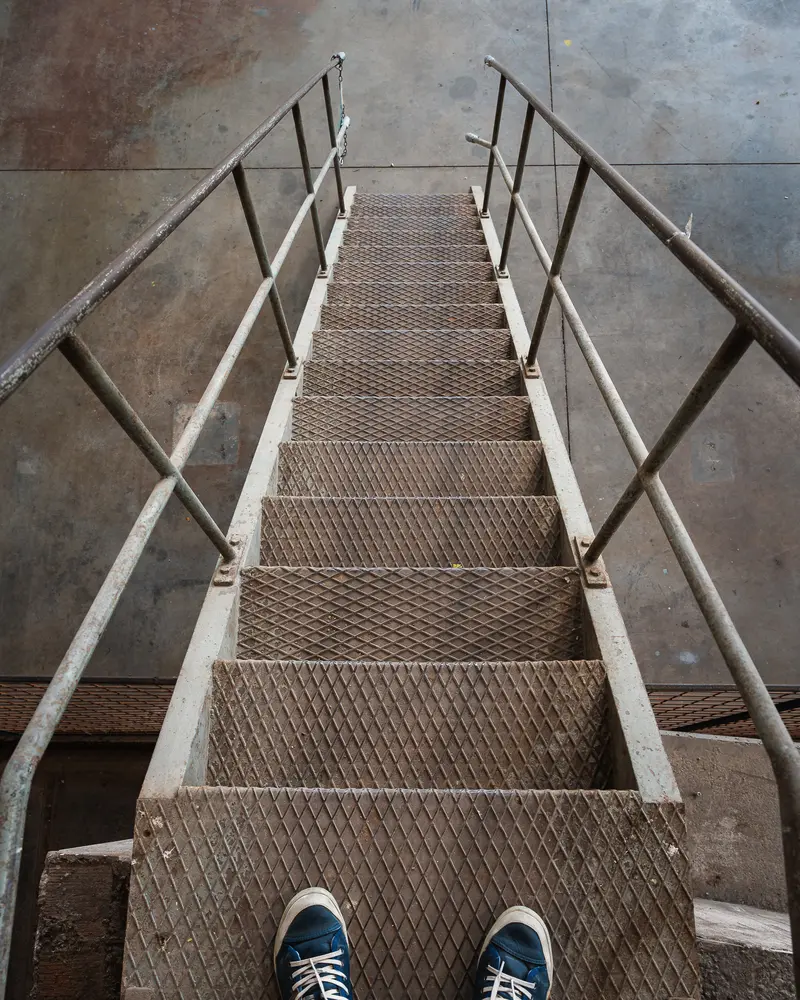 Glanzstoff St. Pölten Open House, September 2026 A visitor stands at the top of a rusted steel staircase with expanded-metal treads and tubular handrails inside the former Glanzstoff viscose factory in St. Pölten, Austria, during Open House 2026 in September 2026. The staircase descends to a bare concrete floor, part of the disused industrial plant opened to the public for guided access.
 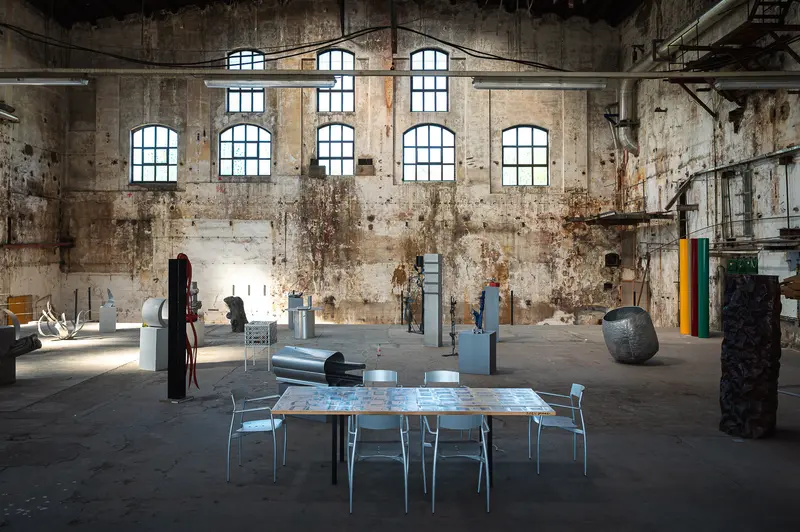 Glanzstoff St. Pölten Open House, September 2026 Sculptures and a long meeting table with metal chairs occupy a weathered double-height production hall at the former Glanzstoff viscose factory in St. Pölten, Austria, during Open House 2026 in September 2026. The Glanzstoff site, a viscose fibre plant closed in 2008, retains its arched steel-framed windows and unrestored concrete walls.
 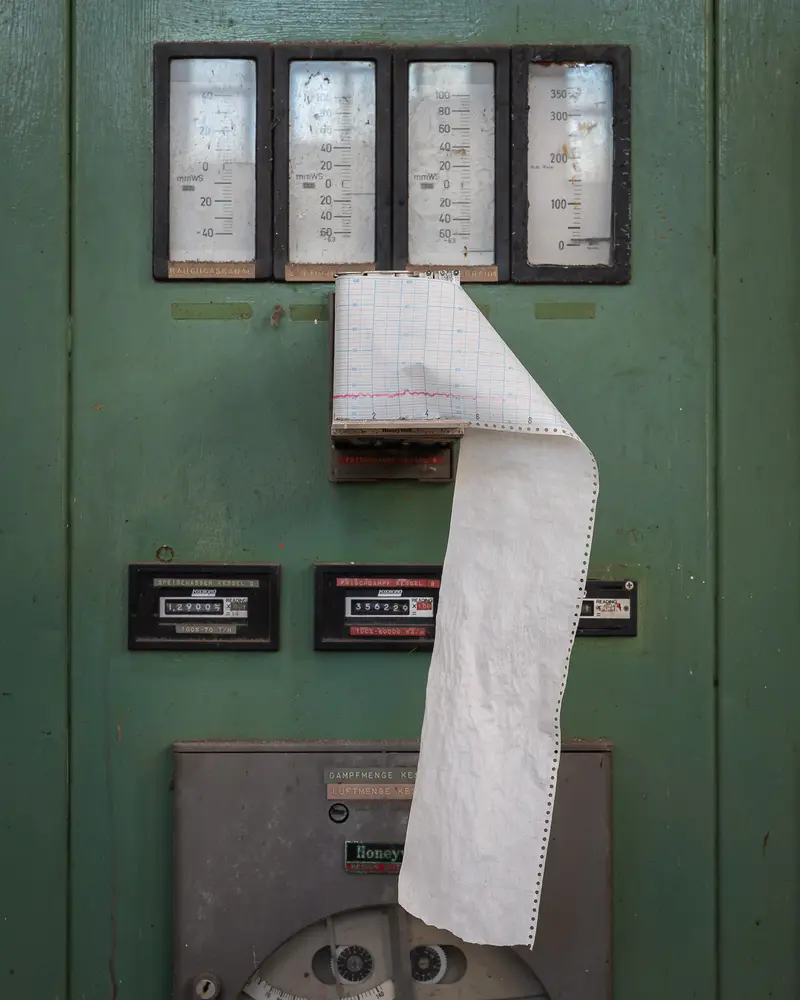 Glanzstoff St. Pölten Open House, September 2026 A green-painted boiler control panel with mmWS draft gauges, mechanical counters and a Honeywell chart recorder stands preserved on the former Glanzstoff viscose factory site in St. Pölten, Austria, documented during Open House 2026 in September 2026. A perforated strip of recorder paper still hangs from the Honeywell unit, its printed trace ending where the plant's steam boilers were shut down.
 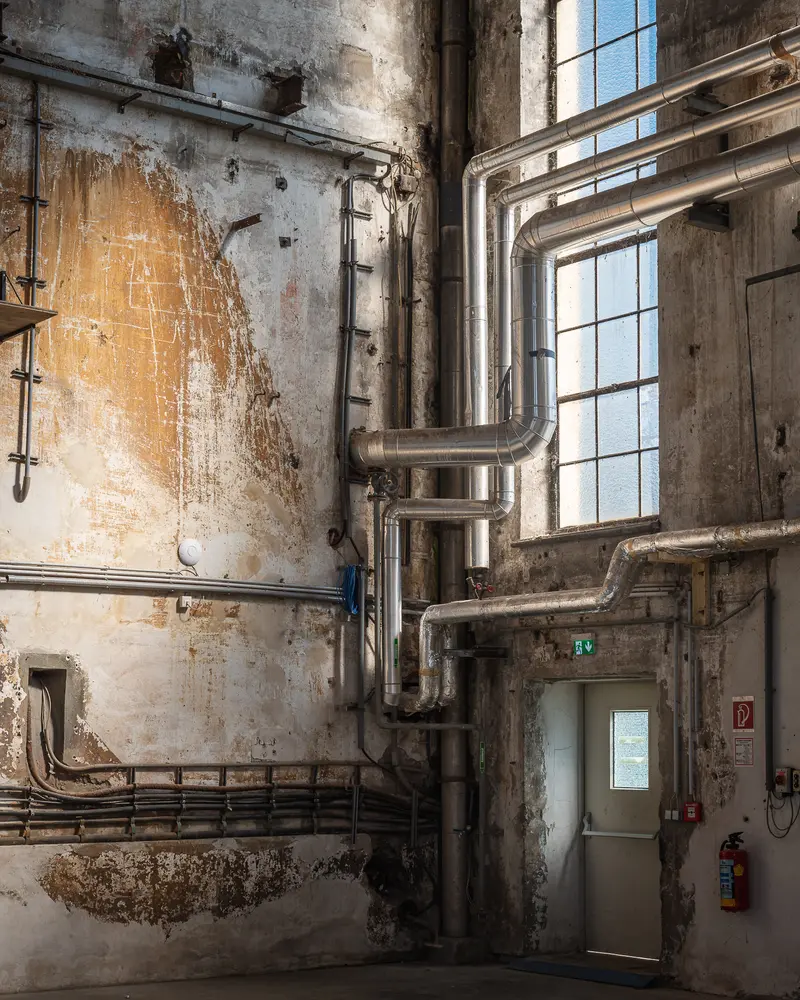 Glanzstoff St. Pölten Open House, September 2026 Bare industrial hall interior at the former Glanzstoff viscose factory in St. Pölten, Lower Austria, Austria, documented during Open House 2026 in September 2026. Stainless-steel ducting and conduit run across stained concrete walls beside a steel-framed multi-pane window and a fire door marked with an emergency exit sign.
 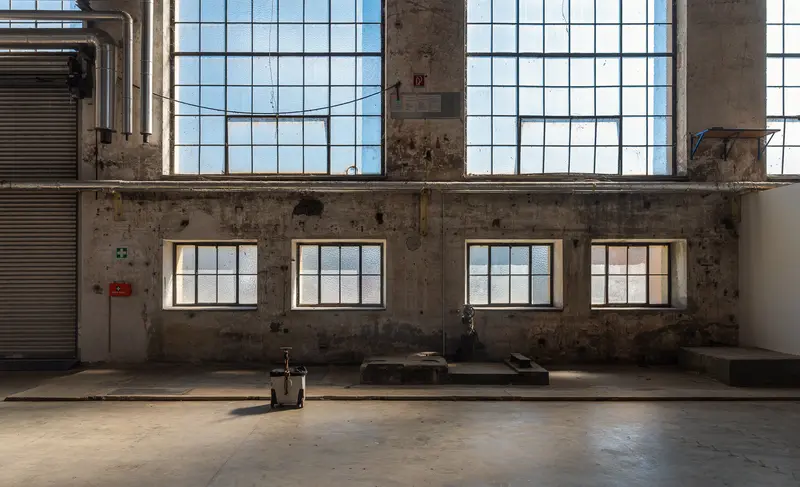 Glanzstoff St. Pölten Open House, September 2026 Cleared production hall inside the former Glanzstoff viscose factory in St. Pölten, Austria, photographed during Open House 2026 in September 2026. Weathered concrete piers carry tall steel-framed grid windows above a row of smaller openings, with machine bases left in the polished floor.
 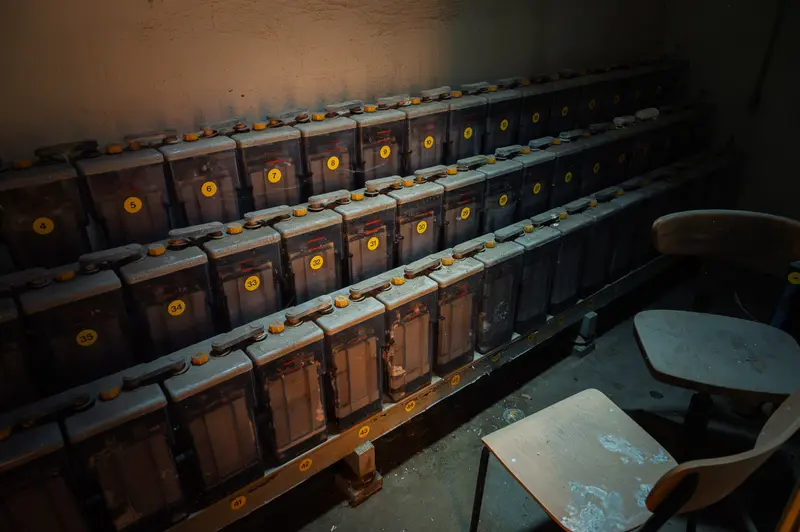 Glanzstoff St. Pölten Open House, September 2026 Rows of numbered lead-acid accumulator cells line a cellar wall of the former Glanzstoff viscose factory in St. Pölten, Austria, photographed during Open House 2026 in September 2026. Yellow enamel number discs from 4 to 44 identify each glass-and-metal battery cell in the disused emergency power backup bank.
 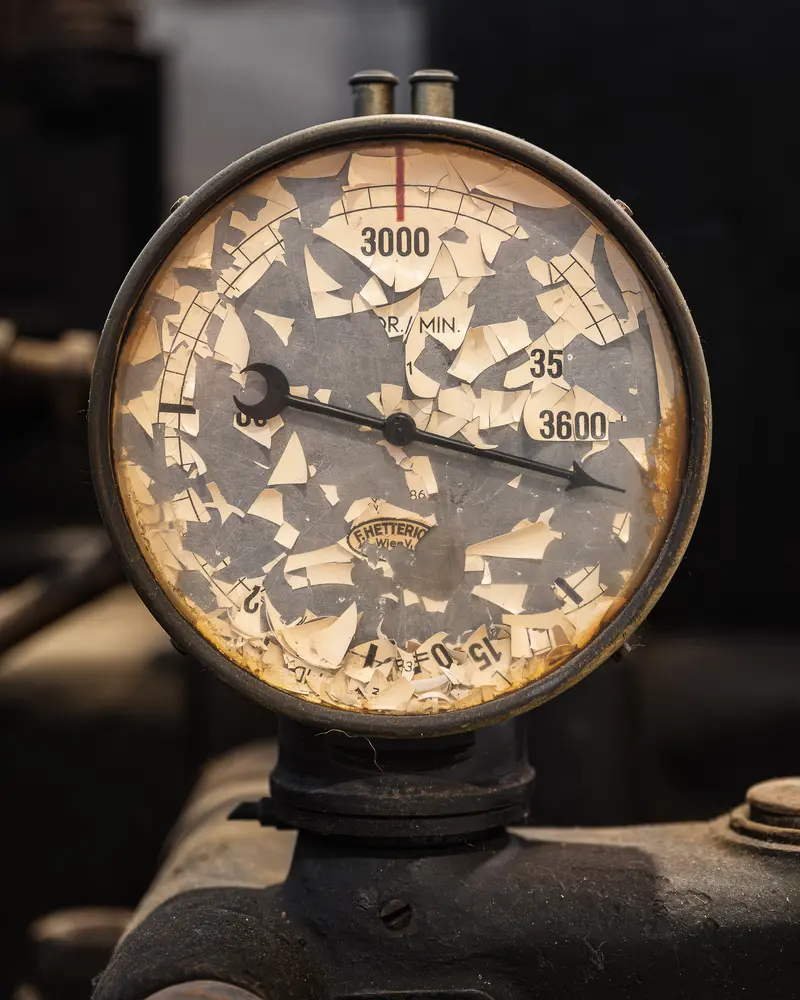 Glanzstoff St. Pölten Open House, September 2026 A brass-cased revolution counter marked "UDR./MIN." with a scale reaching 3600 remains mounted on industrial machinery at the Glanzstoff factory site in St. Pölten, Lower Austria, during Open House 2026 in September 2026. The dial bears the maker's mark of F. Hetterich, Wien V., and its paper face has flaked away across the scale.
 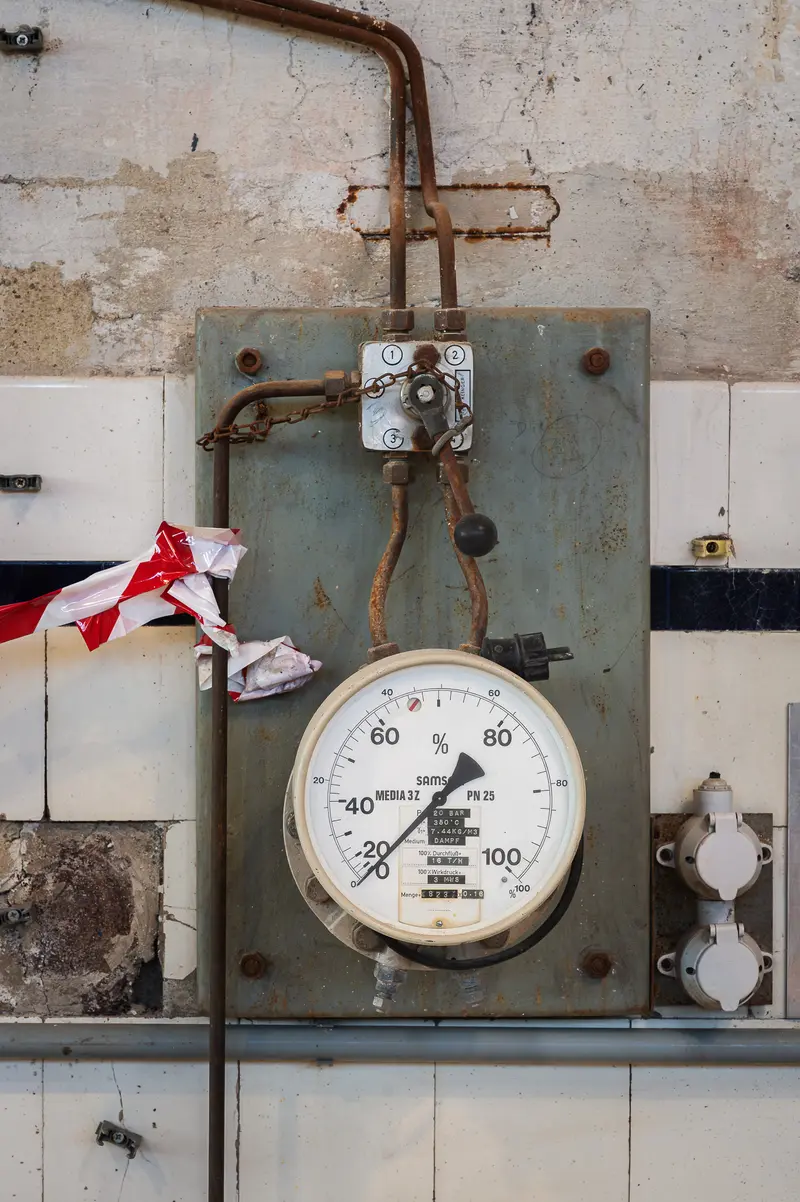 Glanzstoff St. Pölten Open House, September 2026 A Samson Media 3Z PN 25 percentage gauge remains mounted on a steel plate at the former Glanzstoff viscose factory in St. Pölten, Austria, documented during Open House 2026 in September 2026. The dial plate specifies steam service at 20 bar and 380 °C with a maximum flow of 16 t/h.
 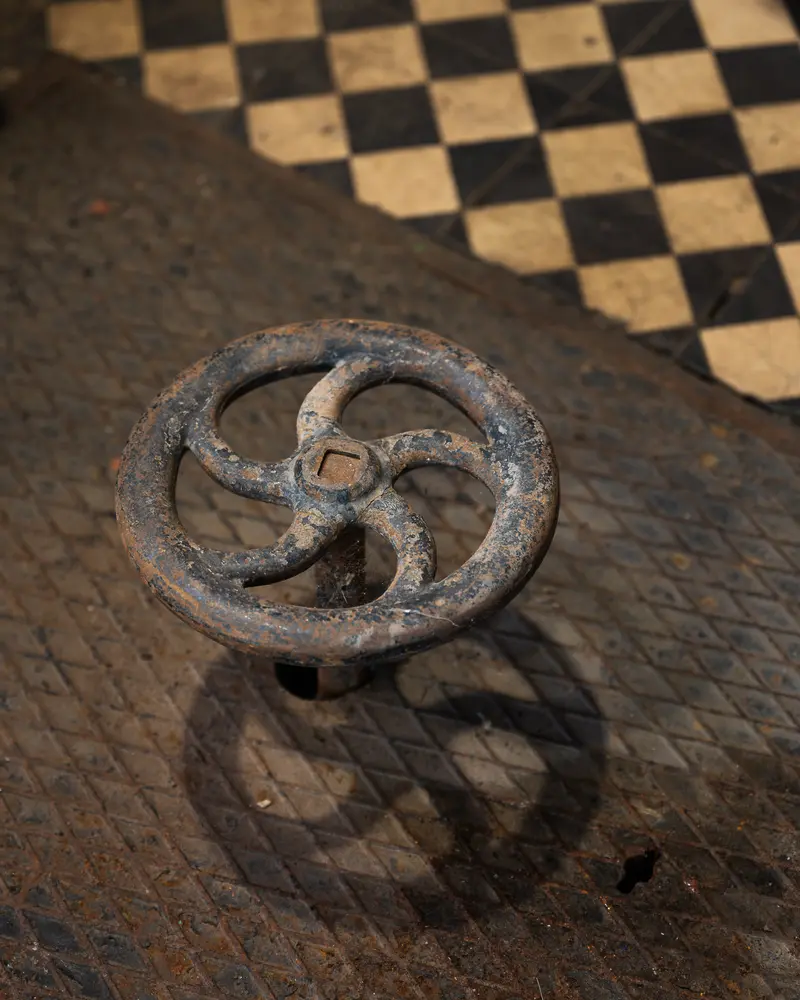 Glanzstoff St. Pölten Open House, September 2026 A corroded cast-iron valve handwheel rises from a diamond-plate steel floor inside the former Glanzstoff viscose factory in St. Pölten, Austria, documented during Open House 2026 in September 2026. The adjoining black-and-white checkerboard tile floor marks the boundary between the plant's industrial machinery area and its tiled work halls.
 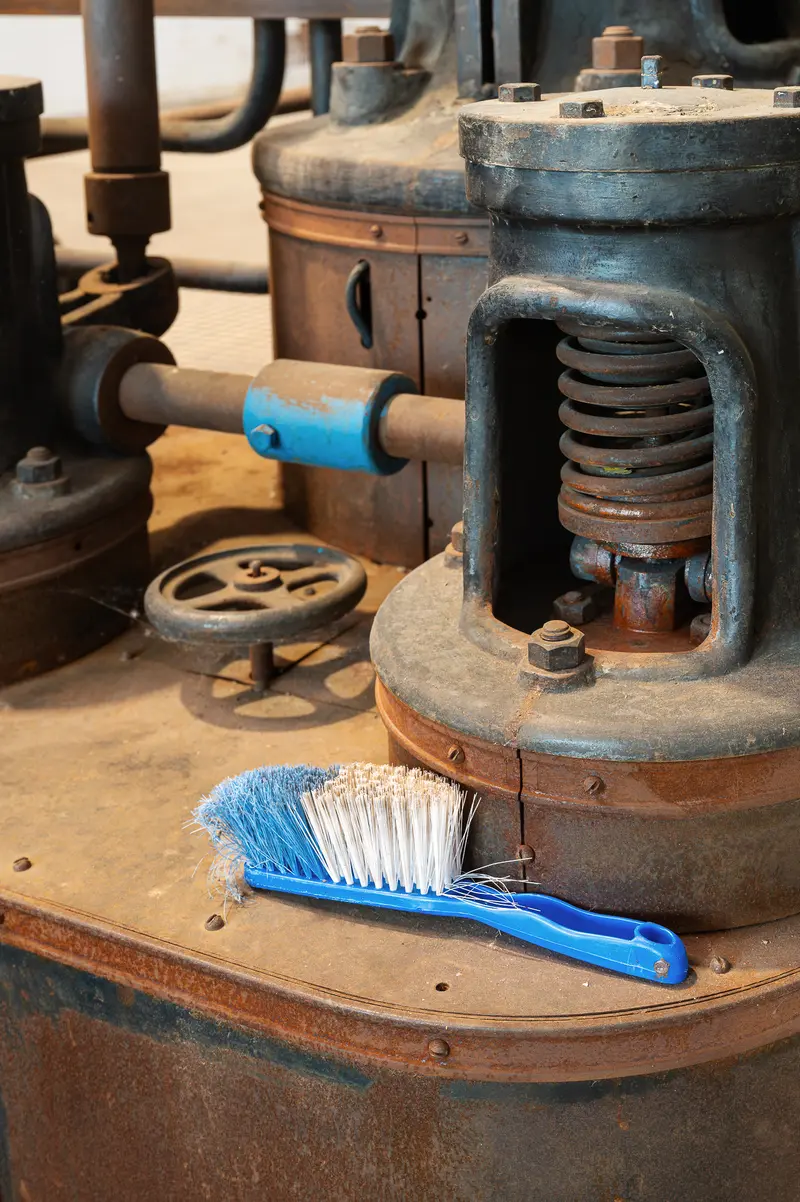 Glanzstoff St. Pölten Open House, September 2026 A blue hand brush rests on the cast-iron housing of a historic industrial pump at the former Glanzstoff viscose factory in St. Pölten, Austria, during Open House 2026 in September 2026. An exposed valve spring and a riveted flywheel remain in place on the weathered machinery, which has stood since the plant's closure.
 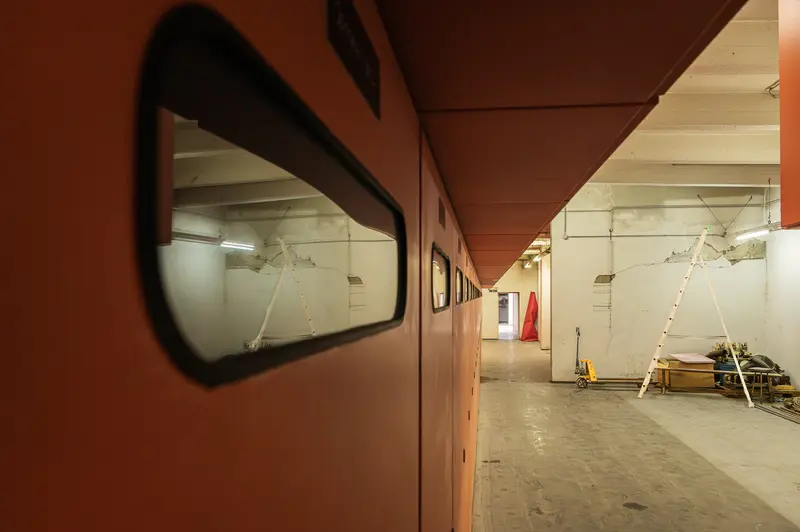 Glanzstoff St. Pölten Open House, September 2026 A terracotta-red enclosed structure with angled porthole-style windows runs the length of a former factory hall at Glanzstoff St. Pölten, Austria, photographed during Open House 2026 in September 2026. The surrounding hall retains its raw concrete floor, cracked plaster walls and propped timber shoring from ongoing conversion work on the former viscose plant.
 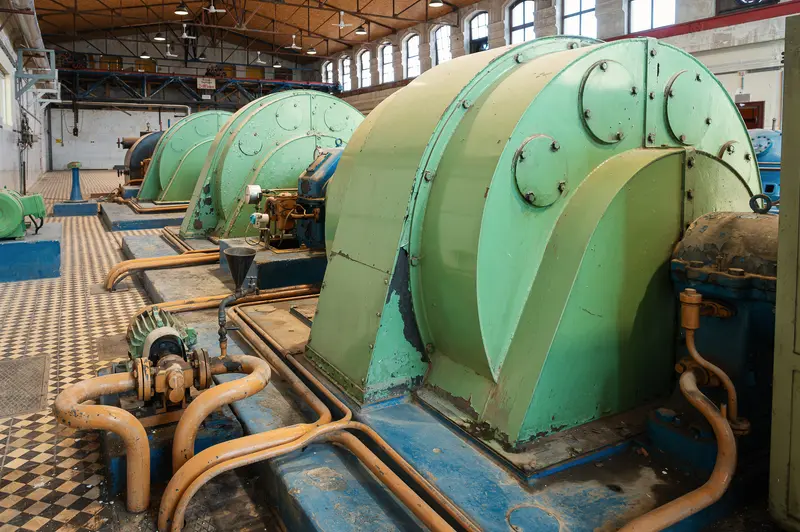 Glanzstoff St. Pölten Open House, September 2026 A row of green-painted industrial machine housings stands on blue concrete plinths inside the former Glanzstoff viscose factory in St. Pölten, Lower Austria, opened to visitors during Open House 2026 in September 2026. Copper pipework and a chequerboard tiled floor run the length of the arched-window hall, which retains its original machinery in situ.
 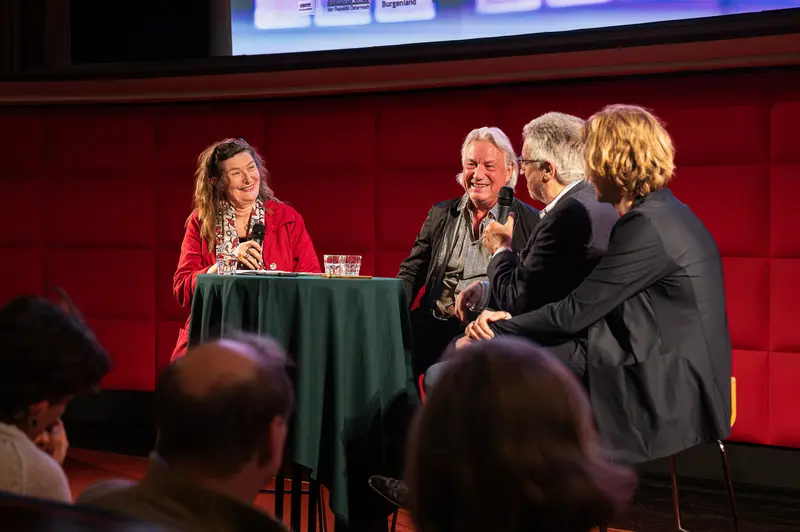 Walk Bruno Kreisky on TOUR & Preview "Bruno - der junge Kreisky" im Filmcasino
 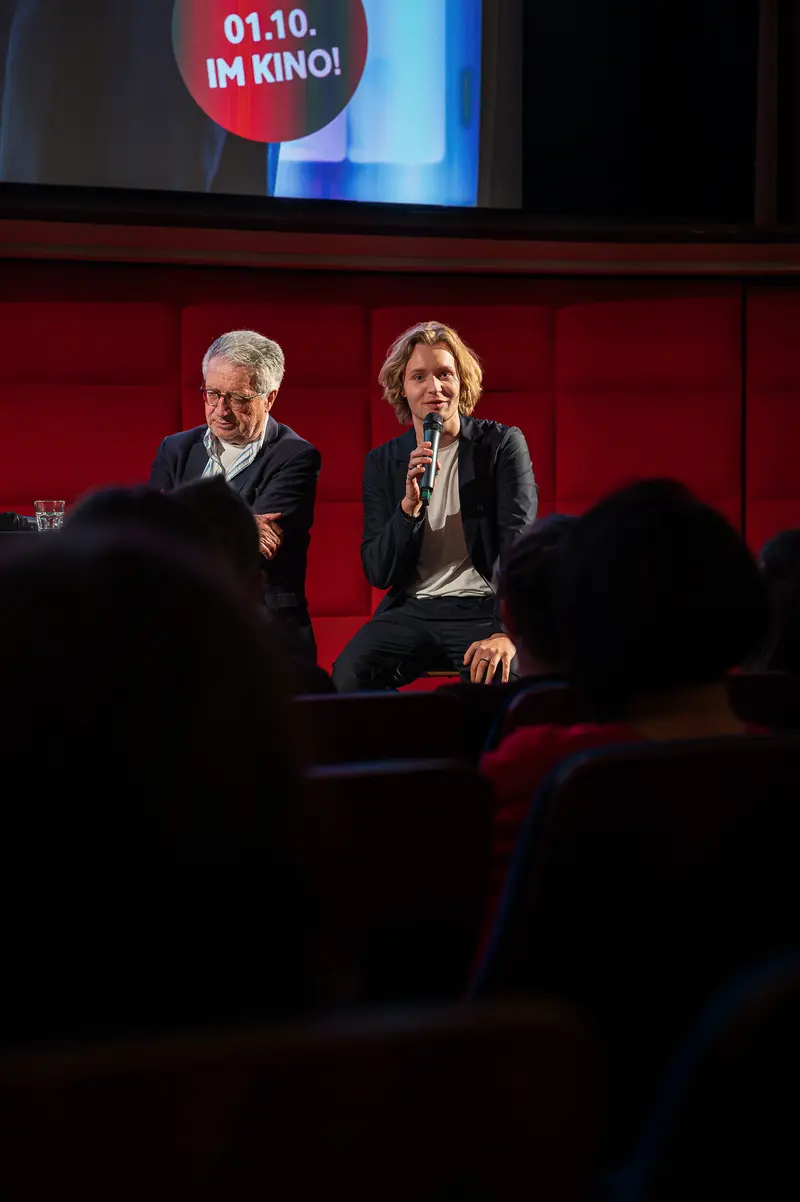 Walk Bruno Kreisky on TOUR & Preview "Bruno - der junge Kreisky" im Filmcasino
 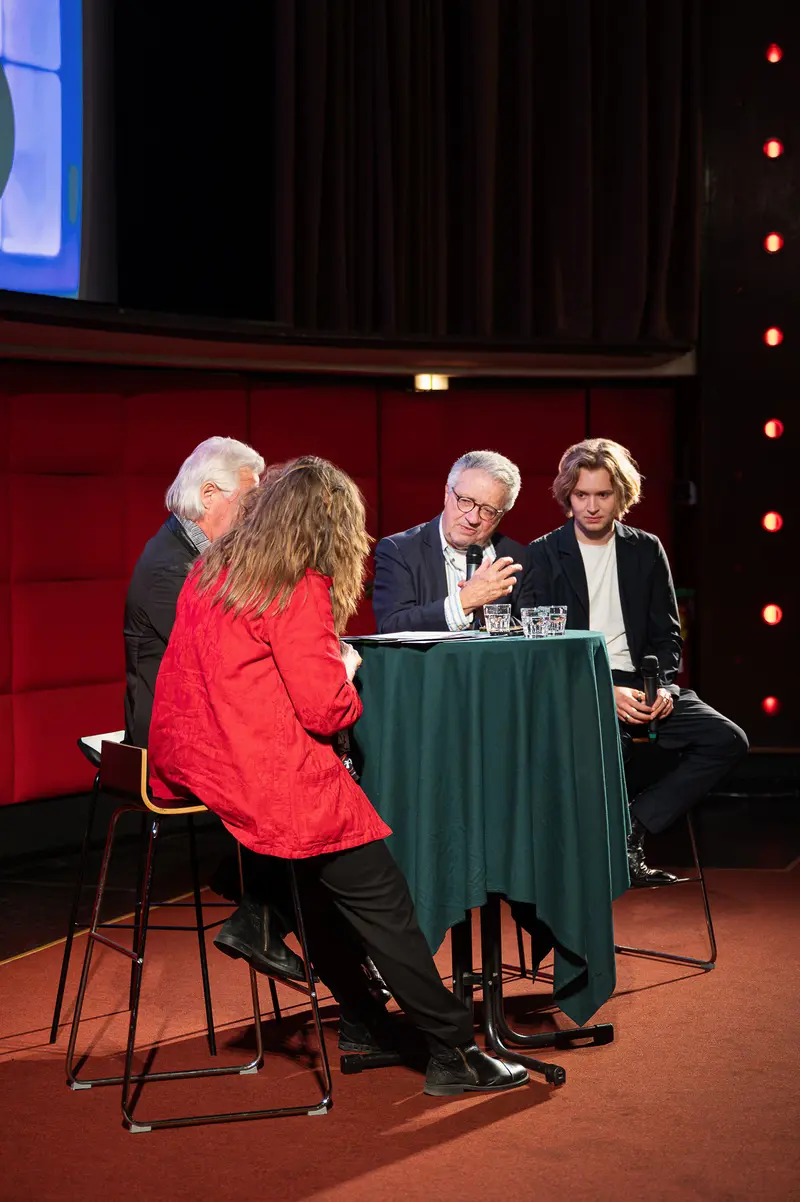 Walk Bruno Kreisky on TOUR & Preview "Bruno - der junge Kreisky" im Filmcasino
 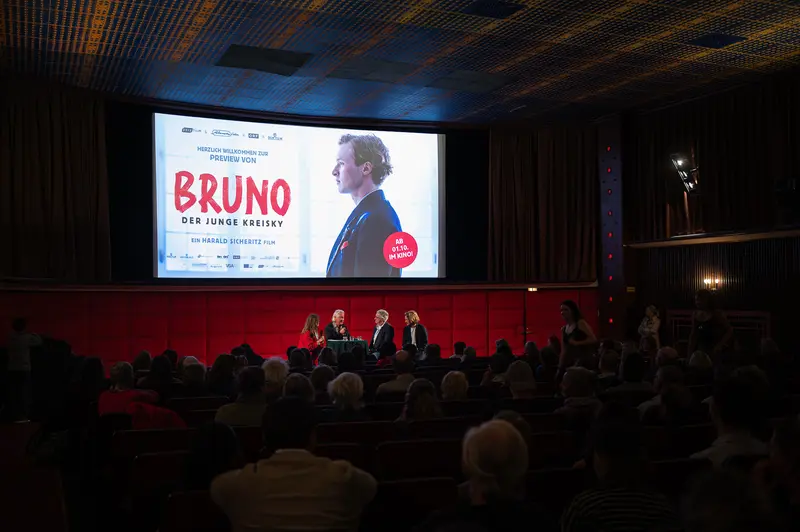 Walk Bruno Kreisky on TOUR & Preview "Bruno - der junge Kreisky" im Filmcasino
 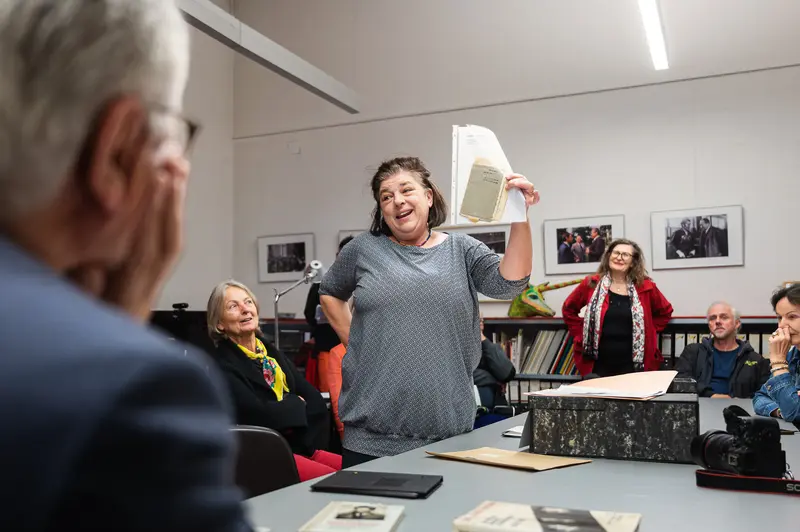 Walk Bruno Kreisky on TOUR & Preview "Bruno - der junge Kreisky" im Filmcasino
  Walk Bruno Kreisky on TOUR & Preview "Bruno - der junge Kreisky" im Filmcasino
 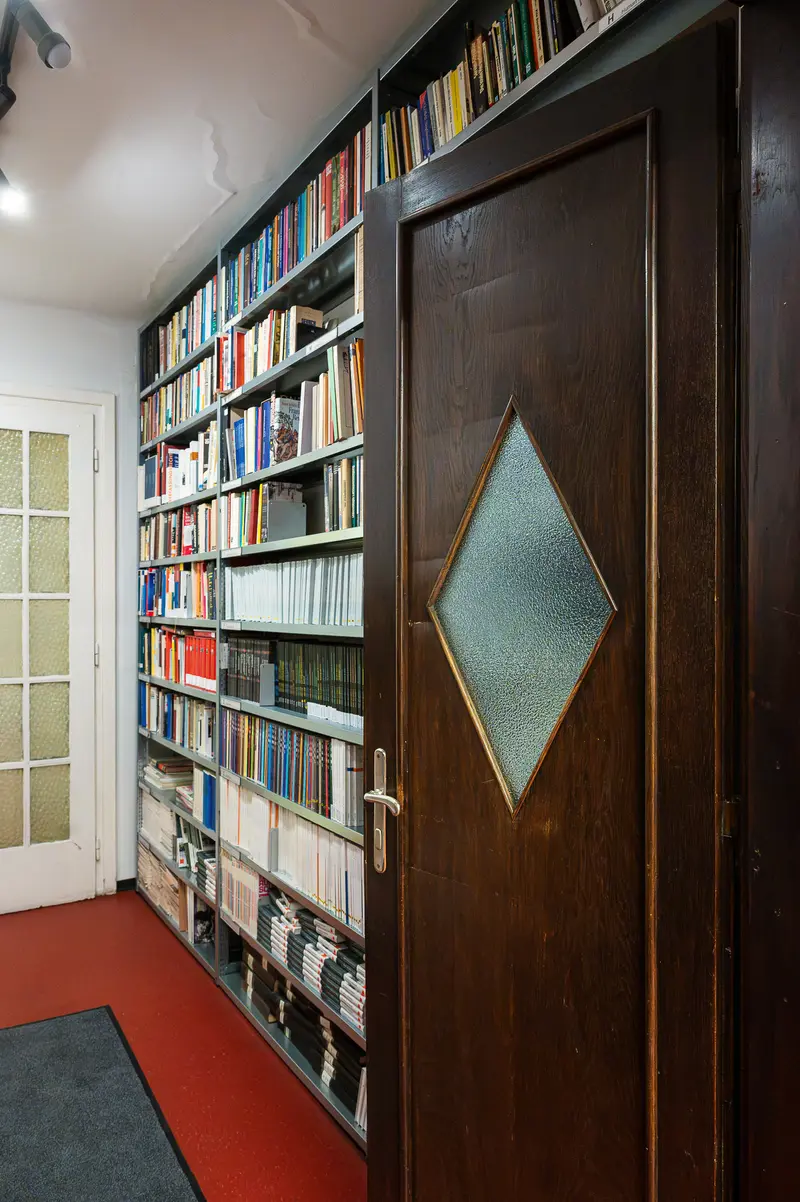 Walk Bruno Kreisky on TOUR & Preview "Bruno - der junge Kreisky" im Filmcasino
 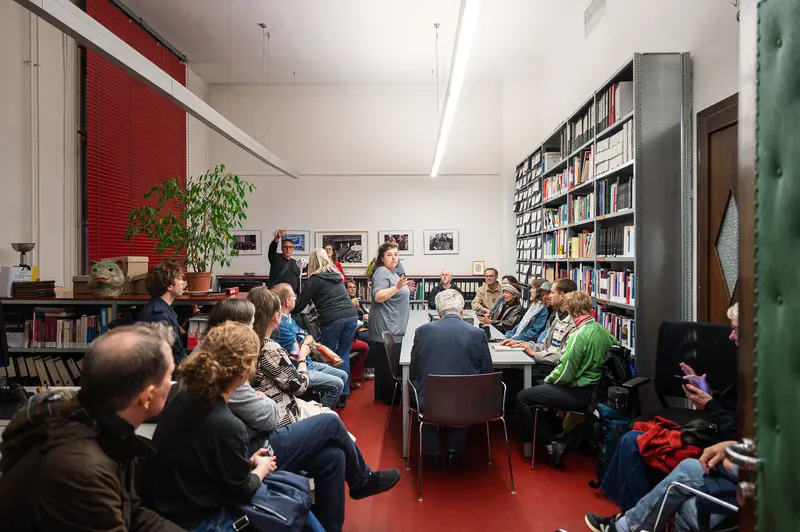 Walk Bruno Kreisky on TOUR & Preview "Bruno - der junge Kreisky" im Filmcasino
 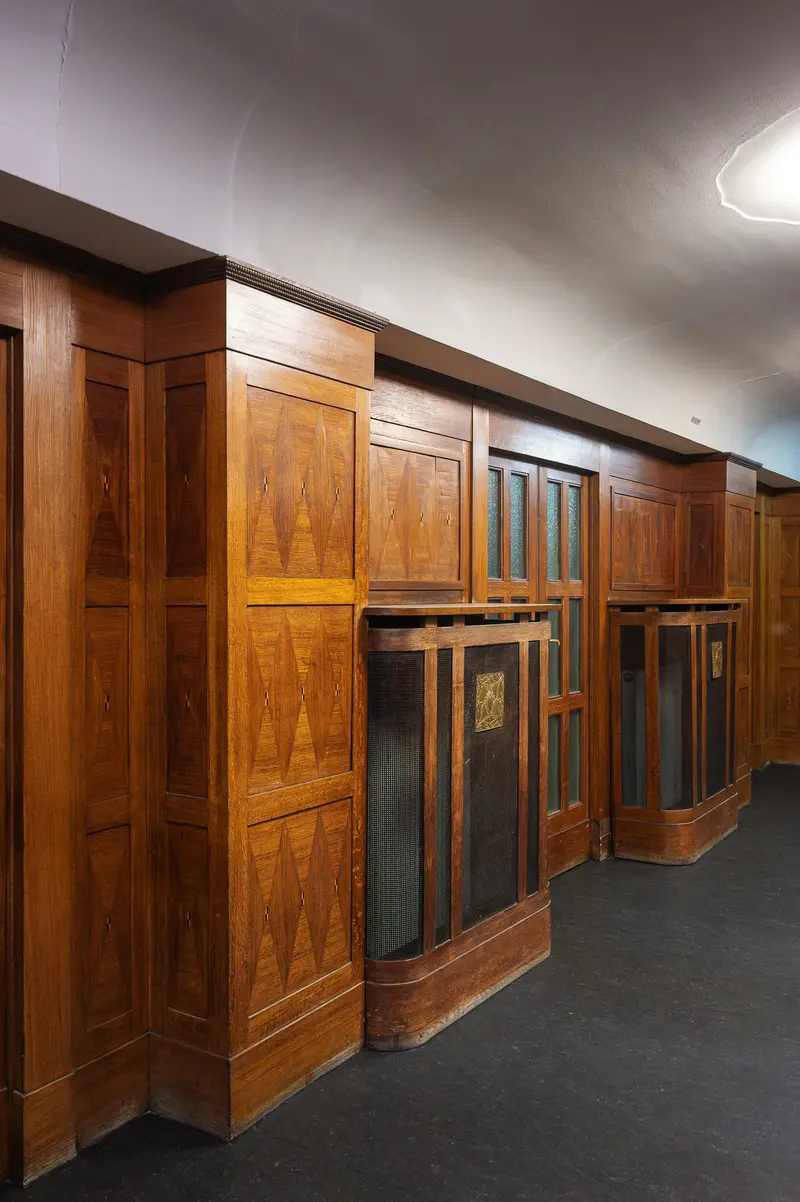 Walk Bruno Kreisky on TOUR & Preview "Bruno - der junge Kreisky" im Filmcasino
 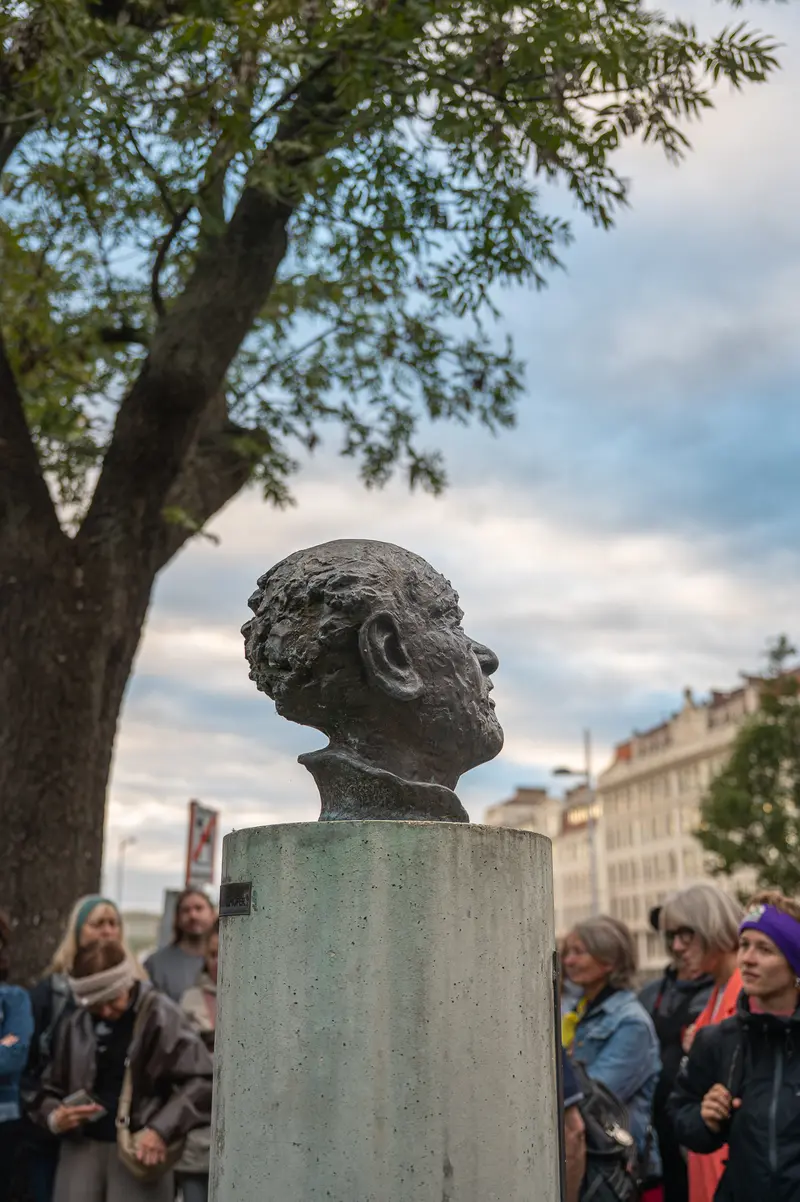 Walk Bruno Kreisky on TOUR & Preview "Bruno - der junge Kreisky" im Filmcasino
 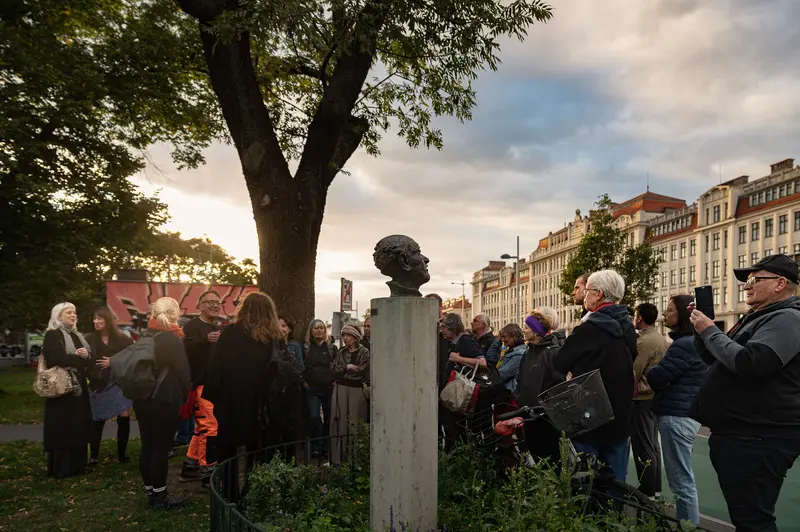 Walk Bruno Kreisky on TOUR & Preview "Bruno - der junge Kreisky" im Filmcasino
 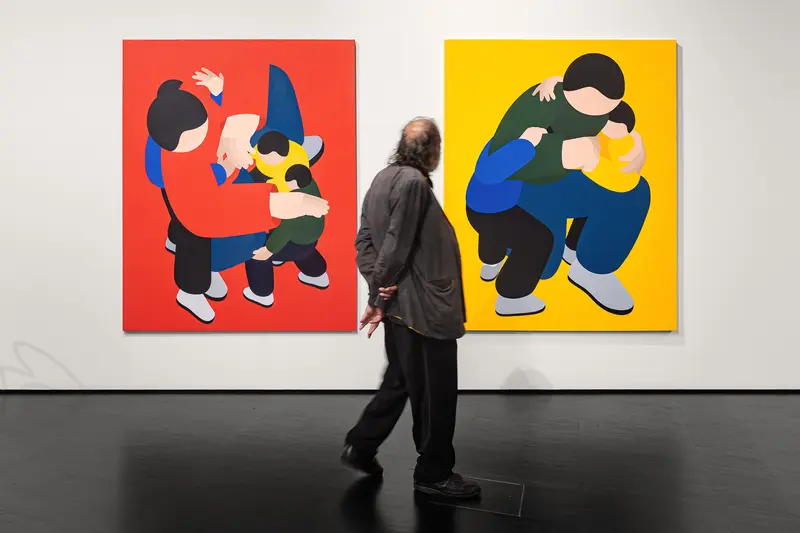 Marko Sajn Becoming One Opening at STRABAG Art Site, Vienna, September 2026 A visitor walks past two large paintings by Marko Sajn at the opening of the exhibition "Becoming One" at Strabag Art Site in Vienna, Austria, in September 2026. Marko Sajn's paintings depict flat, faceless figures embracing on red and yellow backgrounds, with the visitor's motion blur contrasting the still canvases.
 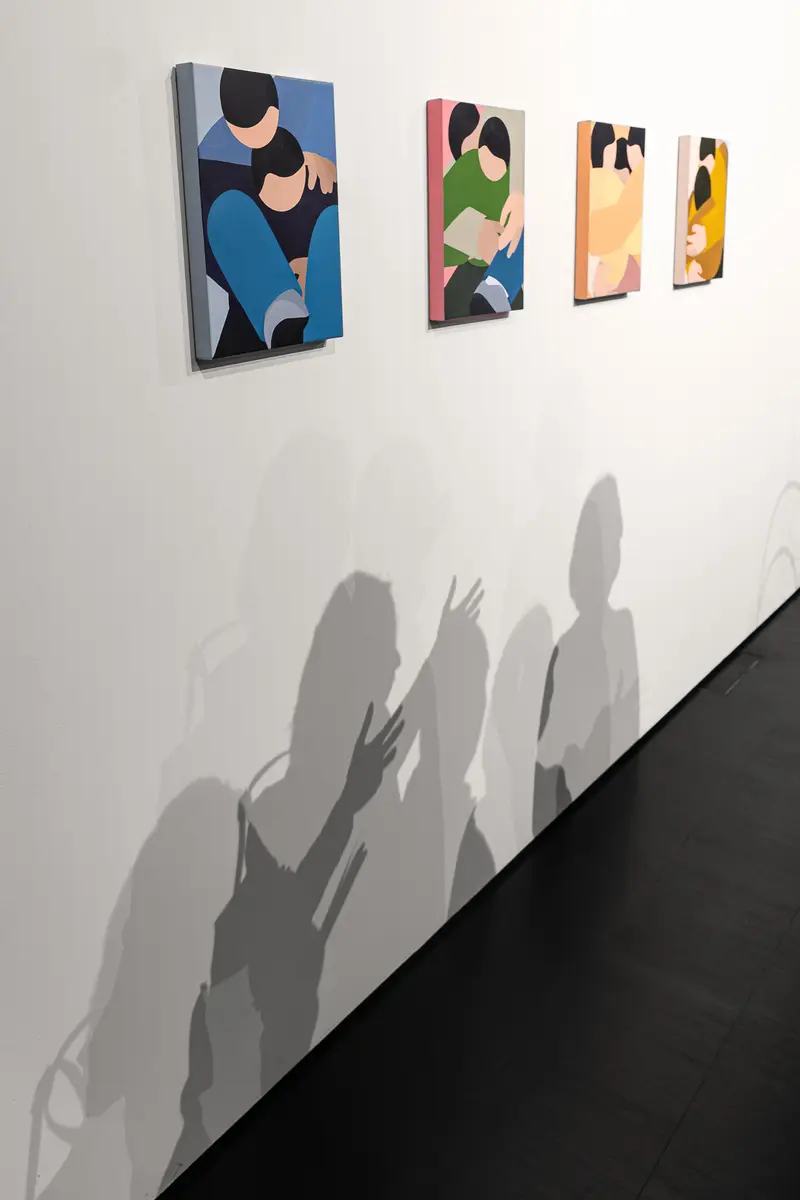 Marko Sajn Becoming One Opening at STRABAG Art Site, Vienna, September 2026 Four small paintings by Marko Sajn depicting embracing figures hang on a white wall at the exhibition opening of "Becoming One" at Strabag Art Site in Vienna, Austria, in September 2026. Shadows of visitors gesturing in conversation are cast across the wall beneath the artworks.
 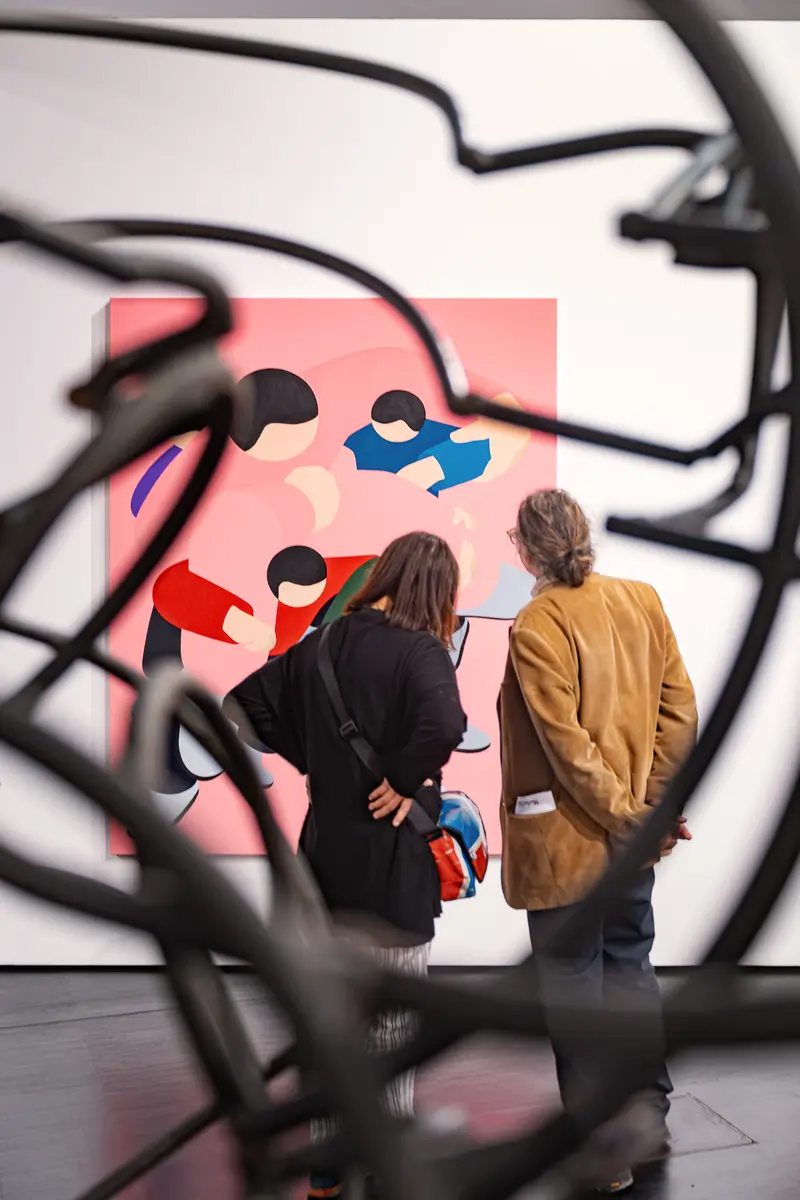 Marko Sajn Becoming One Opening at STRABAG Art Site, Vienna, September 2026 Two visitors seen from behind study a large pink painting of stylised figures by Marko Sajn at the exhibition opening "Becoming One" at Strabag Art Site, Vienna, Austria, in September 2026. The scene is framed by the dark looping lines of a metal sculpture in the foreground, with the flat-colour canvas hanging on a white gallery wall.
 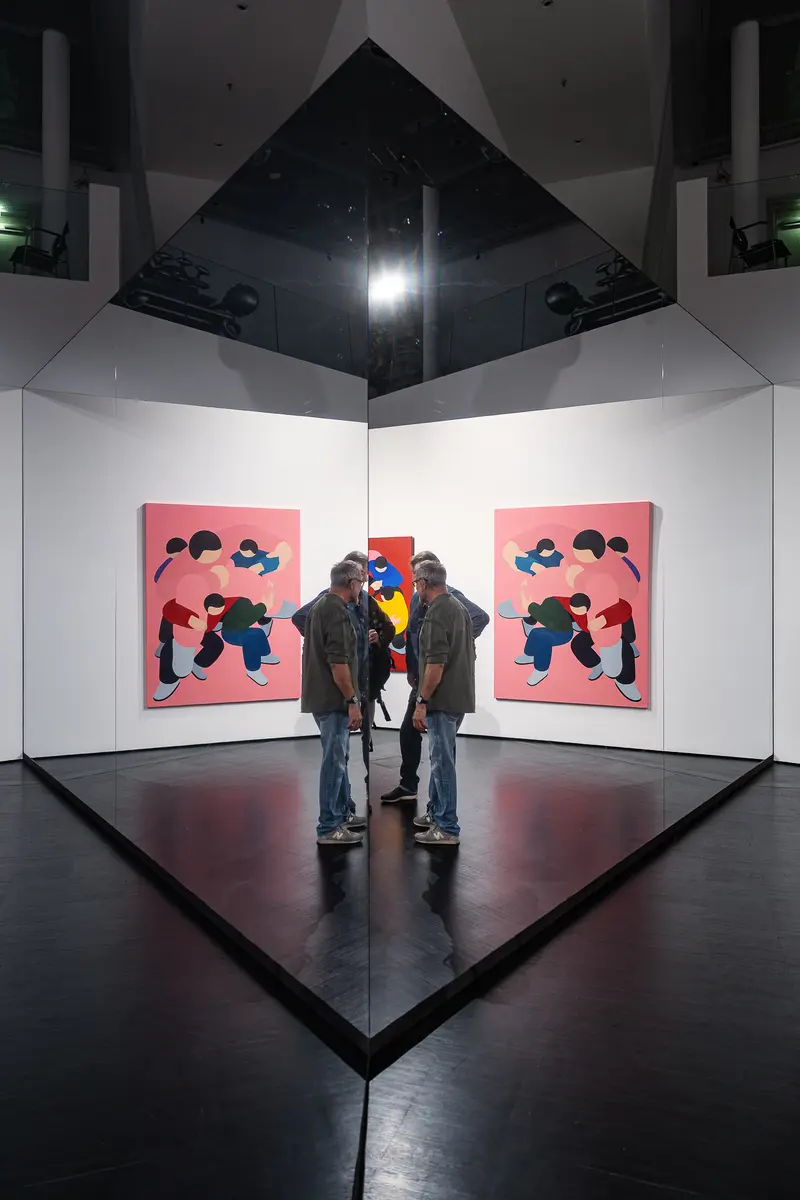 Marko Sajn Becoming One Opening at STRABAG Art Site, Vienna, September 2026 Visitors stand at a mirrored wall corner beside a pink painting of stylised figures by Marko Sajn at the "Becoming One" exhibition opening at Strabag Art Site in Vienna, Austria, in September 2026. The floor-to-ceiling mirror doubles the visitors and the artwork, making the corner a distinctive feature of the exhibition space.
 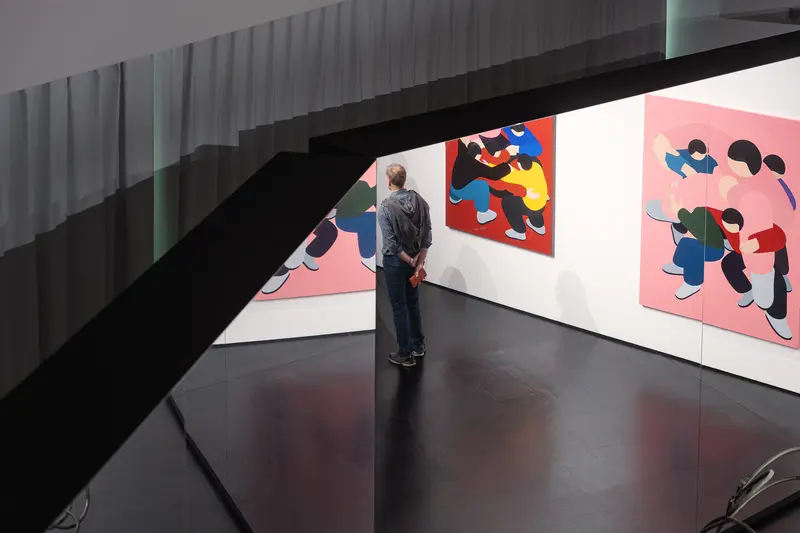 Marko Sajn Becoming One Opening at STRABAG Art Site, Vienna, September 2026 A visitor stands with hands clasped behind his back viewing large-format paintings by Marko Sajn at the exhibition opening "Becoming One" at Strabag Art Site, Vienna, Austria, in September 2026. The paintings on red and pink backgrounds show stylized, faceless figures embracing in tightly clustered groups, seen from a raised viewpoint between the venue's black mirrored panels.
 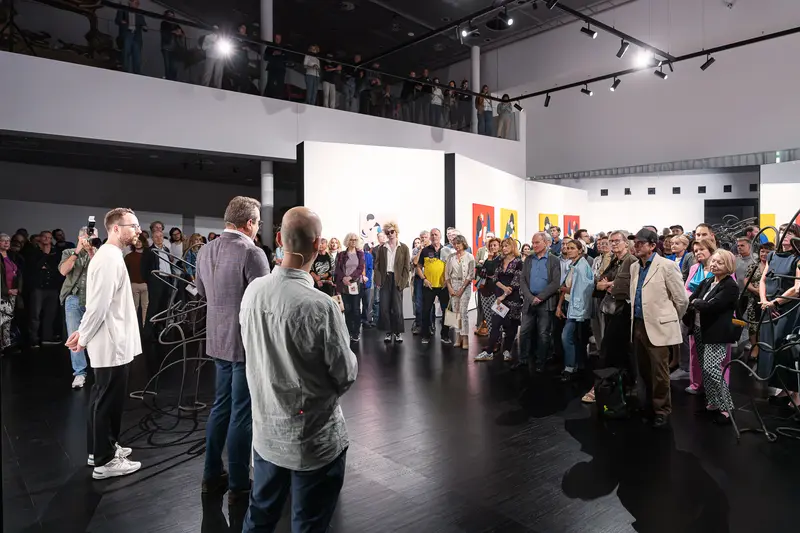 Marko Sajn Becoming One Opening at STRABAG Art Site, Vienna, September 2026 Sebastian Haselsteiner of STRABAG ART, curator Miha Colner and artist Marko Sajn address a crowded audience at the exhibition opening of Marko Sajn "Becoming One" at Strabag Art Site, Vienna, Austria, in September 2026. Marko Sajn's red and yellow figurative paintings hang on the white gallery walls behind the audience, with guests also watching from the mezzanine above.
 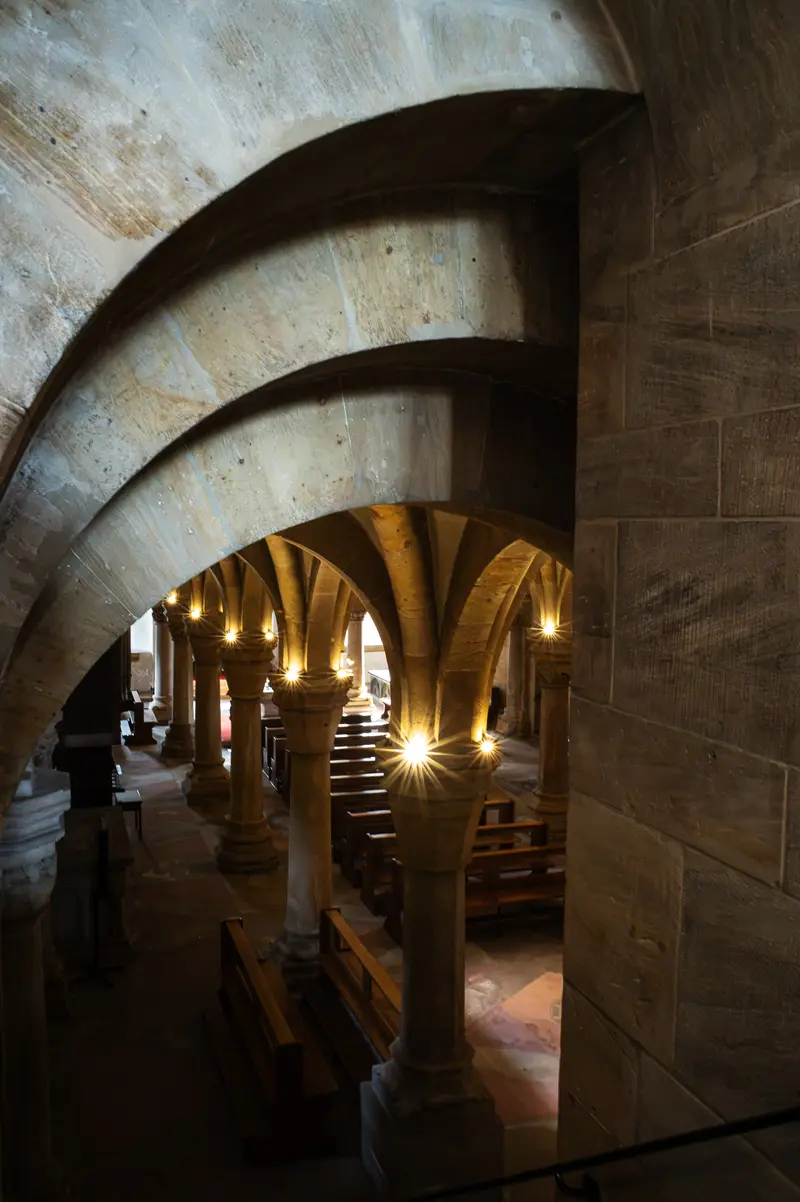 Trip to Germany and Denmark, August 2026
 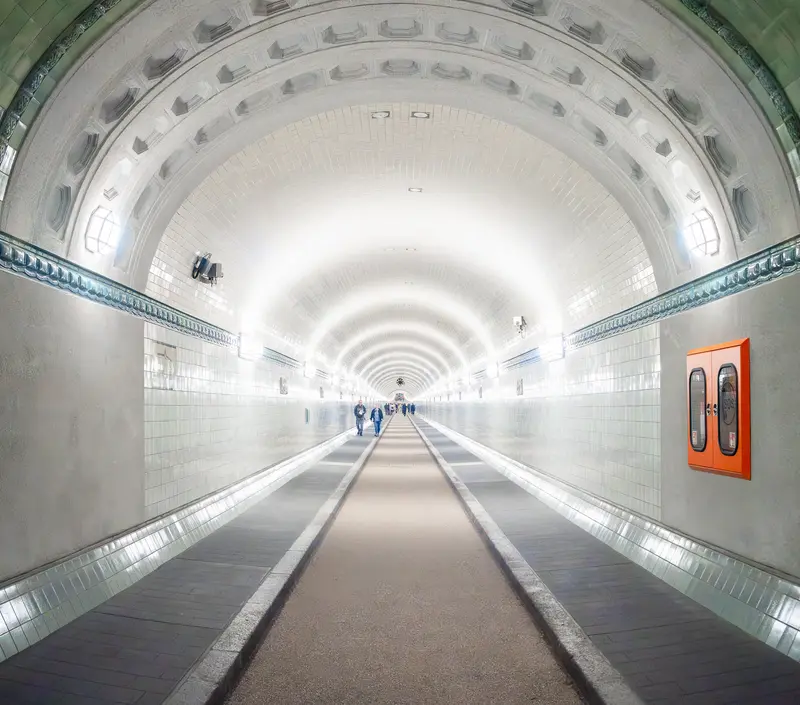 Trip to Germany and Denmark, August 2026
 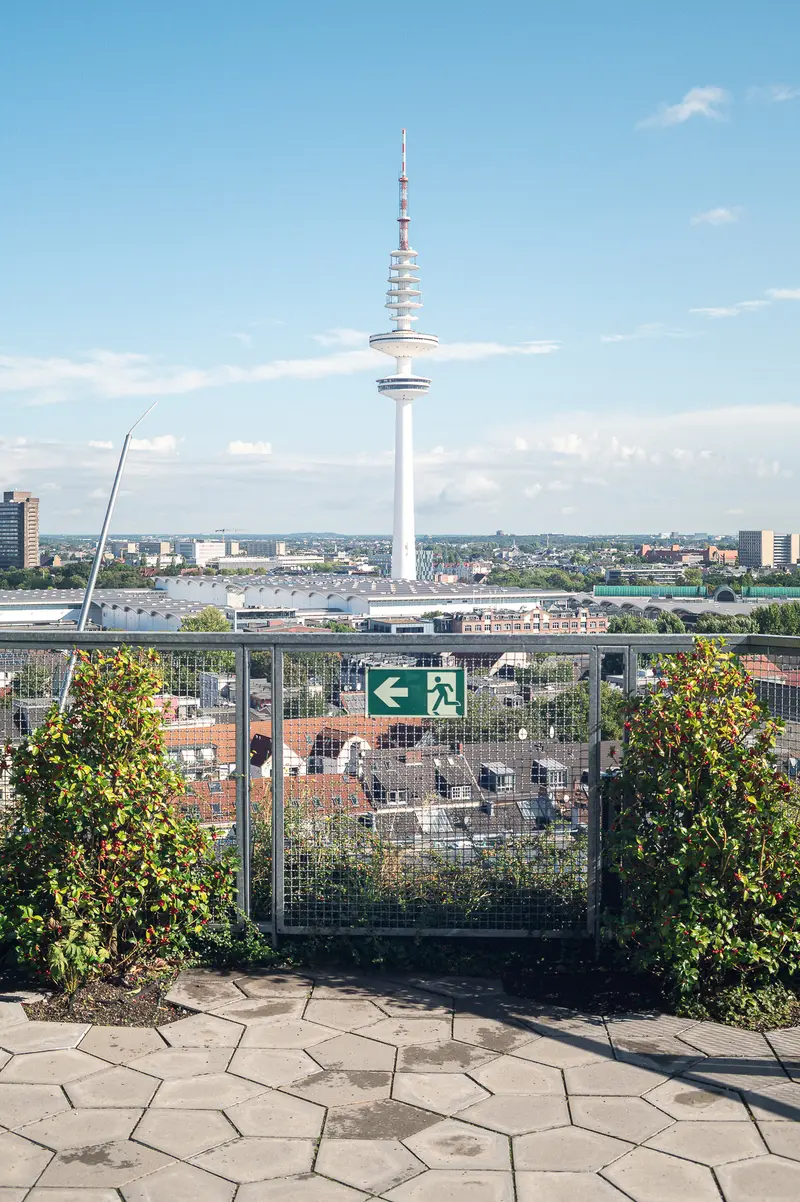 Trip to Germany and Denmark, August 2026
 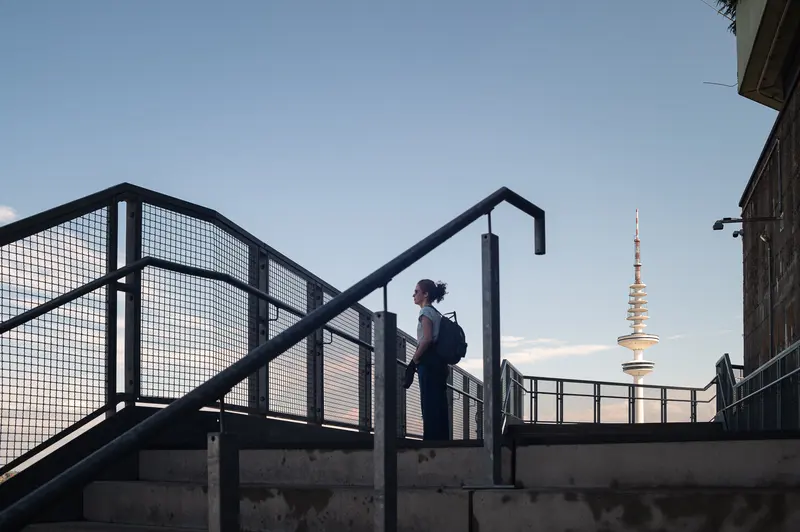 Trip to Germany and Denmark, August 2026
 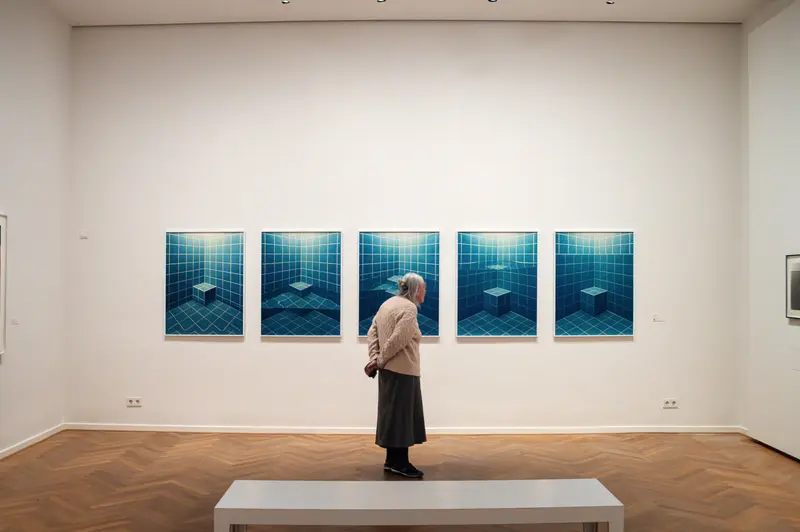 Trip to Germany and Denmark, August 2026
 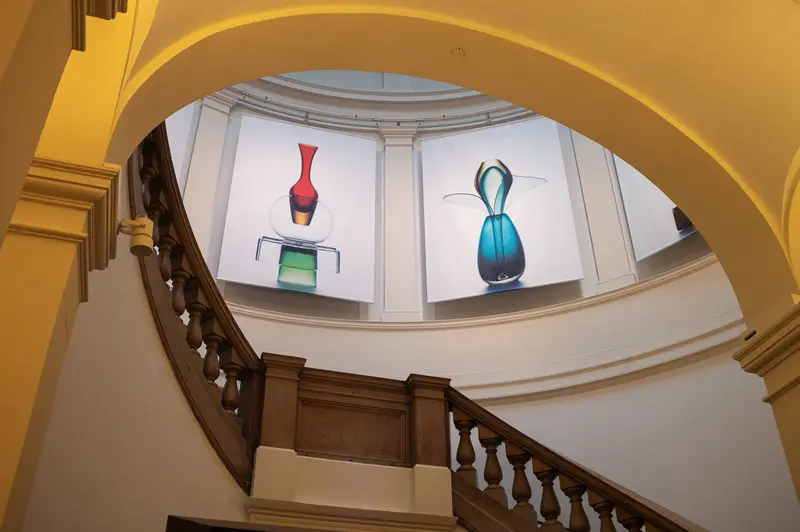 Trip to Germany and Denmark, August 2026
 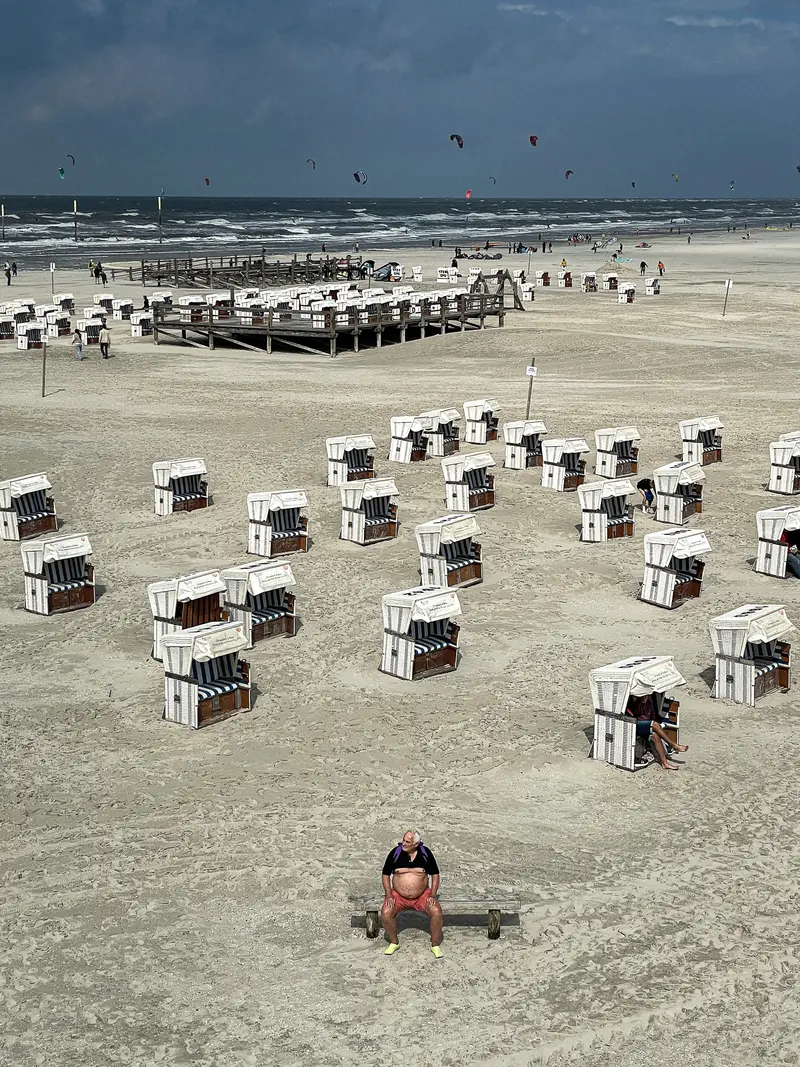 Trip to Germany and Denmark, August 2026
 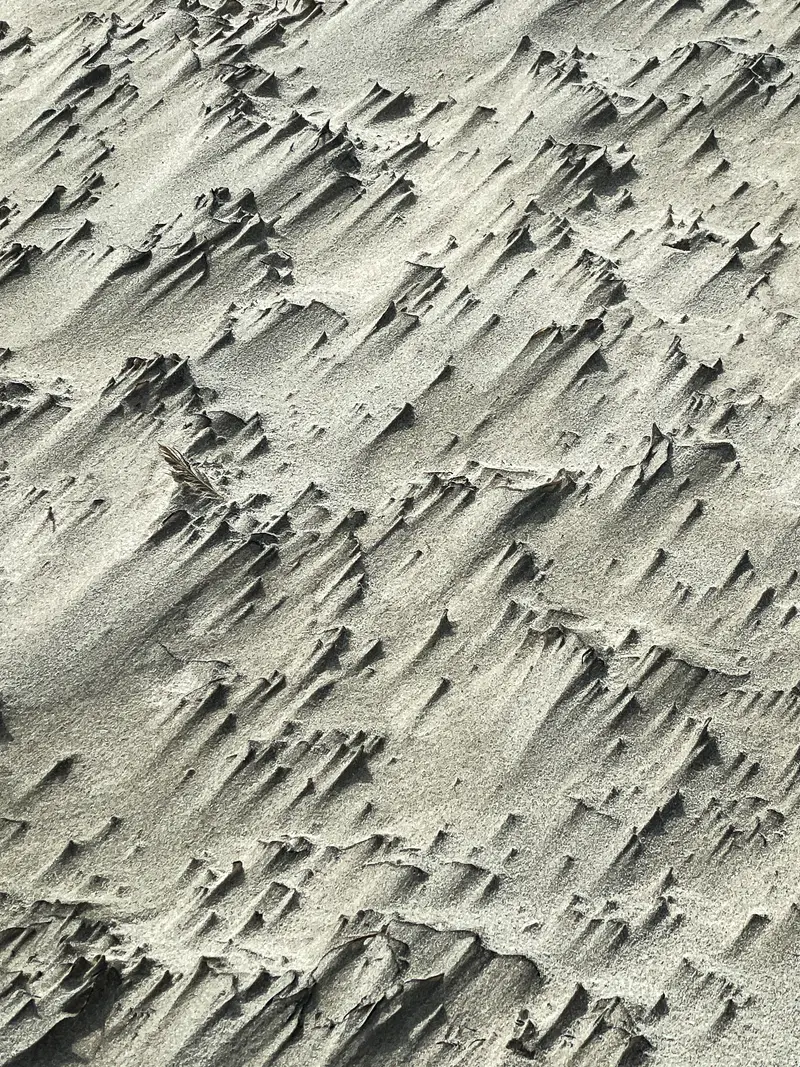 Trip to Germany and Denmark, August 2026
 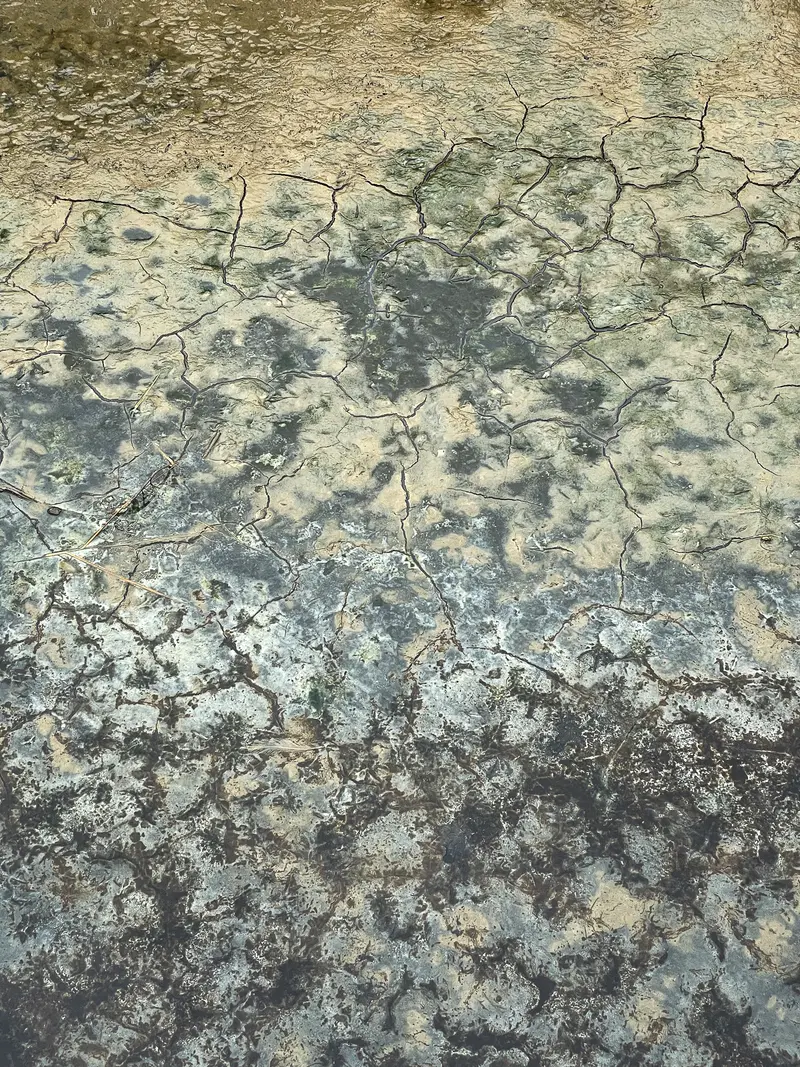 Trip to Germany and Denmark, August 2026
 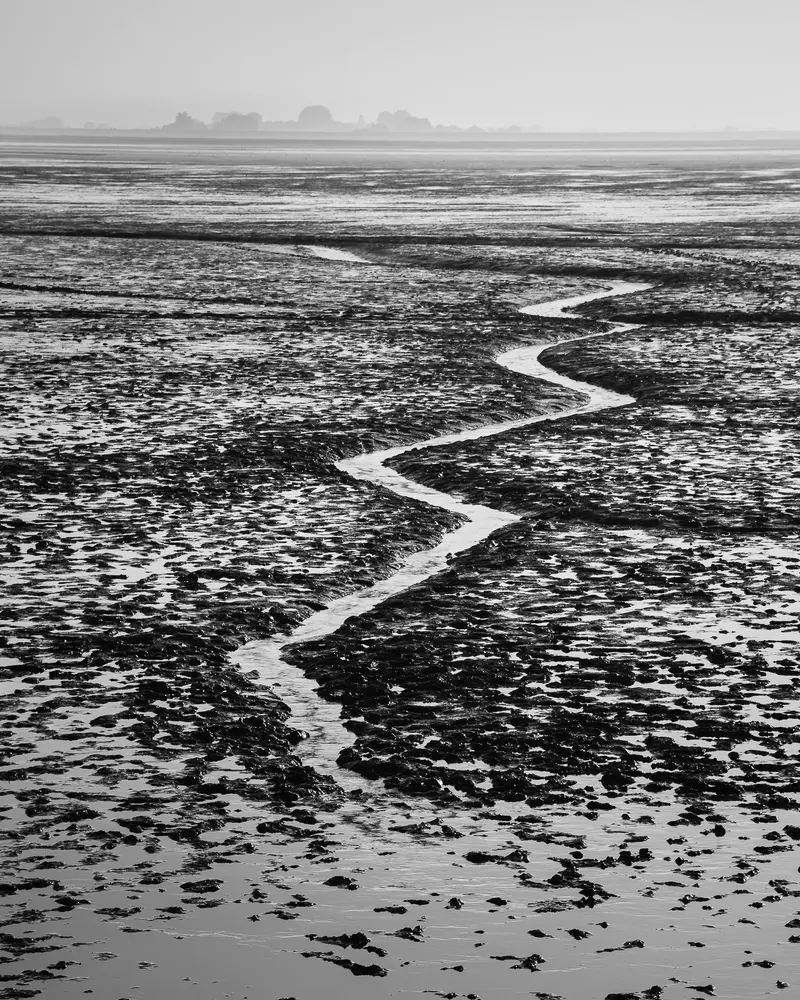 Trip to Germany and Denmark, August 2026
 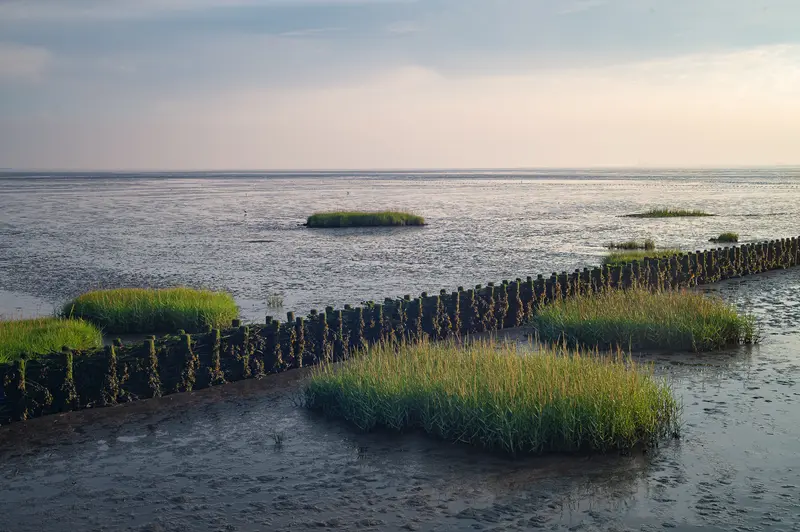 Trip to Germany and Denmark, August 2026
  Trip to Germany and Denmark, August 2026
  Trip to Germany and Denmark, August 2026
  Trip to Germany and Denmark, August 2026
  Trip to Germany and Denmark, August 2026
 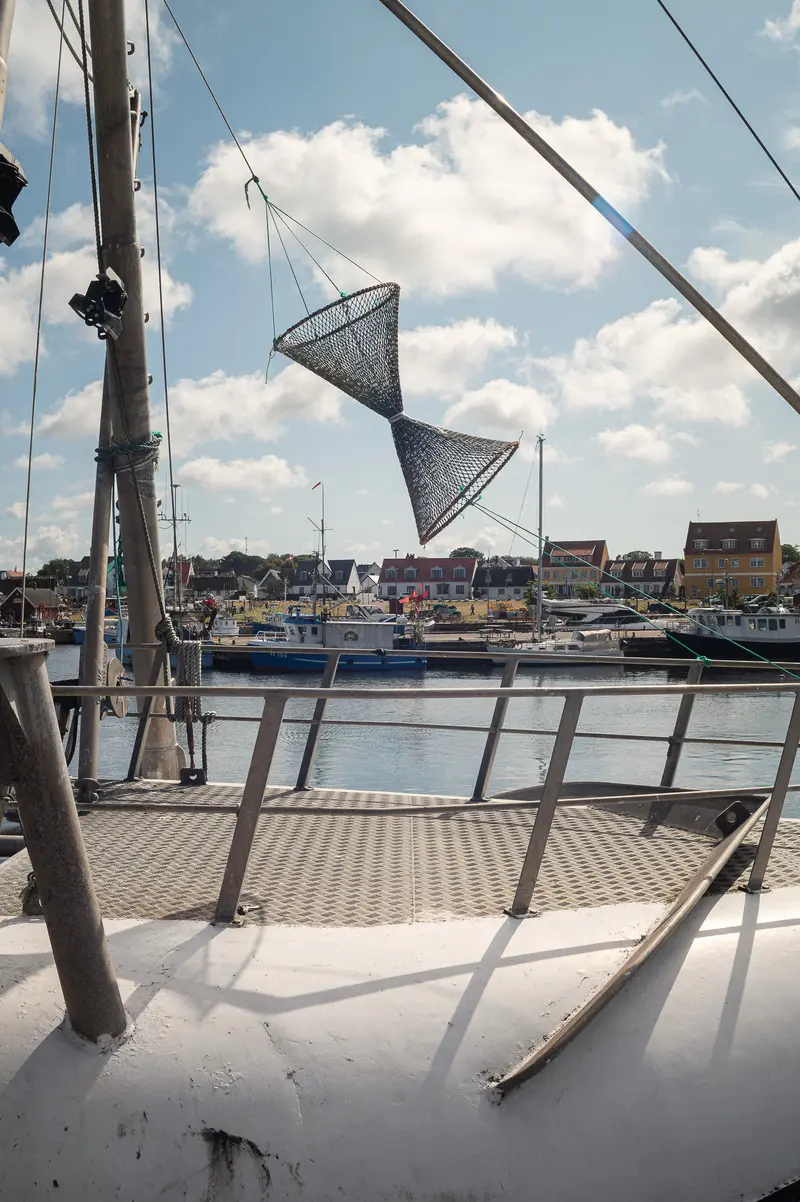 Trip to Germany and Denmark, August 2026
 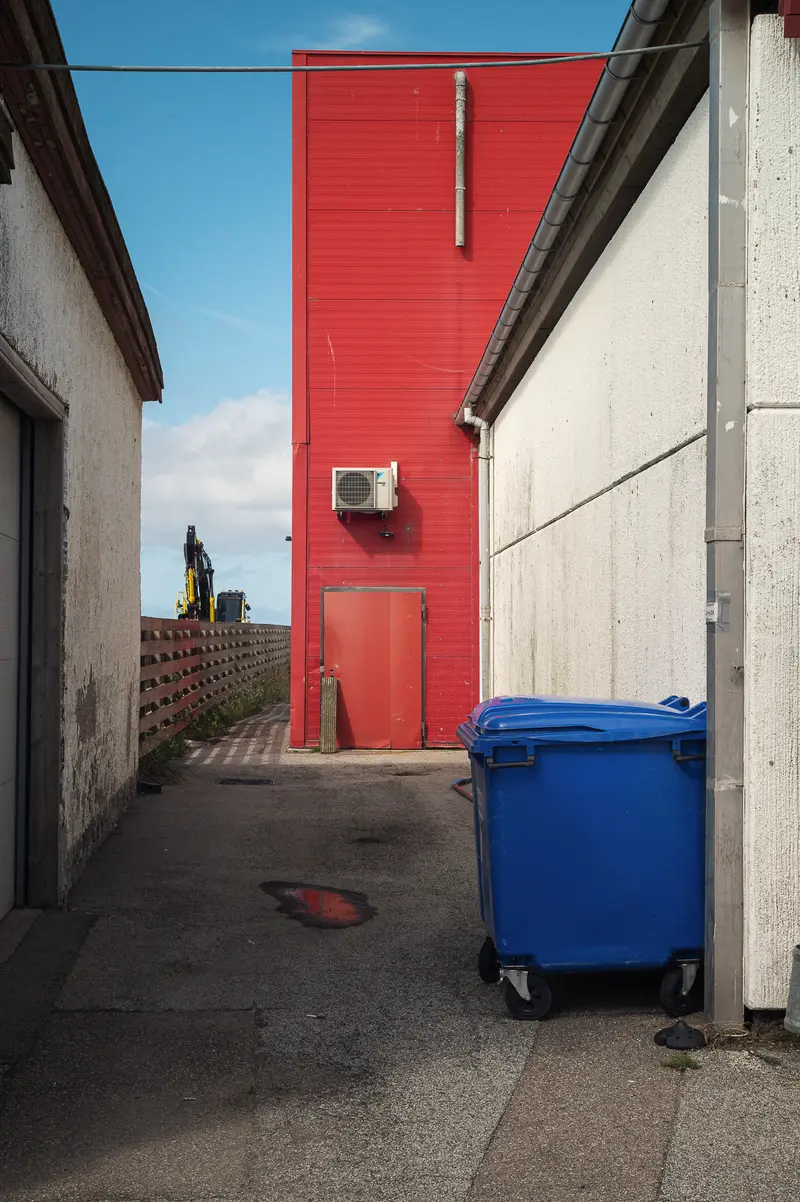 Trip to Germany and Denmark, August 2026
 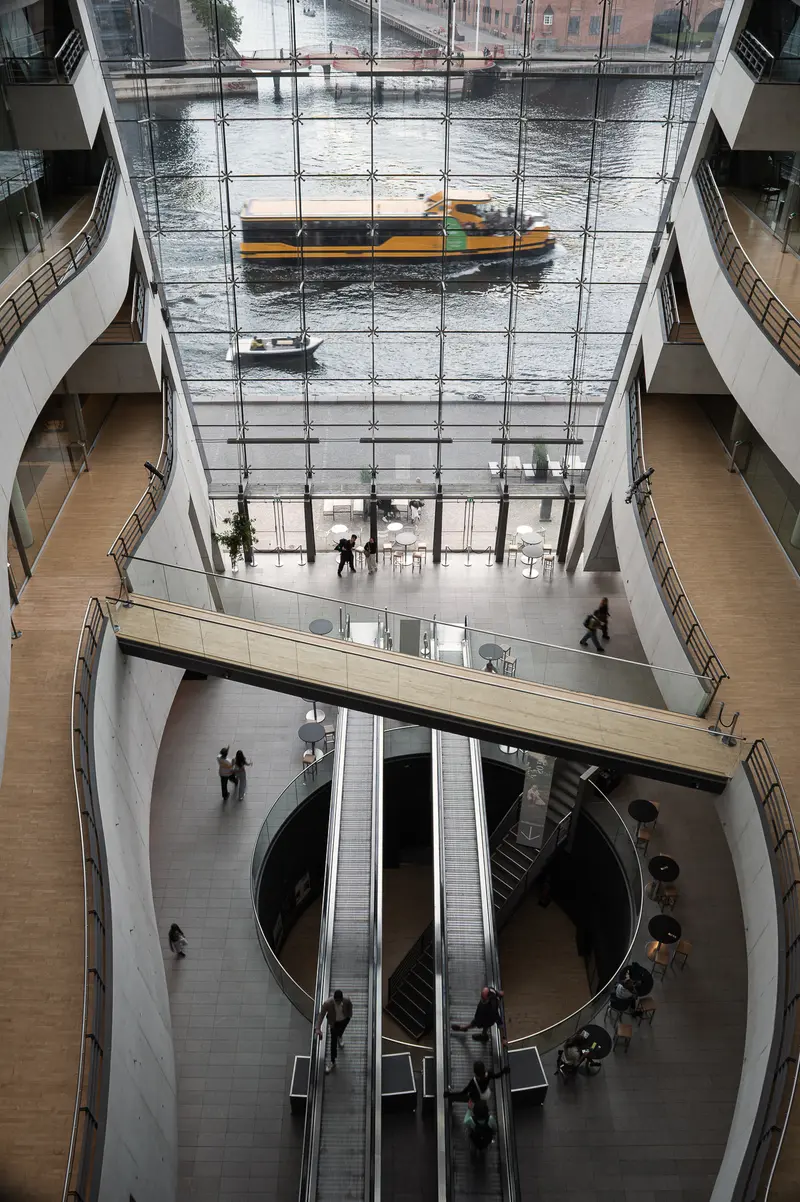 Trip to Germany and Denmark, August 2026
 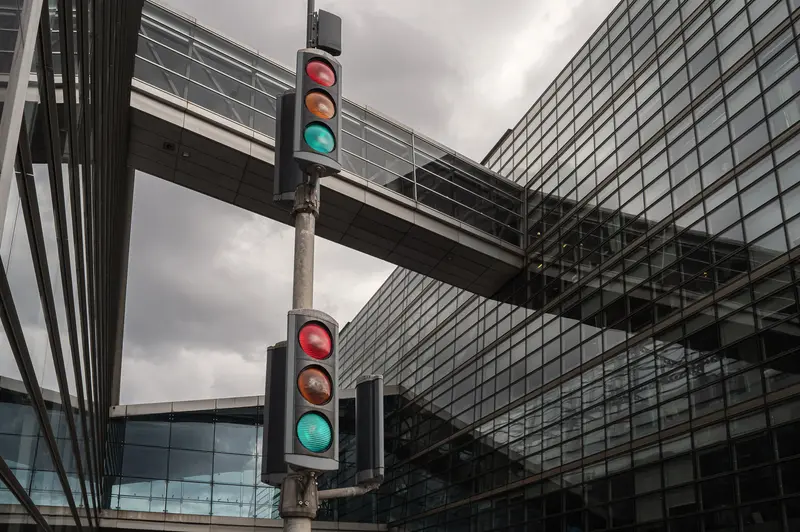 Trip to Germany and Denmark, August 2026
 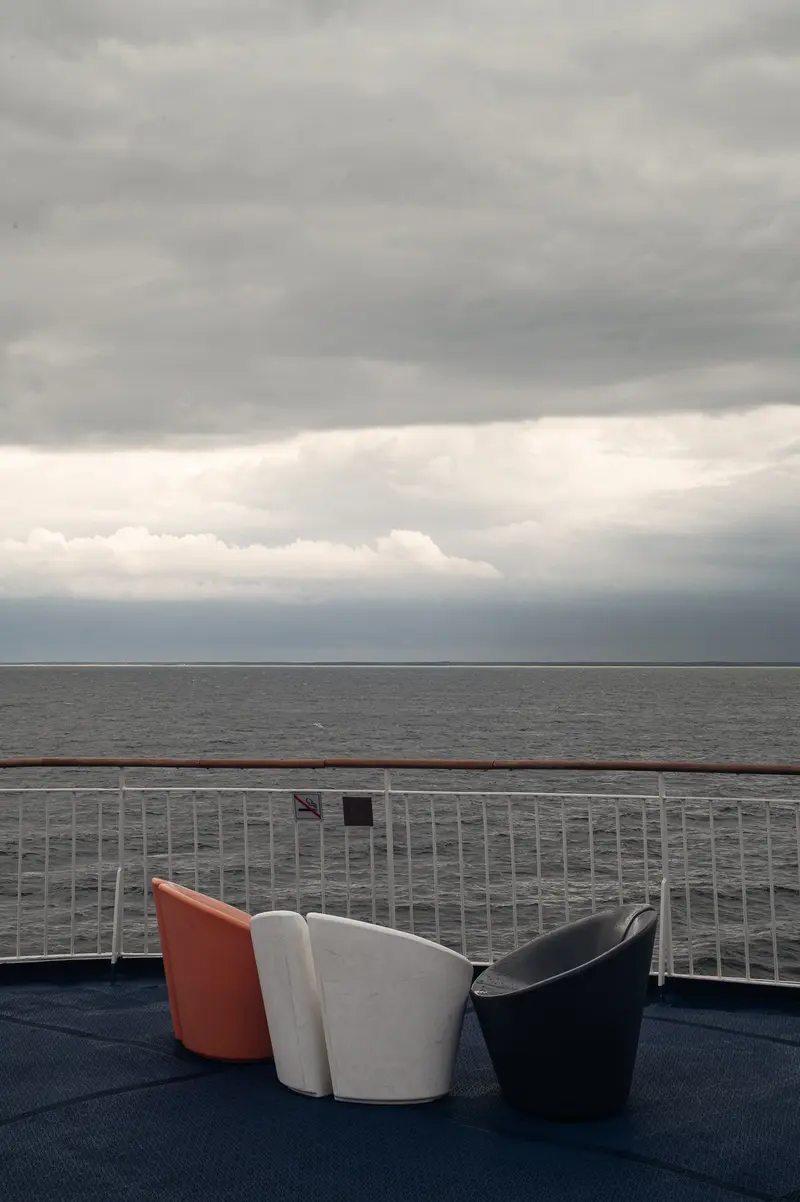 Trip to Germany and Denmark, August 2026
 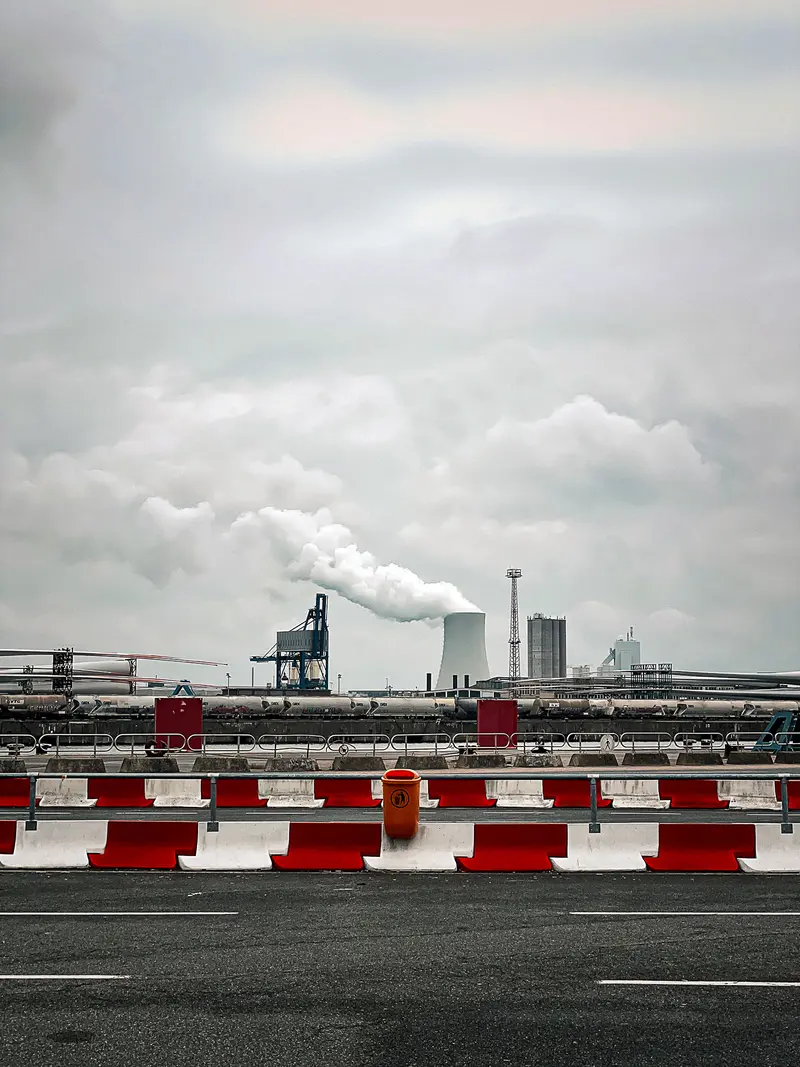 Trip to Germany and Denmark, August 2026
 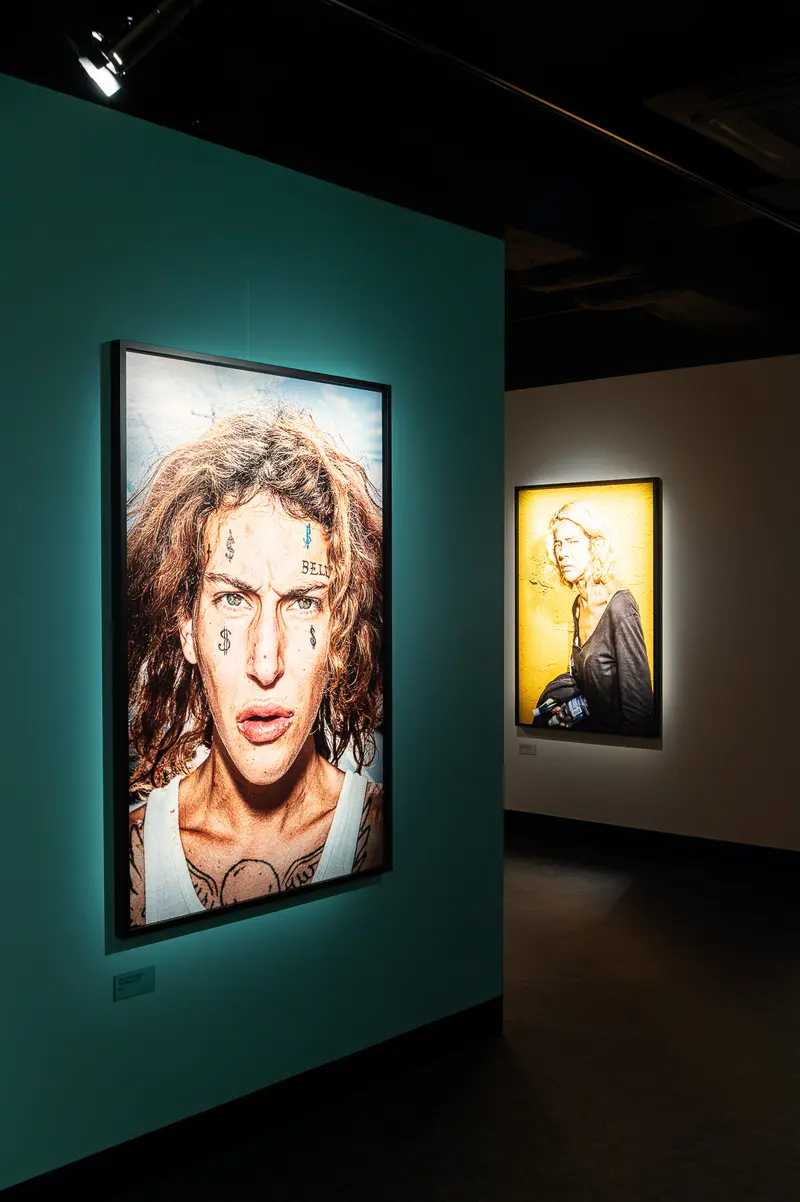 Trip to Germany and Denmark, August 2026
 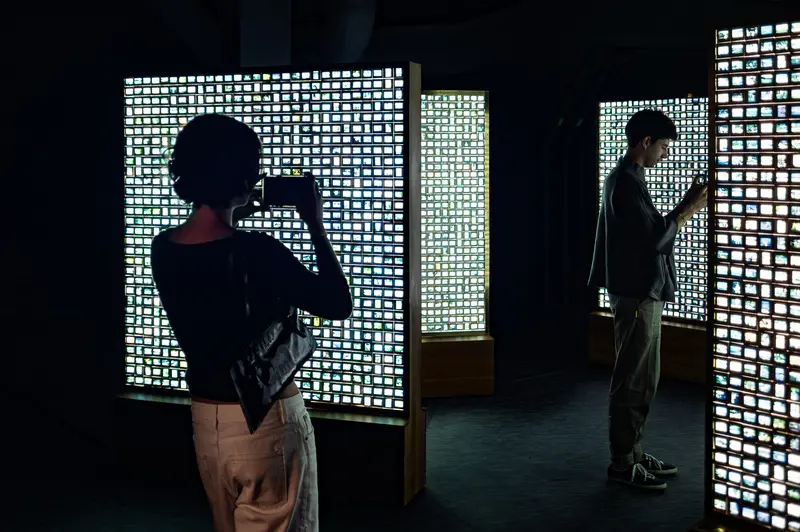 Trip to Germany and Denmark, August 2026
 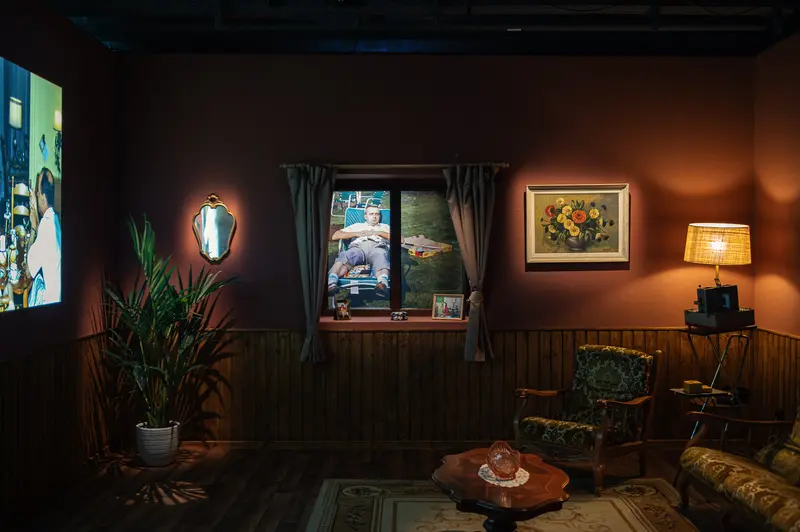 Trip to Germany and Denmark, August 2026
 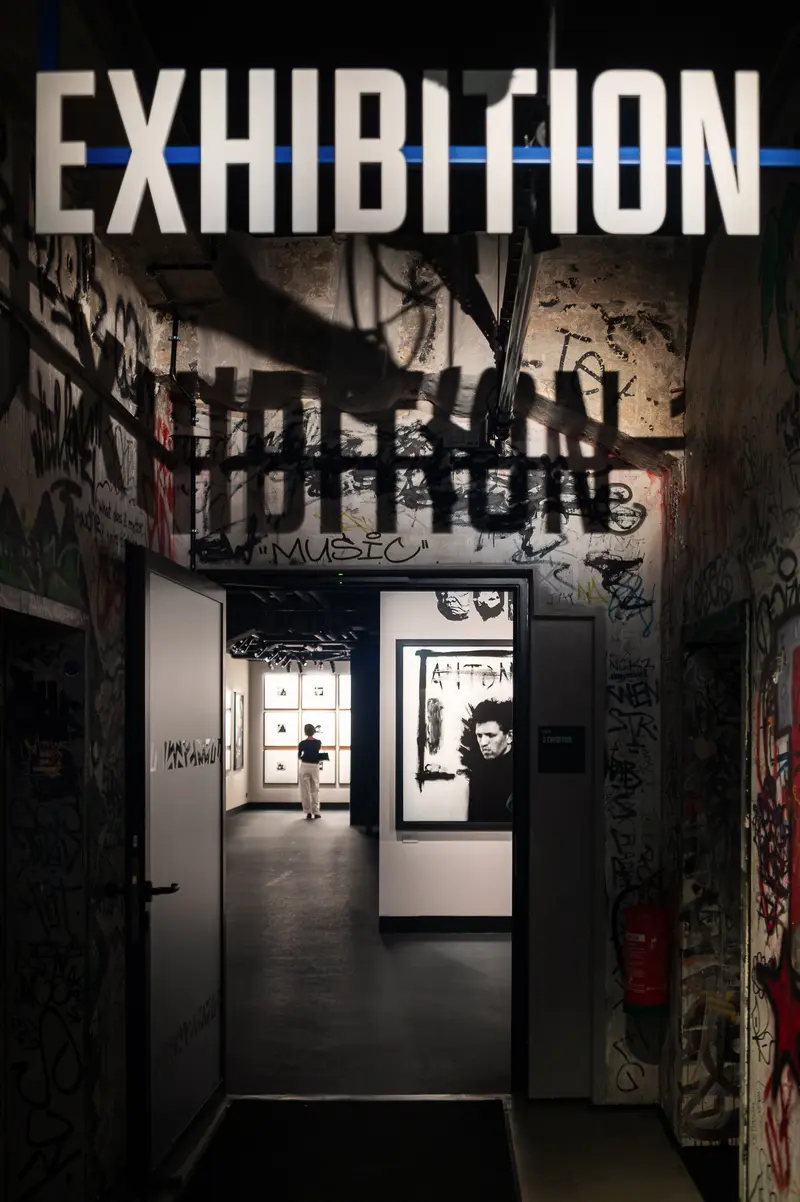 Trip to Germany and Denmark, August 2026
 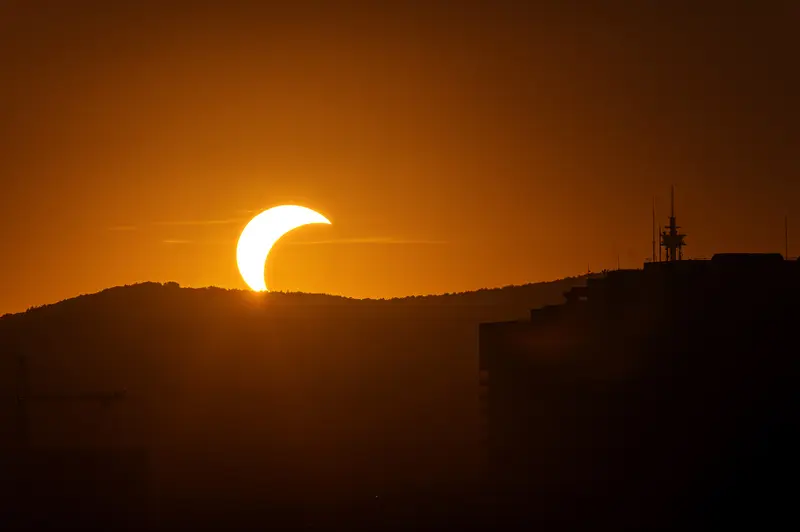 Partial Solar Eclipse over Vienna, August 2026 The partially eclipsed sun sets as a crescent behind the wooded ridge of the Vienna Woods, photographed from central Vienna, Austria, on 12 August 2026. A high-rise building topped by a telecommunications mast and a construction crane stand in silhouette against the orange sky.
 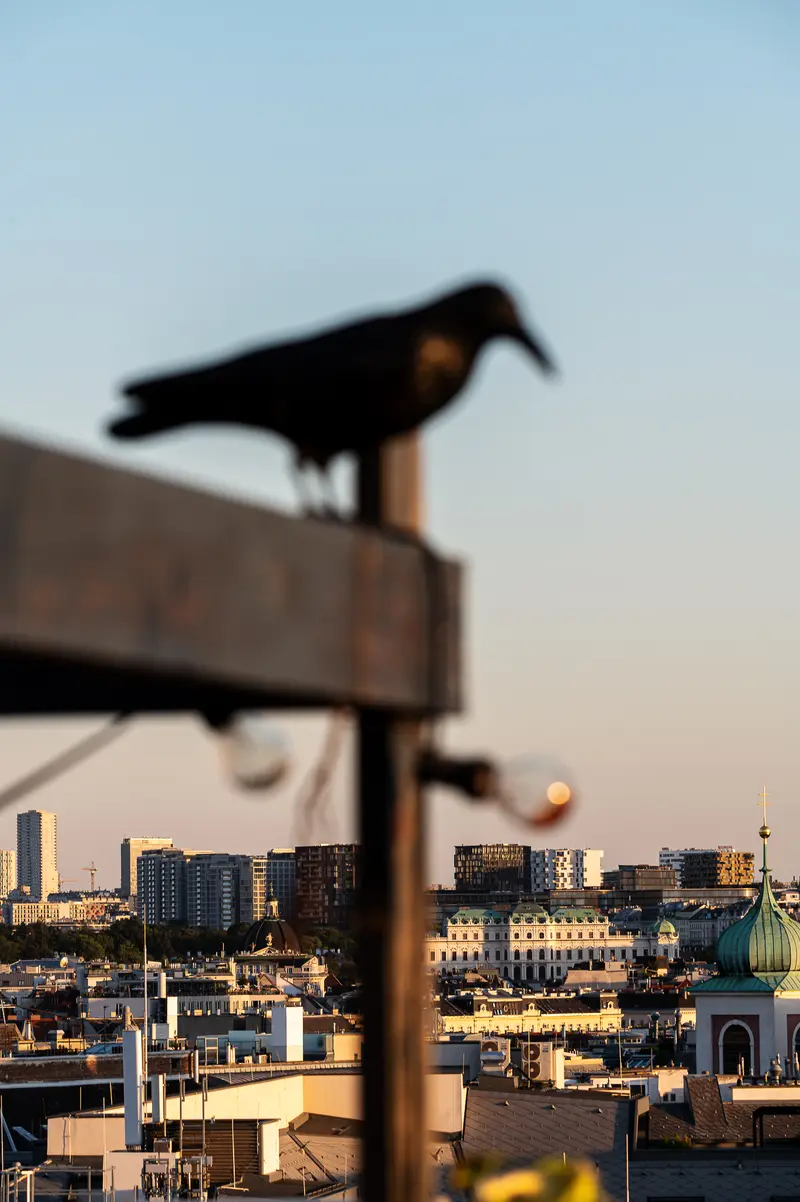 Partial Solar Eclipse over Vienna, August 2026 A crow perches on a rooftop light fitting above the Innere Stadt in Vienna, Austria, during the solar eclipse of 12 August 2026. The Baroque Oberes Belvedere, completed in 1723, stands out on the skyline beyond the surrounding rooftops.
 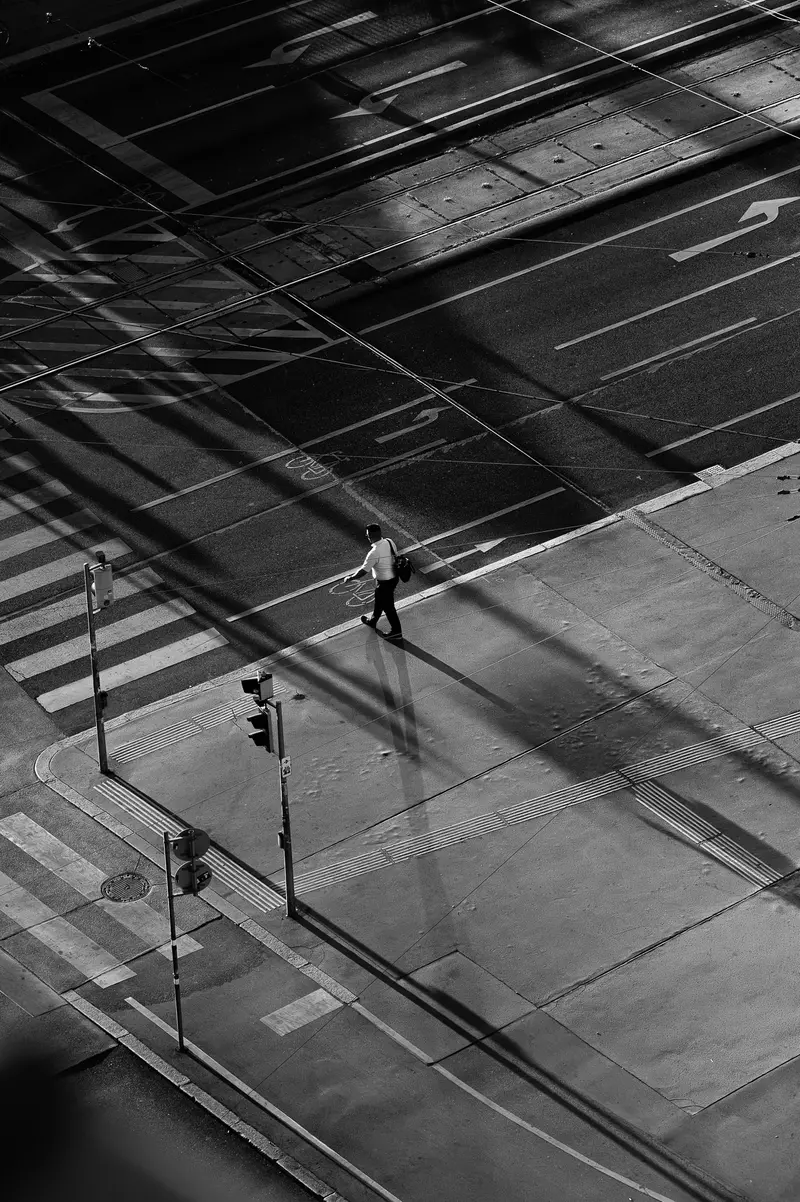 Partial Solar Eclipse over Vienna, August 2026 A single pedestrian crosses a deserted intersection in Vienna's Innenstadt, seen from above during the partial solar eclipse of 12 August 2026. The 12 August 2026 total solar eclipse reached Vienna only as a deep partial phase, with the path of totality crossing Greenland, Iceland and northern Spain.
 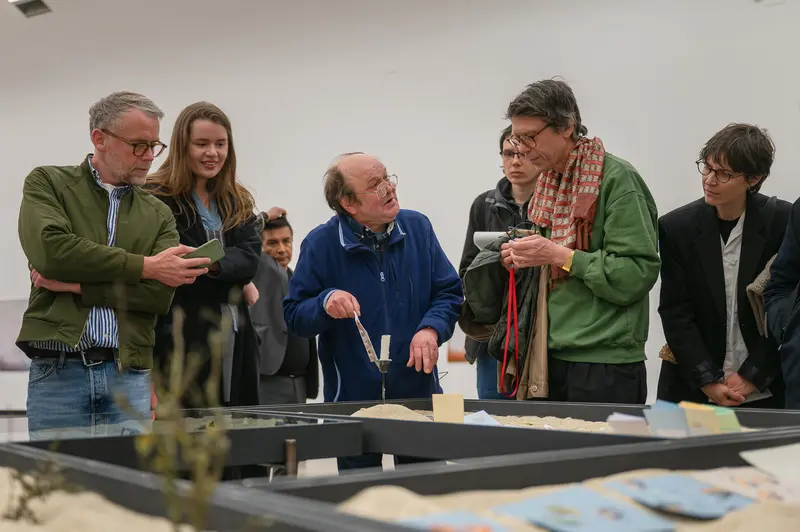 Lebt und arbeitet in Wien Kunsthalle Press Conference, April 2026 A group of six adults examines architectural or design materials laid out on a table during an indoor workshop or planning session. The participants, wearing casual clothing including green and blue jackets, engage in animated conversation while reviewing what appear to be maps, sketches, or design documents. The setting suggests a collaborative design review or community planning meeting in a institutional space with white walls.
 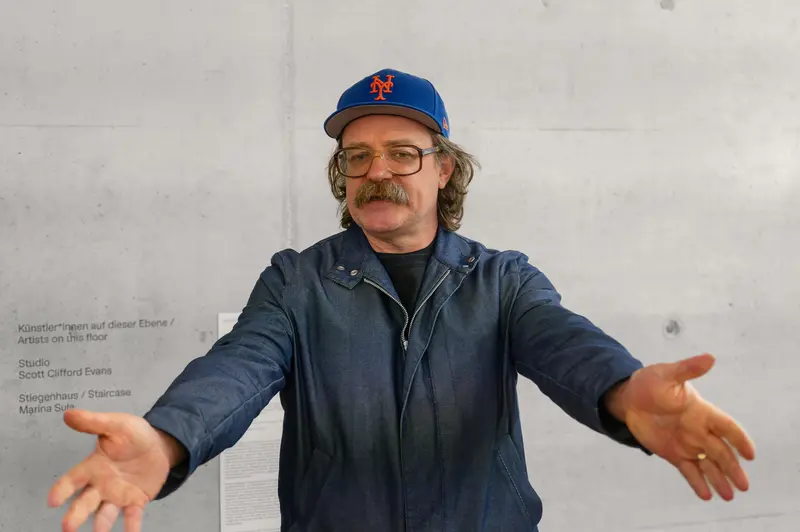 Lebt und arbeitet in Wien Kunsthalle Press Conference, April 2026 An artist wearing a blue New York Mets baseball cap and glasses demonstrates an expansive gesture while speaking in a white gallery space with visible text panels on the wall behind him. The man, dressed in a navy blue jacket over a black shirt, appears to be explaining or presenting work during what seems to be a gallery talk or artist discussion event. His open-armed posture and animated expression suggest active engagement with an audience in an institutional art setting.
 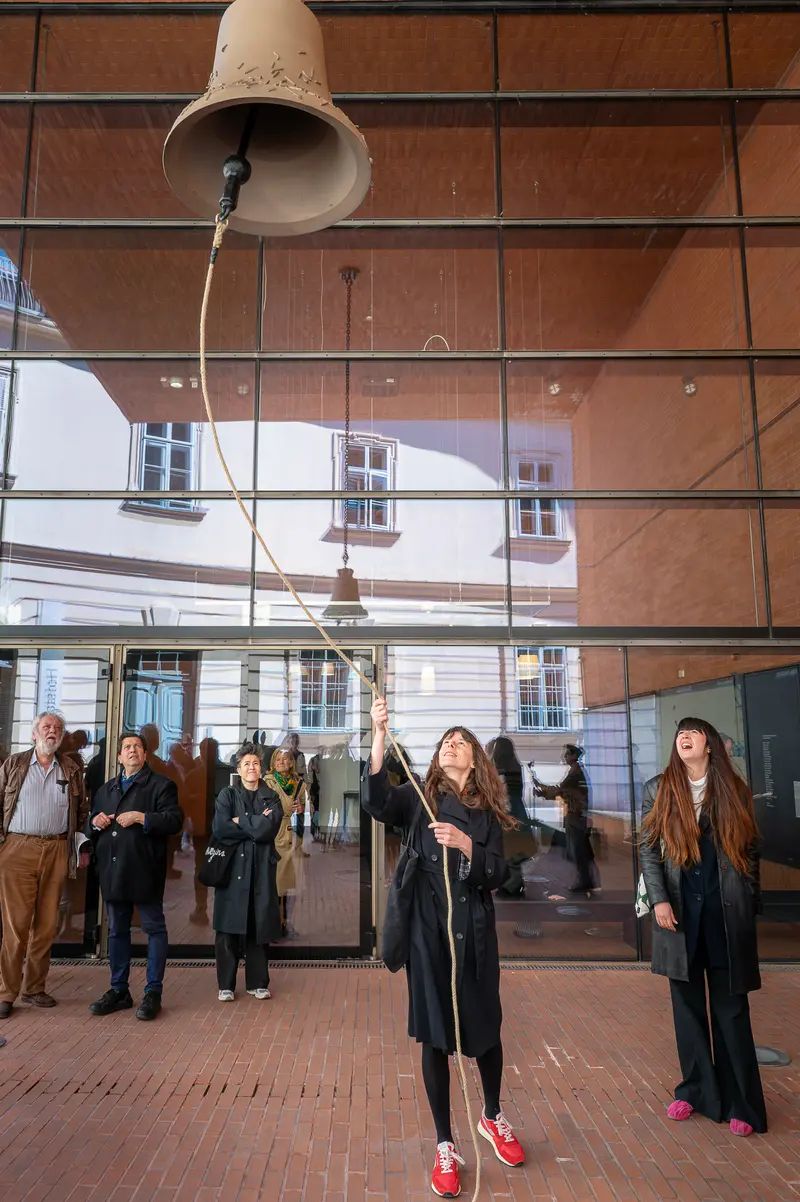 Lebt und arbeitet in Wien Kunsthalle Press Conference, April 2026 A group of performers in dark clothing participates in an interactive installation featuring a large suspended bell in a modern brick courtyard with reflective glass facades. The participants appear engaged with the sculptural element, which is mounted on an overhead structure. This event demonstrates contemporary performance art utilizing architectural spaces and participatory engagement.
 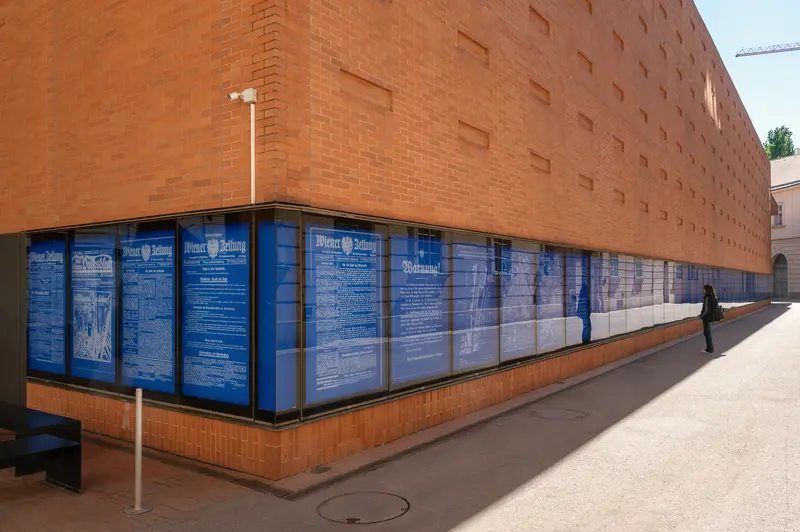 Lebt und arbeitet in Wien Kunsthalle Press Conference, April 2026 A modern brick building features an extensive row of blue-framed display panels along its ground level, positioned beneath a distinctive orange-red brick facade. A solitary pedestrian walks past the installation on a paved forecourt, with a white pole and street-level infrastructure visible in the foreground. The architectural design integrates public information display within contemporary building design.
 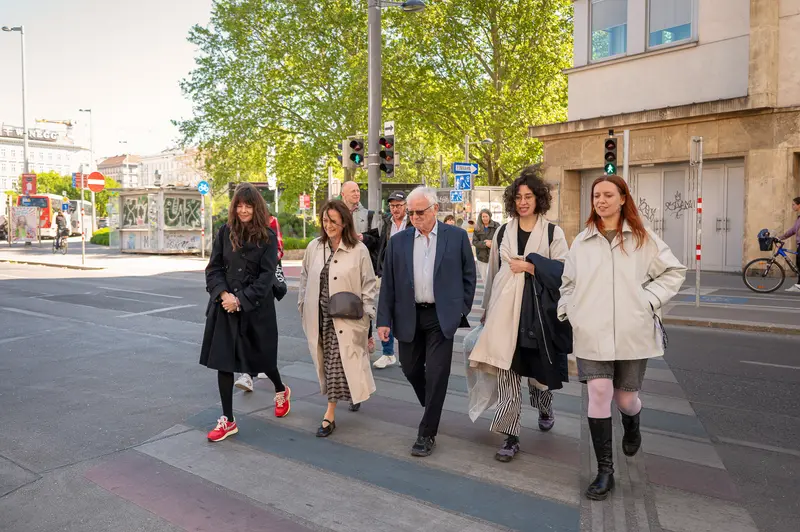 Lebt und arbeitet in Wien Kunsthalle Press Conference, April 2026 A group of approximately eight people walk together across a wide urban street lined with green trees and modern buildings. The pedestrians, dressed in business casual and formal attire including black coats and neutral tones, cross at a marked intersection with visible traffic signals and street signage. The scene captures a daytime urban moment in what appears to be a European city district.
 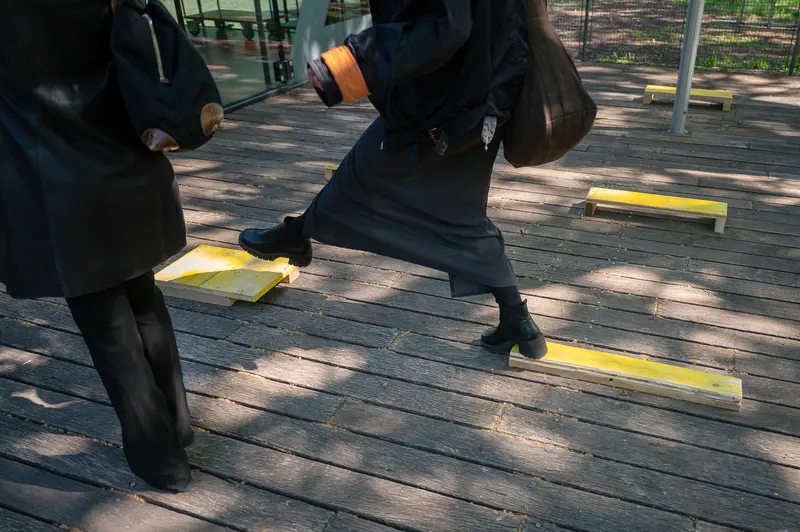 Lebt und arbeitet in Wien Kunsthalle Press Conference, April 2026 People participate in a cornhole game on a wooden deck during an outdoor daytime event, with participants in dark business attire tossing yellow bean bags toward cornhole boards. Yellow markers and scoring boards are visible on the deck surface, indicating an organized recreational activity. The setting appears to be a corporate or professional gathering featuring lawn games on a covered outdoor platform.
 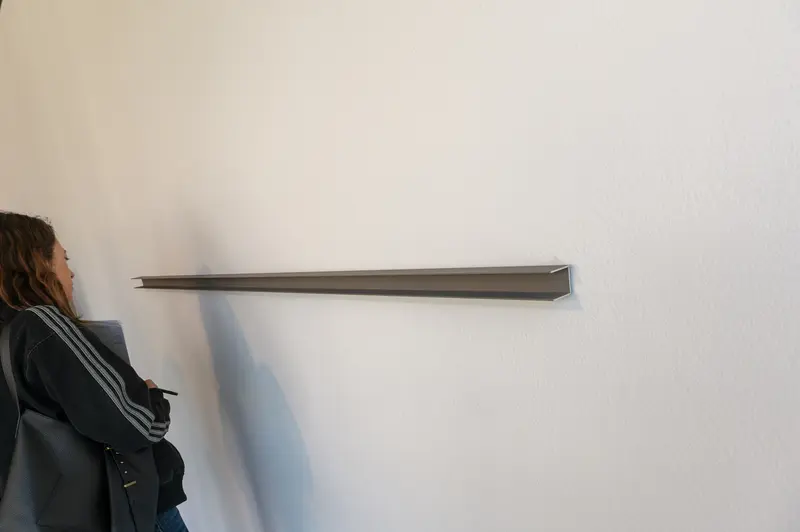 Lebt und arbeitet in Wien Kunsthalle Press Conference, April 2026 A woman in a black jacket stands before a long, minimalist metal shelf mounted horizontally on a white gallery wall. The narrow shelf, rendered in dark metallic finish, casts a distinct shadow against the plain surface, emphasizing its linear geometry and spare aesthetic. This installation exemplifies contemporary gallery display practices where architectural elements function as sculptural objects within exhibition spaces.
 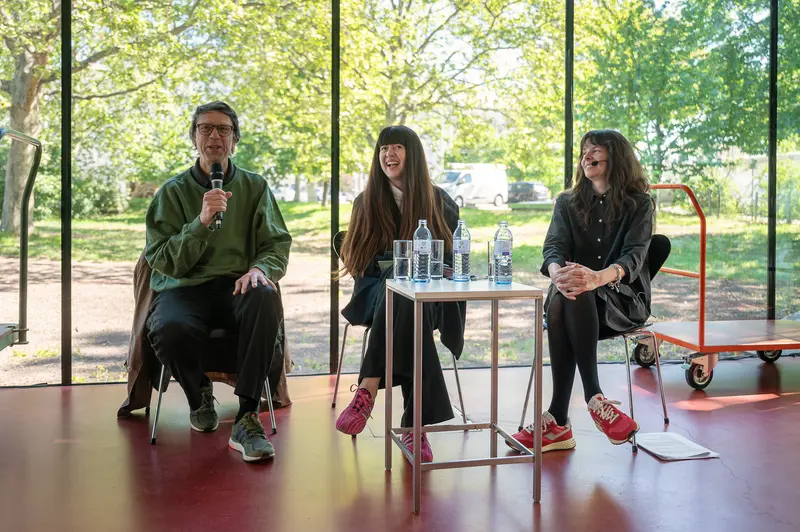 Lebt und arbeitet in Wien Kunsthalle Press Conference, April 2026 Three panelists participate in a public discussion at an indoor venue with expansive windows framing green trees and park grounds. The man on the left wears a olive-green jacket and holds a microphone, while two women in dark clothing sit to his right beside a small table with water bottles. The setting appears to be a contemporary cultural or educational venue designed with floor-to-ceiling glazing that connects the interior space to the natural landscape outside.
 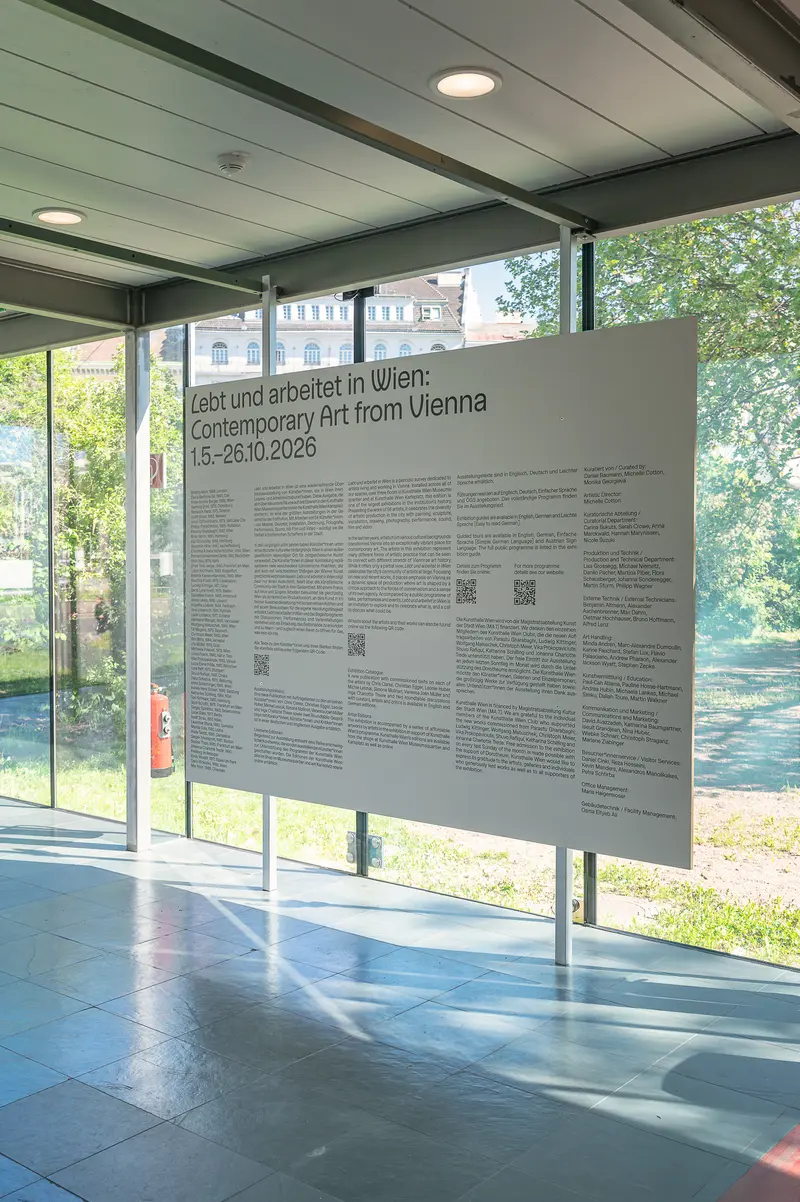 Lebt und arbeitet in Wien Kunsthalle Press Conference, April 2026 An informational exhibition panel titled "Gefünd angestellt in Wien: Contemporary Art from Vienna" (dated 15-26.05.2025) is mounted on glass in a modern interior space with polished flooring and large windows overlooking landscaped grounds. The panel contains text and photographic documentation presenting curatorial information about contemporary art practices in Vienna. The installation demonstrates how exhibition materials are displayed in gallery settings to contextualize and educate visitors about featured artists and artistic movements.
 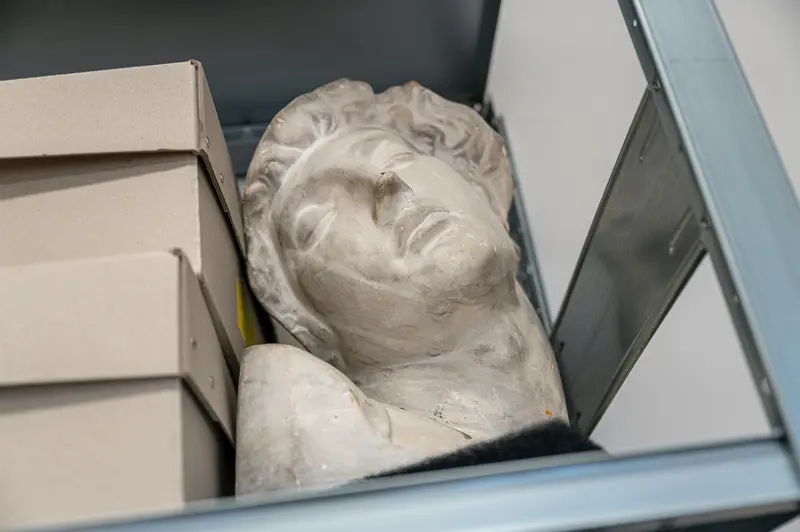 Polyphonic Archive: Entangled Voices at VBKÖ, Vienna, April 2026 A classical marble sculptural bust is displayed among cardboard storage boxes during the Polyphonic Archive exhibition at VBKÖ (Vereinigung bildender Künstlerinnen Österreichs) in Vienna, Austria, March 14 - May 2, 2026. The white plaster or marble head depicts classical features and is positioned between archival storage materials in what appears to be an institutional storage or display area. The exhibition celebrates over 100 years of queer feminist artistic production from Austrian women visual artists, with participating artists including Pêdra Costa, Zoe Gudović, Daniel Hill, Vinko Nino Jaeger, Eszter Katalin, Tahereh Nourani, and Christina Werner.
 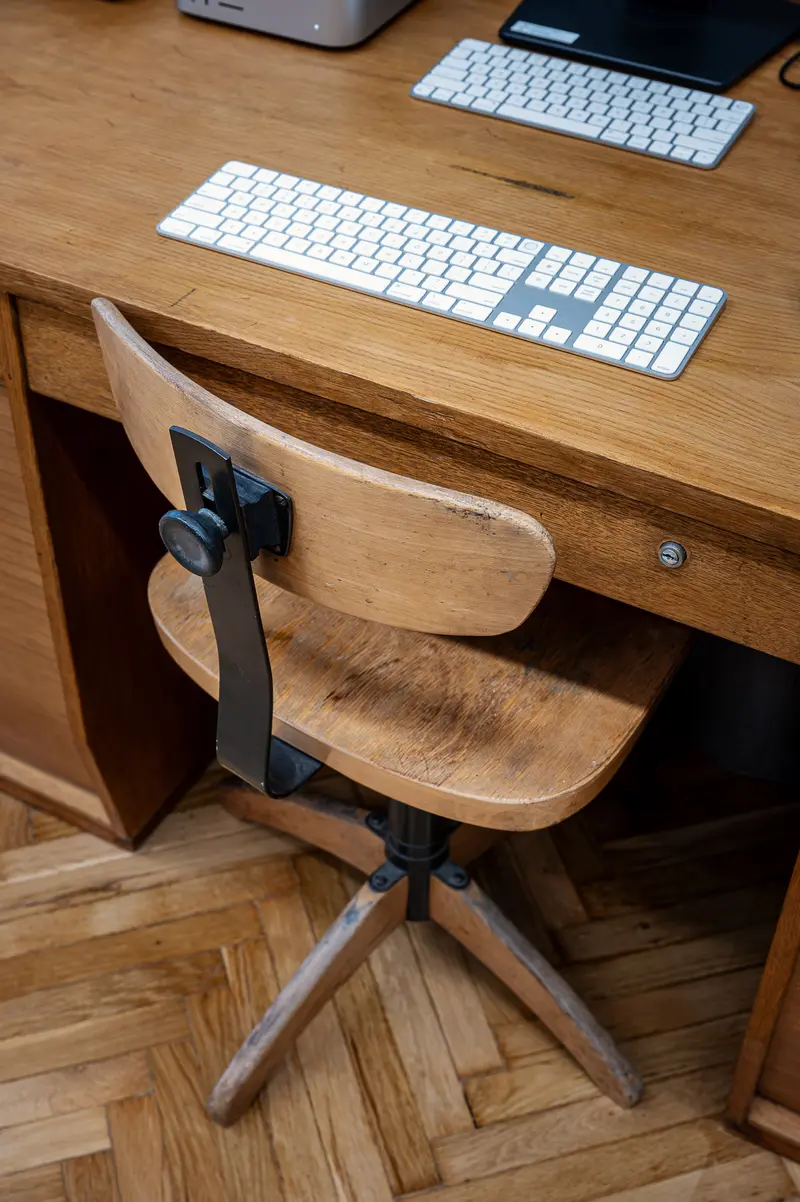 Polyphonic Archive: Entangled Voices at VBKÖ, Vienna, April 2026 A wooden swivel chair with curved armrests and tripod base sits beneath a desk in a studio or office environment, positioned in front of white computer keyboards and monitors. The chair features natural wood construction with black metal hardware and brackets, exemplifying mid-century modern furniture design. The workspace arrangement demonstrates a typical creative studio setup used for digital work and design practices.
 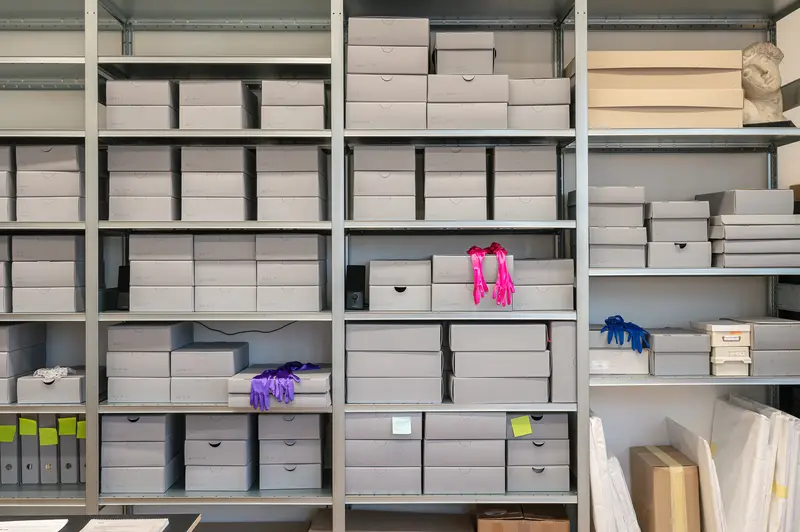 Polyphonic Archive: Entangled Voices at VBKÖ, Vienna, April 2026 Organized storage shelving system at the VBKÖ (Vereinigung bildender Künstlerinnen Österreichs) archive displays white archival boxes, historical documents, and colorful organizational markers across metal-framed shelving units. The Archive Polyphonic, reopened after renovation at Maysedergasse 2/28 in Vienna's first district, houses over 100 years of queer feminist artistic materials from Austrian women visual artists since the organization's founding in 1910. The exhibition runs March 14 – May 2, 2026, curated by Georgia Holz, Veronika Hösch, Mika Maruyama, Stephanie Misa, Miwa Negoro, Tsai-Ju Wu, and Julia Wieger.
 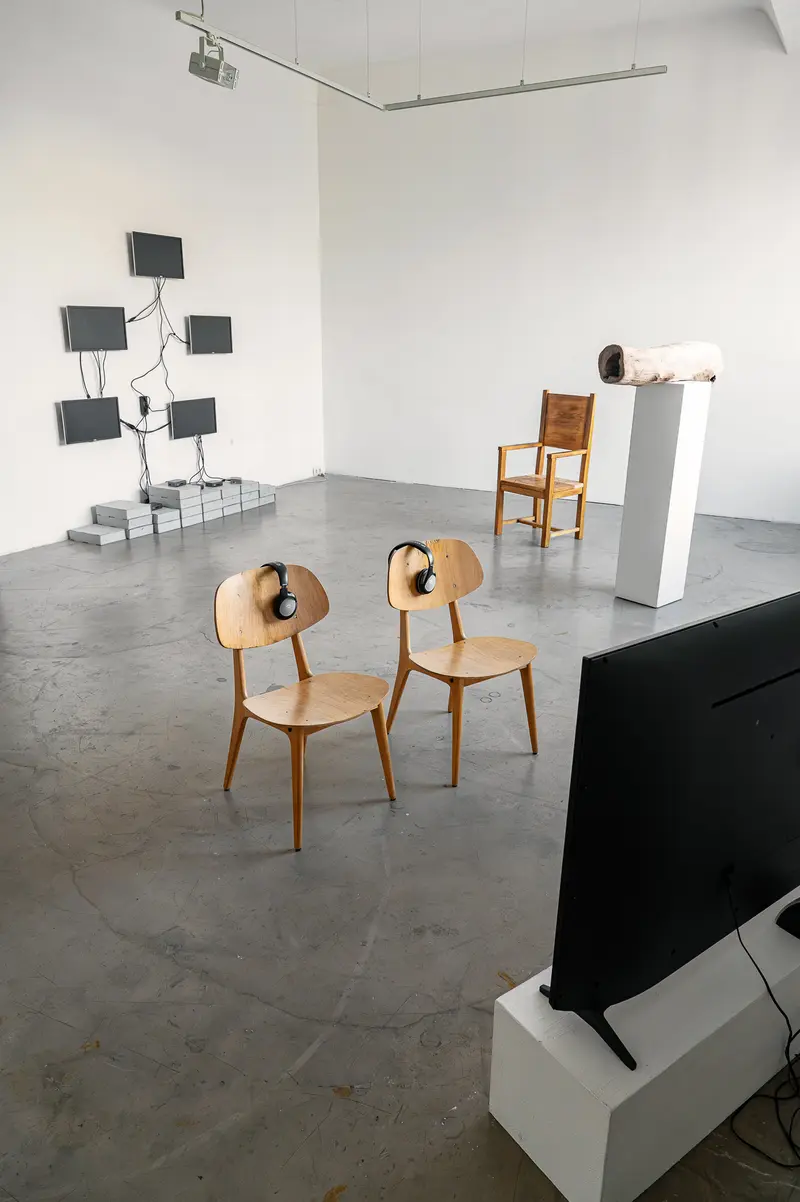 Polyphonic Archive: Entangled Voices at VBKÖ, Vienna, April 2026 The Polyphonic Archive exhibition, Entangled Voices, displayed at VBKÖ (Vereinigung bildender Künstlerinnen Österreichs) in Vienna from March 14 to May 2, 2026, features wooden chairs, sculptural objects, and multimedia installations across the gallery floor. The installation includes a tree-like structure displaying framed artworks, white pedestals with sculptural forms, and a video monitor, arranged within the renovated archive space. The exhibition celebrates over 100 years of queer feminist artistic production from Austrian women visual artists, curated by Georgia Holz, Veronika Hösch, Mika Maruyama, Stephanie Misa, Miwa Negoro, Tsai-Ju Wu, and Julia Wieger.
 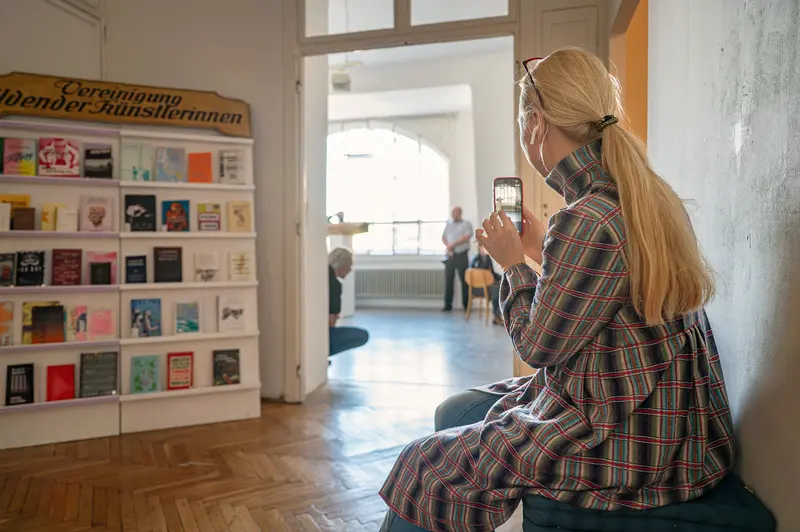 Polyphonic Archive: Entangled Voices at VBKÖ, Vienna, April 2026 A visitor photographs a display panel at the Polyphonic Archive: Entangled Voices exhibition at VBKÖ (Vereinigung bildender Künstlerinnen Österreichs) in Vienna's first district during the March-May 2026 archive re-opening. The woman in a plaid shirt holds a smartphone to record the exhibition featuring over 100 years of queer feminist artistic production by Austrian women visual artists since the organization's 1910 founding. The exhibition, curated by Georgia Holz, Veronika Hösch, Mika Maruyama, Stephanie Misa, Miwa Negoro, Tsai-Ju Wu, and Julia Wieger, showcases historical artworks, documents, and objects from participating artists including Pêdra Costa, Zoe Gudović, Daniel Hill, Vinko Nino Jaeger, Eszter Katalin, Tahereh Nourani, and Christina Werner.
 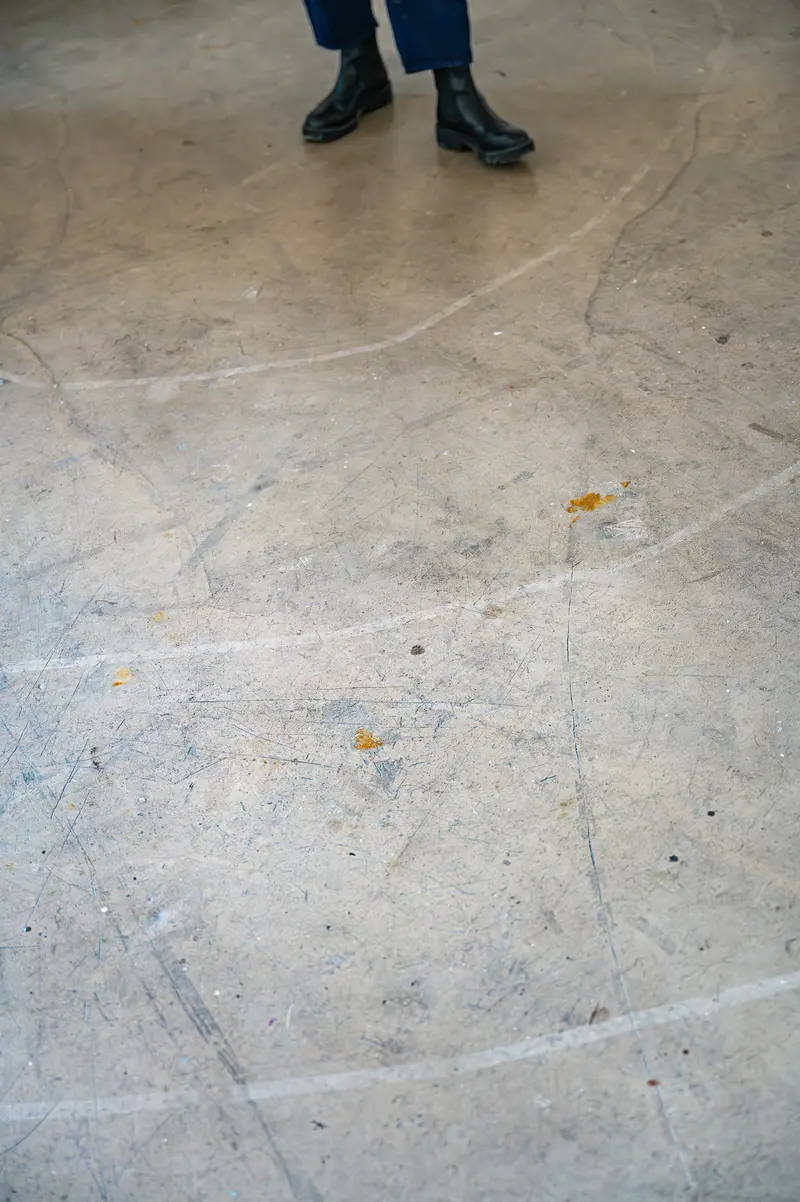 Polyphonic Archive: Entangled Voices at VBKÖ, Vienna, April 2026 The floor of the VBKÖ archive space displays geometric chalk markings and outlines during the Polyphonic Archive exhibition opening in March 2026. A person wearing dark blue trousers and black boots stands in the upper portion of the frame, positioned near curved and linear chalk drawings on the concrete surface. The exhibition at VBKÖ (Vereinigung bildender Künstlerinnen Österreichs) on Maysedergasse, Vienna, celebrates over 100 years of queer feminist artistic production since the organization's founding in 1910.
 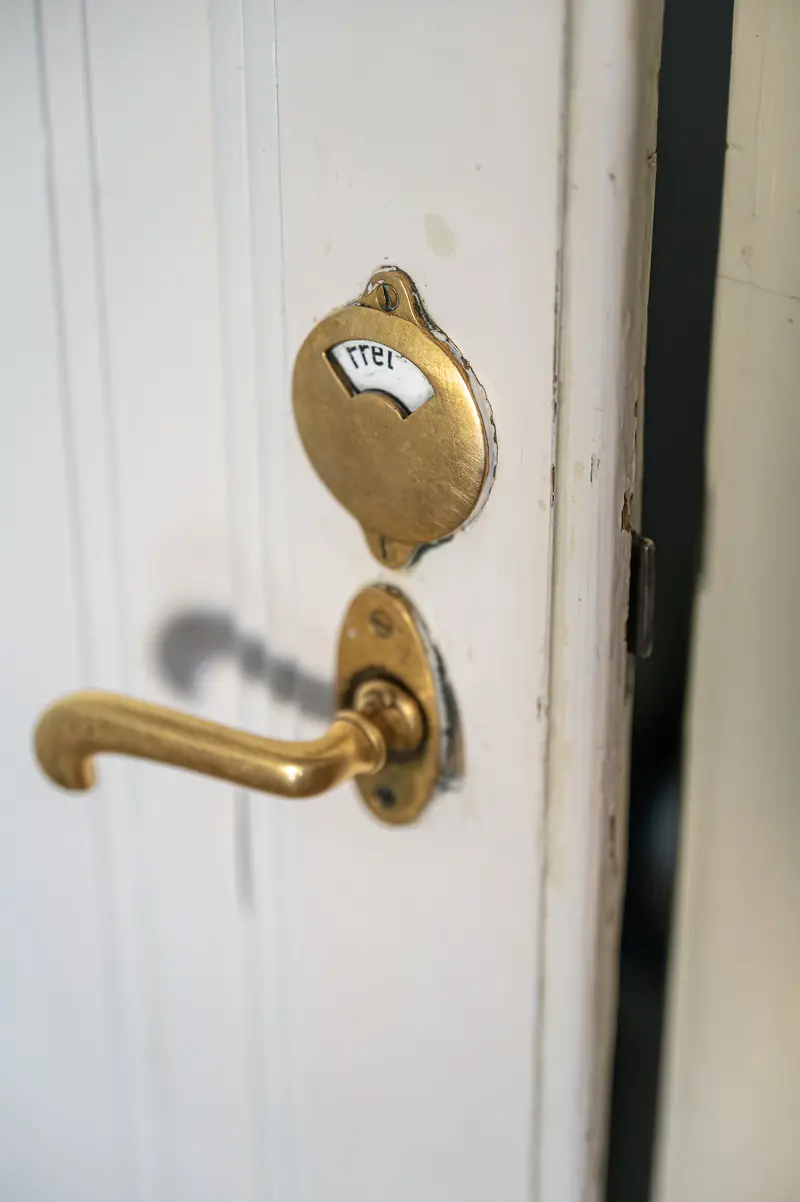 Polyphonic Archive: Entangled Voices at VBKÖ, Vienna, April 2026 A brass door handle and occupancy indicator are mounted on a white painted door at the Polyphonic Archive re-opening at VBKÖ (Vereinigung bildender Künstlerinnen Österreichs), Maysedergasse 2/28, Vienna, March–May 2026. The oval indicator plate displays "FREI" (free/vacant) and features period hardware consistent with the building's historical architecture. The exhibition celebrates over 100 years of queer feminist artistic production since VBKÖ's founding in 1910.
 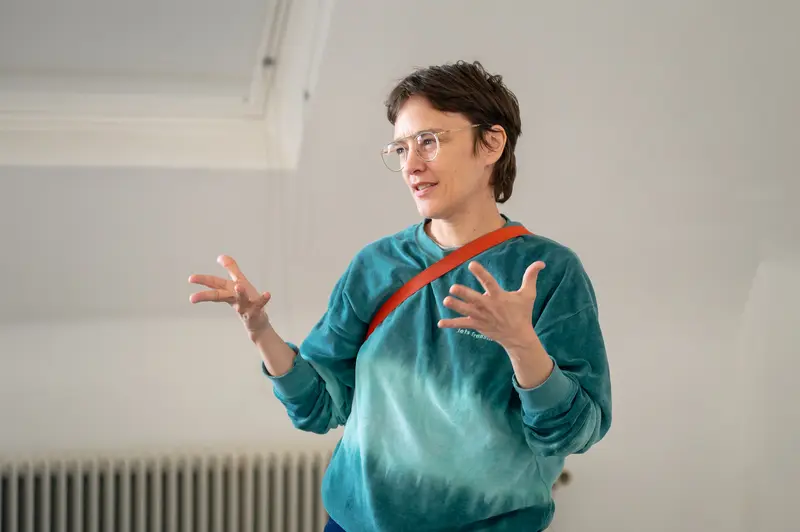 Polyphonic Archive: Entangled Voices at VBKÖ, Vienna, April 2026 Julia Wieger gestures while speaking during the Polyphonic Archive exhibition at VBKÖ (Vereinigung bildender Künstlerinnen Österreichs) in Vienna's first district in March 2026. The speaker, wearing a teal sweatshirt and glasses, stands in front of a white gallery wall with radiator visible in background. The exhibition celebrates over 100 years of queer feminist artistic production by Austrian women artists, running from March 14 to May 2, 2026.
 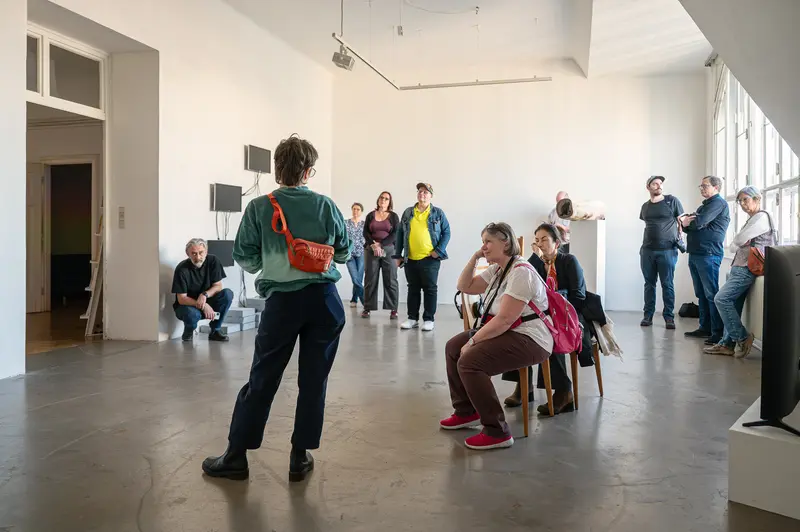 Polyphonic Archive: Entangled Voices at VBKÖ, Vienna, April 2026 A participant performs a dynamic movement or dance piece while an audience of approximately fifteen people observe from various positions throughout the white-walled gallery space during the Polyphonic Archive: Entangled Voices exhibition opening at VBKÖ (Vereinigung bildender Künstlerinnen Österreichs) in Vienna's first district. The performer wears a green jacket and red backpack while another attendee sits on a wooden chair in the center of the polished concrete floor, indicating an interactive or participatory art component. The exhibition, open March 14 – May 2, 2026, celebrates over 100 years of queer feminist artistic production by Austrian women visual artists including Pêdra Costa, Zoe Gudović, Daniel Hill, Vinko Nino Jaeger, Eszter Katalin, Tahereh Nourani, and Christina Werner, curated by Georgia Holz, Veronika Hösch, Mika Maruyama, Stephanie Misa, Miwa Negoro, Tsai-Ju Wu, and Julia Wieger.
 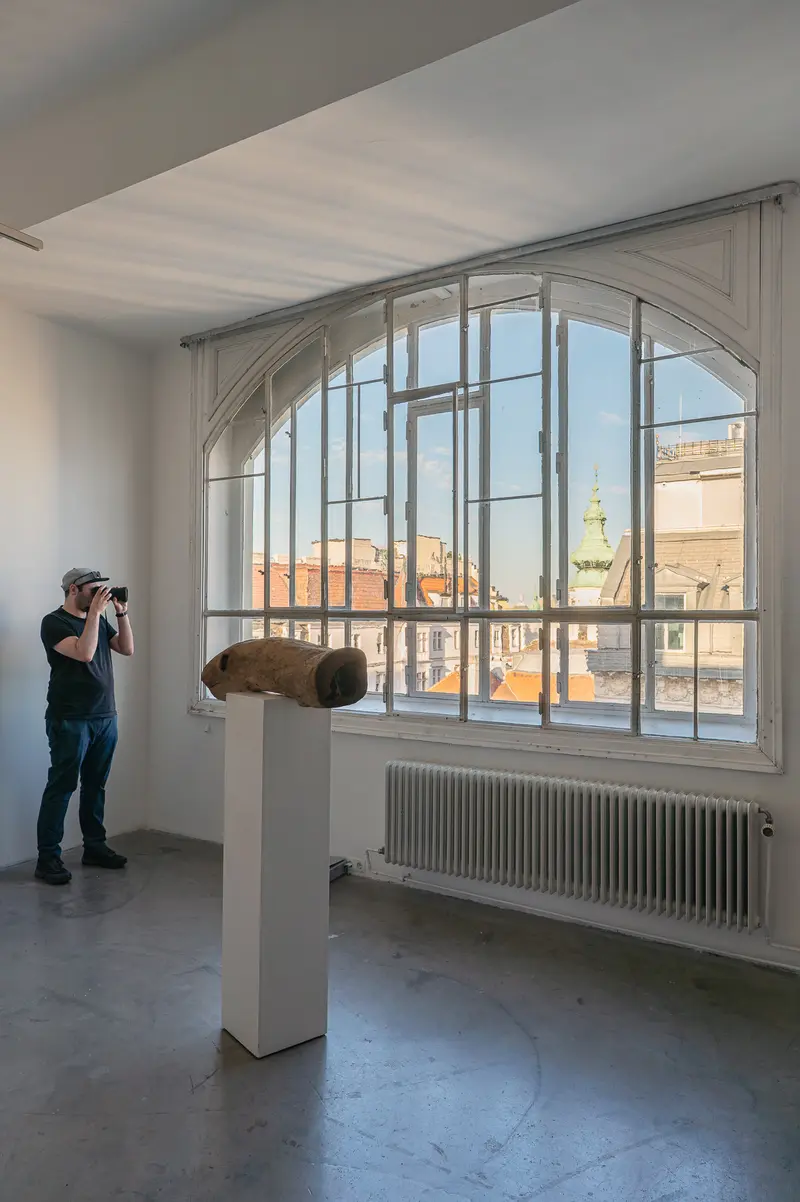 Polyphonic Archive: Entangled Voices at VBKÖ, Vienna, April 2026 A photographer documents the Polyphonic Archive exhibition at VBKÖ (Vereinigung bildender Künstlerinnen Österreichs) in Vienna's first district during the March 14–May 2, 2026 reopening. The archive celebrates over 100 years of queer feminist artistic production since VBKÖ's founding in 1910, with a sculptural bronze work visible on a white pedestal before large gridded windows overlooking the city. The exhibition features participating artists including Pêdra Costa, Zoe Gudović, Daniel Hill, Vinko Nino Jaeger, Eszter Katalin, Tahereh Nourani, and Christina Werner, curated by Georgia Holz, Veronika Hösch, Mika Maruyama, Stephanie Misa, Miwa Negoro, Tsai-Ju Wu, and Julia Wieger.
 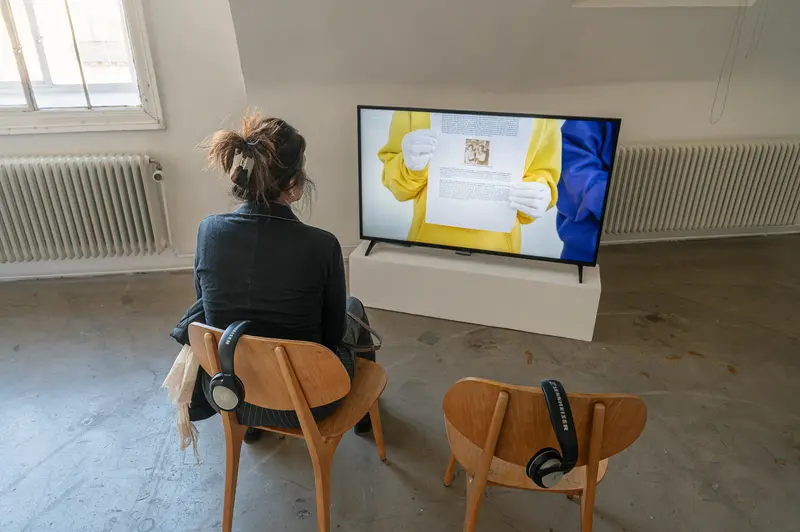 Polyphonic Archive: Entangled Voices at VBKÖ, Vienna, April 2026 A visitor seated on a wooden chair watches a video presentation displayed on a flat-screen monitor at the Polyphonic Archive: Entangled Voices exhibition at VBKÖ (Vereinigung bildender Künstlerinnen Österreichs) in Vienna's first district during the March 14 – May 2, 2026 re-opening. The video shows hands holding a document against a blue fabric background. The exhibition celebrates over 100 years of queer feminist artistic production since VBKÖ's founding in 1910, featuring works by Pêdra Costa, Zoe Gudović, Daniel Hill, Vinko Nino Jaeger, Eszter Katalin, Tahereh Nourani, and Christina Werner.
 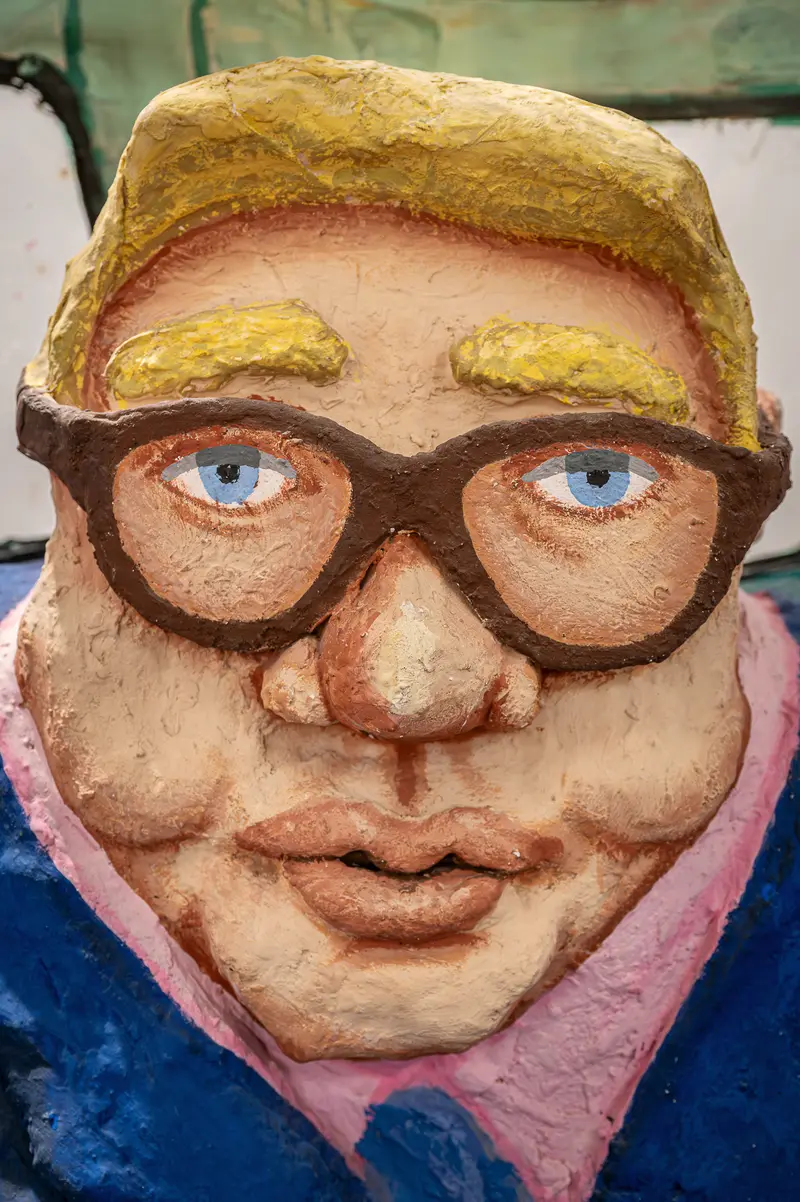 2026-04-22 Albertina Modern KAWS A papier-mâché passenger figure with blonde hair, thick-framed glasses, and blue eyes is part of Red Grooms, Mimi Gross & The Ruckus Construction Company's "Ruckus Manhattan: Subway" (1975–76). The hand-painted caricature features detailed facial features and clothing as part of the larger subway-car sculpture installation.
 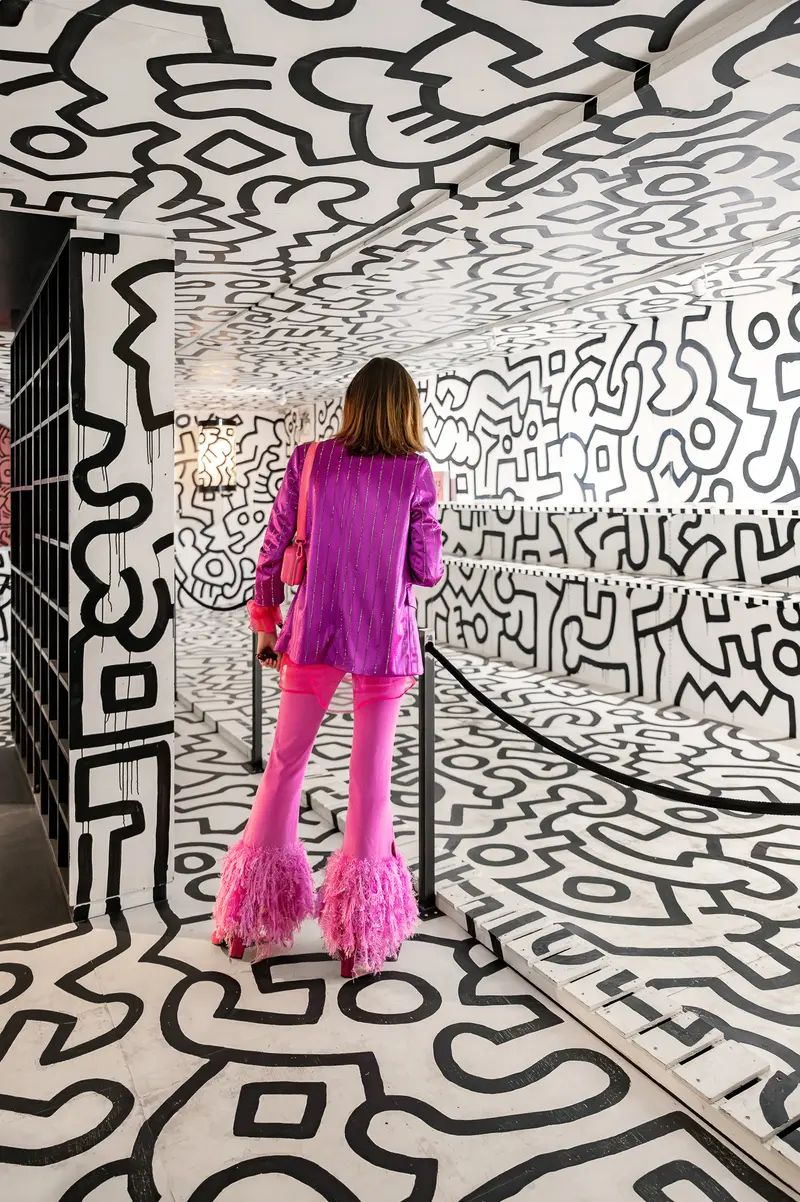 2026-04-22 Albertina Modern KAWS A visitor wearing pink stands inside an immersive Keith Haring-style installation featuring black-and-white linear patterns covering the floor, walls, and ceiling at Albertina Modern Vienna. The installation references Keith Haring's 1988 Tokyo Pop Shop, part of the "KAWS. Art & Comix" exhibition curated by Angela Stief and Florian Waldvogel.
 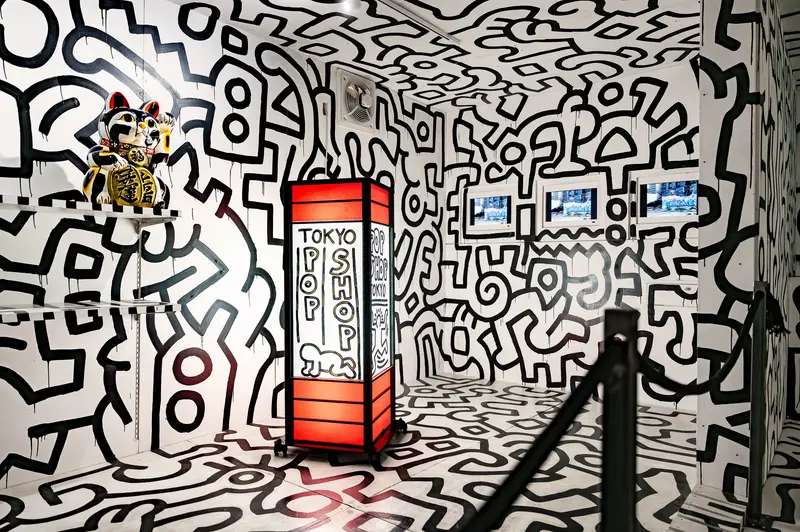 2026-04-22 Albertina Modern KAWS Immersive Keith Haring installation at Albertina Modern's KAWS. Art & Comix exhibition features floor-to-ceiling black-and-white line drawings referencing Keith Haring's 1988 Tokyo Pop Shop. The room includes a glowing rectangular light box and a Maneki-neko sculpture positioned against the patterned walls.
 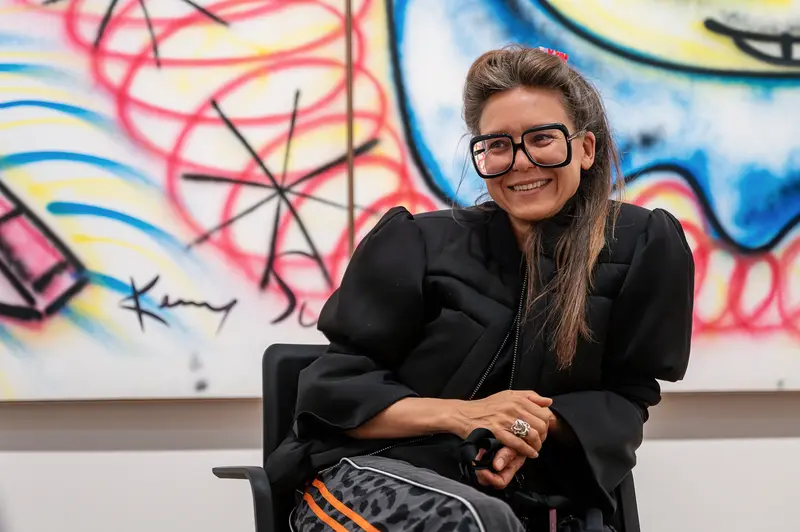 2026-04-22 Albertina Modern KAWS Angela Stief, Director and Chief Curator of Albertina Modern, photographed during the press tour of KAWS. Art & Comix exhibition at Albertina Modern Vienna, April 3 – September 27, 2026. Angela Stief curated the exhibition with co-curator Florian Waldvogel, presenting 192 works tracing comics and graffiti into contemporary fine art.
 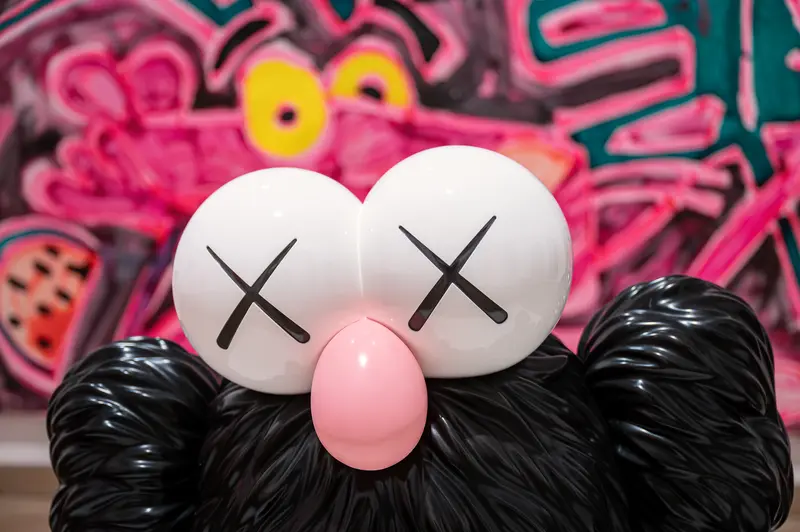 2026-04-22 Albertina Modern KAWS A black KAWS BFF sculpture with white X-eyes and a pink pointed snout is displayed against vibrant pink and yellow graffiti-style wall graphics at the KAWS. Art & Comix exhibition at Albertina Modern Vienna. The exhibition, curated by Angela Stief and Florian Waldvogel, ran from April 3 to September 27, 2026.
 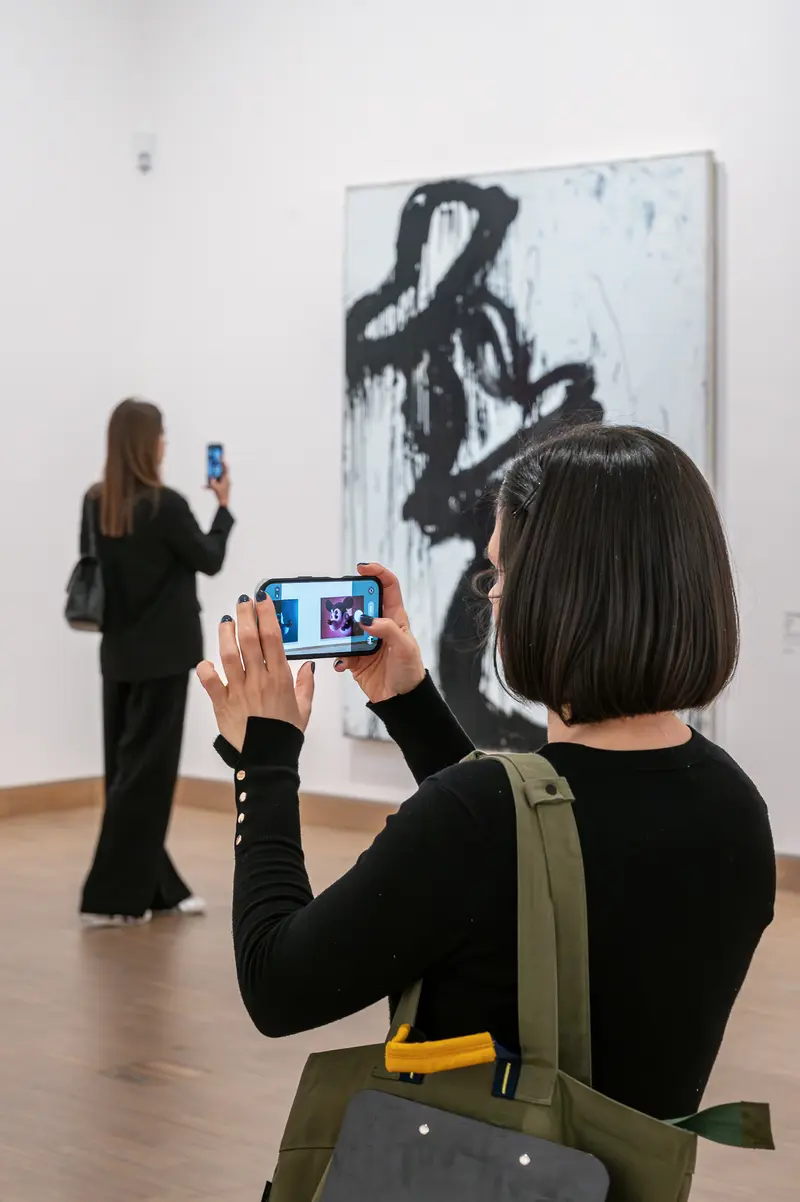 2026-04-22 Albertina Modern KAWS Two visitors photograph artwork at the KAWS. Art & Comix exhibition at Albertina Modern Vienna, April 3 – September 27, 2026. One visitor holds a smartphone to capture a large black-and-white painting on the gallery wall. The exhibition features 192 works tracing the influence of comics and graffiti on contemporary fine art.
 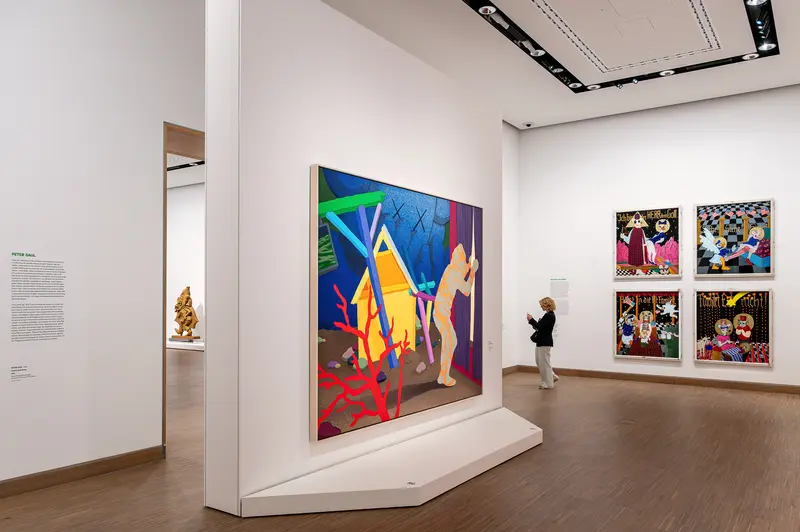 2026-04-22 Albertina Modern KAWS A visitor photographs artworks in a white-walled gallery at Albertina Modern Vienna, with a large colorful modernist painting on the left wall and four framed works on the right wall. The exhibition space features wooden flooring and descriptive text panels mounted beside the artworks. A small sculpture is visible in an adjacent gallery room.
 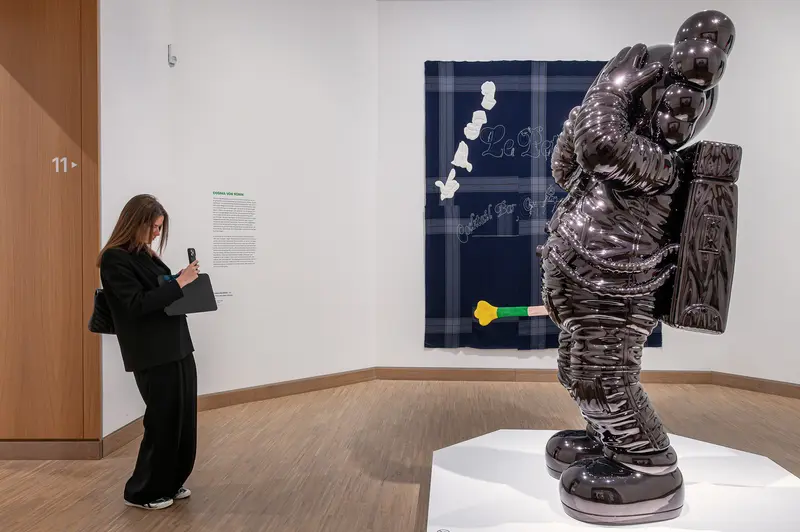 2026-04-22 Albertina Modern KAWS A visitor wearing black photographs a large dark sculptural work by KAWS displayed on a white pedestal at Albertina Modern Vienna. The gallery space features wooden flooring and white walls with additional artworks visible in the background. The exhibition "KAWS. Art & Comix" runs from April 3 to September 27, 2026.
 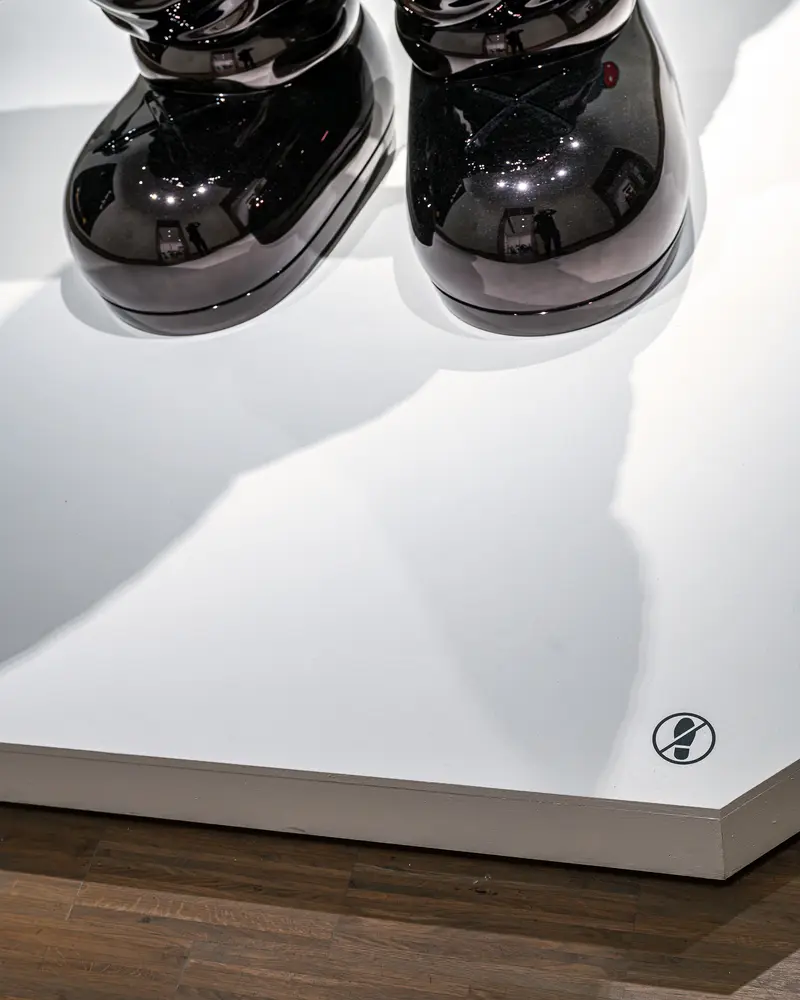 2026-04-22 Albertina Modern KAWS Close-up of the glossy black boots of a large KAWS sculpture positioned on a white pedestal at the Albertina Modern Vienna exhibition. The pedestal displays a small circular KAWS logo with the artist's signature crossed-eye motif. The sculpture stands on a wooden floor, showcasing the cartoon-inspired aesthetic central to the exhibition's exploration of comics and contemporary art.
 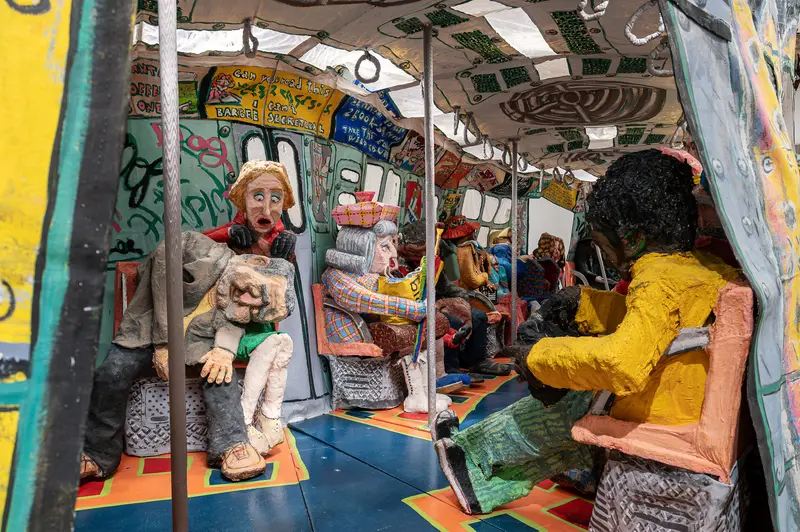 2026-04-22 Albertina Modern KAWS View in the interior of "Ruckus Manhattan: Subway" by Red Grooms, Mimi Gross & The Ruckus Construction Company (1975–76). The sculpture features papier-mâché passenger figures, hand-painted graffiti, colorful advertisements, and detailed subway car fittings. The work is displayed as part of KAWS. Art & Comix at Albertina Modern Vienna.
 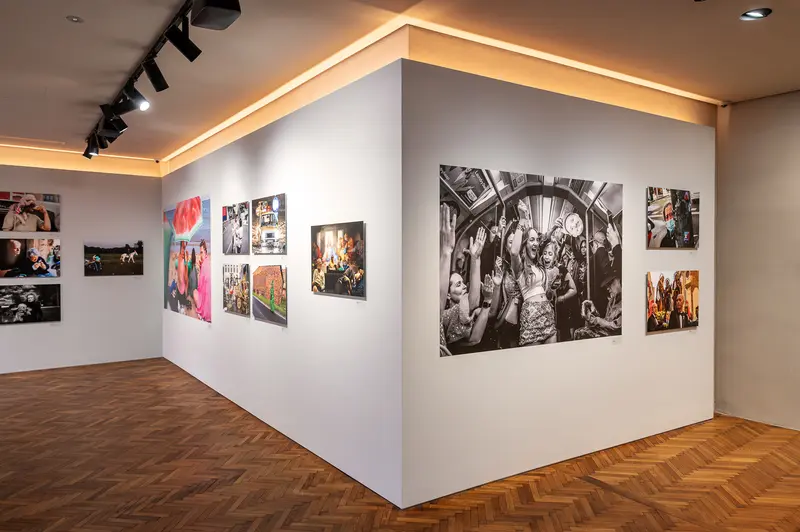 15th Street Photo Contest, Leica Gallery Vienna, April 2026 The 15th Street Photo Contest exhibition is installed at Leica Gallery Vienna, Seilergasse, Vienna, Austria in April 2026, showcasing selected winning entries from the annual street photography competition. Multiple color and black-and-white photographs of varying sizes are mounted across white gallery walls under professional track lighting, with a central white partition displaying a large-format black-and-white image surrounded by smaller framed prints. Leica Gallery Vienna serves as a dedicated photography exhibition and education venue in Austria's capital.
 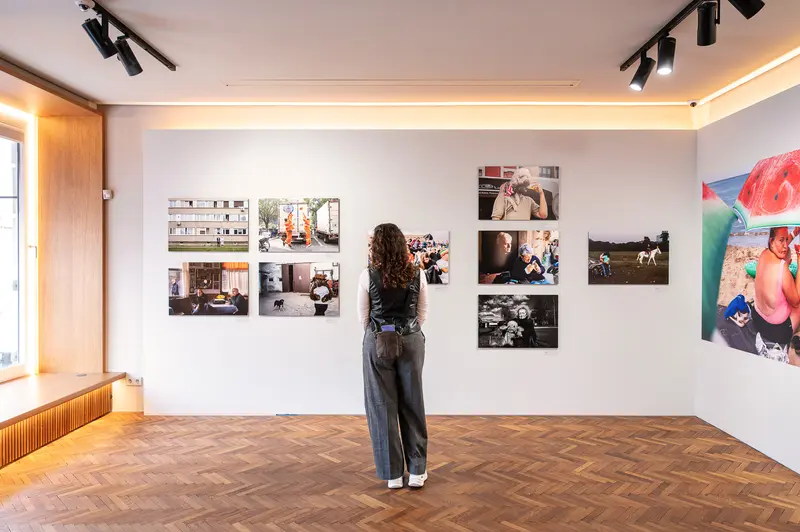 15th Street Photo Contest, Leica Gallery Vienna, April 2026 A visitor examines photographs displayed during the 15th Street Photo Contest exhibition in April 2026 at Leica Gallery Vienna, located at Seilergasse 10 in Vienna, Austria. The gallery's white walls feature a salon-style arrangement of black-and-white and color photographs under track lighting, with herringbone wooden flooring providing a professional exhibition environment. The annual Street Photo Contest showcases selected submissions across multiple gallery spaces.
 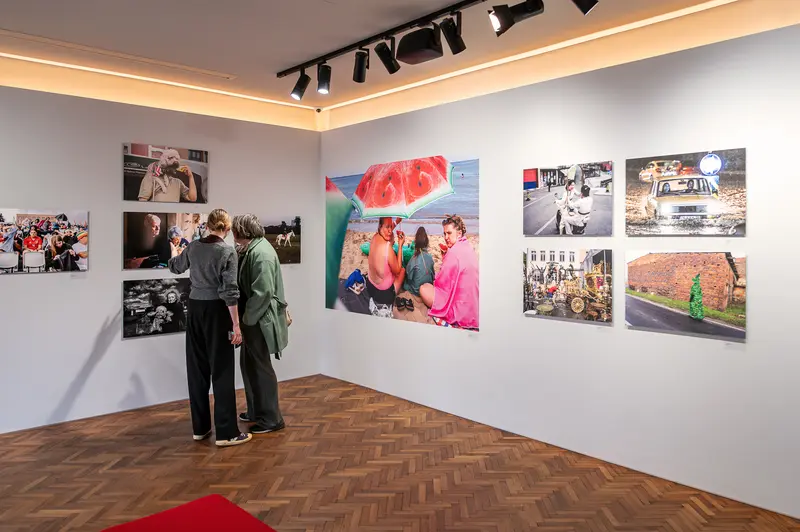 15th Street Photo Contest, Leica Gallery Vienna, April 2026 Visitors examine framed photographs from the 15th Street Photo Contest during an exhibition at Leica Gallery Vienna in Vienna's first district. The gallery displays color and black-and-white photographs depicting street scenes and everyday moments selected through competitive judging. The 15th Street Photo Contest showcases contemporary street photography at Vienna's premier photography venue.
 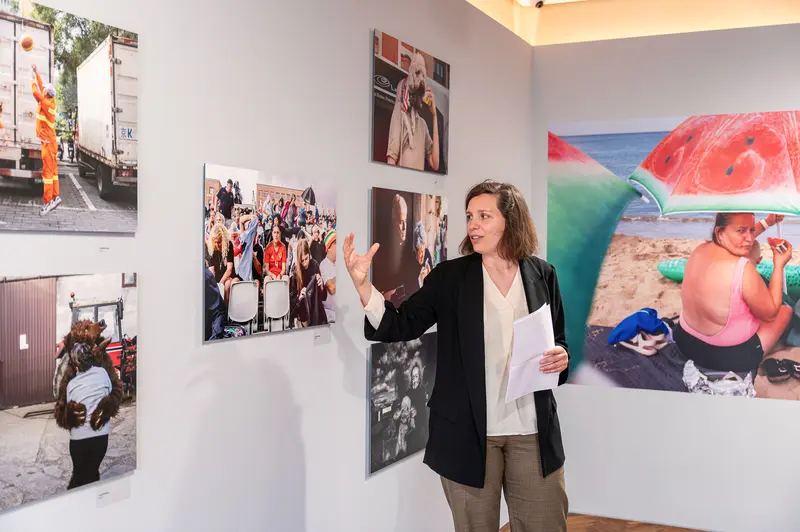 15th Street Photo Contest, Leica Gallery Vienna, April 2026 Miriam Marzura, curator and judge at Leica Gallery Vienna, presents photographs from the 15th Street Photo Contest during an exhibition at the gallery located at Seilergasse 10, Vienna, Austria, in April 2026. Marzura gestures toward framed color photographs displayed on white walls, including urban scenes, crowd gatherings, and beach activities, while holding exhibition materials. The 15th Street Photo Contest is an annual international photography competition organized by Leica Gallery Vienna that selects and exhibits winning submissions from photographers worldwide.
 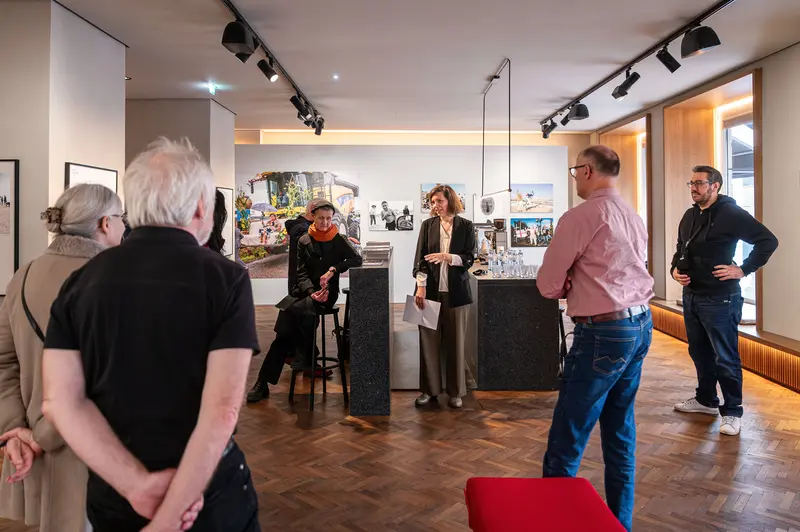 15th Street Photo Contest, Leica Gallery Vienna, April 2026 Miriam Marzura, curator and judge, presents photographs from the 15th Street Photo Contest to gallery visitors at Leica Gallery Vienna, Seilergasse 1010 Wien, in April 2026. Several attendees stand throughout the gallery space examining framed photographs displayed on white walls under professional track lighting. The annual contest celebrates contemporary street photography from international submissions.
 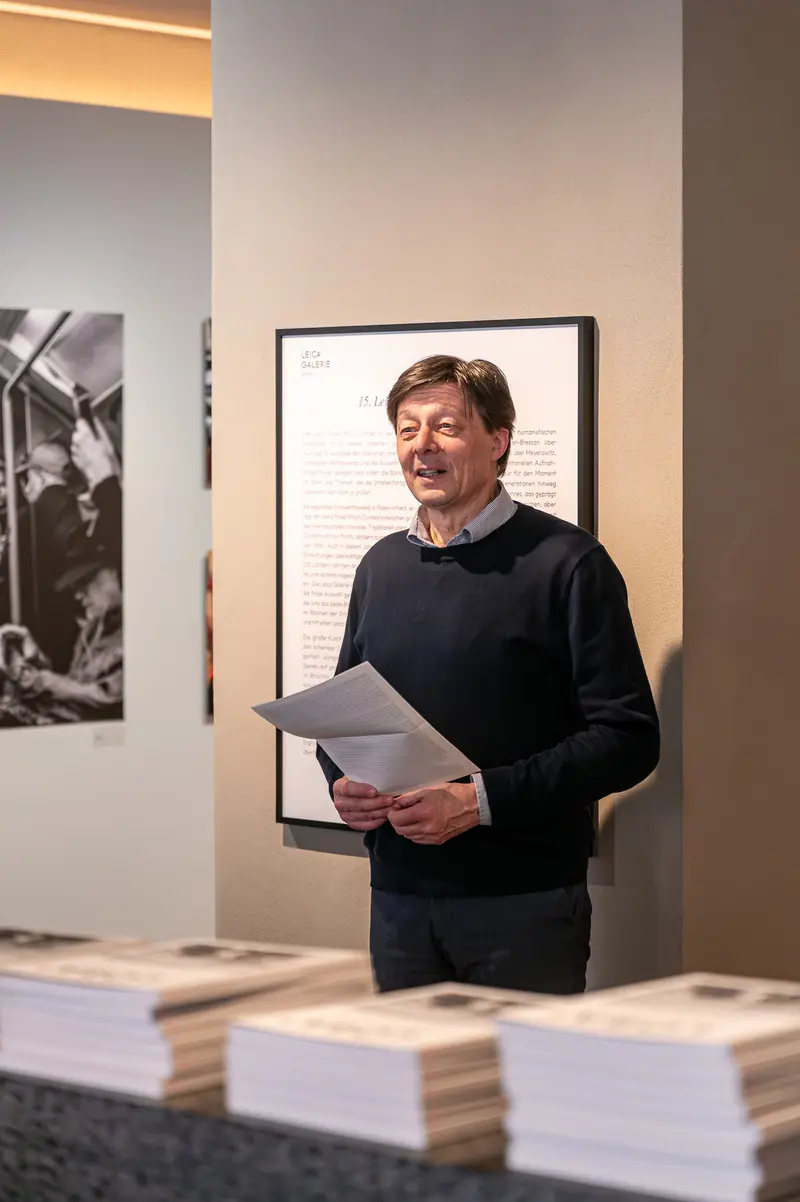 15th Street Photo Contest, Leica Gallery Vienna, April 2026 A male attendee holds an exhibition catalog while standing in the main gallery space during the 15th Street Photo Contest at Leica Gallery Vienna, Seilergasse 1010 Wien, April 2026. Framed black-and-white photographs are mounted on white gallery walls, with stacked catalogs visible on a table in the foreground. The event, organized in cooperation with gallery walk.at, featured guided tours as part of its educational programming for the international photography competition.
 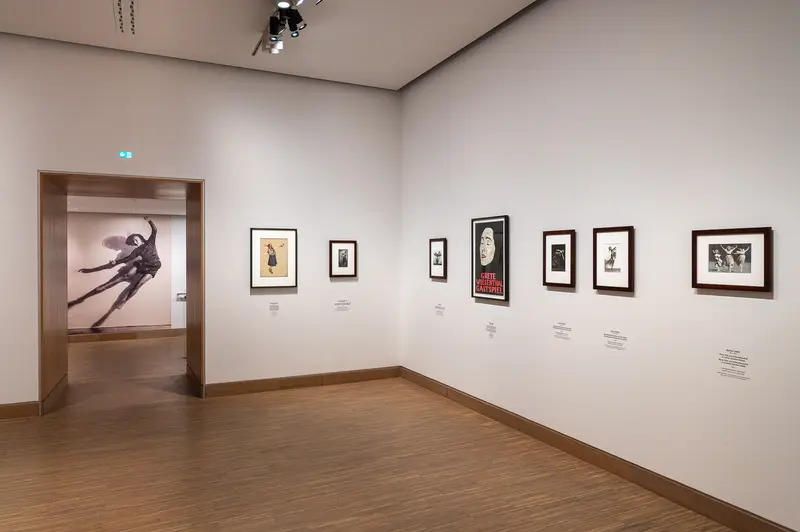 Tanzbild at Albertina Modern, Vienna, April 2026 The Tanzbild exhibition at Albertina Modern in Vienna presents a curated selection of framed artworks and prints arranged salon-style across white gallery walls, with a sculptural installation visible through an open doorway. Multiple works of varying sizes, each accompanied by identifying plaques, are displayed on wooden flooring in a professional museum setting. The exhibition demonstrates the institutional presentation of visual art within Vienna's contemporary art institutions.
 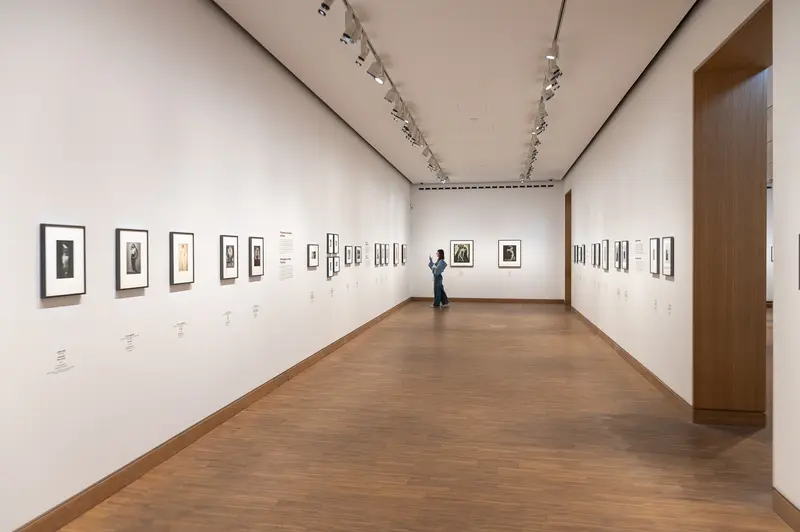 Tanzbild at Albertina Modern, Vienna, April 2026 A visitor views framed drawings and prints displayed in the Tanzbild exhibition at Albertina Modern in Vienna, April 2026. Approximately thirty artworks are arranged in salon-style configurations across white walls under professional track lighting, with a wooden floor defining the minimalist gallery space. The installation represents a contemporary presentation format for curated exhibitions of works on paper in an institutional museum setting.
 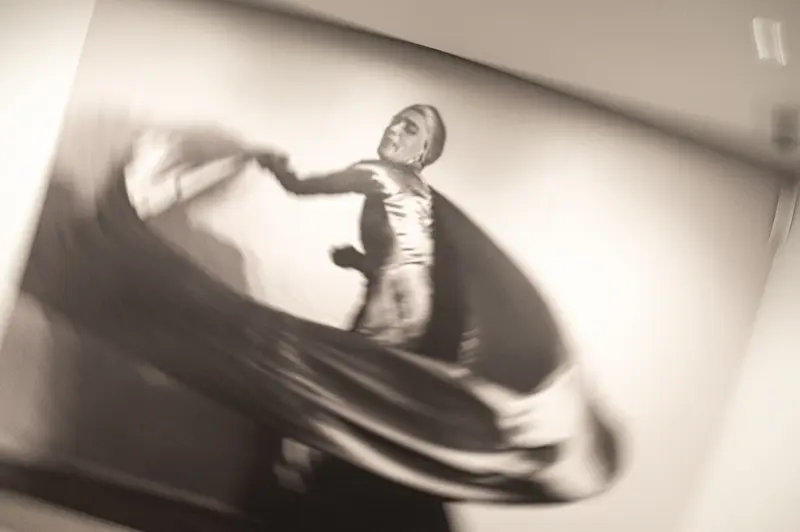 Tanzbild at Albertina Modern, Vienna, April 2026 A performer wearing a dark cape executes an expressive gestural pose at the Tanzbild exhibition at Albertina Modern in Vienna, April 2026. The figure extends one arm upward while the cape's fabric creates dynamic flowing lines across the composition, captured in black and white by photographer Michael Seirer. The theatrical staging emphasizes the sculptural quality of the draped garment and the performer's gestural intensity.
 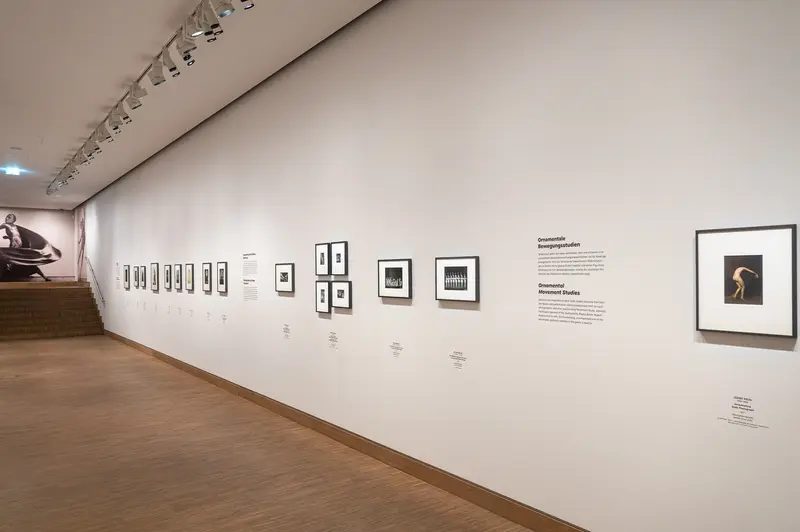 Tanzbild at Albertina Modern, Vienna, April 2026 A contemporary art gallery exhibition features a curated collection of framed photographs and artworks arranged along a white wall, with descriptive text panels and individual piece labels visible throughout the installation. The wooden floor and track lighting system create a professional museum environment designed for viewing prints and photographic works. The systematic presentation and documentation reflect institutional curatorial standards for photography exhibitions in modern art venues.
 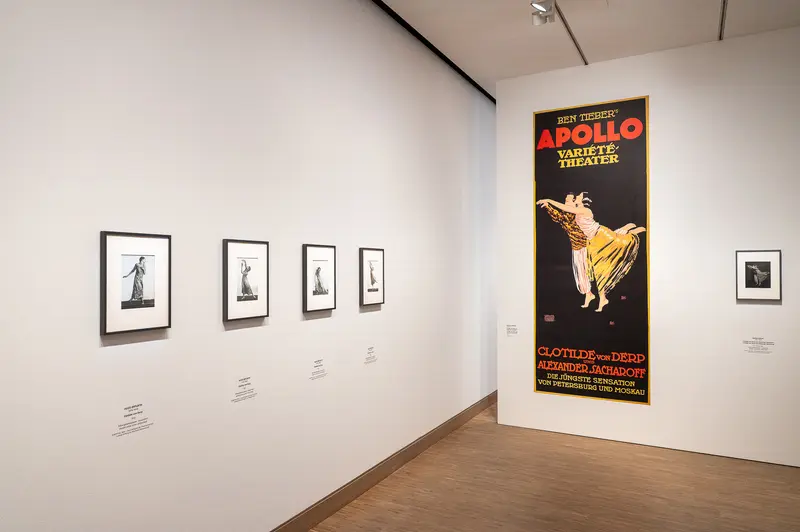 Tanzbild at Albertina Modern, Vienna, April 2026 The Tanzbild exhibition at Albertina Modern in Vienna displays archival materials from the Apollo Theater, a historic New York City venue that opened in 1934 and became a cultural institution for African American entertainment. A vintage Apollo Theater variety playbill featuring a golden rooster illustration is mounted alongside four framed black-and-white performance photographs on a white gallery wall. The Apollo Theater's significant role in American performance history is documented through these exhibition materials.
 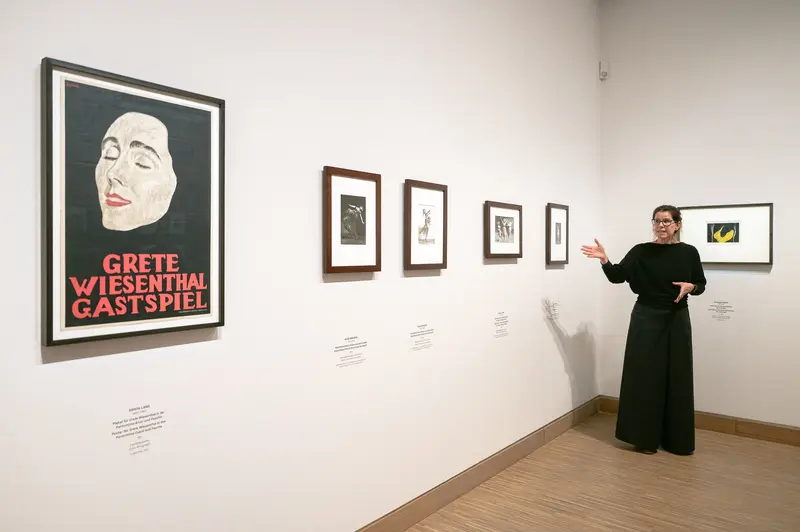 Tanzbild at Albertina Modern, Vienna, April 2026 Astrid Mahler, curator of the Tanzbild exhibition at Albertina Modern in Vienna, points toward framed artworks displayed on white gallery walls in April 2026. A prominent "Grete Wiesenthal Gastspiel" poster featuring a stylized female profile in red and black dominates the left wall, accompanied by a series of smaller framed pieces arranged horizontally. The installation presents early 20th-century performance and theatrical promotional materials documenting Grete Wiesenthal's guest performances.
 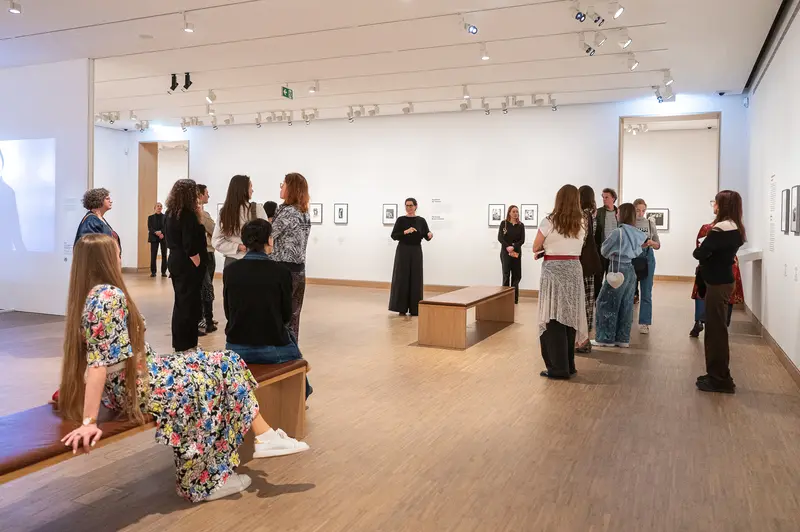 Tanzbild at Albertina Modern, Vienna, April 2026 Visitors attend the Tanzbild exhibition at Albertina Modern in Vienna, April 2026, observing framed artworks displayed on white gallery walls while standing near wooden display pedestals in a minimalist, professionally lit space. Multiple attendees in casual and formal attire move throughout the gallery, engaging directly with individual contemporary artworks arranged across the expansive wooden floor. The spacious gallery environment is designed to facilitate visitor interaction with the featured contemporary art collection.
 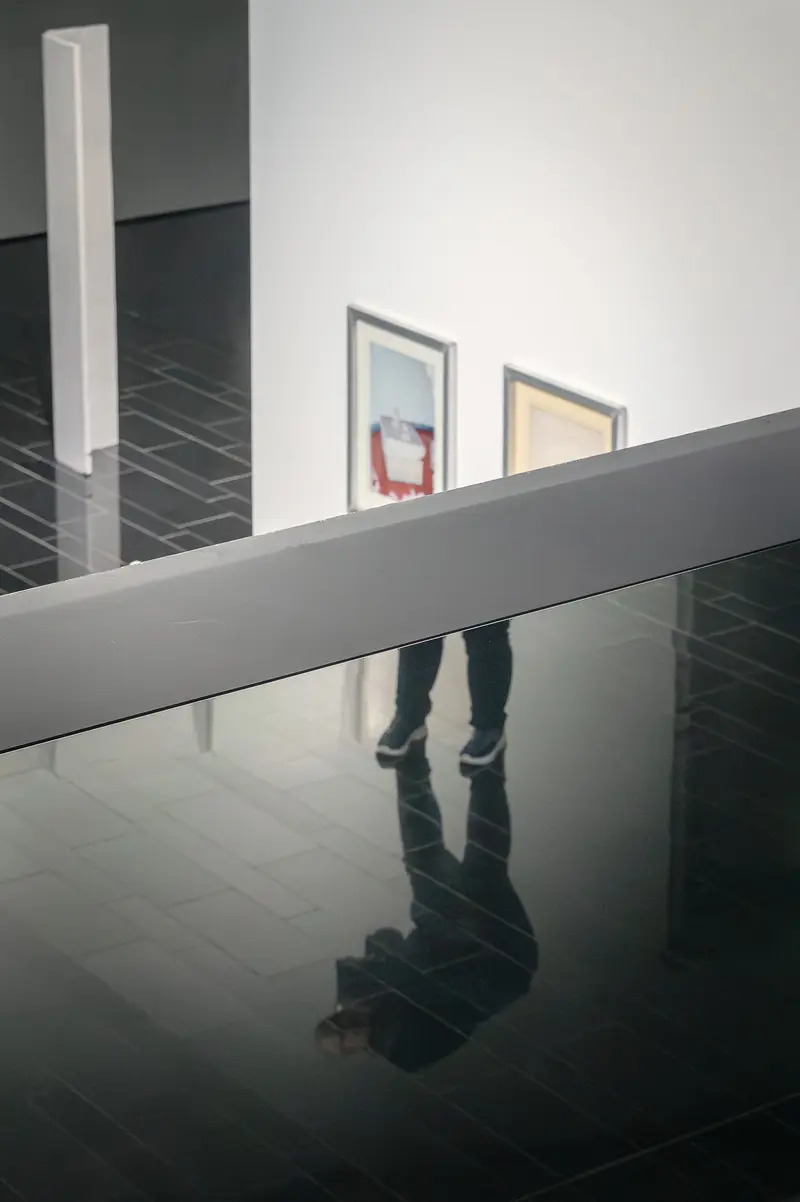 Emma Hummerhielm Carlén Exhibition at STRABAG ART Site, March 2026 A visitor's reflection appears on the glossy black floor at Swedish artist Emma Hummerhielm Carlén's exhibition "By the Wall" at STRABAG ART Site, Vienna, running from March 16 to April 10, 2026. The exhibition features framed artworks leaning against white walls, with a white column visible in the minimalist gallery space. Emma Hummerhielm Carlén (born 1991, Stockholm) received this exhibition as part of her recognition prize from the STRABAG ART Award 2025, having trained at the Academy of Fine Arts Vienna under Heimo Zobernig and Nora Schultz.
 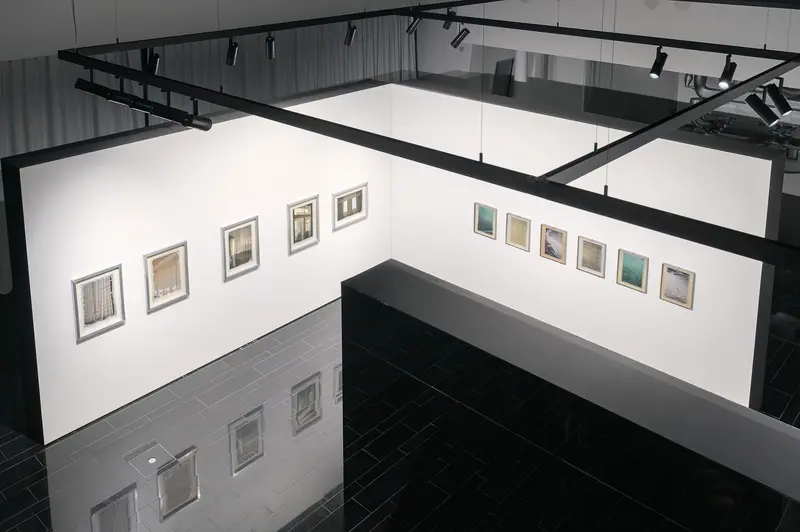 Emma Hummerhielm Carlén Exhibition at STRABAG ART Site, March 2026 Swedish artist Emma Hummerhielm Carlén's exhibition "By the Wall" at STRABAG ART Site, Vienna, Austria, runs from March 16 to April 10, 2026, as part of her STRABAG ART Award 2025 recognition prize. The overhead view shows framed artworks arranged along white gallery walls with a black partition structure in the minimalist exhibition space. Emma Hummerhielm Carlén (born 1991, Stockholm) trained at the Academy of Fine Arts Vienna under Heimo Zobernig and Nora Schultz.
 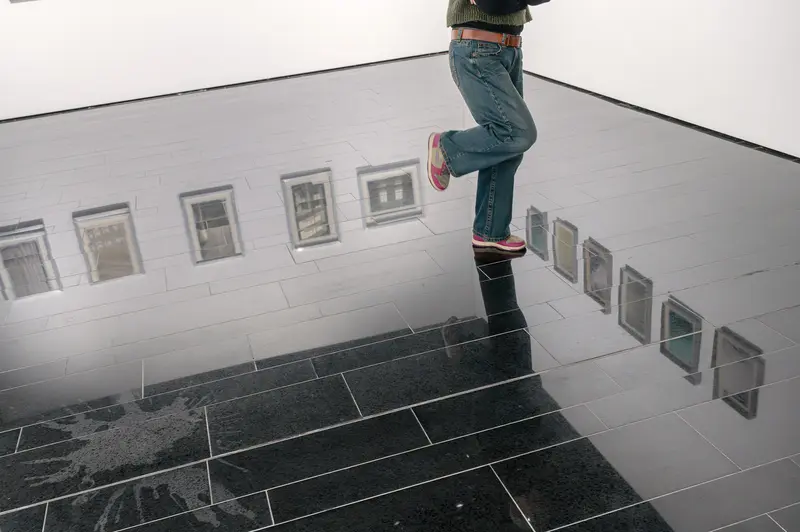 Emma Hummerhielm Carlén Exhibition at STRABAG ART Site, March 2026 A visitor playing child games with reflections of Emmas work. Emma Hummerhielm Carlén's exhibition "By the Wall" runs from March 16 to April 10, 2026, at STRABAG ART Site, presented as part of her STRABAG ART Award 2025 recognition prize. The installation features framed artworks mounted low on white gallery walls with a dramatic black reflective floor section creating mirror effects. Emma Hummerhielm Carlén (b. 1991, Stockholm) trained at the Academy of Fine Arts Vienna under Heimo Zobernig and Nora Schultz.
 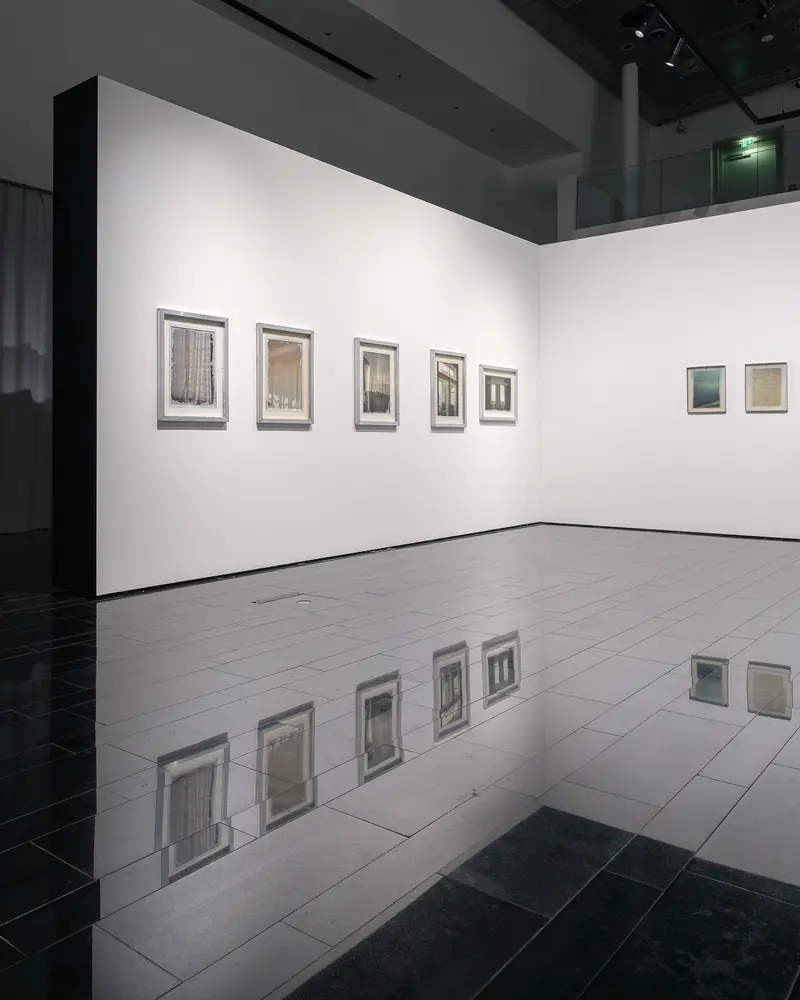 Emma Hummerhielm Carlén Exhibition at STRABAG ART Site, March 2026 Emma Hummerhielm Carlén's exhibition "By the wall" at STRABAG ART Site, Vienna, Austria, runs from March 16 to April 10, 2026, as part of her STRABAG ART Award 2025 recognition prize. The gallery installation shows a series of framed works mounted on white walls with reflective flooring that mirrors the displayed pieces in the minimalist exhibition space. Emma Hummerhielm Carlén (born 1991, Stockholm) trained at the Academy of Fine Arts Vienna under Heimo Zobernig and Nora Schultz.
 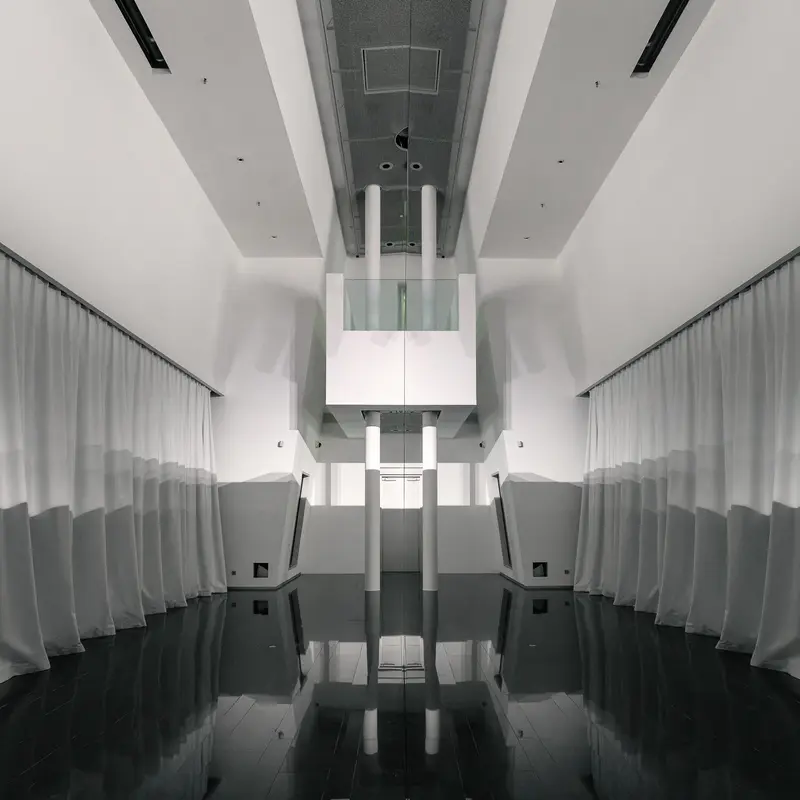 Emma Hummerhielm Carlén Exhibition at STRABAG ART Site, March 2026 Swedish artist Emma Hummerhielm Carlén's exhibition "By the wall" at STRABAG ART Site, Vienna, Austria, runs from March 16 to April 10, 2026, as part of her STRABAG ART Award 2025 recognition prize. The installation features a symmetrical black reflective floor, white architectural structures suspended from the ceiling, and floor-to-ceiling grey curtains along both walls creating a corridor-like space. Emma Hummerhielm Carlén (born 1991, Stockholm) trained at the Academy of Fine Arts Vienna under Heimo Zobernig and Nora Schultz.
 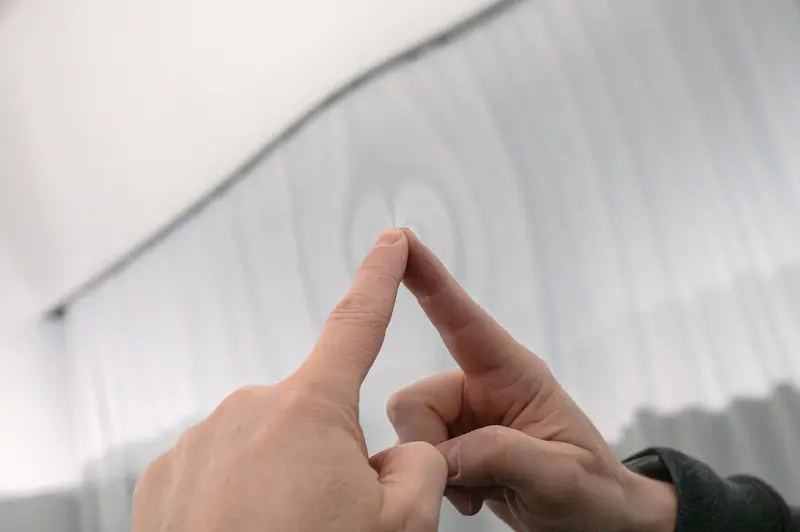 Emma Hummerhielm Carlén Exhibition at STRABAG ART Site, March 2026 Bending reality at STRABAG ART Site from March 16 to April 10, 2026. The Swedish-born artist (b. 1991, Stockholm) trained at the Academy of Fine Arts Vienna under Heimo Zobernig and Nora Schultz. STRABAG ART Site presents the exhibition as part of Emma Hummerhielm Carlén's recognition prize from the STRABAG ART Award 2025.
 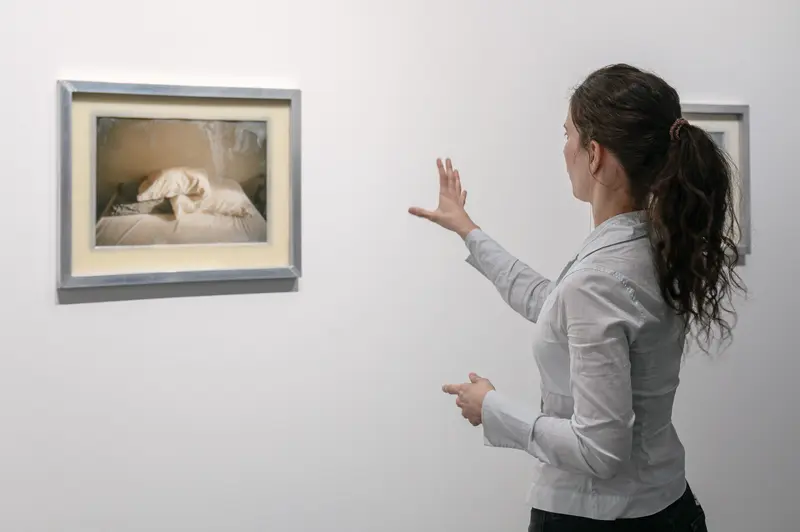 Emma Hummerhielm Carlén Exhibition at STRABAG ART Site, March 2026 Swedish artist Emma Hummerhielm Carlén (b. 1991, Stockholm) presents her work at the STRABAG ART Site exhibition "By the Wall," held March 16 to April 10, 2026, as part of her STRABAG ART Award 2025 recognition prize. Emma Hummerhielm Carlén gestures toward a framed photograph of a white cat on a cushion mounted on the gallery wall. Emma Hummerhielm Carlén trained at the Academy of Fine Arts Vienna under Heimo Zobernig and Nora Schultz.
 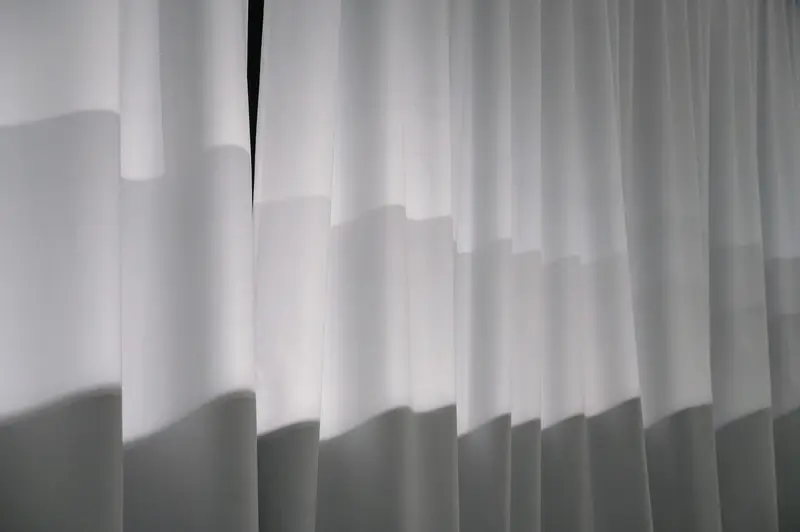 Emma Hummerhielm Carlén Exhibition at STRABAG ART Site, March 2026 Swedish artist Emma Hummerhielm Carlén presents "By the wall" at STRABAG ART Site from March 16 to April 10, 2026, as part of her STRABAG ART Award 2025 recognition prize. The installation features translucent white curtains arranged in vertical panels creating layered shadows and depth gradients from light to dark. Emma Hummerhielm Carlén (b. 1991, Stockholm) trained at the Academy of Fine Arts Vienna under Heimo Zobernig and Nora Schultz.
 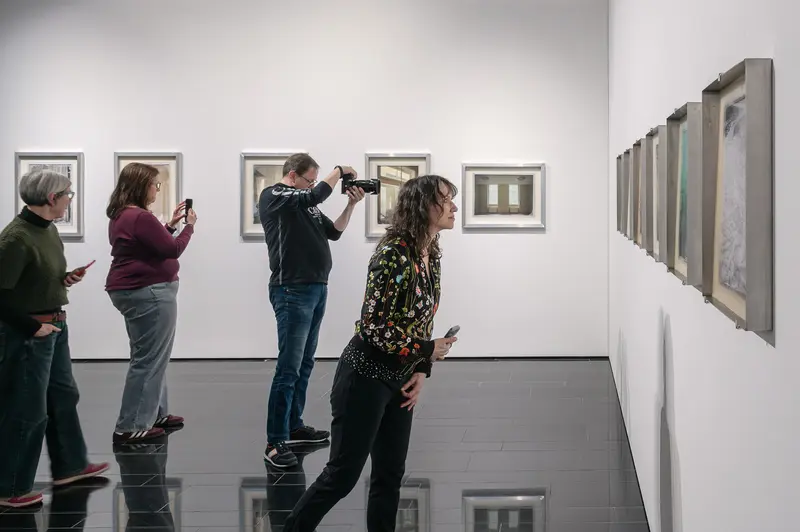 Emma Hummerhielm Carlén Exhibition at STRABAG ART Site, March 2026 Visitors view framed artworks at Swedish artist Emma Hummerhielm Carlén's exhibition at STRABAG ART Site, Vienna, March to April 2026. The exhibition displays multiple framed pieces on white gallery walls, with attendees photographing and observing the works, including Emma Hummerhielm Carlén in a white shirt. STRABAG ART Site hosts exhibitions for recipients of the STRABAG ART Award recognition prize, supporting contemporary artists.
 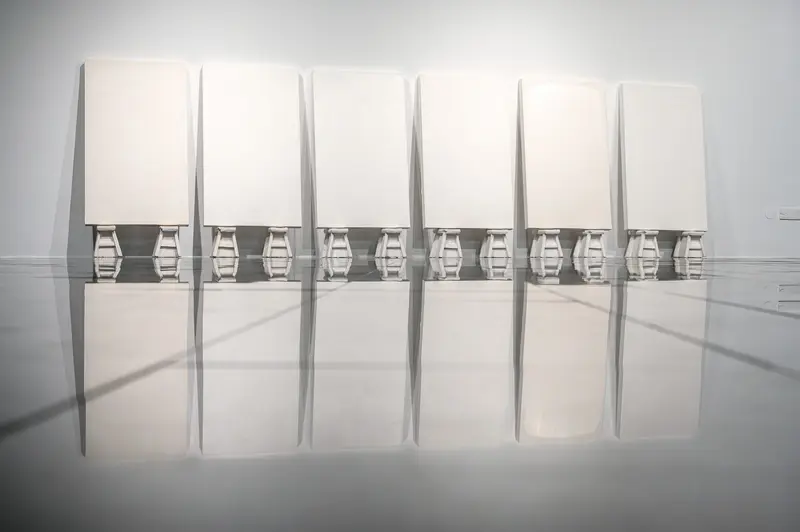 Emma Hummerhielm Carlén Exhibition at STRABAG ART Site, March 2026 Swedish artist Emma Hummerhielm Carlén presents her installation "By the wall" at STRABAG ART Site, Vienna, Austria, as part of her STRABAG ART Award 2025 recognition prize, exhibited March 16 to April 10, 2026. Six identical white panels stand in a row against the gallery wall, each mounted on metal bases with geometric support structures, reflected in the polished floor surface. Emma Hummerhielm Carlén (b. 1991, Stockholm) trained at the Academy of Fine Arts Vienna under Heimo Zobernig and Nora Schultz.
 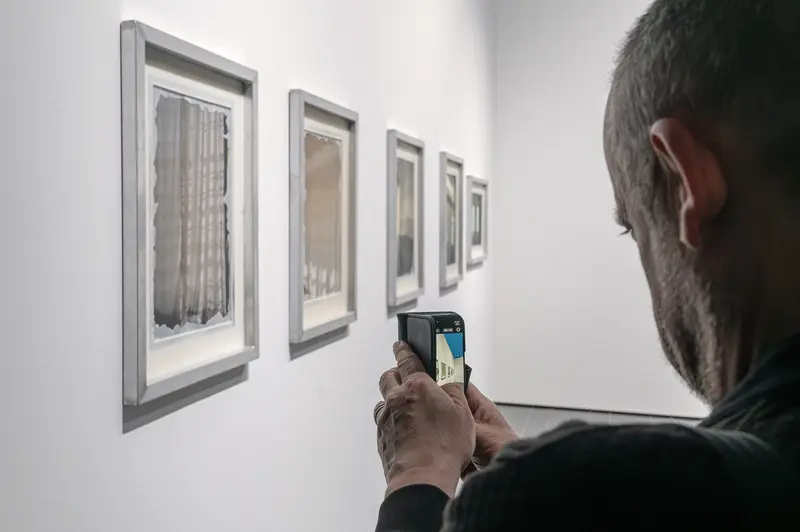 Emma Hummerhielm Carlén Exhibition at STRABAG ART Site, March 2026 A visitor photographs framed artworks with a smartphone at Emma Hummerhielm Carlén's exhibition "By the wall" at STRABAG ART Site, Vienna, Austria, March-April 2026. The exhibition displays a series of five framed photographic or mixed-media works mounted in a row on a white gallery wall, viewed from behind the visitor's shoulder. Emma Hummerhielm Carlén (b. 1991, Stockholm) received this exhibition as part of her recognition prize from the STRABAG ART Award 2025, following her training at the Academy of Fine Arts Vienna under Heimo Zobernig and Nora Schultz.
 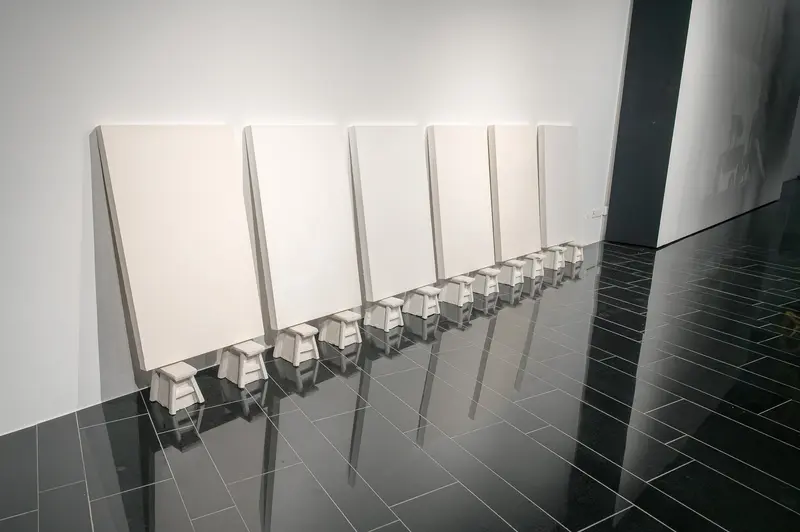 Emma Hummerhielm Carlén Exhibition at STRABAG ART Site, March 2026 Swedish artist Emma Hummerhielm Carlén presents her installation "By the Wall" at STRABAG ART Site as part of her STRABAG ART Award 2025 recognition prize, exhibited from March 16 to April 10, 2026. The installation features six white vertical panels leaning against a white wall above small cubic metal structures arranged in a row on black tiled flooring. STRABAG ART Site showcases contemporary art exhibitions in Vienna, providing a platform for emerging and established artists to display large-scale installations.
 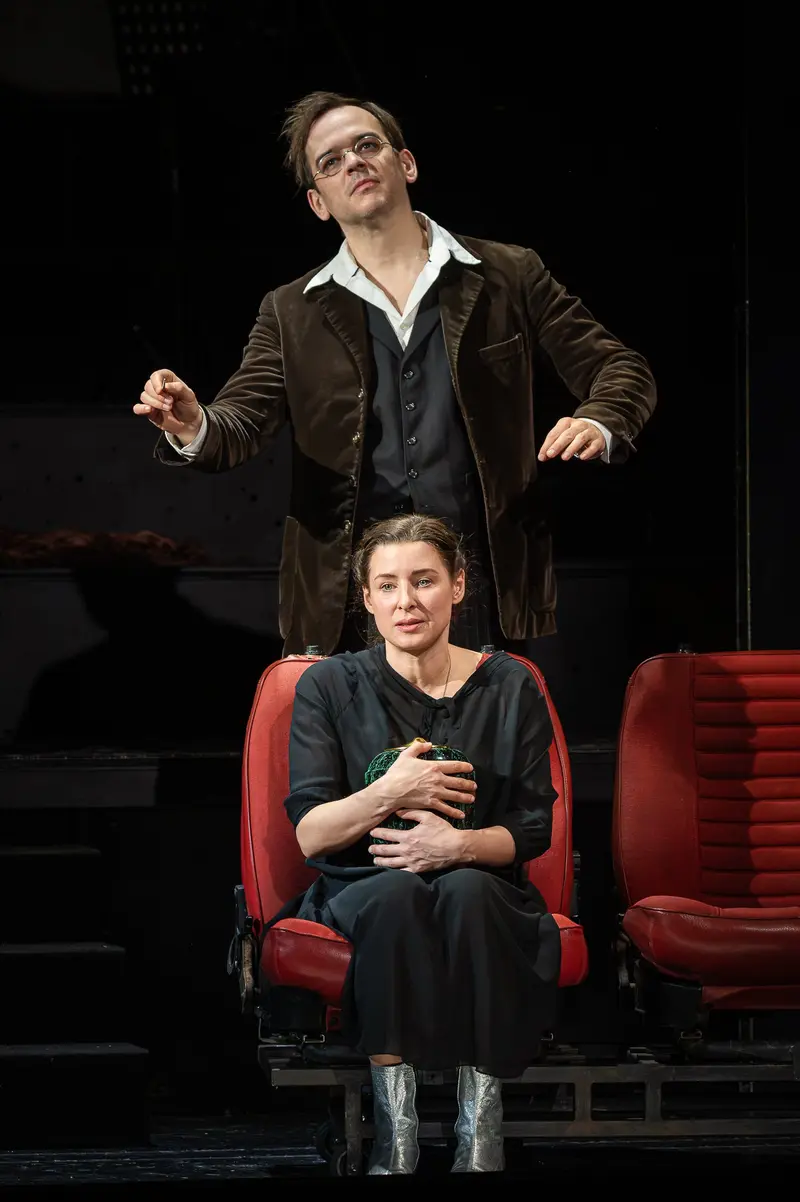 Zemlinsky Photo Rehearsal at Theater in der Josefstadt, March 2026 Martin Vischer as Alexander Zemlinsky and Martina Ebm as Louise Sachsel-Zemlinsky perform during the photo rehearsal of "Zemlinsky" at Theater in der Josefstadt in Vienna on March 16, 2026. Vischer stands behind Ebm, who is seated on a red chair, both in period costume against a black background. The production premiered on March 19, 2026 at the Vienna venue.
 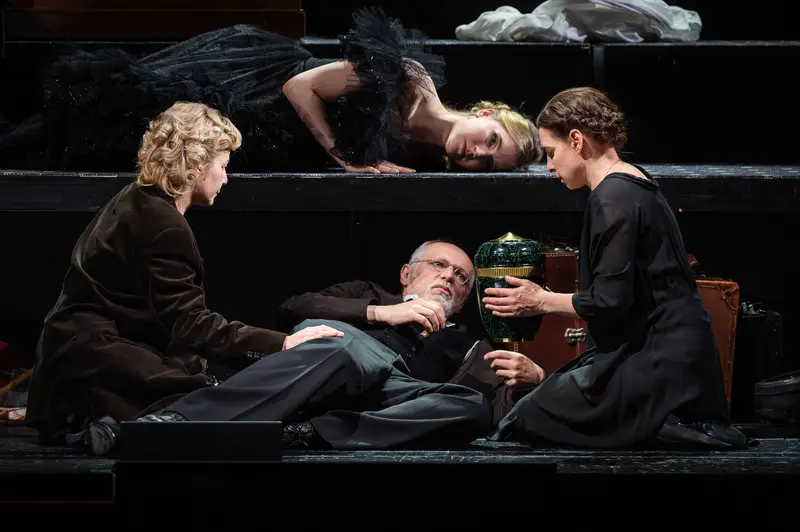 Zemlinsky Photo Rehearsal at Theater in der Josefstadt, March 2026 Cast members perform during a photo rehearsal of "Zemlinsky" at Theater in der Josefstadt in Vienna on March 16, 2026, ahead of the premiere on March 19. The scene depicts multiple actors on stage, including Günter Franzmeier seated center holding a drink, with Susa Meyer and Martina Ebm positioned to his left and right in conversation. Theater in der Josefstadt, established in 1788, is Vienna's oldest theater and hosts contemporary dramatic productions alongside classical repertoire.
 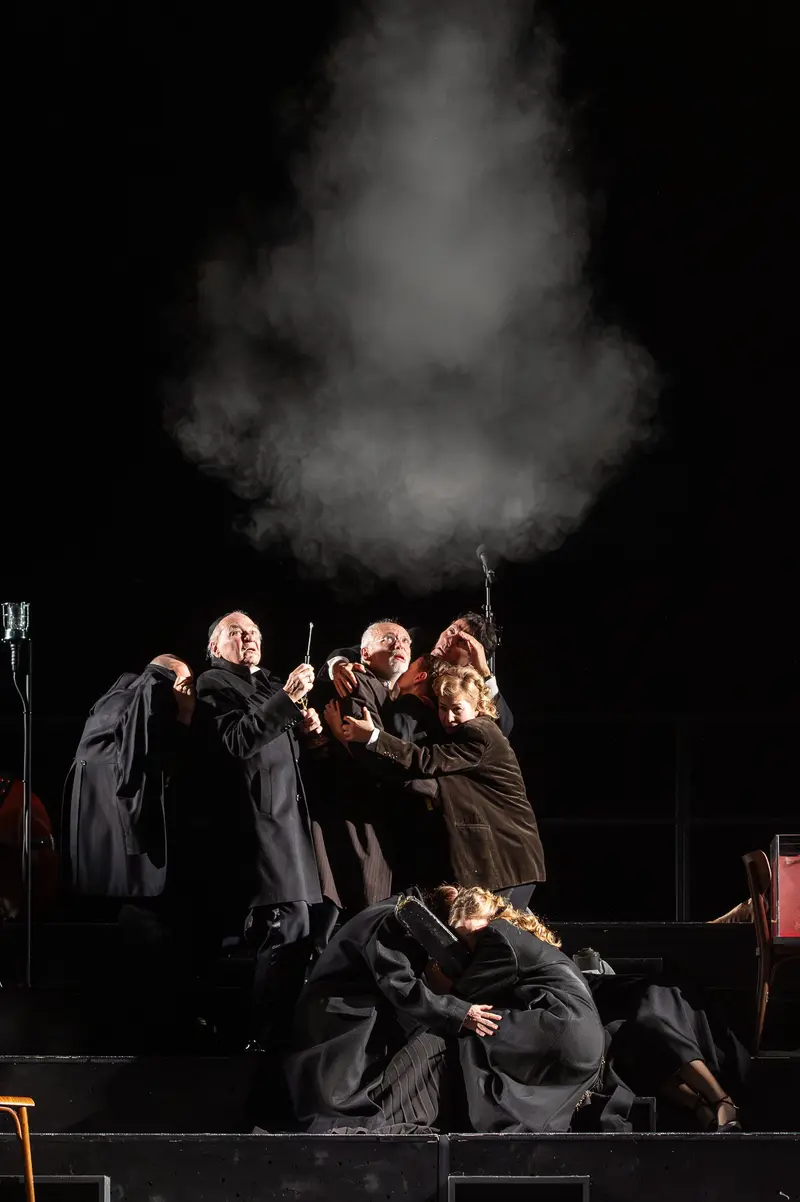 Zemlinsky Photo Rehearsal at Theater in der Josefstadt, March 2026 The ensemble cast of "Zemlinsky," including Susa Meyer, Günter Franzmeier, Martina Ebm, Kimberly Rydell, Martin Vischer, Melanie Hackl, Markus Kofler, Julian Valerio Rehrl, Robert Joseph Bartl, and Ulli Maier, performs during a photo rehearsal at Theater in der Josefstadt in Vienna on March 16, 2026. The actors stand illuminated on stage beneath atmospheric smoke effects and theatrical lighting. Directed by Michael Seirer, the production premiered three days later on March 19, 2026, at Vienna's historic Theater in der Josefstadt.
 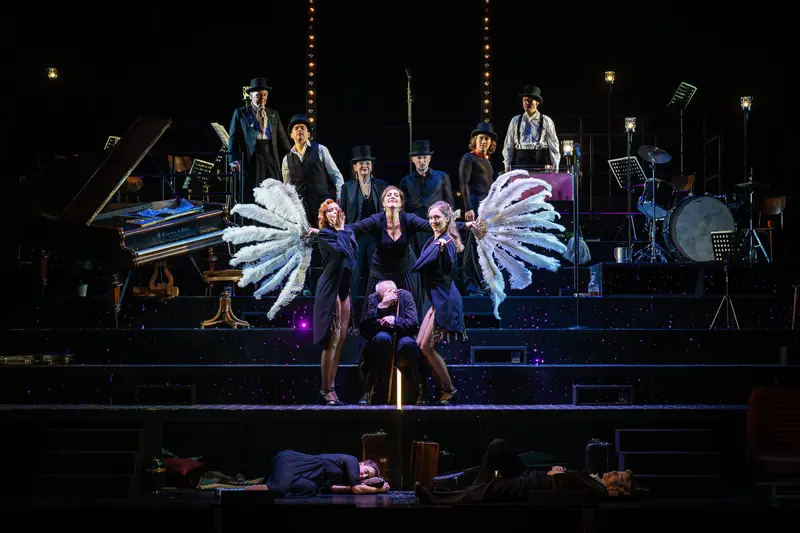 Zemlinsky Photo Rehearsal at Theater in der Josefstadt, March 2026 The cast of "Zemlinsky" performs during a photo rehearsal on March 16, 2026, at the Theater in der Josefstadt in Vienna, Austria, ahead of the premiere scheduled for March 19, 2026. The ensemble, including Susa Meyer, Günter Franzmeier, Martina Ebm, Kimberly Rydell, Martin Vischer, Melanie Hackl, Markus Kofler, Julian Valerio Rehrl, Robert Joseph Bartl, and Ulli Maier, performs on a darkened stage with illuminated costume elements and orchestral accompaniment. The Theater in der Josefstadt is one of Vienna's oldest and most prominent theaters, located in the Josefstadt district.
 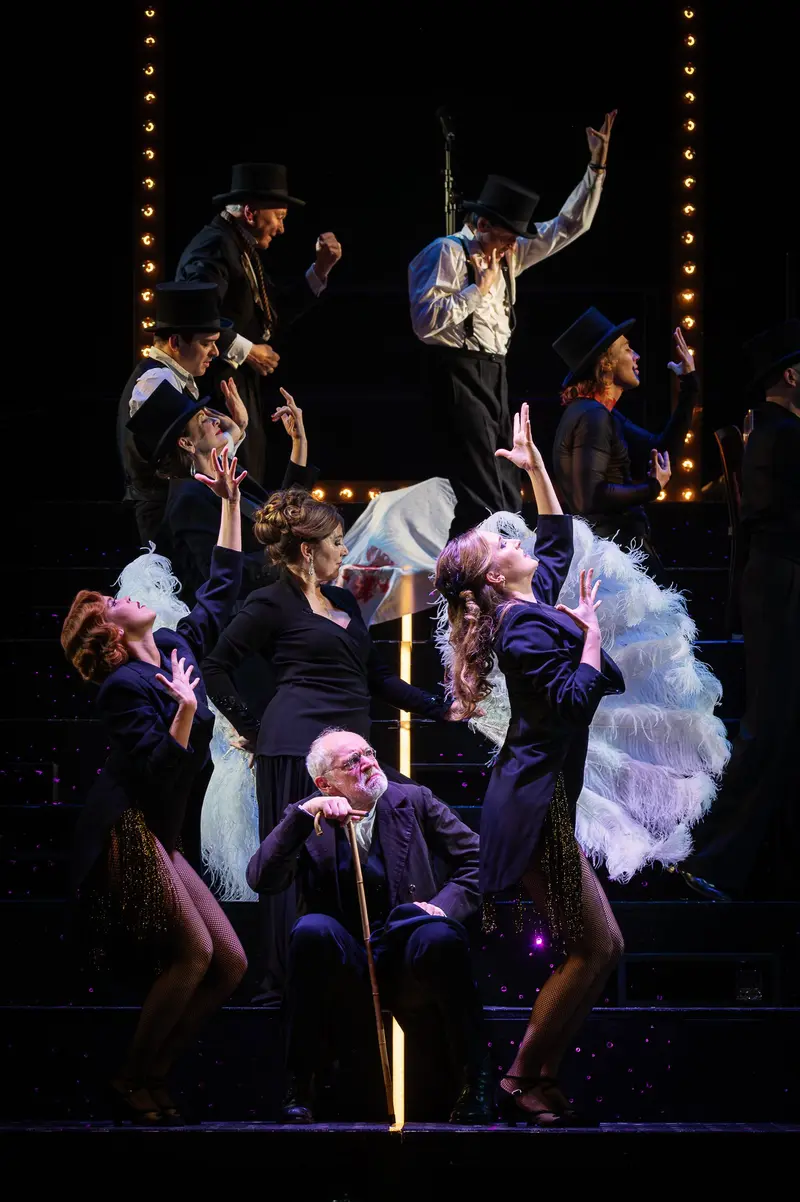 Zemlinsky Photo Rehearsal at Theater in der Josefstadt, March 2026 The cast of "Zemlinsky" performs during a photo rehearsal at Theater in der Josefstadt in Vienna on March 16, 2026, ahead of the premiere on March 19, 2026. Performers including Susa Meyer, Günter Franzmeier, Martina Ebm, Kimberly Rydell, Martin Vischer, Melanie Hackl, Markus Kofler, Julian Valerio Rehrl, Robert Joseph Bartl, and Ulli Maier are arranged on stage with dramatic lighting and decorative elements. The production explores the interconnected lives of composer Alexander Zemlinsky, painter Richard Gerstl, and Alma Schindler-Mahler-Gropius-Werfel in early twentieth-century Vienna.
 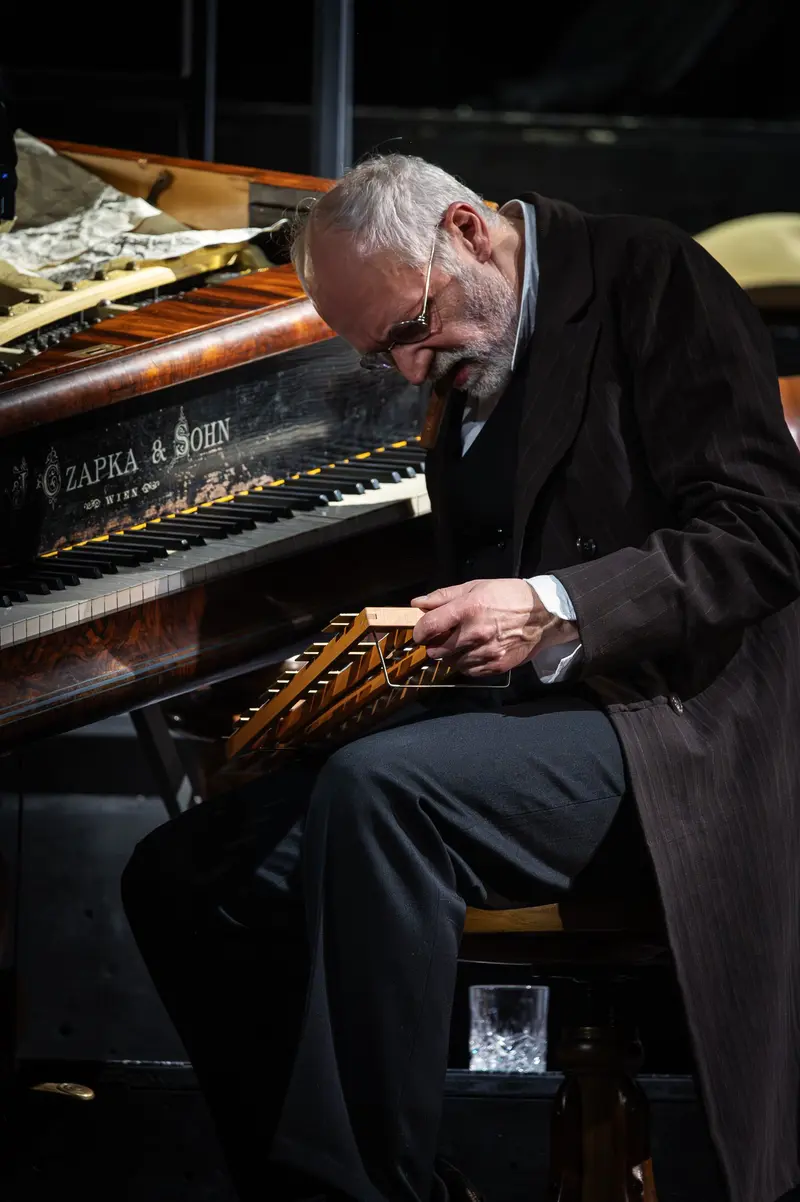 Zemlinsky Photo Rehearsal at Theater in der Josefstadt, March 2026 Günter Franzmeier performs in the role of Austrian composer Alexander Zemlinsky during a theatrical production, playing saxophone while seated at a Bösendorfer piano in formal black attire. Franzmeier displays intense concentration on the instrument, captured in profile against the piano's polished wood surface. The production dramatizes the life of Zemlinsky, a late 19th and early 20th-century composer known for symphonies, operas, and chamber works.
 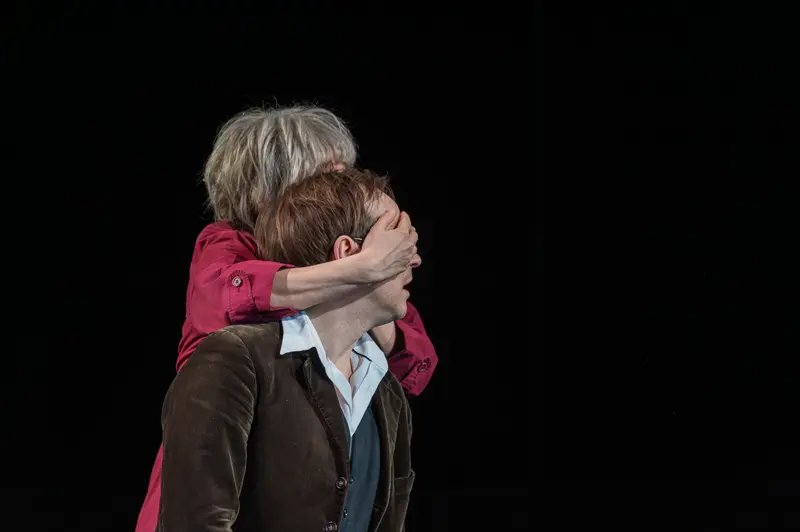 Zemlinsky Photo Rehearsal at Theater in der Josefstadt, March 2026 Susa Meyer as Anna Moll and Günter Franzmeier as Alexander Zemlinsky participate in a photo rehearsal for the production "Zemlinsky" at Theater in der Josefstadt in Vienna on March 16, 2026. Meyer stands in the foreground wearing a brown jacket while Franzmeier, dressed in a burgundy jacket, embraces her from behind against a black background. The theatrical production premieres on March 19, 2026, at the Vienna venue.
 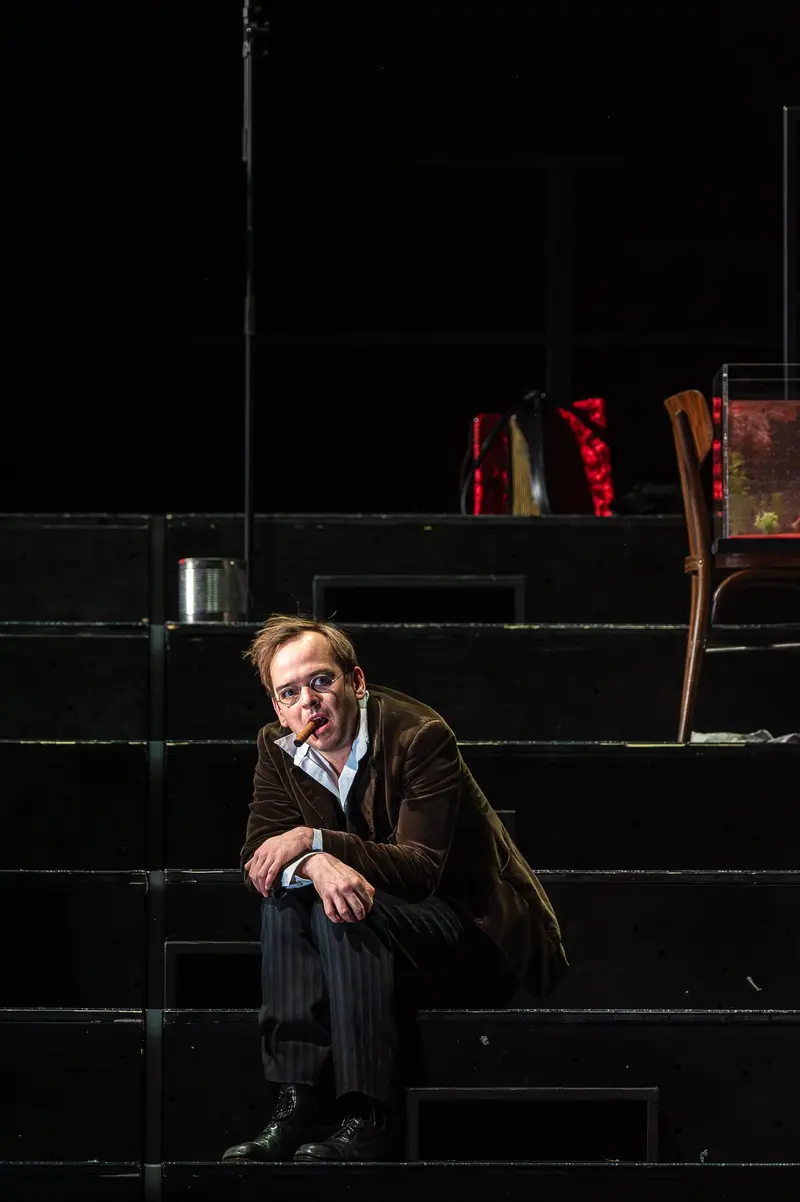 Zemlinsky Photo Rehearsal at Theater in der Josefstadt, March 2026 Günter Franzmeier, performing the role of Alexander Zemlinsky (der Ältere) and Adolf Zemlinsky (der Ältere), sits on darkened stage stairs during a photo rehearsal for the production "Zemlinsky" at Theater in der Josefstadt in Vienna on March 16, 2026. Franzmeier is dressed in brown jacket and pinstriped trousers, wearing glasses, with a contemplative expression as he rests his arm on his knee. The theatrical premiere of "Zemlinsky," directed for Theater in der Josefstadt's 2026 season, was scheduled for March 19, 2026.
 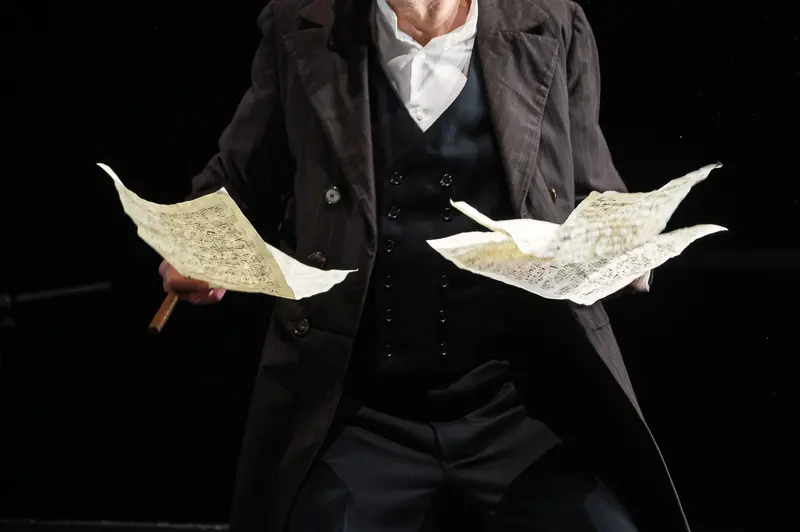 Zemlinsky Photo Rehearsal at Theater in der Josefstadt, March 2026 An actor in period costume holds open scripts during the photo rehearsal of "Zemlinsky" at Theater in der Josefstadt in Vienna on March 16, 2026, two days before the production's premiere. The performer, dressed in a dark double-breasted jacket and white shirt, displays the scripts against a black background. "Zemlinsky" is a theatrical production featuring an ensemble cast including Susa Meyer, Günter Franzmeier, Kimberly Rydell, Markus Kofler, and Julian Valerio Rehrl, directed at Vienna's historic Theater in der Josefstadt.
 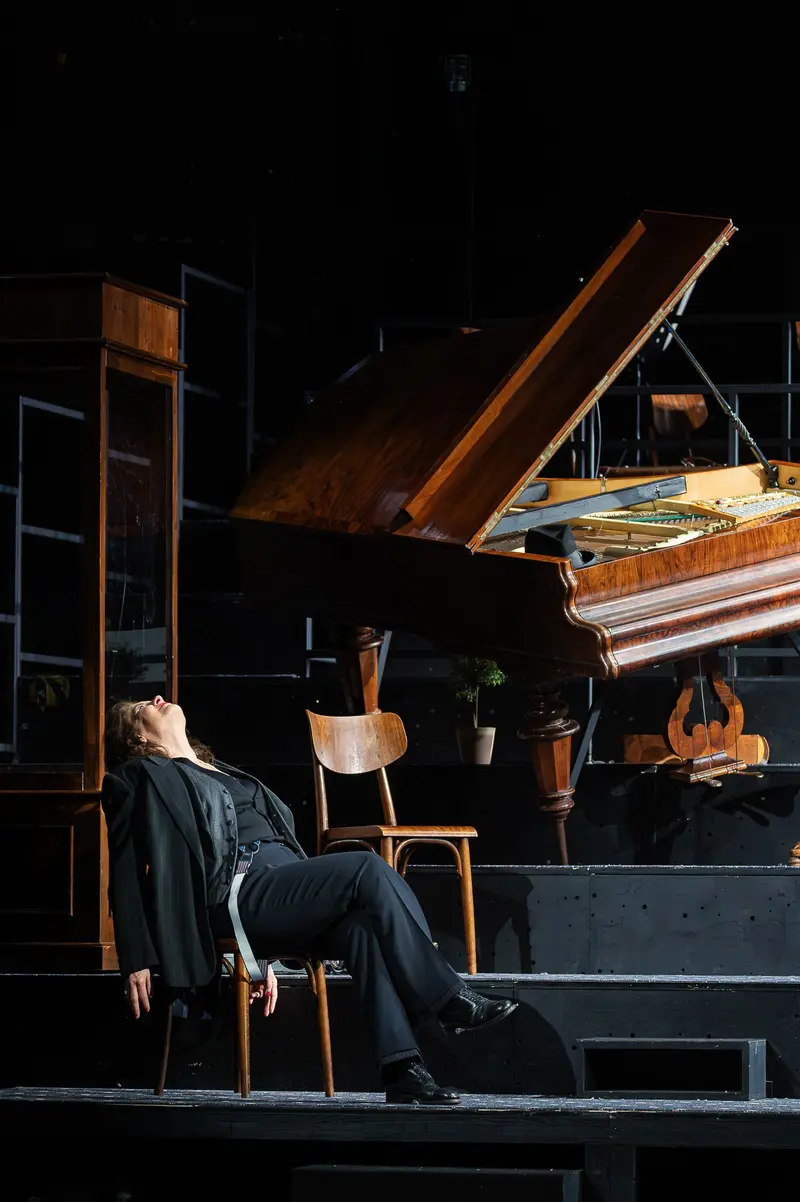 Zemlinsky Photo Rehearsal at Theater in der Josefstadt, March 2026 Günter Franzmeier, performing as Alexander Zemlinsky (der Ältere), sits alone on stage during a photo rehearsal at the Theater in der Josefstadt in Vienna on March 16, 2026, preceding the production's March 19, 2026 premiere. The ensemble cast includes Susa Meyer, Martina Ebm, Martin Vischer, and Markus Kofler as Arnold Schönberg. The Theater in der Josefstadt is Vienna's historic venue for classical and contemporary dramatic productions.
 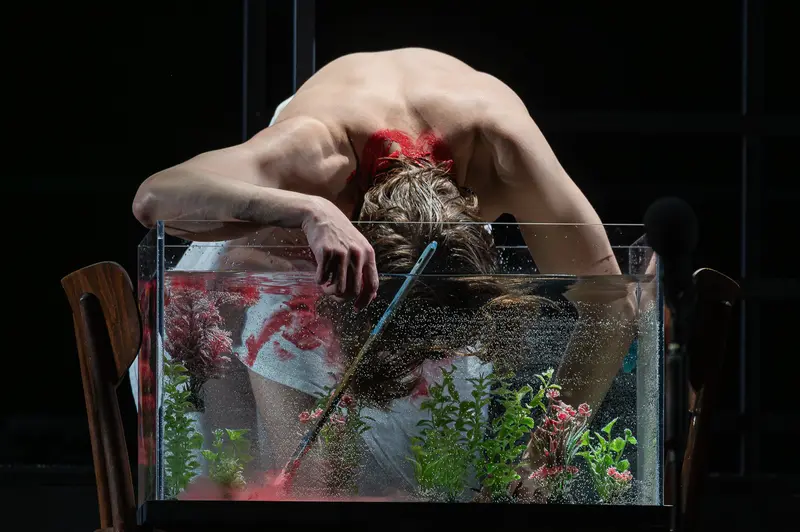 Zemlinsky Photo Rehearsal at Theater in der Josefstadt, March 2026 Julian Valerio Rehrl performs in a water-filled transparent tank containing submerged flowering plants and aquatic vegetation at Theater in der Josefstadt, Vienna, in March 2026. The shirtless performer leans directly into the tank, interacting intimately with the botanical elements in a controlled theatrical environment. Photographer Michael Seirer documents this artistic engagement with natural materials within the enclosed aquatic installation.
 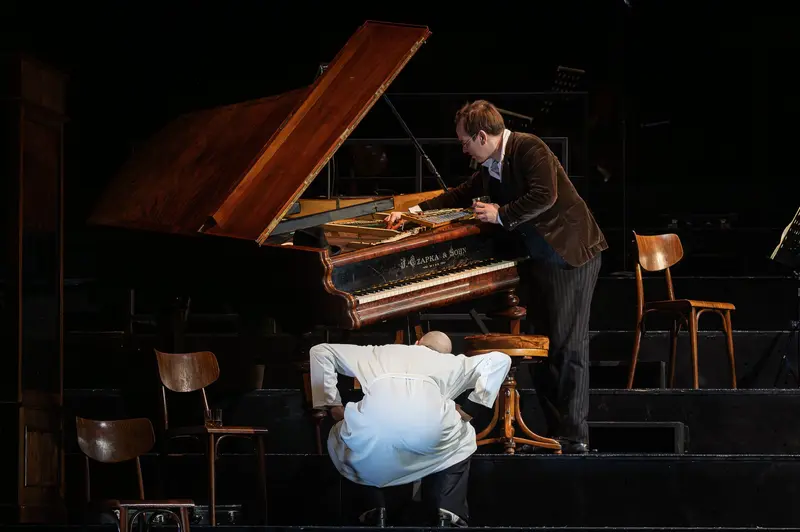 Zemlinsky Photo Rehearsal at Theater in der Josefstadt, March 2026 Cast members perform during a photo rehearsal of the theatrical production "Zemlinsky" at the Theater in der Josefstadt in Vienna on March 16, 2026, with the premiere scheduled for March 19, 2026. Two actors interact at an open grand piano on stage, with wooden chairs visible in the darkened theater space. The production features a cast including Susa Meyer, Günter Franzmeier, Martina Ebm, Kimberly Rydell, Martin Vischer, Melanie Hackl, Markus Kofler, Julian Valerio Rehrl, Robert Joseph Bartl, and Ulli Maier performing multiple historical roles spanning the lives of composer Alexander Zemlinsky, Arnold Schönberg, and Alma Schindler-Mahler-Gropius-Werfel.
 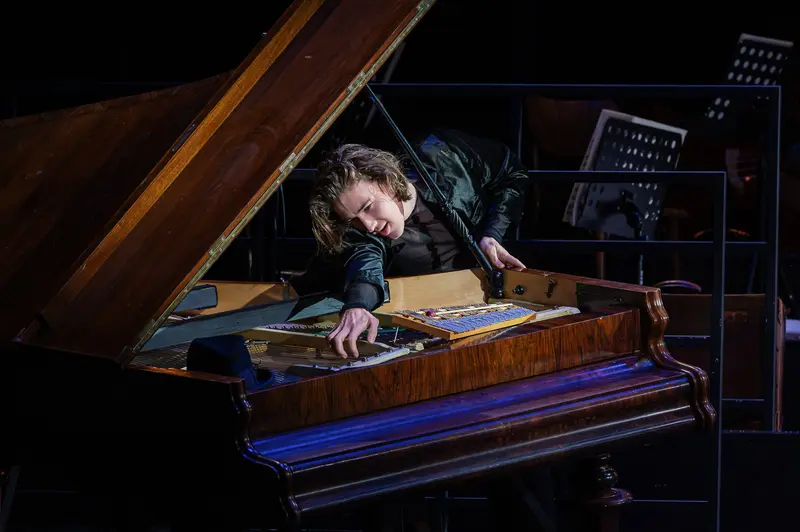 Zemlinsky Photo Rehearsal at Theater in der Josefstadt, March 2026 Susa Meyer performs at a grand piano during the photo rehearsal of "Zemlinsky" at Theater in der Josefstadt in Vienna on March 16, 2026, portraying multiple characters including Anna Moll, Charlotte Garrigue Masaryková, and Clara Zemlinsky (the Elder). The production features an ensemble cast including Günter Franzmeier, Martina Ebm, Kimberly Rydell, Martin Vischer, and others, with the premiere scheduled for March 19, 2026.
 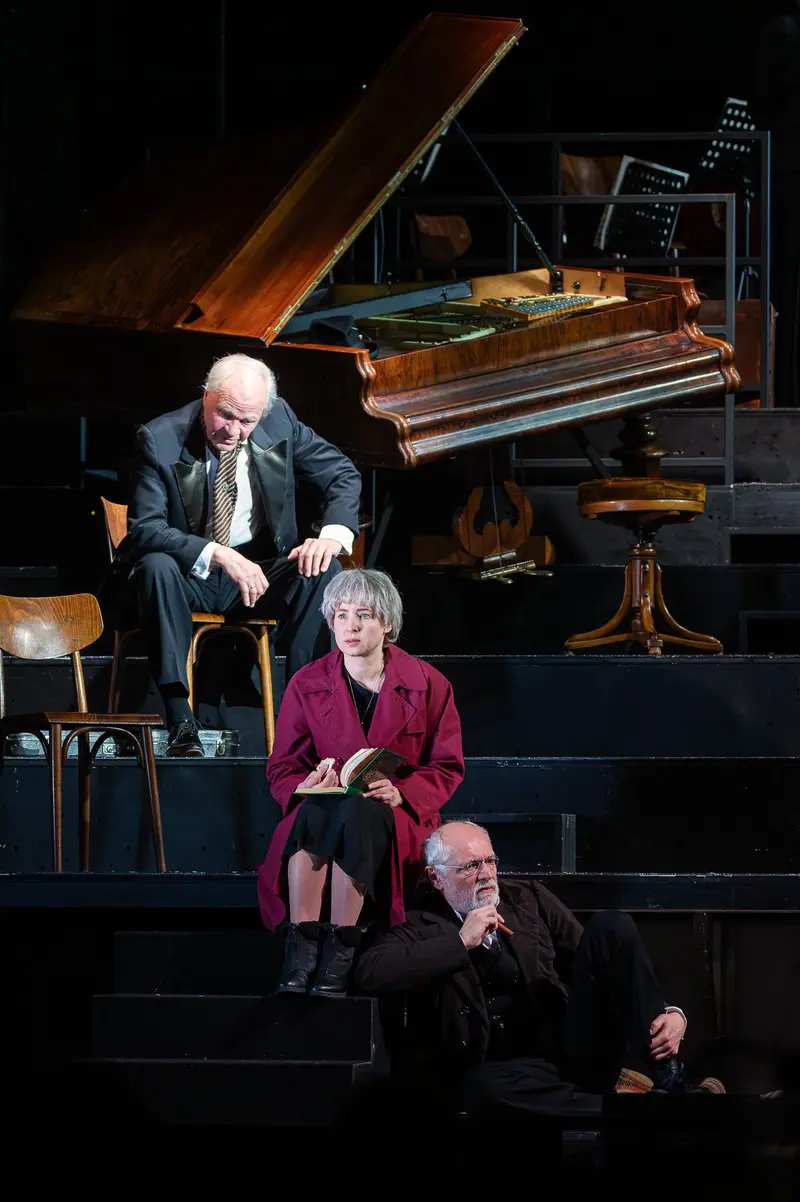 Zemlinsky Photo Rehearsal at Theater in der Josefstadt, March 2026 Cast members Susa Meyer, Günter Franzmeier, and Ulli Maier participate in a photo call rehearsal for the premiere of "Zemlinsky" at Theater in der Josefstadt in Vienna on March 16, 2026. The three performers are positioned on the theater's dark stage near a grand piano, with Franzmeier seated and Meyer and Maier standing. Theater in der Josefstadt, Austria's oldest continuously operating theater founded in 1788, hosted the official premiere of this production on March 19, 2026.
 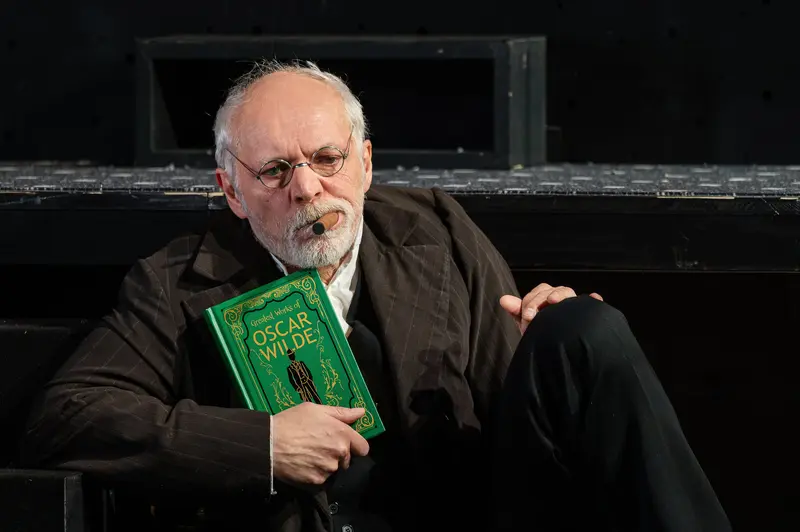 Zemlinsky Photo Rehearsal at Theater in der Josefstadt, March 2026 Actor Günter Franzmeier portrays Alexander Zemlinsky during a theatrical performance at Theater in der Josefstadt in Vienna, March 2026. Franzmeier sits on dark steps wearing a dark jacket and glasses, holding a green book while gesturing expressively with one hand. The photograph was taken by photographer Michael Seirer and documents a character portrayal moment from this Vienna theater production.
 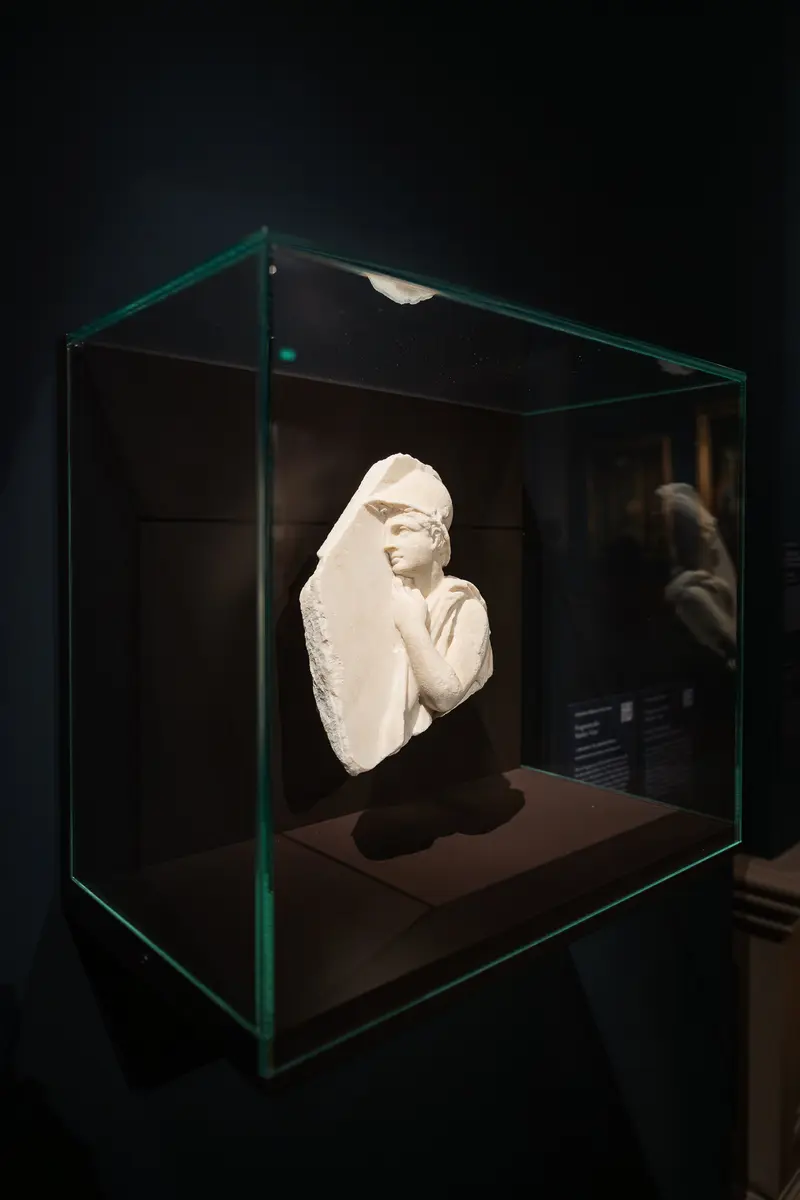 Dealing in Splendour at Gartenpalais Liechtenstein, March 2026 Dealing in Splendour at Gartenpalais Liechtenstein
 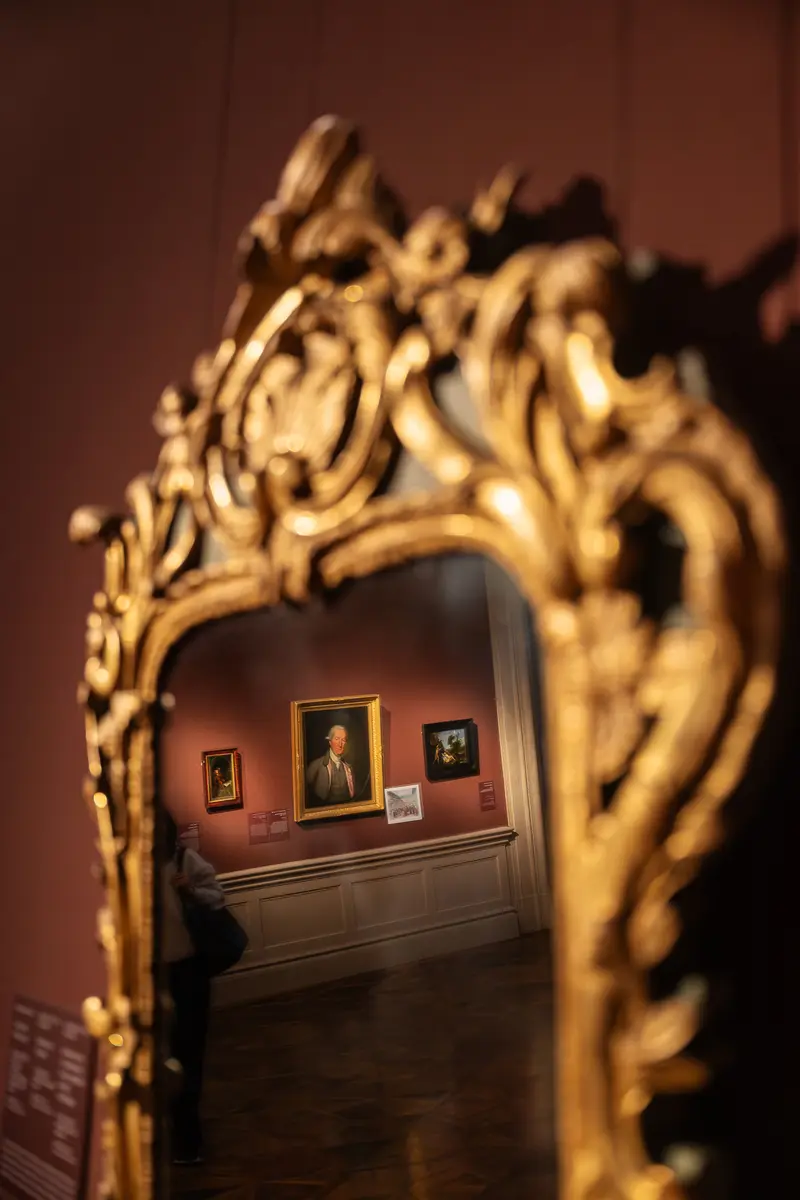 Dealing in Splendour at Gartenpalais Liechtenstein, March 2026 Dealing in Splendour at Gartenpalais Liechtenstein
 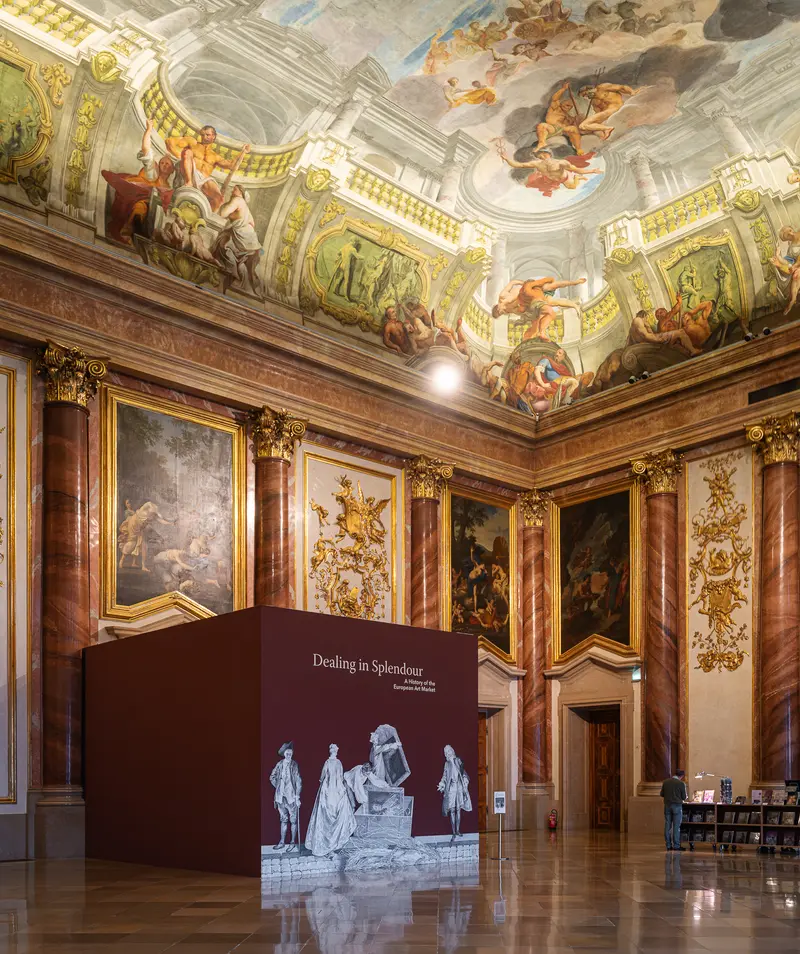 Dealing in Splendour at Gartenpalais Liechtenstein, March 2026 Dealing in Splendour at Gartenpalais Liechtenstein
 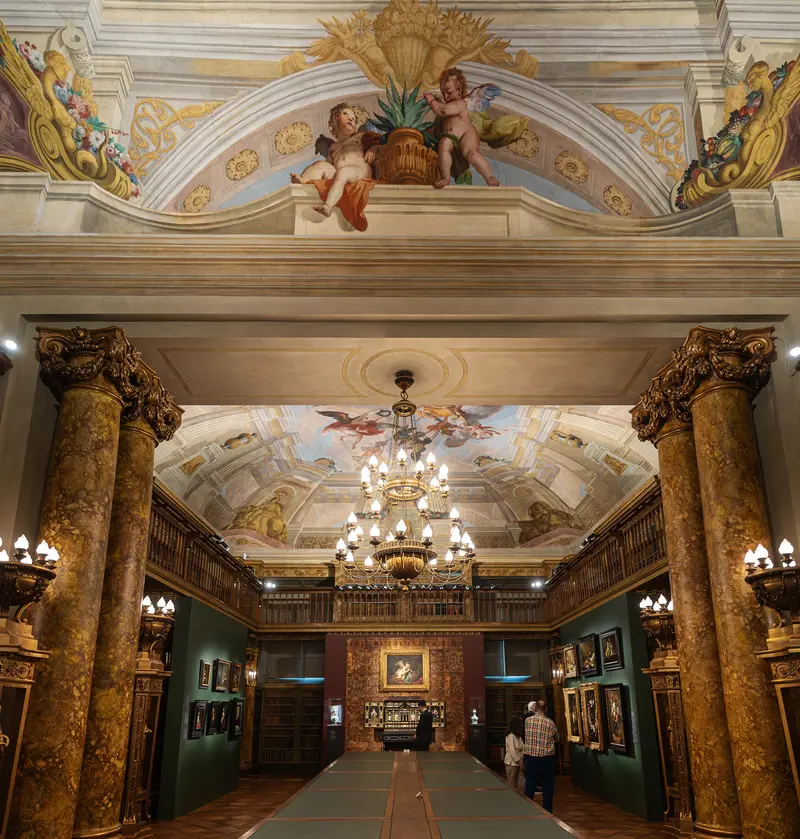 Dealing in Splendour at Gartenpalais Liechtenstein, March 2026 Dealing in Splendour at Gartenpalais Liechtenstein
 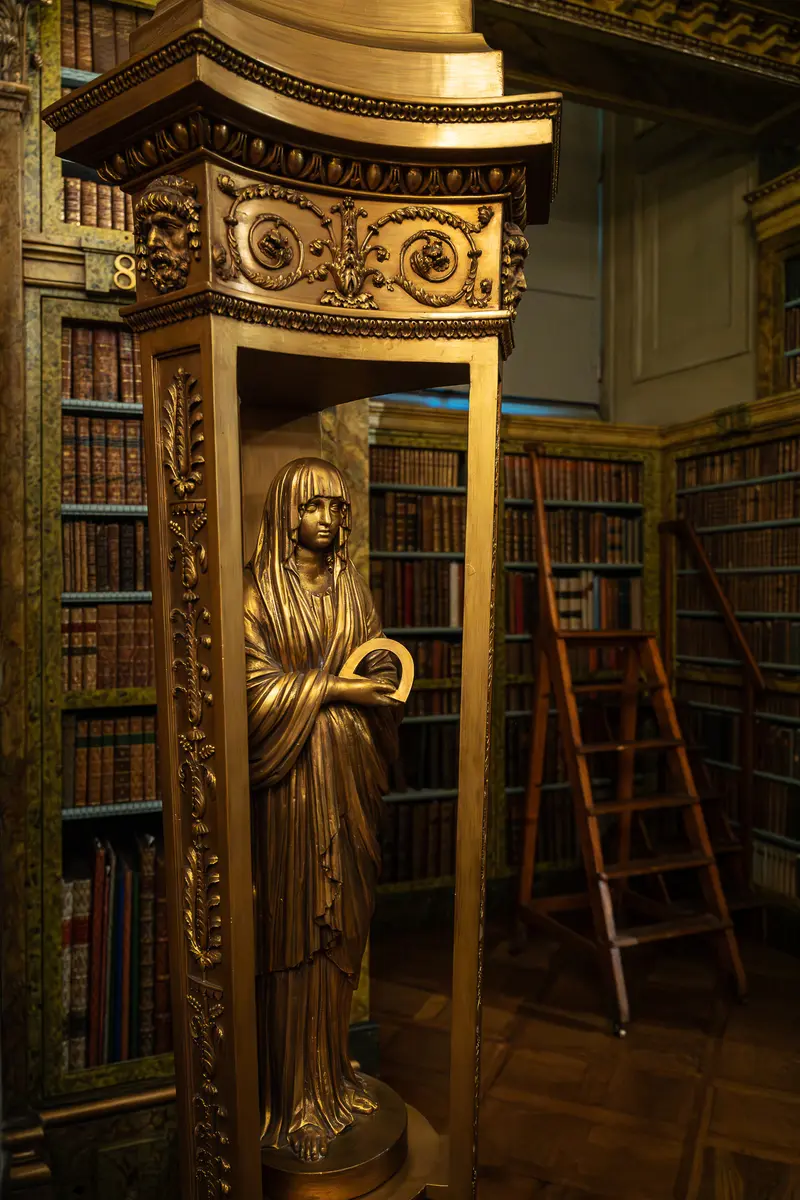 Dealing in Splendour at Gartenpalais Liechtenstein, March 2026 Dealing in Splendour at Gartenpalais Liechtenstein
 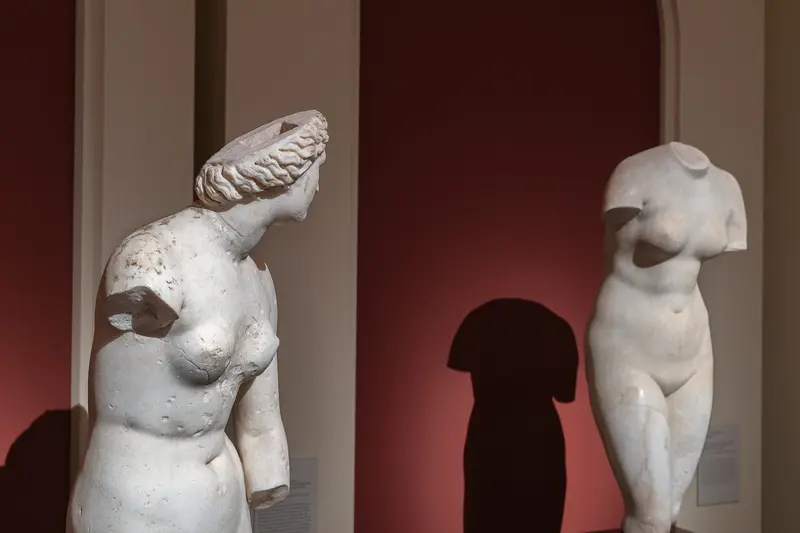 Dealing in Splendour at Gartenpalais Liechtenstein, March 2026 Dealing in Splendour at Gartenpalais Liechtenstein
 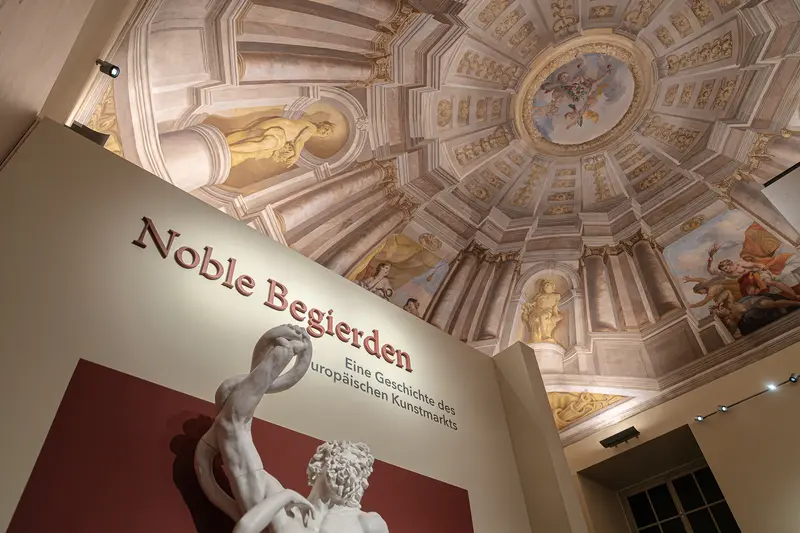 Dealing in Splendour at Gartenpalais Liechtenstein, March 2026 Laocoön and His Sons - Dealing in Splendour at Gartenpalais Liechtenstein.
 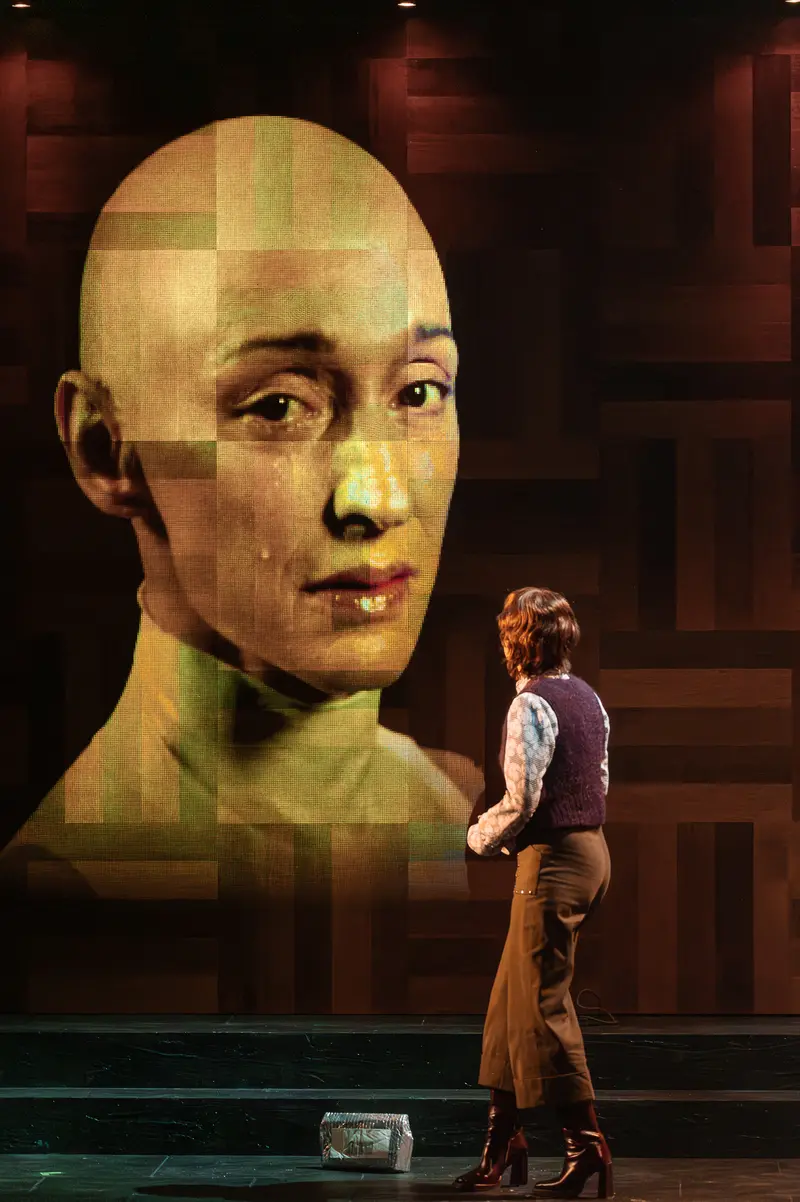 Sophia at Theater in der Josefstadt, February 2026 An actor performs on stage next to a large projected pixelated human face during a production of Sophia at the Kammerspiele der Josefstadt in Vienna. The performer wears casual clothing while positioned adjacent to the digitally rendered facial projection on a dark stage set. The production integrates live theatrical performance with digital imagery to create a hybrid visual experience.
 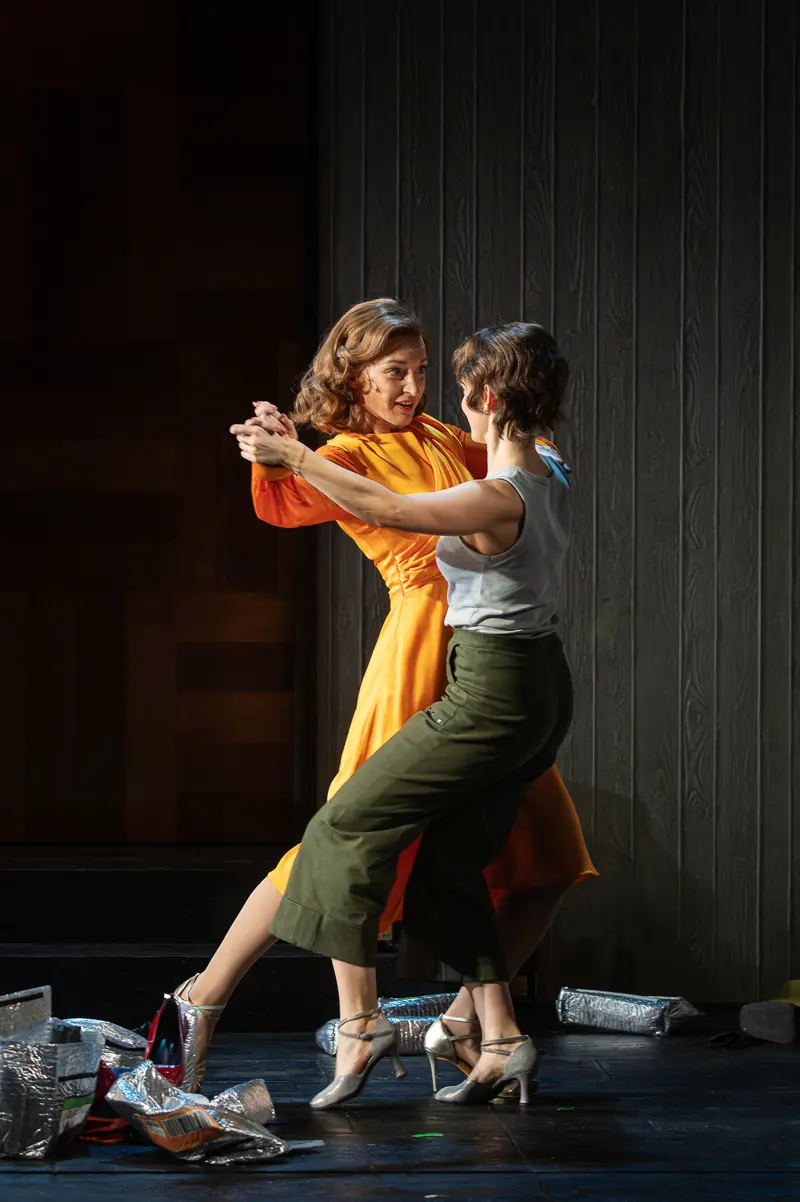 Sophia at Theater in der Josefstadt, February 2026 Two performers dance in intimate close embrace during a theatrical stage production, with one wearing a flowing yellow and orange dress and the other in olive green pants and a light-colored top. Both wear character shoes on a dark stage floor scattered with props, performing against dark paneled walls. The scene depicts a choreographed moment of connection typical of contemporary theatrical dance productions.
 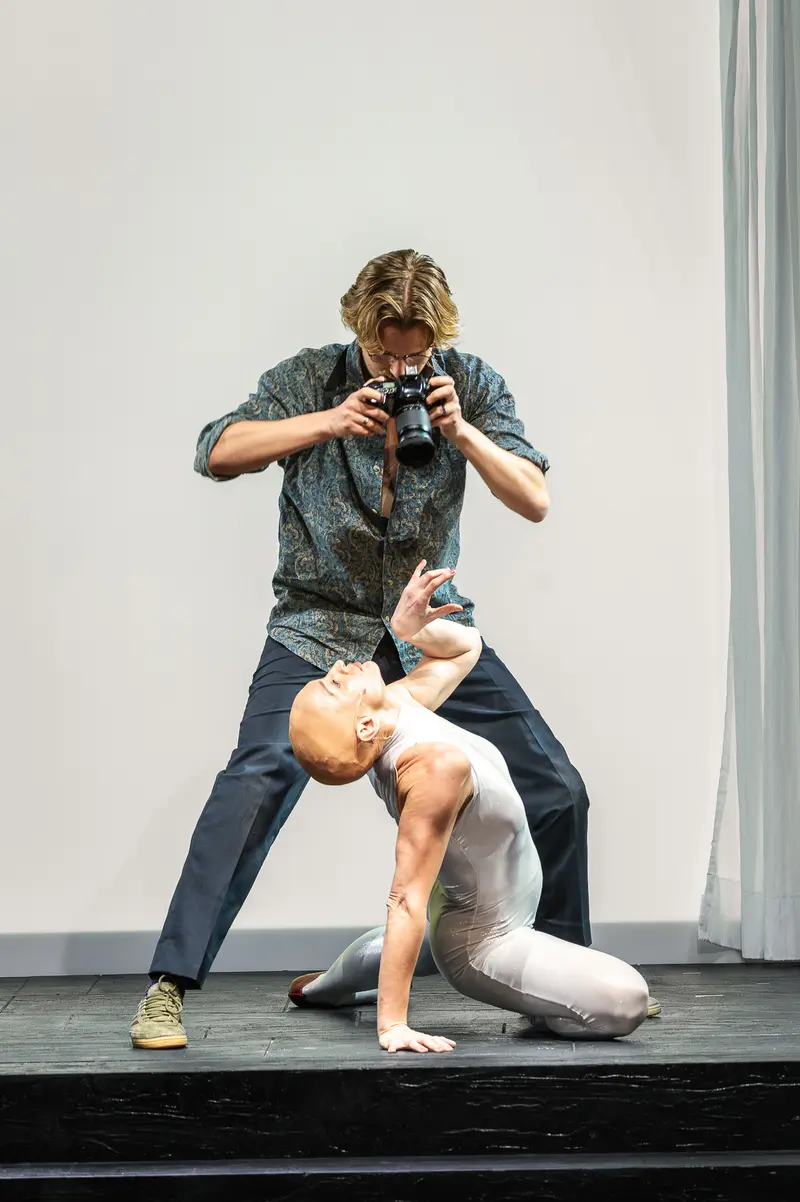 Sophia at Theater in der Josefstadt, February 2026 A photographer holding a camera stands with spread legs over a ballet dancer in a white leotard positioned in a low artistic pose on the dark stage during the production "Sophia" at Kammerspiele der Josefstadt in Vienna. The two performers are framed against a light backdrop, creating a stark visual contrast on the stage floor. This theatrical moment captures an interaction between documentation and performance within the avant-garde production.
 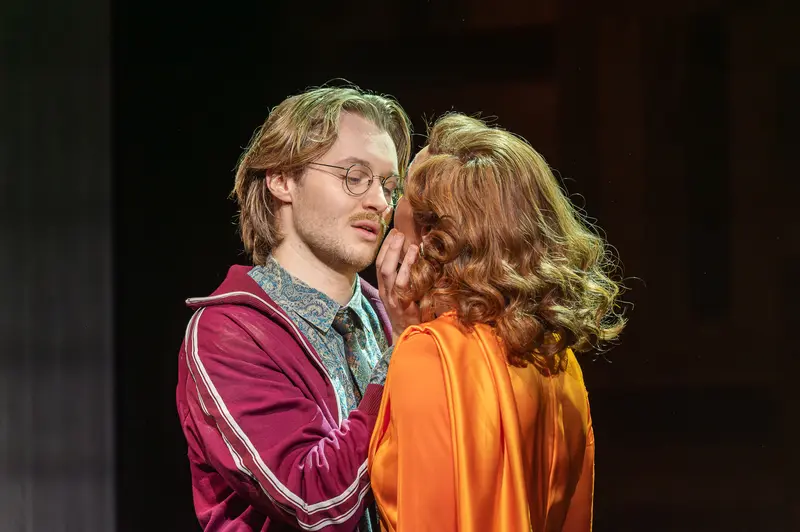 Sophia at Theater in der Josefstadt, February 2026 Two performers share a close theatrical moment during a production of Sophia at the Kammerspiele der Josefstadt in Vienna. The actor on the left wears glasses and a burgundy track jacket over a patterned shirt, while the performer on the right wears an orange garment, with both figures positioned in an intimate exchange on a darkened stage. The Kammerspiele der Josefstadt is a historic theater in Vienna's eighth district known for contemporary dramatic productions.
 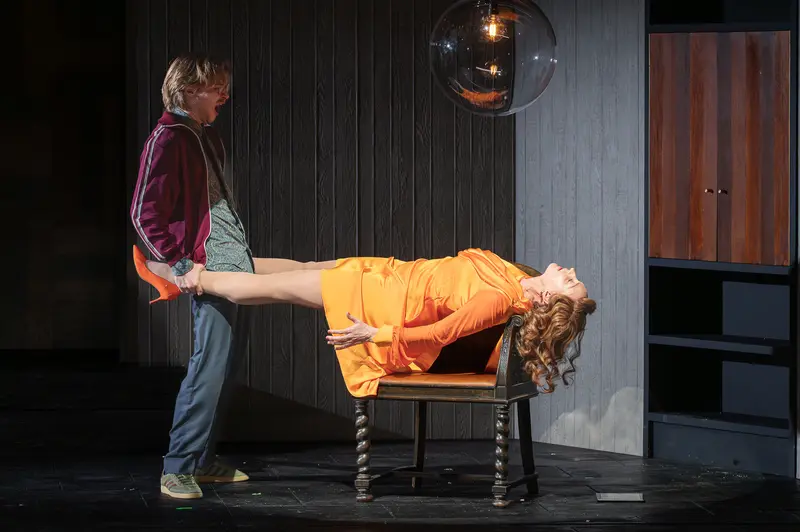 Sophia at Theater in der Josefstadt, February 2026 A performer in a burgundy jacket and orange sneakers supports a second performer in an orange dress positioned horizontally across a dark wooden chair during a scene from Sophia at Kammerspiele der Josefstadt in Vienna. The minimalist stage features dark paneled walls, a spherical suspended light fixture, and wooden cabinetry, creating an austere theatrical environment. The production uses physical manipulation and geometric staging to create visual illusions of weightlessness and suspension.
 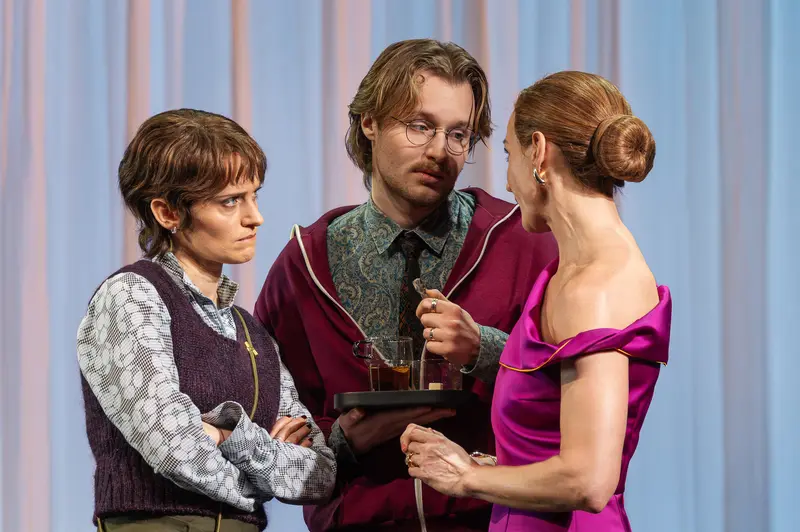 Sophia at Theater in der Josefstadt, February 2026 Three performers in period attire engage in a scene during a production of Sophia at the Kammerspiele der Josefstadt in Vienna. The left actor wears a patterned vest over a printed shirt, the center actor holds a tablet while wearing glasses and a burgundy robe, and the right actor appears in a magenta off-shoulder dress. The Kammerspiele der Josefstadt is a historic theater in Vienna's eighth district, known for intimate dramatic productions.
  Sophia at Theater in der Josefstadt, February 2026 An actor performs in the production Sophia at the Kammerspiele der Josefstadt in Vienna during a February 23, 2026 performance. The performer wears a bright orange zip-up jacket and is photographed against a dark background with shoulder-length curled hair. The Kammerspiele der Josefstadt is a historic theater in Vienna's eighth district known for intimate dramatic productions.
 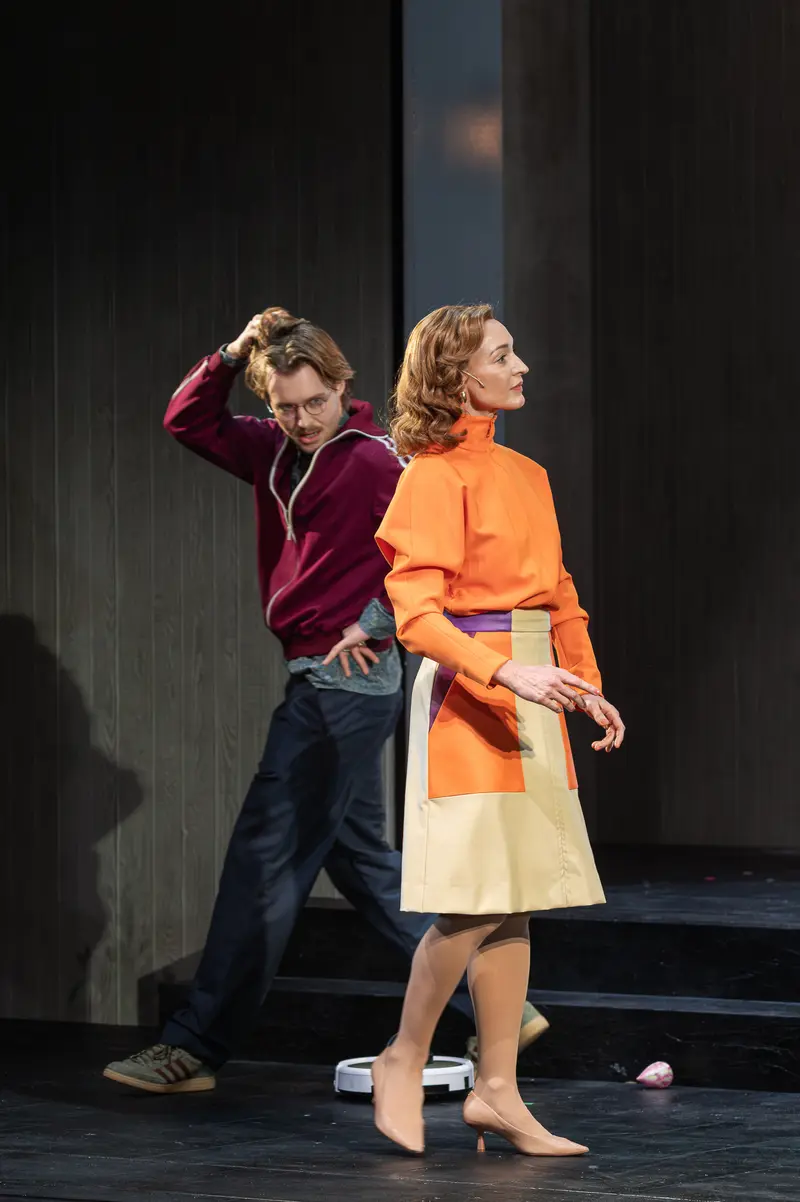 Sophia at Theater in der Josefstadt, February 2026 Two performers stand back-to-back on a dark stage during a scene from Sophia at the Kammerspiele der Josefstadt in Vienna. The performer on the left wears a burgundy sweater and dark pants with hand raised to head, while the performer on the right wears an orange top and cream-colored skirt with heeled shoes. The Kammerspiele der Josefstadt is an historic theater in Vienna's eighth district known for classical and contemporary drama productions.
 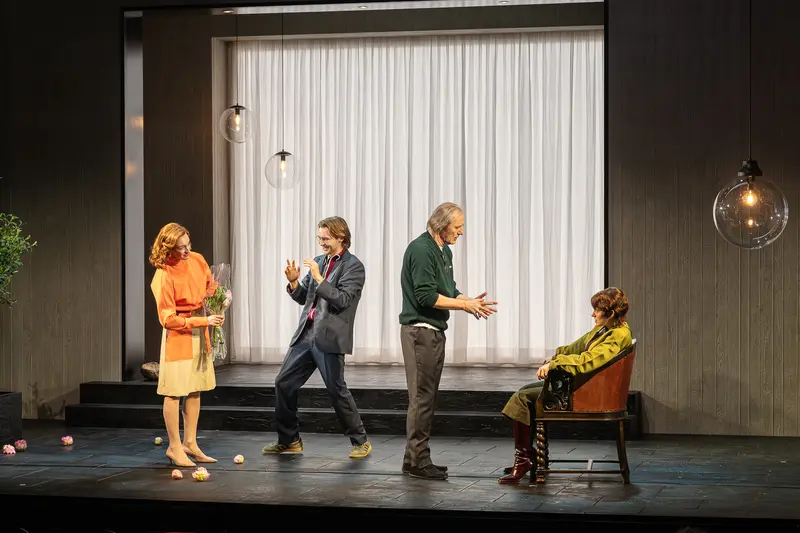 Sophia at Theater in der Josefstadt, February 2026 Four performers occupy a minimalist stage at the Kammerspiele der Josefstadt in Vienna, with a white curtained backdrop and dark walls. Three standing actors in an orange dress, blue suit, and green cardigan interact with a fourth performer seated in a brown leather chair, while scattered spherical objects lie on the stage floor. The Kammerspiele der Josefstadt is a historic chamber theater in Vienna's eighth district, known for intimate dramatic productions.
 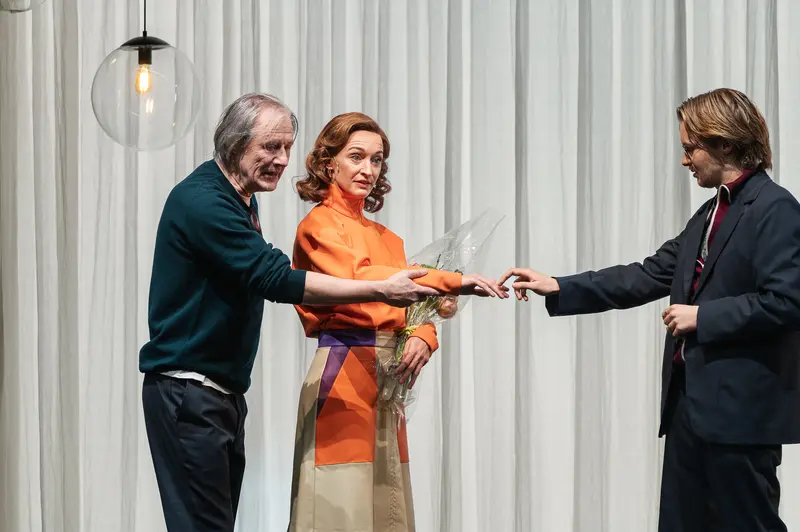 Sophia at Theater in der Josefstadt, February 2026 Three performers enact a scene from the production Sophia at the Kammerspiele der Josefstadt in Vienna. An older man in a teal sweater and a woman in an orange blouse hand documents to a younger man in a dark suit against white curtains forming the stage backdrop. The Kammerspiele der Josefstadt is a historic theater in Vienna's eighth district, Austria.
 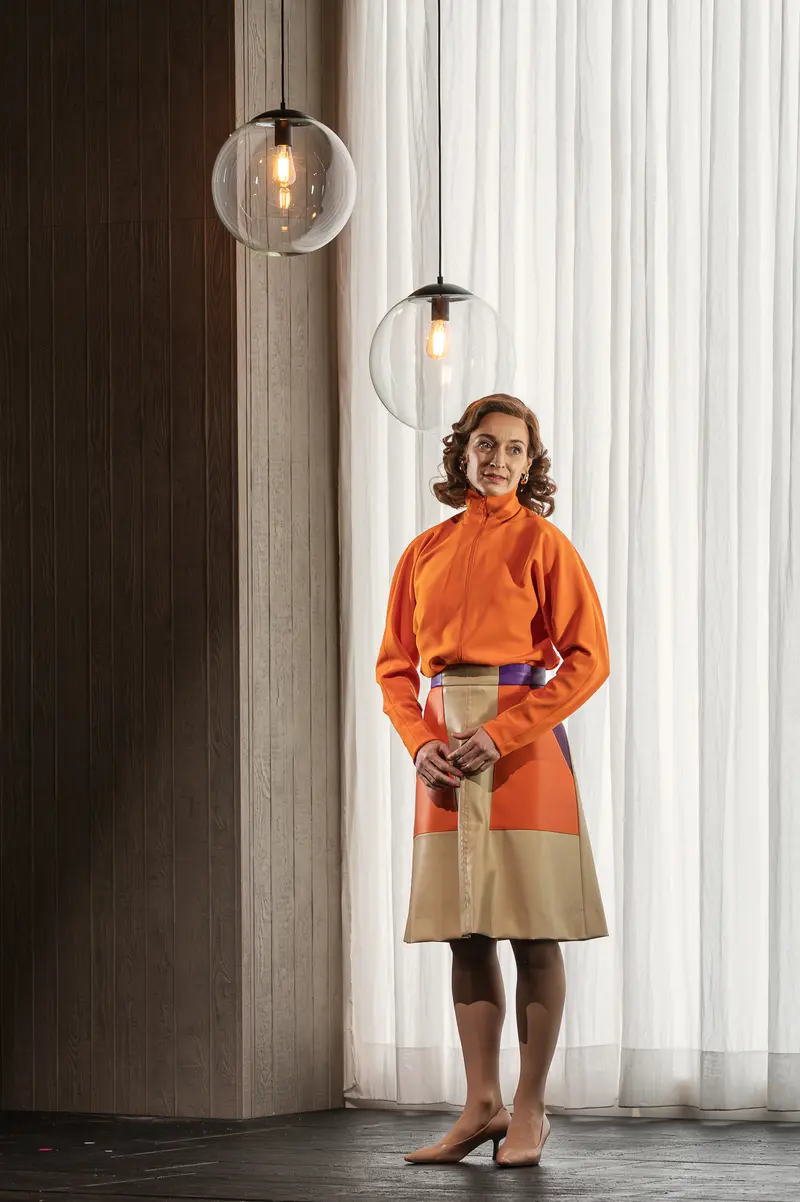 Sophia at Theater in der Josefstadt, February 2026 An actor performs in a scene from Sophia at the Kammerspiele der Josefstadt in Vienna, wearing an orange turtleneck and beige skirt while holding a coffee cup. The minimalist stage features white vertical curtains and two illuminated glass pendant lights suspended above. The production was photographed by Michael Seirer Photography in February 2026.
 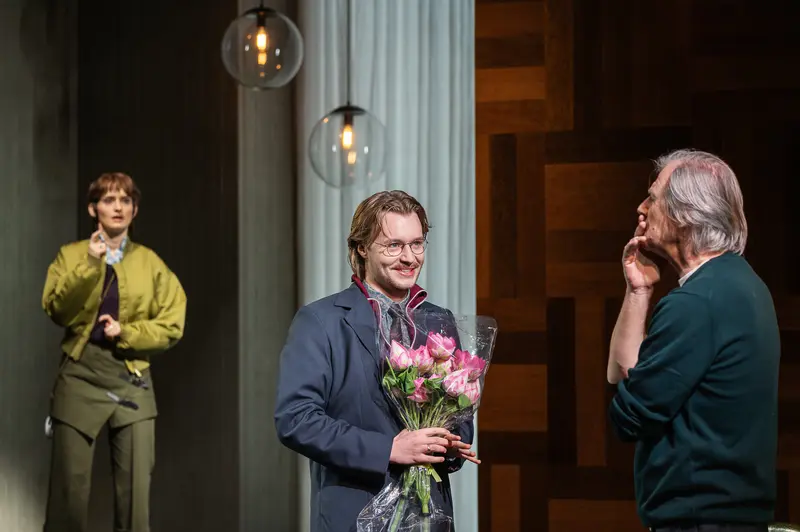 Sophia at Theater in der Josefstadt, February 2026 An actor wearing glasses and holding a bouquet of pink flowers stands center stage during a curtain call at the Kammerspiele der Josefstadt in Vienna. Two other performers are visible on stage, one wearing yellow attire to the left and another figure to the right, with hanging globe light fixtures and draped curtains forming the backdrop. The Kammerspiele der Josefstadt is a historic theater in Vienna's eighth district, known for producing classical and contemporary drama productions.
 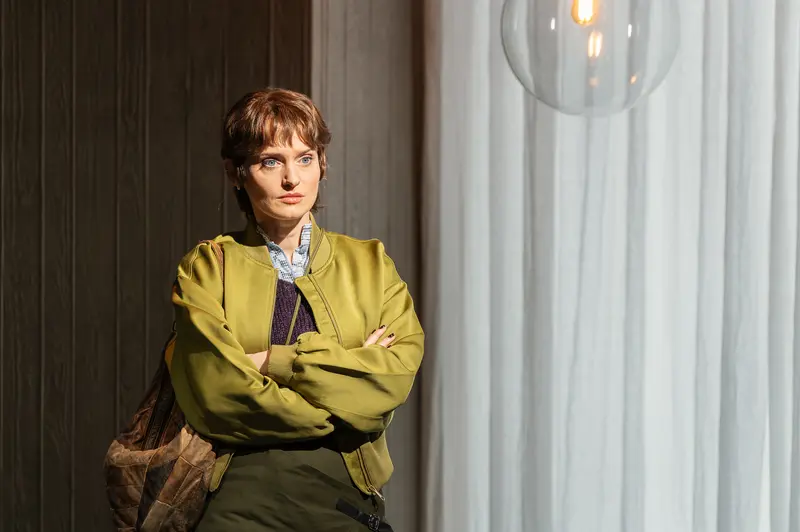 Sophia at Theater in der Josefstadt, February 2026 An actor stands with crossed arms wearing a yellow jacket over a collared shirt during a performance of Sophia at the Kammerspiele der Josefstadt in Vienna. The setting features white curtains and dark wood paneling with overhead pendant lighting. The photograph was taken by Michael Seirer Photography during the February 23, 2026 performance.
 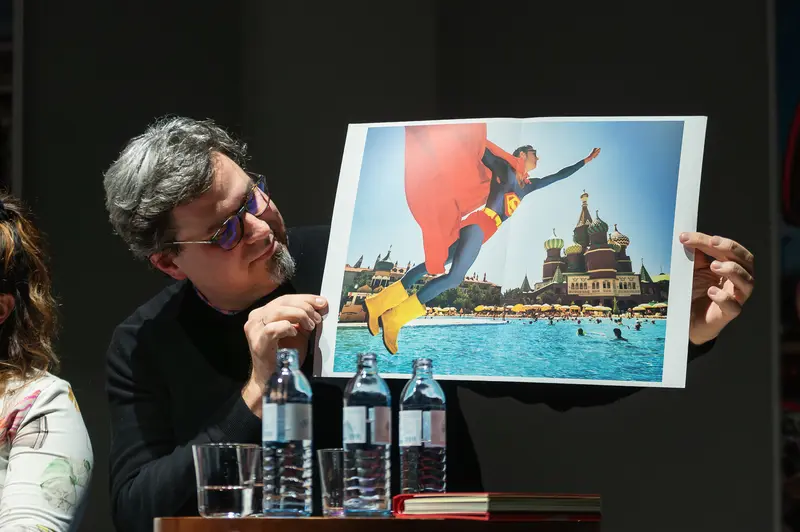 Westlicht Grotesk, February 2026 Reiner Riedler, an Austrian photographer, displays a large-format photograph during a panel discussion at Westlicht, holding an image depicting a figure in a red cape suspended above water with an ornate golden-domed cathedral visible in the background. The panel included István Virágvölgyi (Curator & Artistic Director, Robert Capa Center, Budapest), Jacob Mikanowski (Writer & Historian), and Éva Szombat (Photographer, Hungary), moderated by Anna Wallner of Die Presse. The setting features water bottles and materials on a table in front of a dark backdrop, typical of a structured public screening and lecture event.
 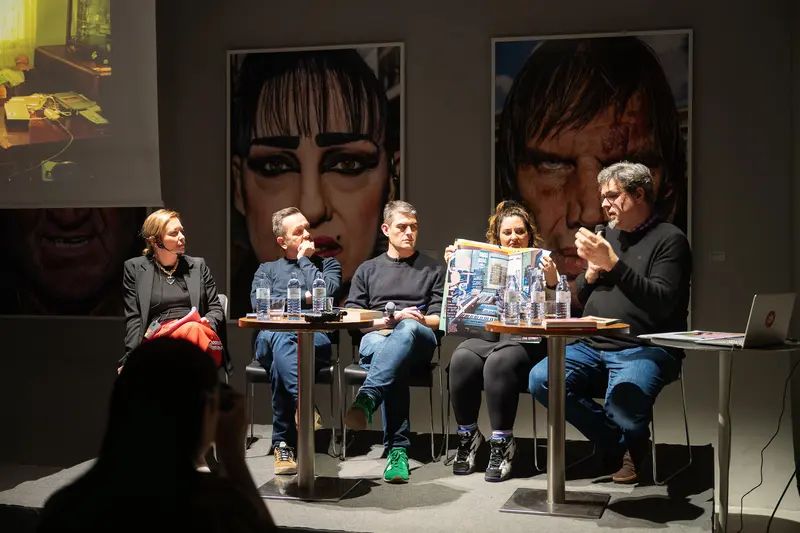 Westlicht Grotesk, February 2026 István Virágvölgyi (Curator & Artistic Director, Robert Cape Center, Budapest), Reiner Riedler (Photographer, Austria), Jacob Mikanowski (Writer & Historian, Institute for Human Sciences, USA), and Éva Szombat (Photographer, Hungary) participate in a panel discussion moderated by Anna Wallner (Journalist & Head of New Media, Die Presse) at Westlicht, seated before large-scale portrait photographs. The panelists discuss photography, curation, and contemporary visual culture in a formal gallery setting. Westlicht is Vienna's international festival and exhibition space dedicated to photography and visual media.
 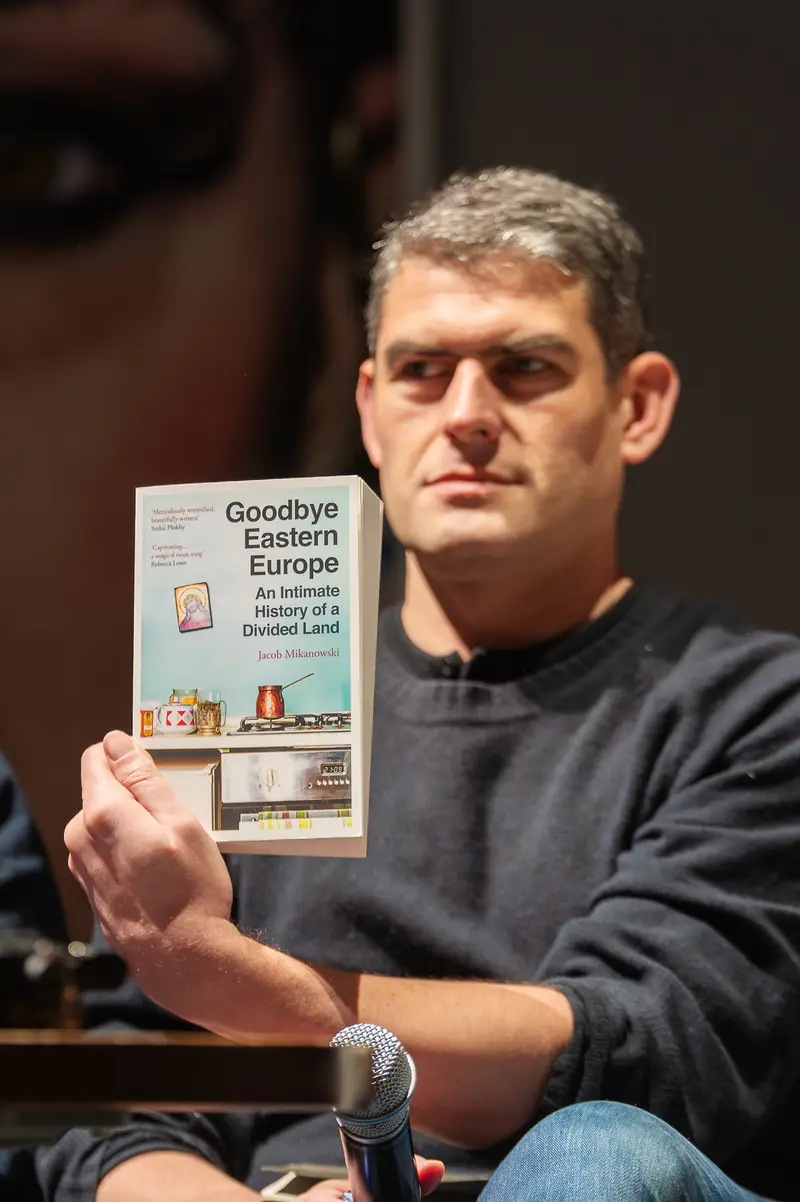 Westlicht Grotesk, February 2026 Reiner Riedler, an Austrian photographer, holds up his book "Goodbye Eastern Europe: A History of a Divided Land" during a panel discussion at Westlicht, a photography venue in Vienna. The presentation was moderated by Anna Wallner, journalist and head of new media at Die Presse, alongside fellow panelists István Virágvölgyi (curator and artistic director of Robert Capa Center, Budapest), Jacob Mikanowski (writer and historian at the Institute for Human Sciences), and Éva Szombat (Hungarian photographer). The event explored photographic perspectives on Eastern European history and cultural memory.
 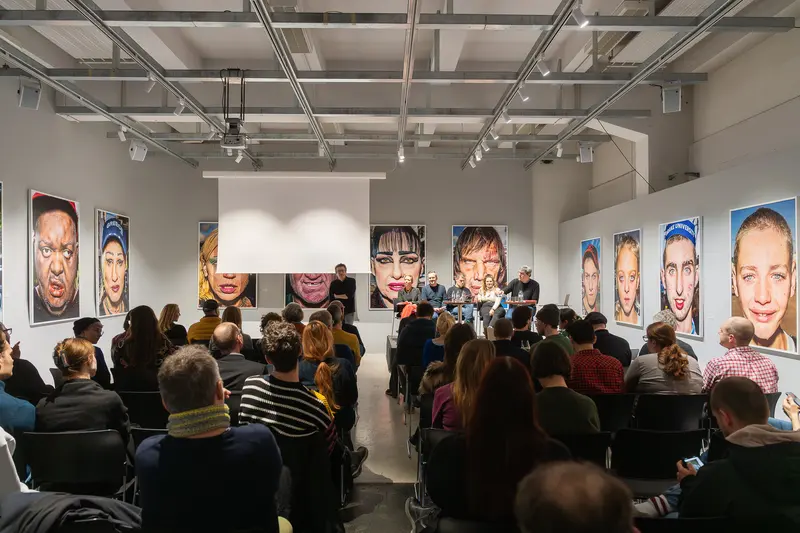 Westlicht Grotesk, February 2026 A panel discussion takes place at Westlicht gallery featuring István Virágvölgyi (Curator & Artistic Director, Robert Capa Center, Budapest), photographer Reiner Riedler (Austria), writer Jacob Mikanowski (Institute for Human Sciences, USA), and photographer Éva Szombat (Hungary), moderated by Anna Wallner (Die Presse). Large-format portrait photographs by the featured photographers are displayed on the white gallery wall behind the panelists. The audience sits in darkness facing the illuminated discussion platform.
 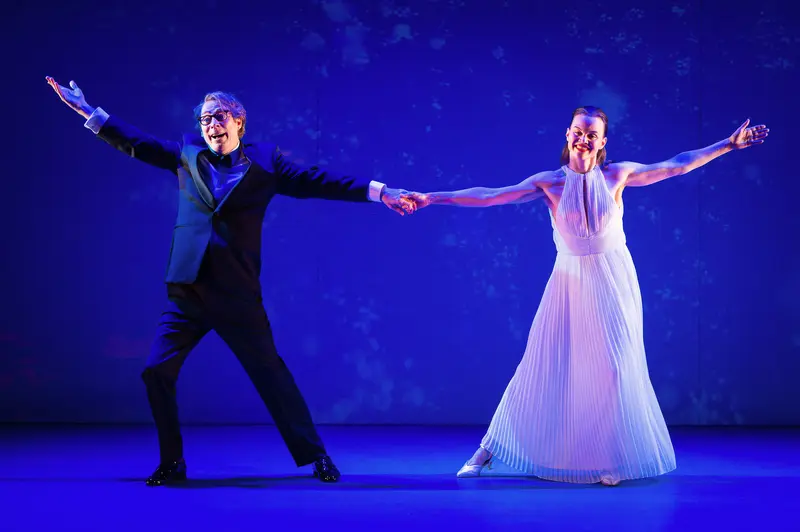 2026-01-14 Die Tanzstunde - Kammerspiele Katharina Klar and André Pohl perform a ballroom dance sequence against a saturated blue backdrop during a photographic rehearsal of "Die Tanzstunde" at Kammerspiele Wien. The actors extend their outer arms in symmetrical gestures while maintaining hand contact at center, Pohl in dark formal attire and Klar in a flowing, pleated white gown that catches the stage lighting. The composition emphasizes theatrical geometry through the performers' parallel diagonal stances and the stark tonal contrast between costumes, while atmospheric lighting creates a nocturnal ambiance characteristic of Stephan von Wedel's scenic design and Sebastian Schubert's illumination work for this production under Folke Braband's direction.
 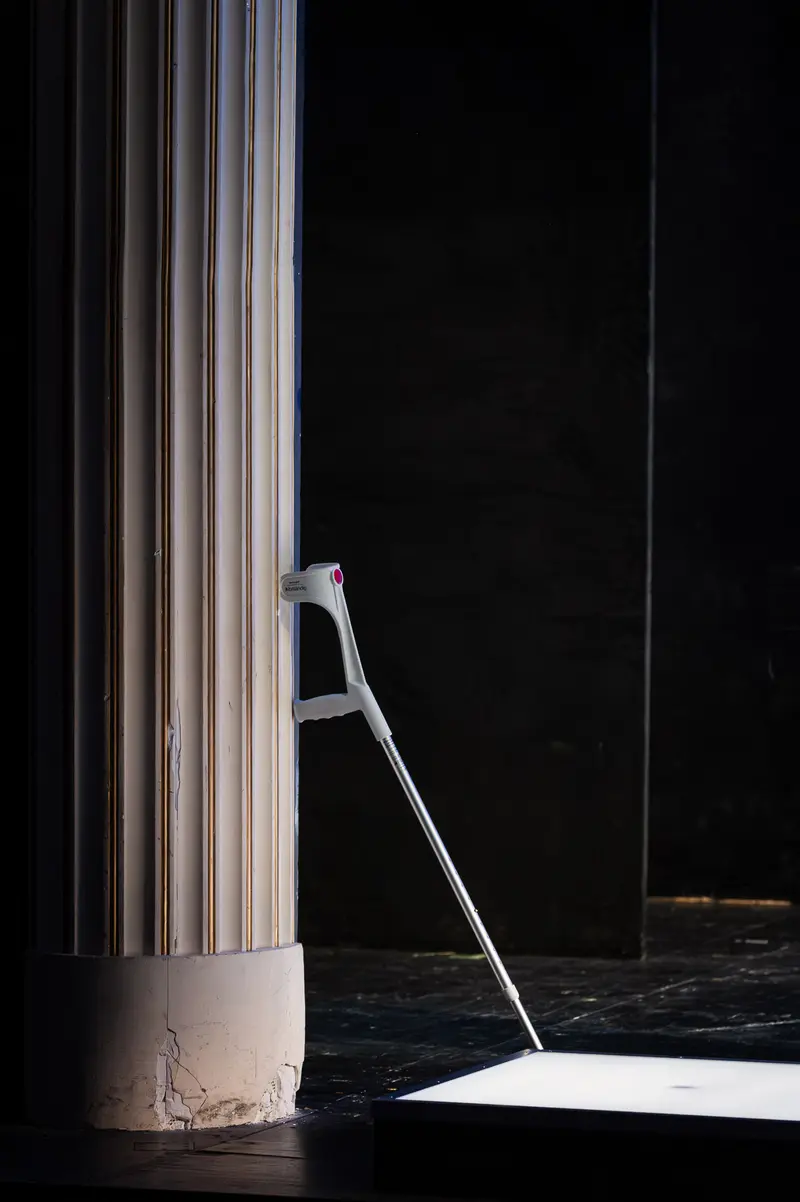 2026-01-14 Die Tanzstunde - Kammerspiele A single crutch stands illuminated against the stark black floor and void of the stage, positioned adjacent to a classical fluted column bathed in cool white light. The composition captures the minimalist scenic design by Stephan von Wedel for "Die Tanzstunde" at Kammerspiele Wien, where the austere architectural element and medical aid create a formal tension between permanence and fragility. Directed by Folke Braband, this production features Katharina Klar as dancer Senga Quinn and André Pohl as Professor Ever Montgomery, with the isolated prop suggesting themes of physical limitation and theatrical absence within the performance space photographed during technical rehearsal on January 14, 2026.
 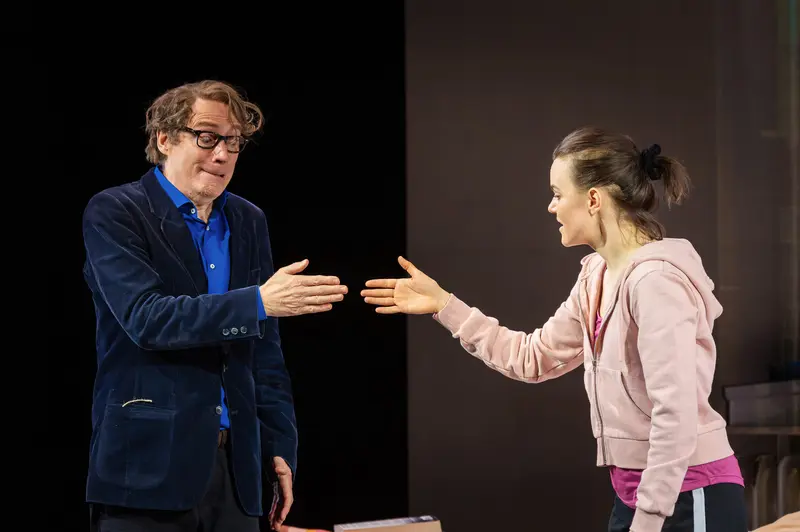 2026-01-14 Die Tanzstunde - Kammerspiele In a photographed dress rehearsal scene from "Die Tanzstunde" at Kammerspiele Wien, actors André Pohl and Katharina Klar perform a moment of tentative physical connection against a stark divided backdrop of black and warm brown tones. Pohl, positioned stage left in a navy velvet blazer and blue shirt, extends his hands palm-down toward Klar, who mirrors the gesture from stage right in a pale pink hoodie and magenta athletic wear, her hair secured in a tight bun. The symmetrical hand positioning and the actors' focused eye contact suggest a choreographed teaching moment between Pohl's character, Professor Ever Montgomery, and Klar's dancer Senga Quinn, lit with precise theatrical illumination designed by Sebastian Schubert.
 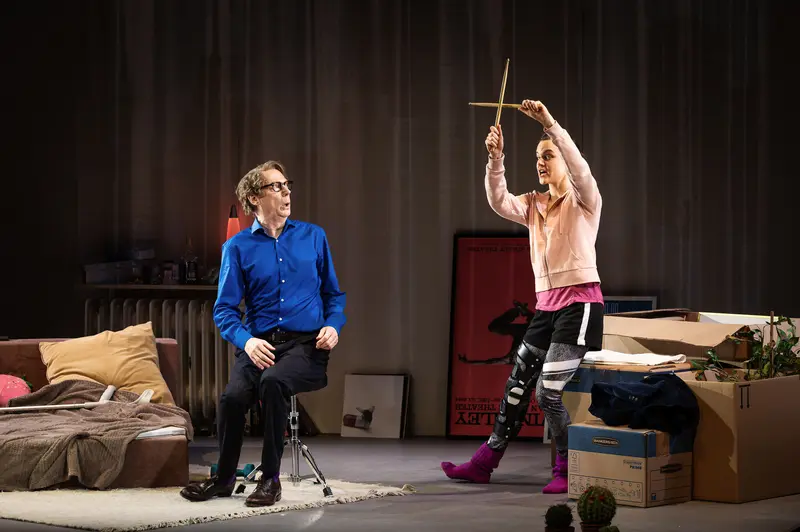 2026-01-14 Die Tanzstunde - Kammerspiele A scene from the dress rehearsal of "Die Tanzstunde" at Kammerspiele Wien shows André Pohl as Professor Ever Montgomery observing Katharina Klar as dancer Senga Quinn, who stands elevated with arms raised holding drumsticks in a conducting gesture. The staging, designed by Stephan von Wedel, features a domestic interior with a bed strewn with cushions at left, cardboard moving boxes, and a piano partly visible at right, all set against heavy draped curtains under Sebastian Schubert's lighting design. The composition emphasizes the vertical relationship between the two performers, with Montgomery positioned at ground level in bright blue shirt while Quinn commands the space from above in layered pink and purple athletic wear.
 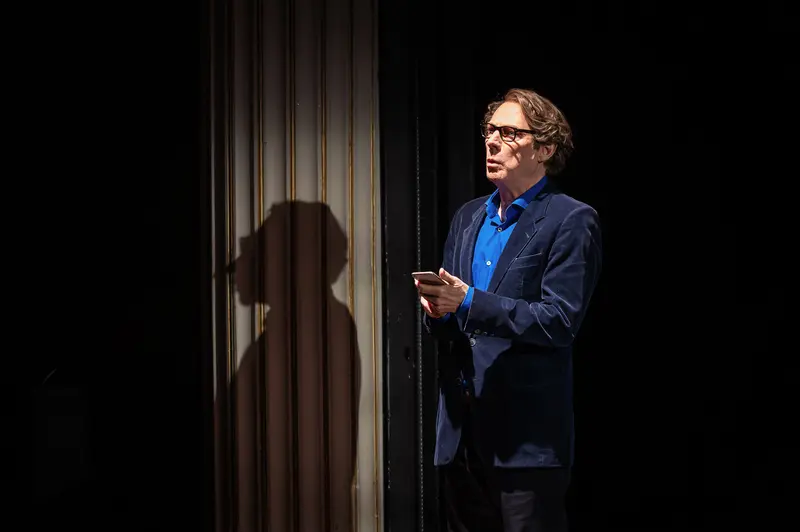 2026-01-14 Die Tanzstunde - Kammerspiele Andre Pohl in dark blazer and blue shirt stands in profile against a stark black backdrop, holding what appears to be a mobile device while speaking. Strong directional lighting creates a pronounced shadow cast upon a light-colored vertical surface to the left, emphasizing the theatrical staging. The image documents André Pohl as Professor Ever Montgomery during the photographic rehearsal (Fotoprobe) of "Die Tanzstunde" at Kammerspiele Wien, January 14, 2026, under the direction of Folke Braband with scenic and costume design by Stephan von Wedel and lighting design by Sebastian Schubert. The composition captures a moment of solo performance with deliberate spatial isolation characteristic of contemporary chamber theater production.
 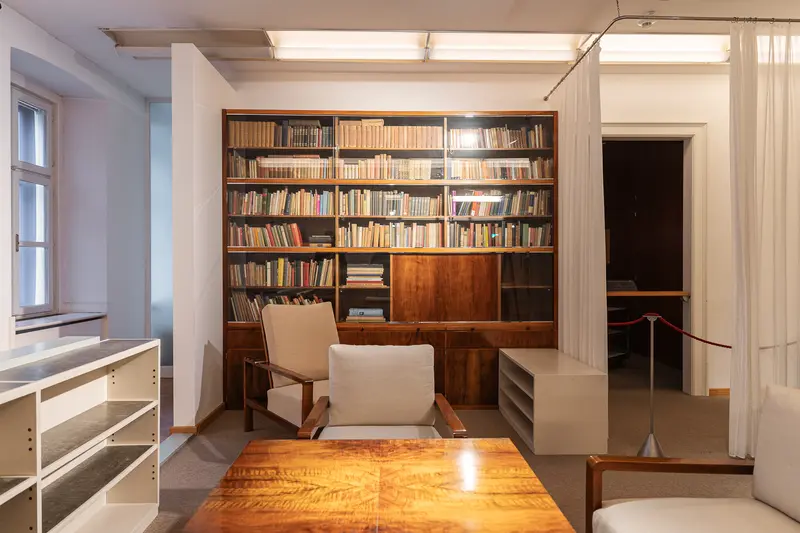 2025-09-28 Möbelmuseum Josef Frank (c) Michael Seirer Photography
 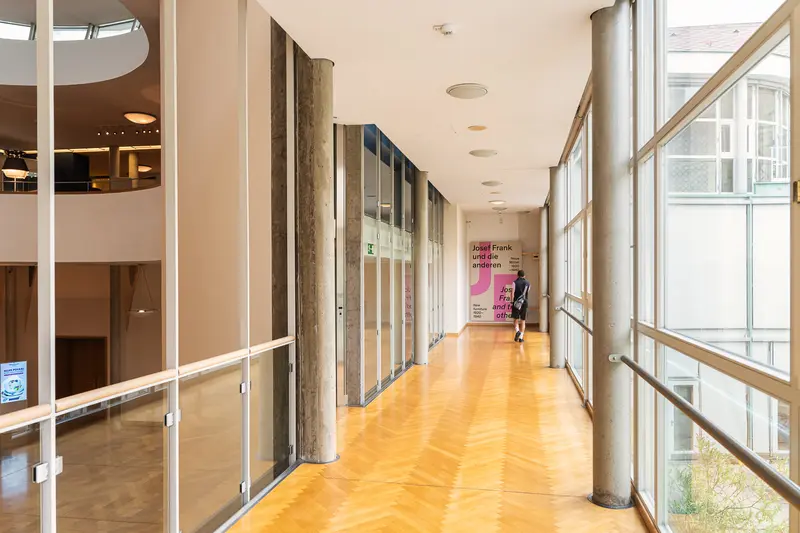 2025-09-28 Möbelmuseum Josef Frank (c) Michael Seirer Photography
 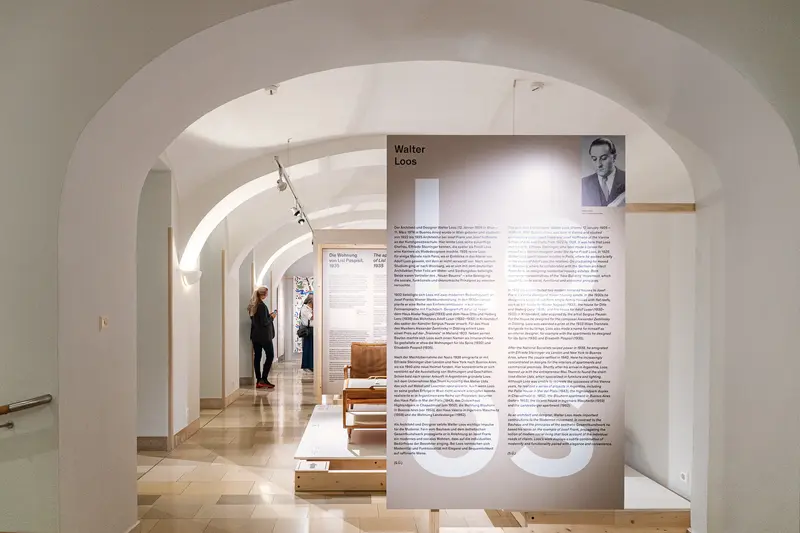 2025-09-28 Möbelmuseum Josef Frank (c) Michael Seirer Photography
 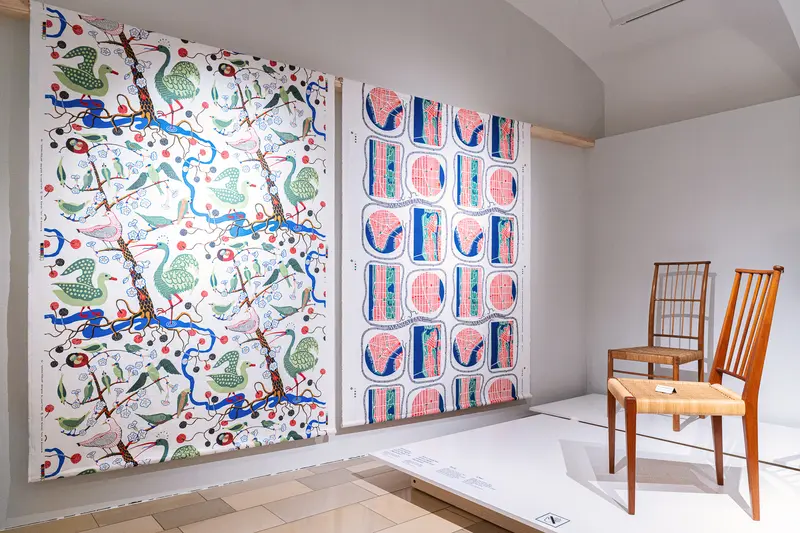 2025-09-28 Möbelmuseum Josef Frank (c) Michael Seirer Photography
 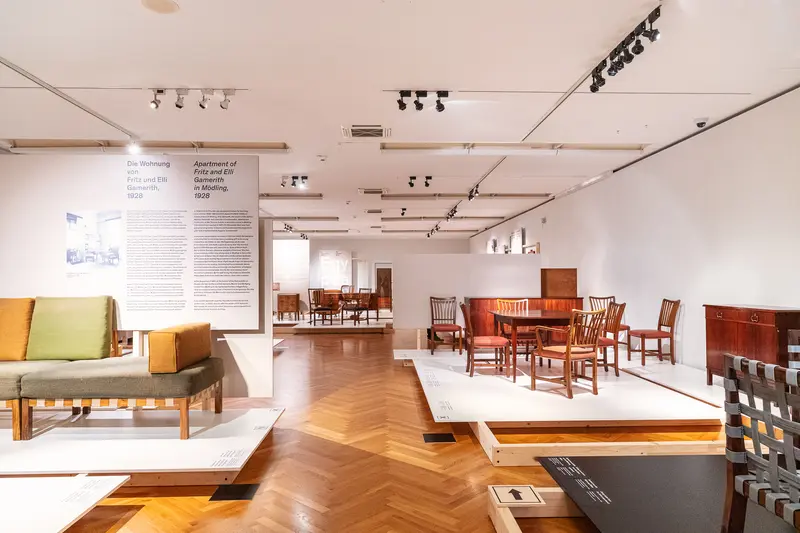 2025-09-28 Möbelmuseum Josef Frank (c) Michael Seirer Photography
 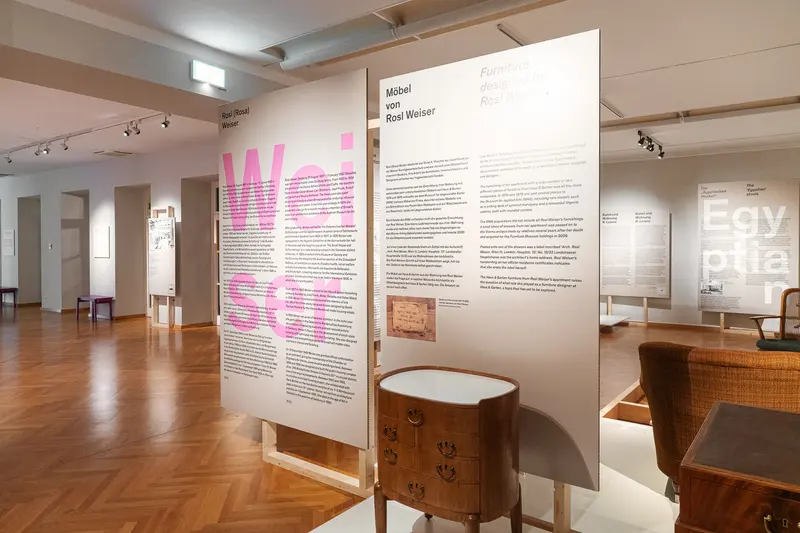 2025-09-28 Möbelmuseum Josef Frank (c) Michael Seirer Photography
 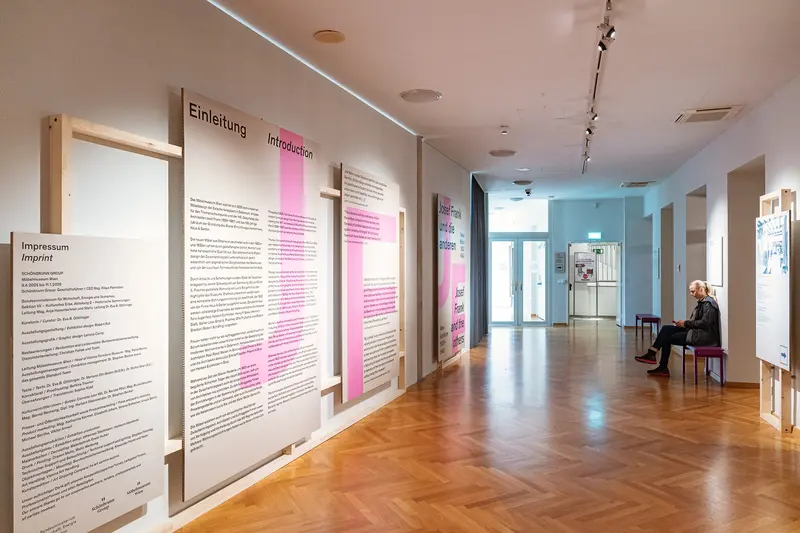 2025-09-28 Möbelmuseum Josef Frank (c) Michael Seirer Photography
  2025-09-28 Möbelmuseum Josef Frank (c) Michael Seirer Photography
  2025-09-28 Möbelmuseum Josef Frank (c) Michael Seirer Photography
 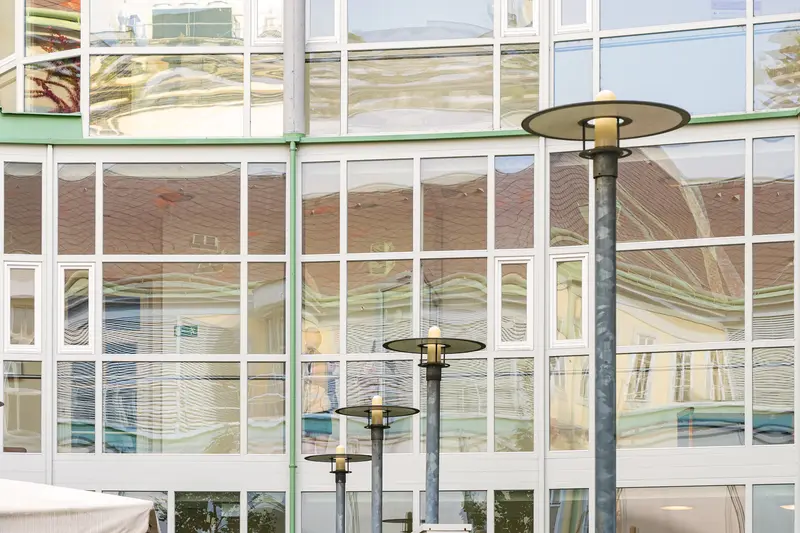 2025-09-28 Möbelmuseum Josef Frank (c) Michael Seirer Photography
 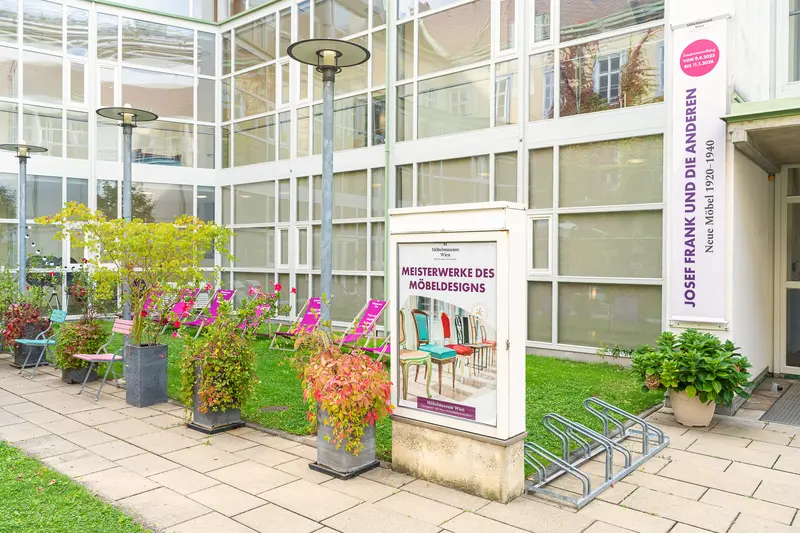 2025-09-28 Möbelmuseum Josef Frank (c) Michael Seirer Photography
 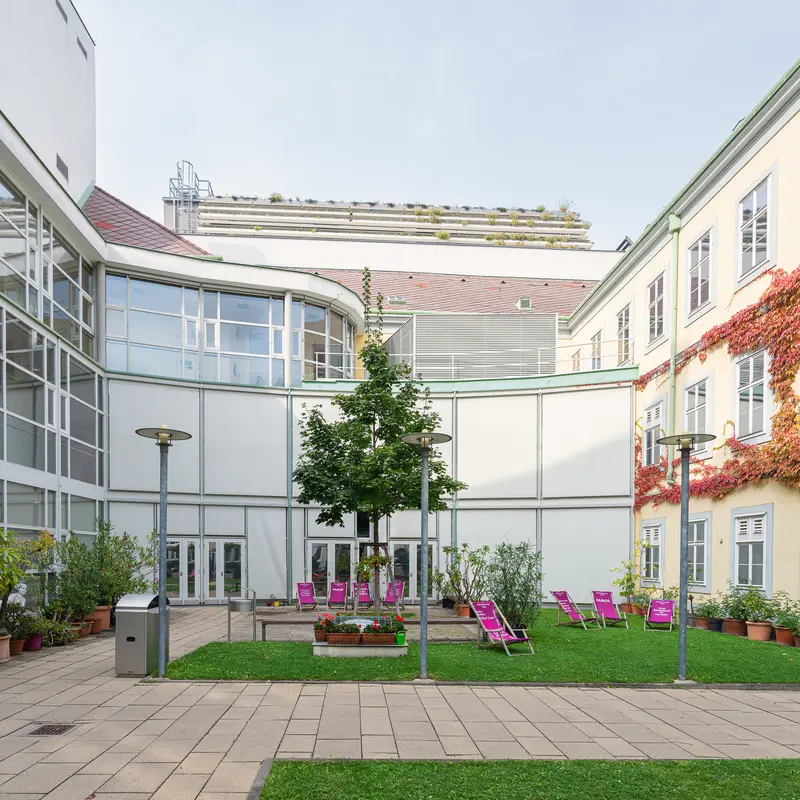 2025-09-28 Möbelmuseum Josef Frank (c) Michael Seirer Photography
 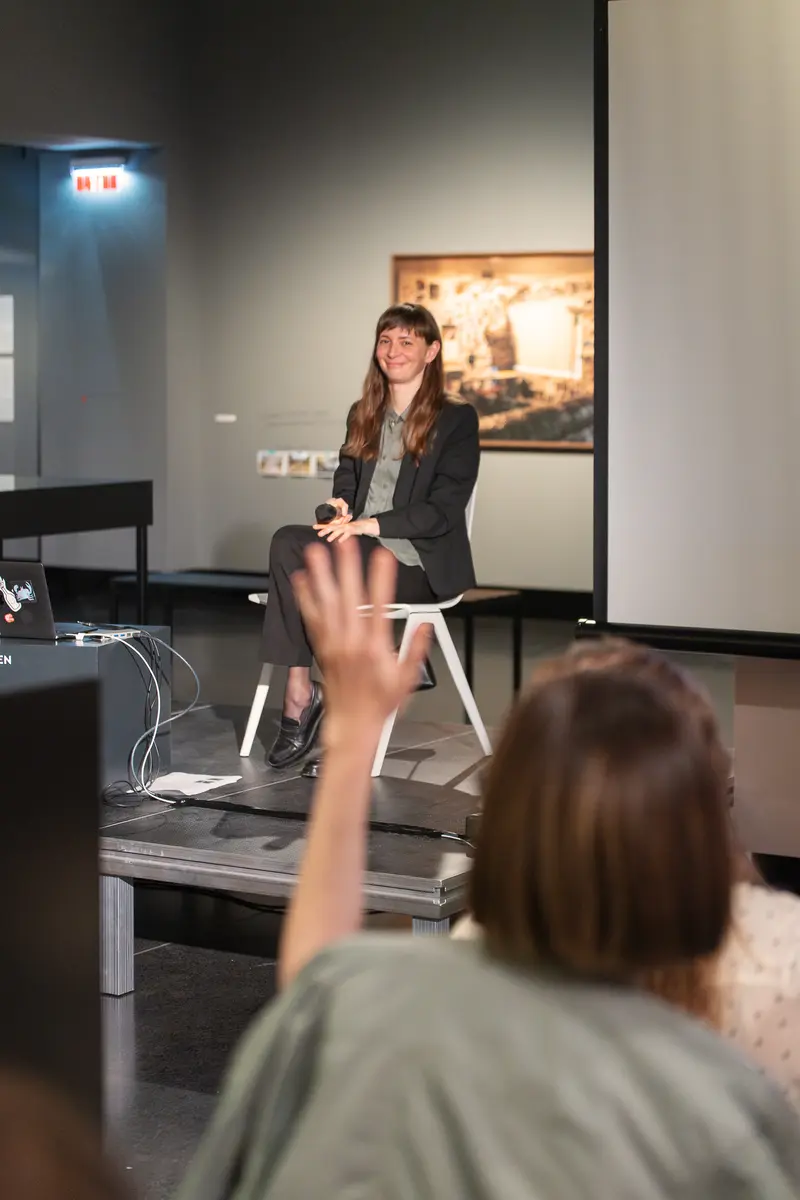 2025-05-21 Julia Gaisbacher at Foto Arsenal Wien A member of the audience raises their hand during Julia Gaisbacher's presentation of her photobook *Hanne Darboven. Am Burgberg* at FOTO ARSENAL WIEN, with Gaisbacher visible in the background seated against the gallery's white wall. The composition captures the interactive nature of the book talk, showing the dialogue between presenter and attendees in the institutional setting of the photography center. The controlled gallery lighting and neutral backdrop emphasize the scholarly discourse surrounding Gaisbacher's photographic documentation of the conceptual artist's Hamburg-Harburg residences.
 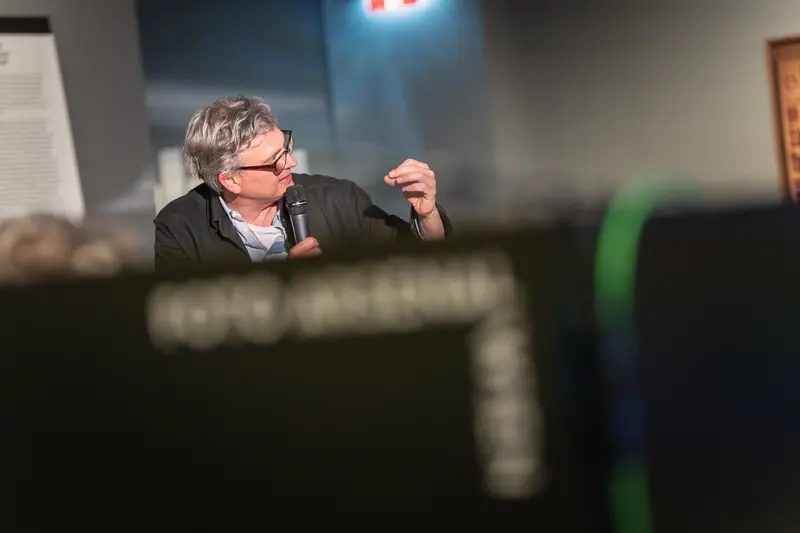 2025-05-21 Julia Gaisbacher at Foto Arsenal Wien A speaker with glasses and graying hair, wearing a dark jacket over a light shirt, gestures with raised hand while holding a microphone during the book presentation at FOTO ARSENAL WIEN. The figure is captured mid-speech against the gallery's neutral walls, with dramatic overhead lighting creating strong contrast and selective focus that isolates the speaker from the softly blurred background. The composition emphasizes the dynamic nature of the discourse surrounding Gaisbacher's photographic documentation of Hanne Darboven's Hamburg-Harburg spaces.
 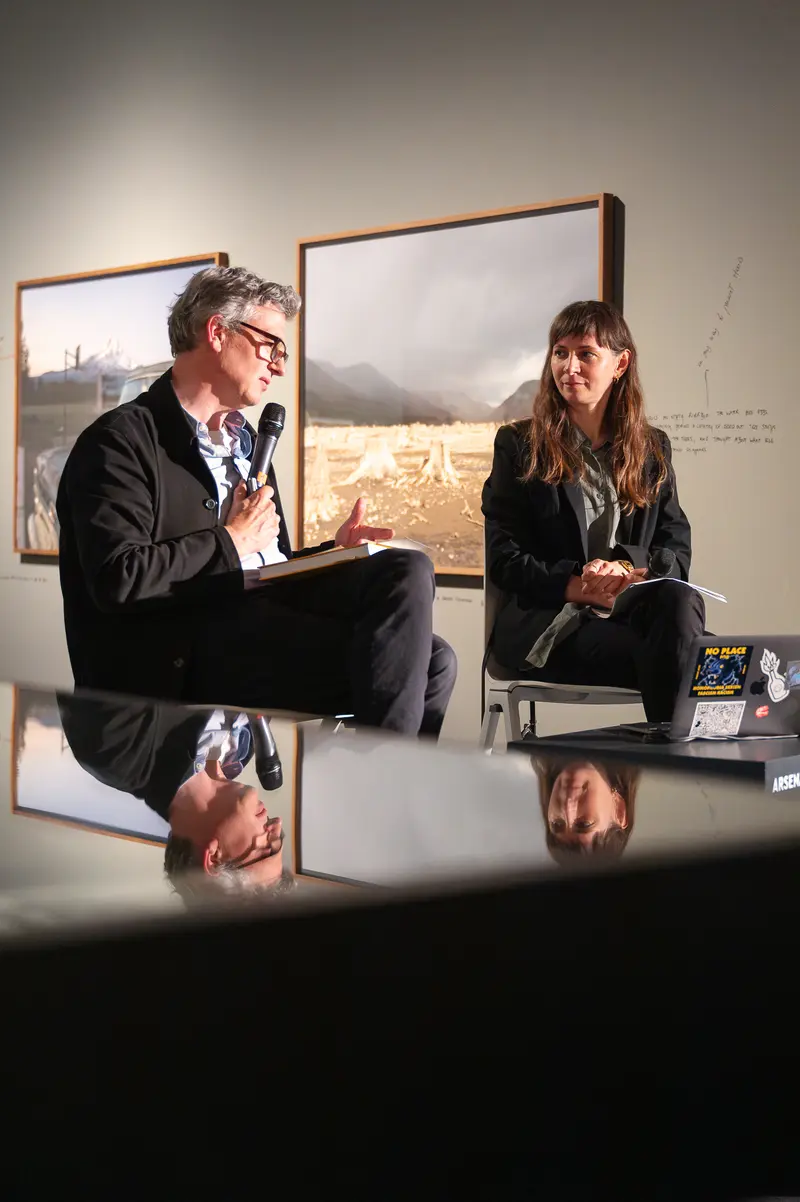 2025-05-21 Julia Gaisbacher at Foto Arsenal Wien Felix Hoffmann, Artistic Director of FOTO ARSENAL WIEN, and photographer Julia Gaisbacher engage in dialogue during the presentation of her photobook *Hanne Darboven. Am Burgberg*, seated on modern chairs within the gallery's minimalist white-walled space. The compositional arrangement captures both speakers in profile against the neutral institutional backdrop, with Hoffmann gesturing toward Gaisbacher as she holds materials related to her documentation project, their positioning suggesting active scholarly exchange about her photographic investigation of the conceptual artist's Hamburg-Harburg residences. The controlled lighting and reflective flooring characteristic of the contemporary gallery environment frame this moment of cultural discourse within FOTO ARSENAL WIEN's exhibition space.
 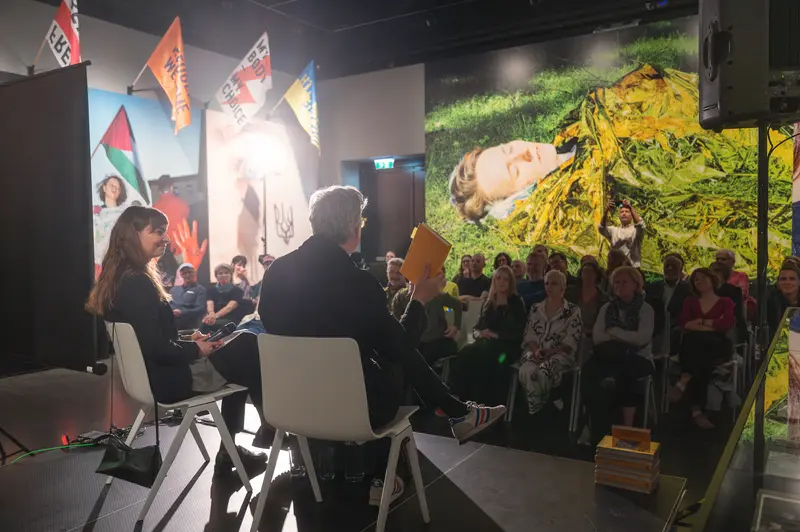 2025-05-21 Julia Gaisbacher at Foto Arsenal Wien The book presentation continues at FOTO ARSENAL WIEN with Felix Hoffmann, Artistic Director, and Julia Gaisbacher seated in white contemporary chairs before an audience, engaged in dialogue about Gaisbacher's photobook *Hanne Darboven. Am Burgberg*. The gallery's controlled lighting illuminates the conversational setting while maintaining focus on the speakers, with Hoffmann gesturing as he addresses questions or commentary about the multi-year photographic documentation of Darboven's Hamburg-Harburg spaces. The composition captures the intimate scale of the institutional talk format, positioning the discussion within the broader context of contemporary photographic discourse and archival practice.
 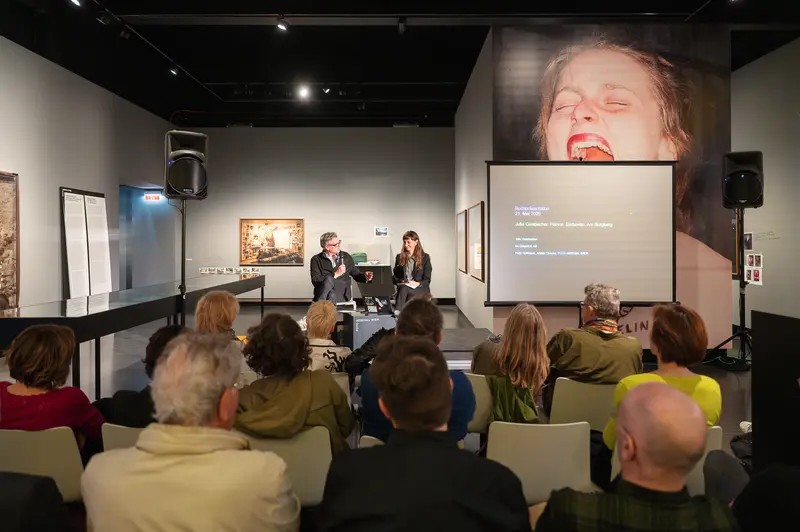 2025-05-21 Julia Gaisbacher at Foto Arsenal Wien The presentation at FOTO ARSENAL WIEN continues with Felix Hoffmann and Julia Gaisbacher positioned at the front of the gallery space, addressing an assembled audience seated in rows of white chairs beneath the venue's characteristic black ceiling grid and track lighting. A large projection screen displays textual content related to Gaisbacher's photobook *Hanne Darboven. Am Burgberg*, while the speakers maintain their dialogue format against the neutral white walls of the institutional setting. The composition captures the formal structure of the book talk, with the audience's attentive positioning creating a clear spatial hierarchy between presenters and attendees within the gallery's controlled environment.
 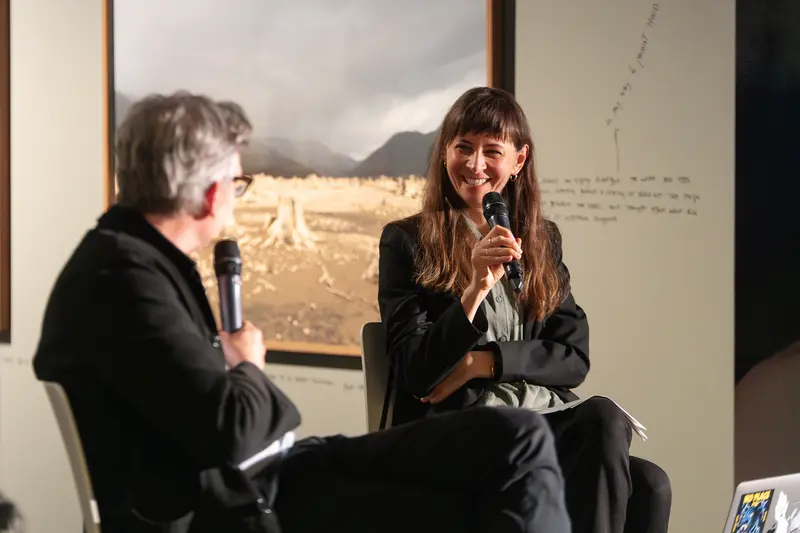 2025-05-21 Julia Gaisbacher at Foto Arsenal Wien Felix Hoffmann and Julia Gaisbacher engage in animated dialogue during their book presentation at FOTO ARSENAL WIEN, both speakers holding microphones as they sit in profile against the gallery's white walls. The conversational dynamic is captured through their attentive postures and direct interaction, with Gaisbacher's expressive gesture suggesting active discussion of her photographic documentation of Hanne Darboven's Hamburg-Harburg spaces. The institutional setting's neutral backdrop and controlled lighting emphasize the scholarly nature of the discourse surrounding Gaisbacher's photobook *Hanne Darboven. Am Burgberg*.
 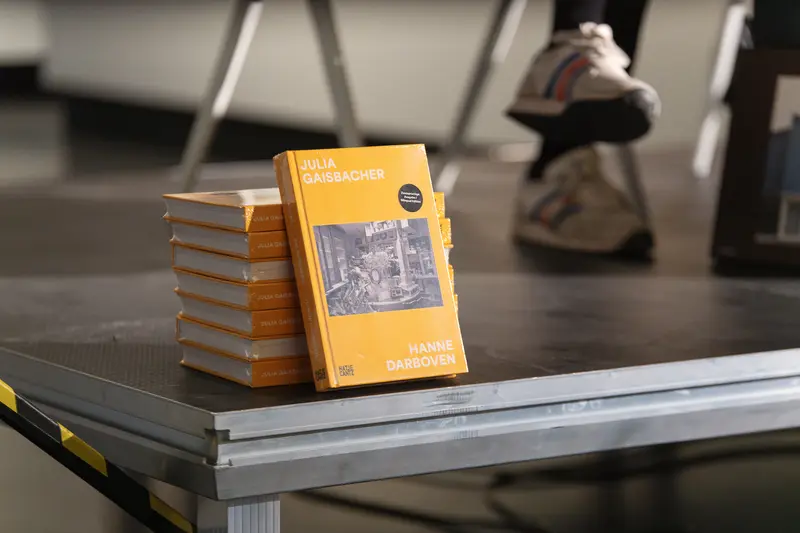 2025-05-21 Julia Gaisbacher at Foto Arsenal Wien A stack of orange-spined copies of Julia Gaisbacher's photobook *Hanne Darboven. Am Burgberg* rests on a metallic surface in the foreground, with one volume positioned upright to display the cover featuring the artist's name and a black-and-white interior photograph. The shallow depth of field renders the background elements—including chair legs and footwear—softly out of focus, directing attention to the publication that serves as the central subject of this book presentation at FOTO ARSENAL WIEN. The controlled lighting and neutral tones emphasize the book's physical presence as both artistic object and documentary record of Gaisbacher's photographic investigation into Hanne Darboven's domestic and working spaces.
 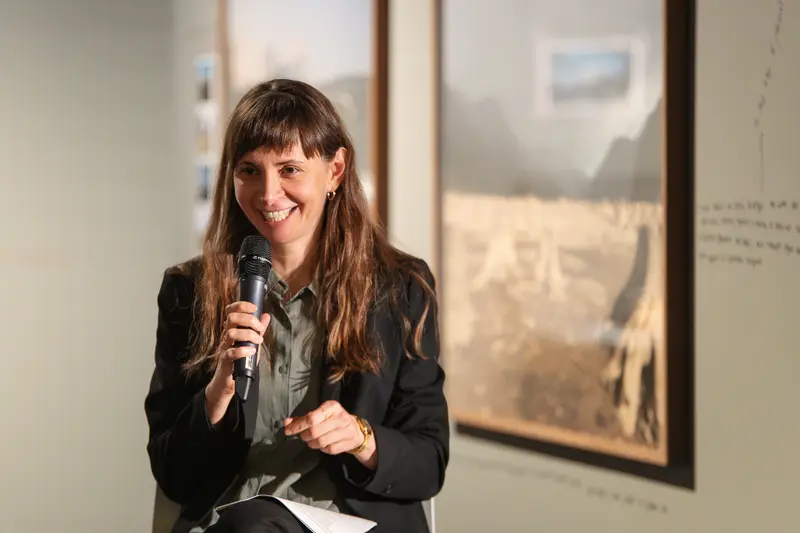 2025-05-21 Julia Gaisbacher at Foto Arsenal Wien Julia Gaisbacher stands in the foreground addressing an audience during her book presentation at FOTO ARSENAL WIEN, microphone in hand, positioned against the gallery's white walls where framed photographs are mounted. The controlled institutional lighting and neutral backdrop create a formal presentation environment that complements the documentary nature of her photobook *Hanne Darboven. Am Burgberg*, while her direct engagement with the audience captures the active discourse surrounding her multi-year photographic investigation of the conceptual artist's Hamburg-Harburg residences. The composition frames both the immediacy of the book talk format and the contemplative scholarly context of Gaisbacher's work documenting Darboven's lived and working spaces.
 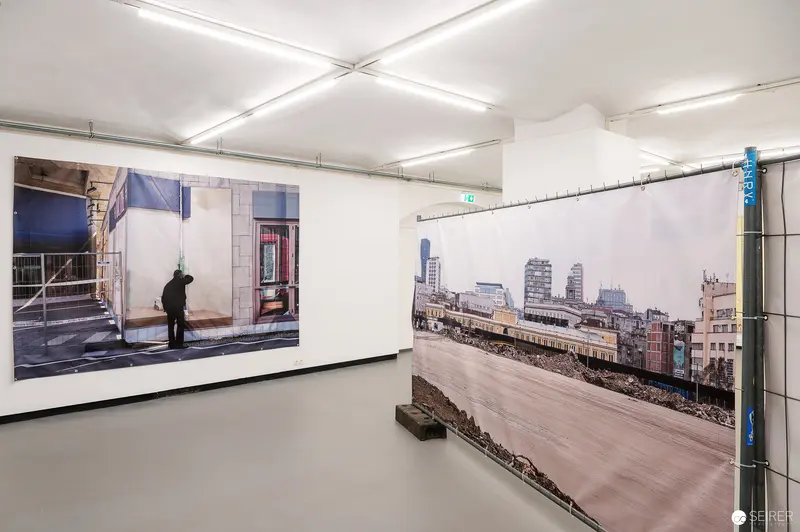 2024-12-03 Fotogalerie Wien - Unfold "One Day You Will Miss Me" by Julia Gaisbacher
 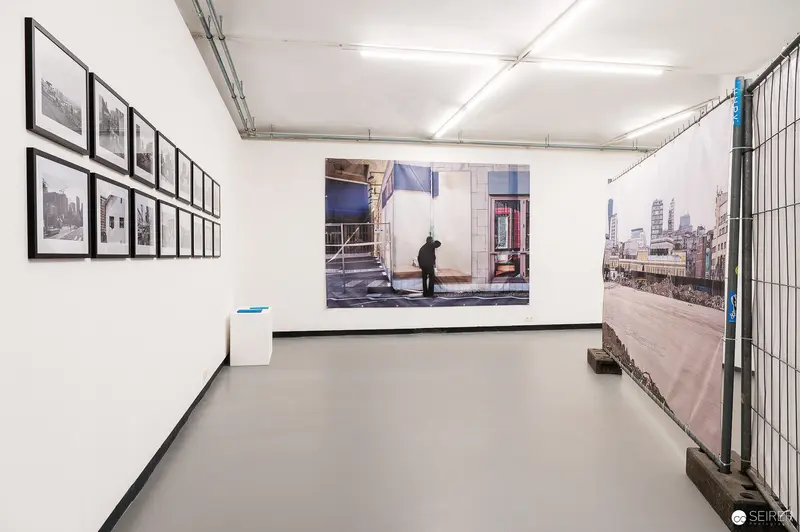 2024-12-03 Fotogalerie Wien - Unfold "One Day You Will Miss Me" by Julia Gaisbacher
 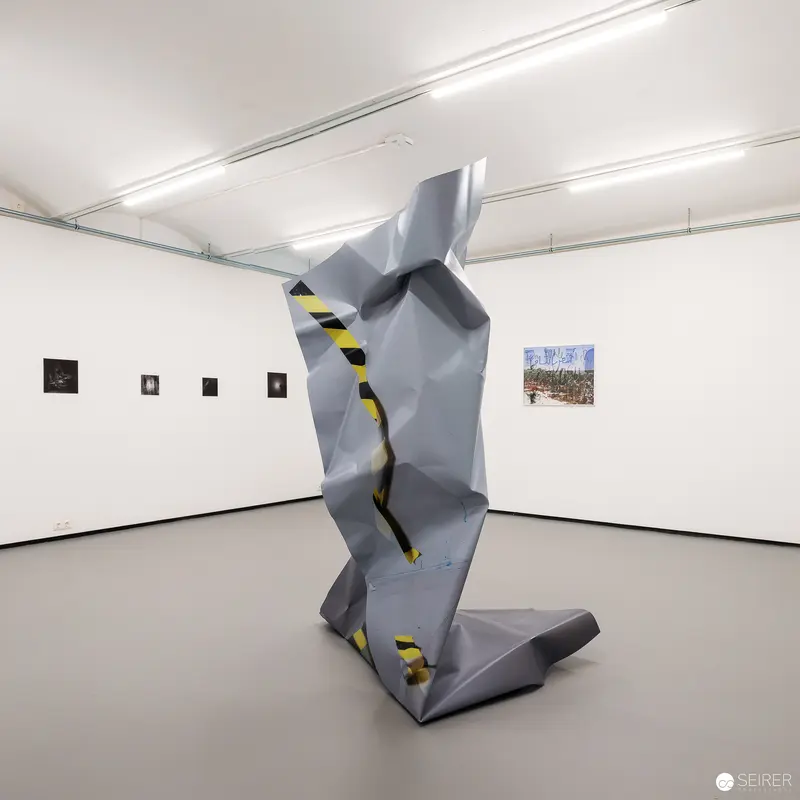 2024-12-03 Fotogalerie Wien - Unfold From the series "Raumfalte" by Herbert Hofer
 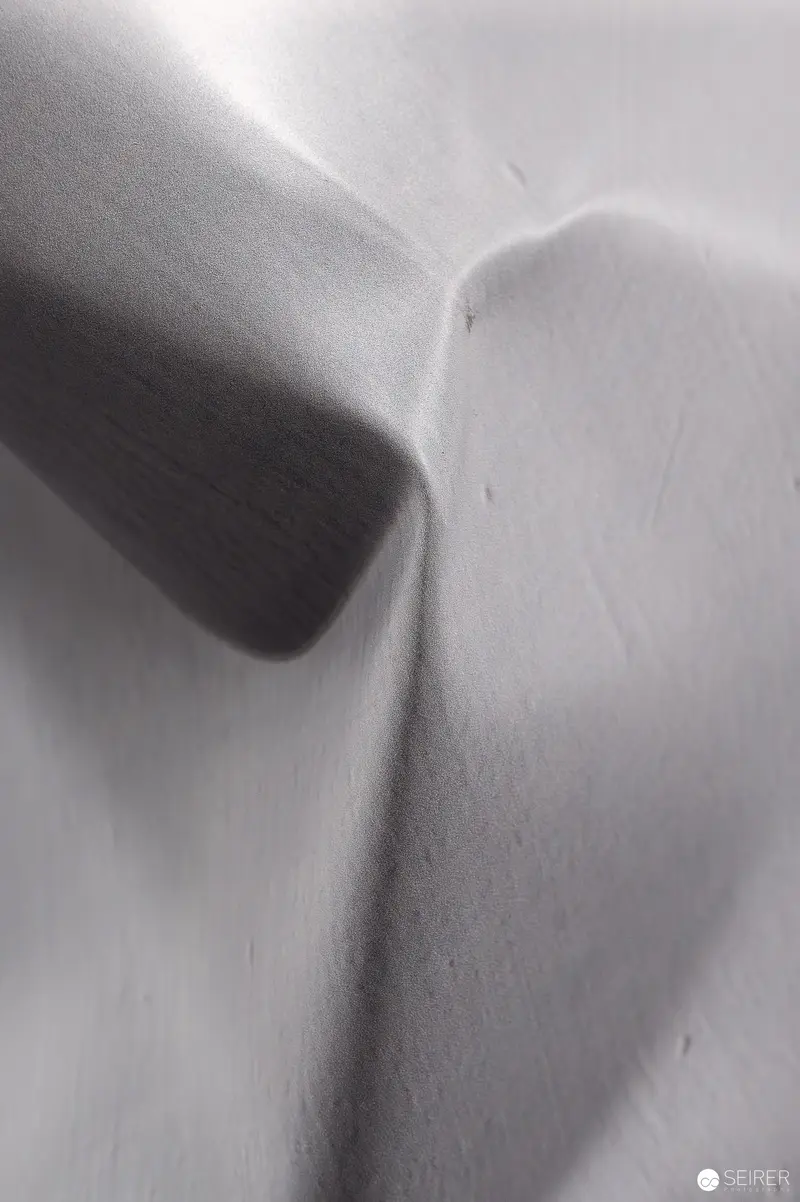 2024-12-03 Fotogalerie Wien - Unfold From the series "Raumfalte" by Herbert Hofer
 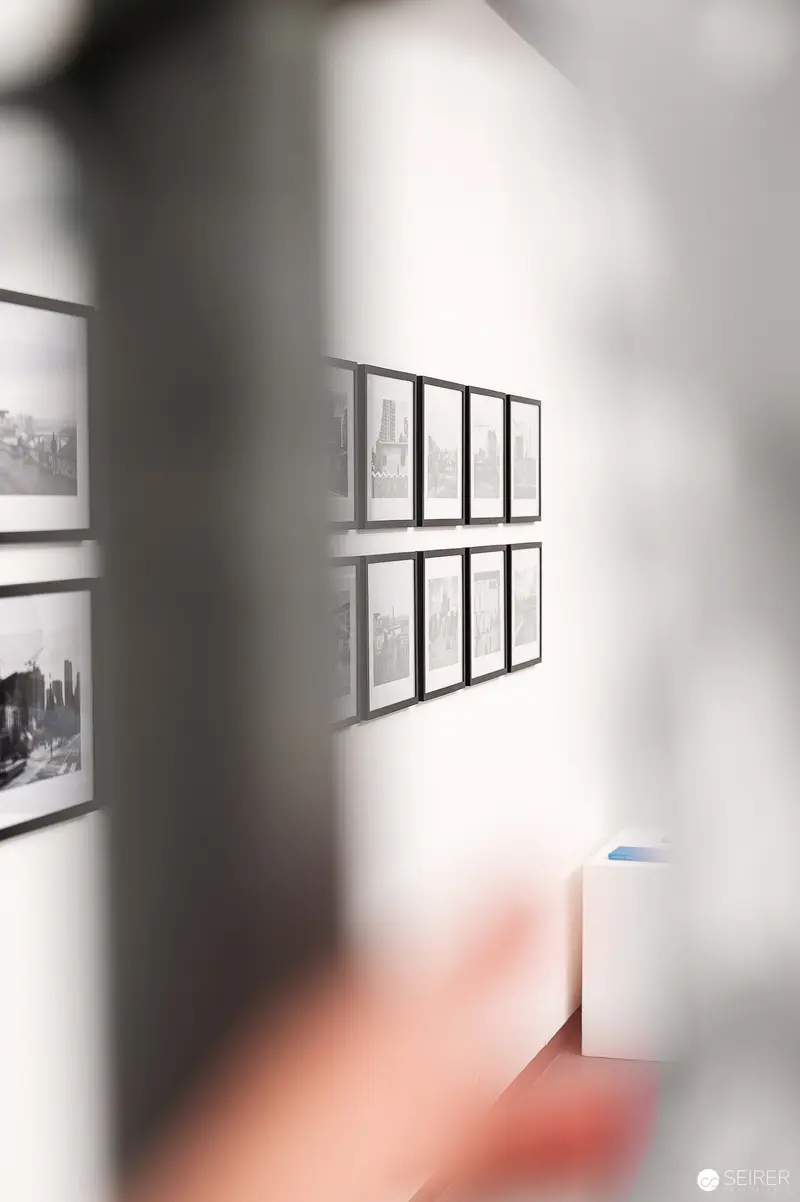 2024-12-03 Fotogalerie Wien - Unfold "One Day You Will Miss Me" by Julia Gaisbacher
 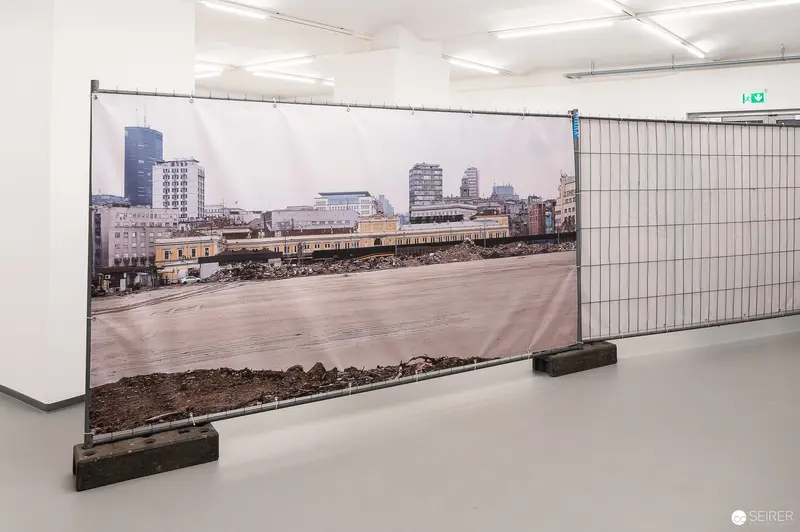 2024-12-03 Fotogalerie Wien - Unfold "One Day You Will Miss Me" by Julia Gaisbacher
 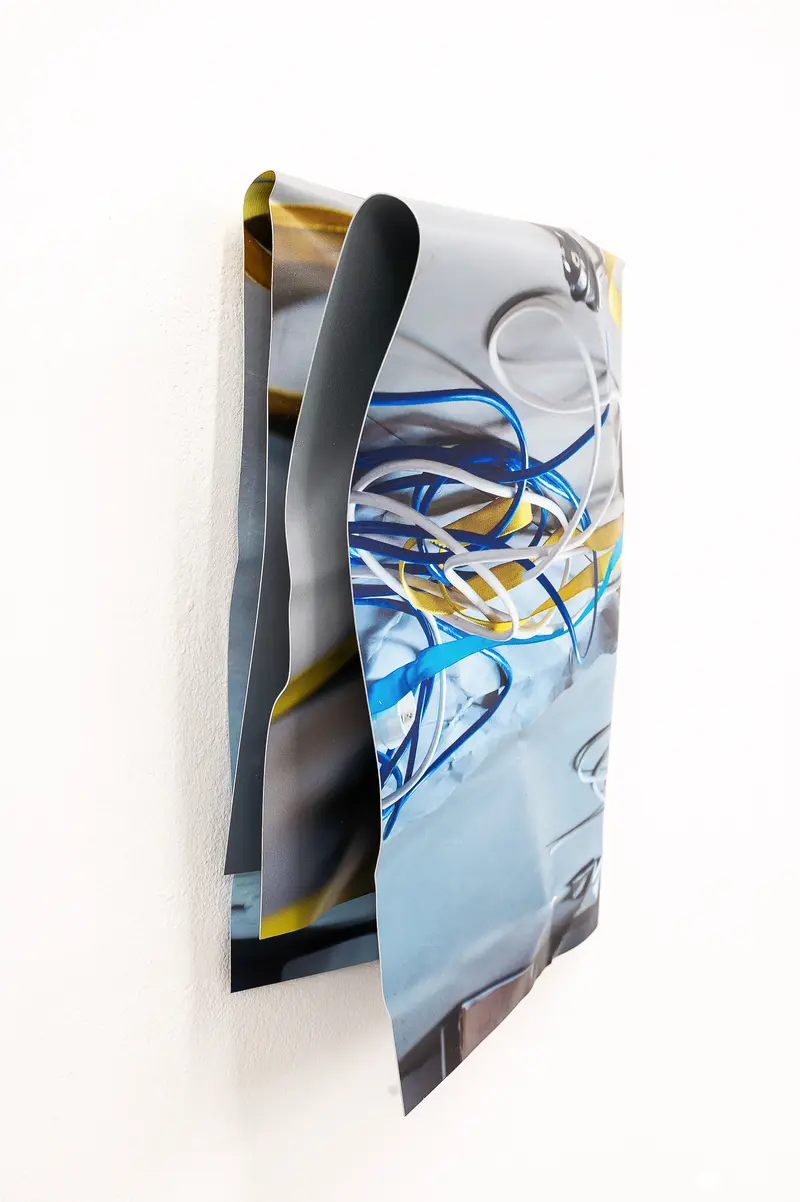 2024-12-03 Fotogalerie Wien - Unfold From the series "Raumfalte" by Herbert Hofer
 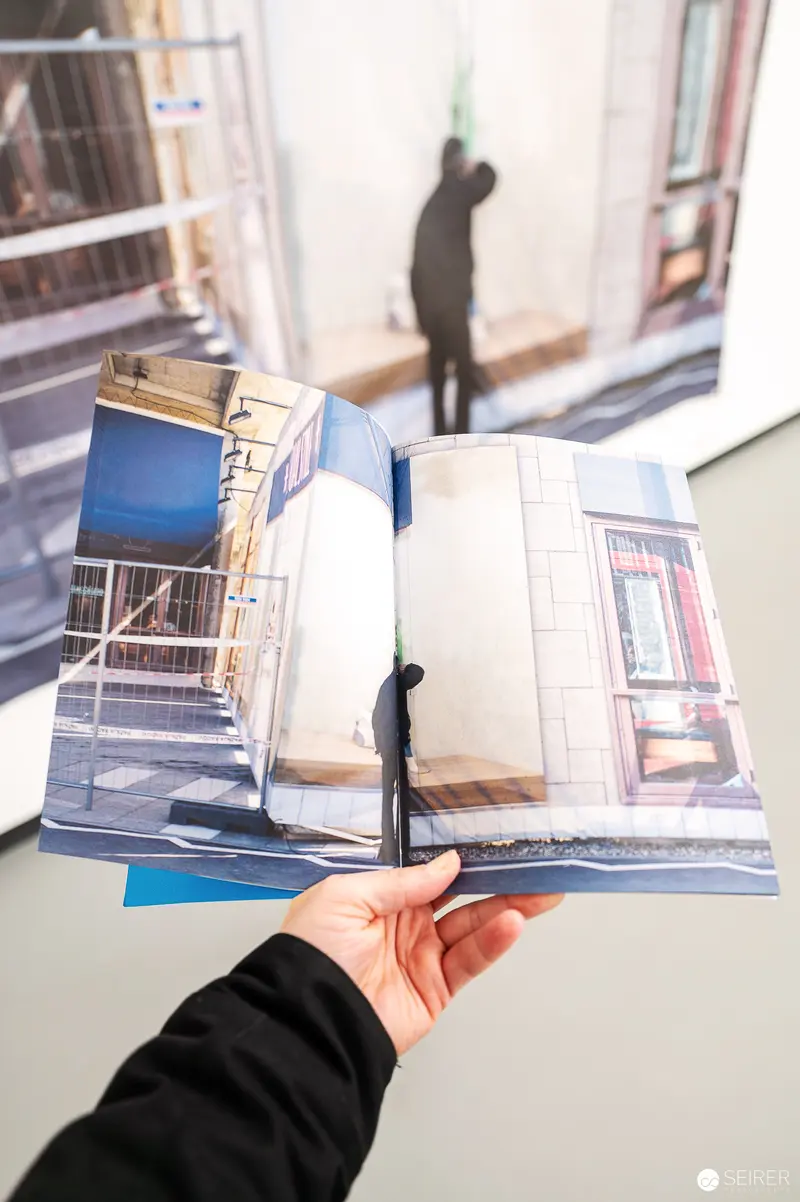 2024-12-03 Fotogalerie Wien - Unfold "One Day You Will Miss Me" by Julia Gaisbacher
 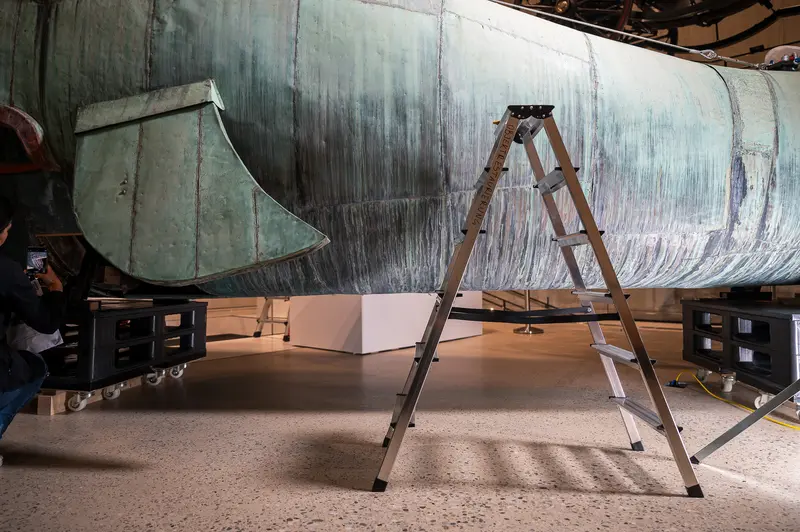 Poldi geht an Land at Wien Museum, October 2024 Museum conservators positioned a wooden step ladder beneath the copper-sheeted whale sculpture "Poldi" during the Wien Museum's restoration days, providing access for close examination of Maria Benke's rescued Prater artwork. The industrial conservation setting reveals behind-the-scenes restoration work during the "Tage der Restaurierung" program, with museum storage equipment visible in the background. The 10-meter sculpture underwent detailed conservation assessment in this Vienna facility.
 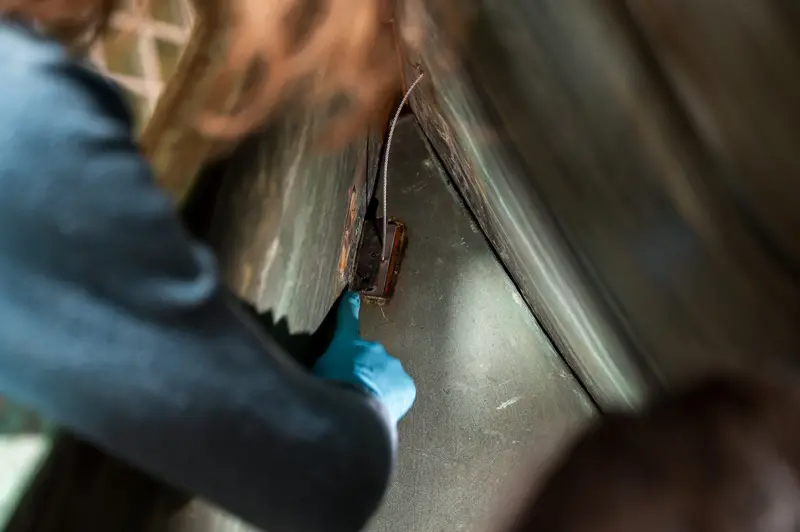 Poldi geht an Land at Wien Museum, October 2024 A conservator wearing blue gloves carefully applies material along the seam where copper sheeting meets the wooden frame structure of Poldi, the historic 10-meter whale sculpture at Wien Museum in Vienna, during the 'Tage der Restaurierung' (Restoration Days) public demonstration. The close-up perspective reveals the intricate junction between the metal skin and internal framework, showcasing the specialized conservation techniques required to maintain this beloved Prater landmark. The Tage der Restaurierung program provides visitors with hands-on insight into artwork preservation methods used at Vienna's museums.
 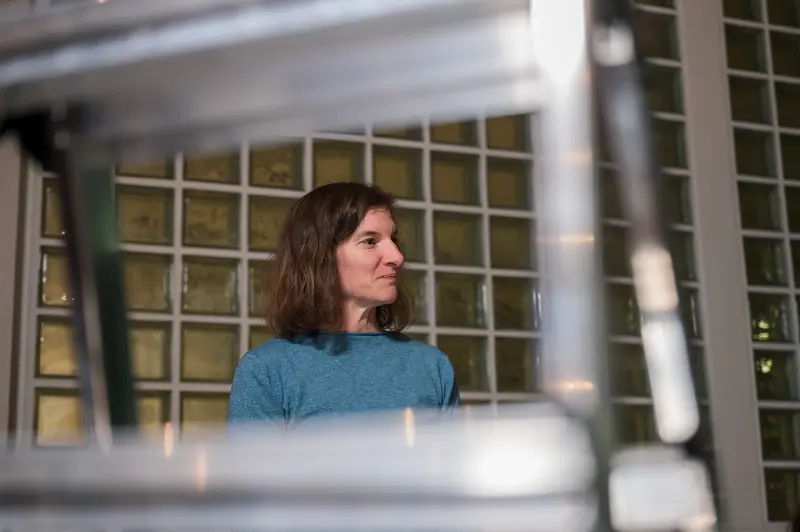 Poldi geht an Land at Wien Museum, October 2024 A museum conservator with shoulder-length brown hair wearing a teal sweater participates in the Wien Museum's 2024 Restoration Days program in Vienna, Austria. The professional is photographed through metal scaffolding framework, looking thoughtfully to the side while engaged in behind-the-scenes conservation work. The "Tage der Restaurierung" (Restoration Days) event showcases the specialized professionals responsible for preserving the Wien Museum's cultural artifacts and collections.
 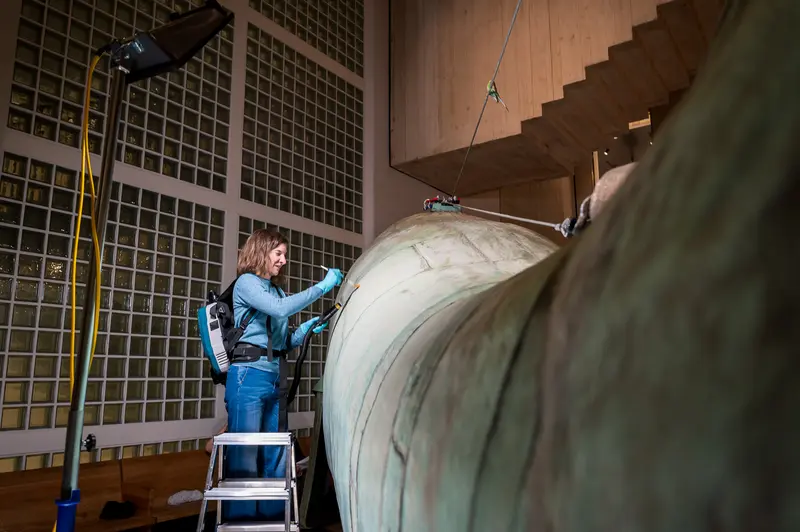 Poldi geht an Land at Wien Museum, October 2024 A conservator in blue work clothing examines the massive copper surface of Poldi, a 10-meter whale sculpture by Maria Benke, during the Wien Museum's Tage der Restaurierung (Conservation Days) program in 2024. The worker stands on a ladder to access the whale's curved body, demonstrating the monumental scale of this historic artwork salvaged from the demolished Gasthaus zum Walfisch in Vienna's Prater district. The industrial museum setting with metal grid walls and suspended wooden beams provides the backdrop for this behind-the-scenes conservation documentation.
 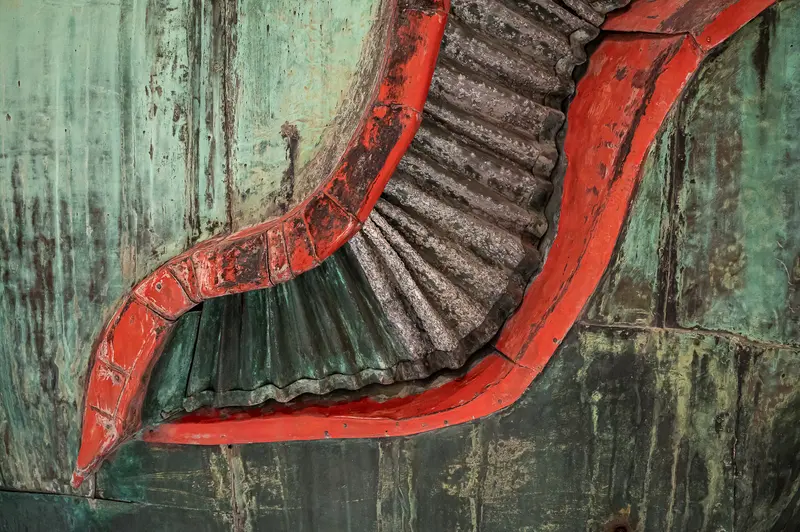 Poldi geht an Land at Wien Museum, October 2024 The Wien Museum's 2024 restoration days revealed detailed architectural elements of the Poldi whale sculpture, a 10-meter artwork designed by Maria Benke, originally from the demolished Gasthaus zum Walfisch. The close-up shows vibrant red-painted curved sections contrasting with aged copper sheeting and dark patina, exposing the intricate structural framework beneath. This documentation captures both the craftsmanship of Benke's design and the conservation work required to preserve this unique Viennese cultural artifact.
 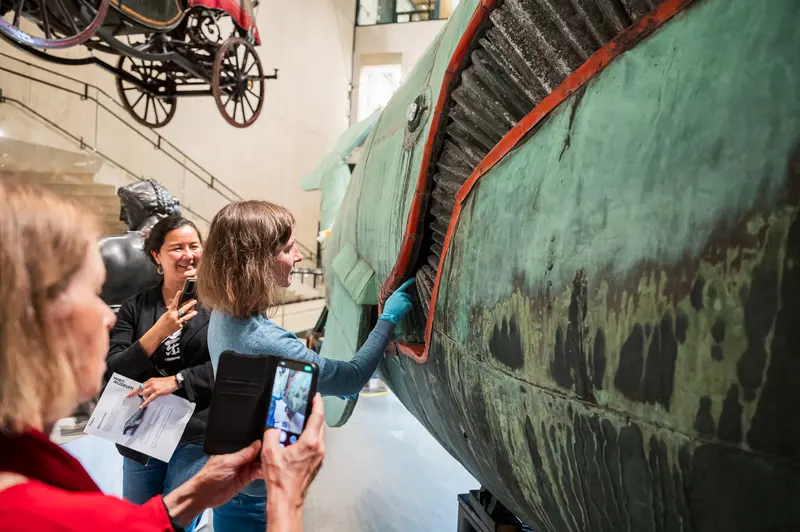 Poldi geht an Land at Wien Museum, October 2024 Museum visitors and staff examine the copper sheeting and patina of the 10-meter Prater whale sculpture 'Poldi' during the 'Tage der Restaurierung' program at the Wien Museum in 2024. A woman points to specific restoration features while attendees document the conservation work with smartphones, providing intimate access to details normally visible only to industrial climbers who maintain Maria Benke's design annually. The lowered sculpture allows guests to observe the craftsmanship and restoration techniques typically inaccessible to the public.
 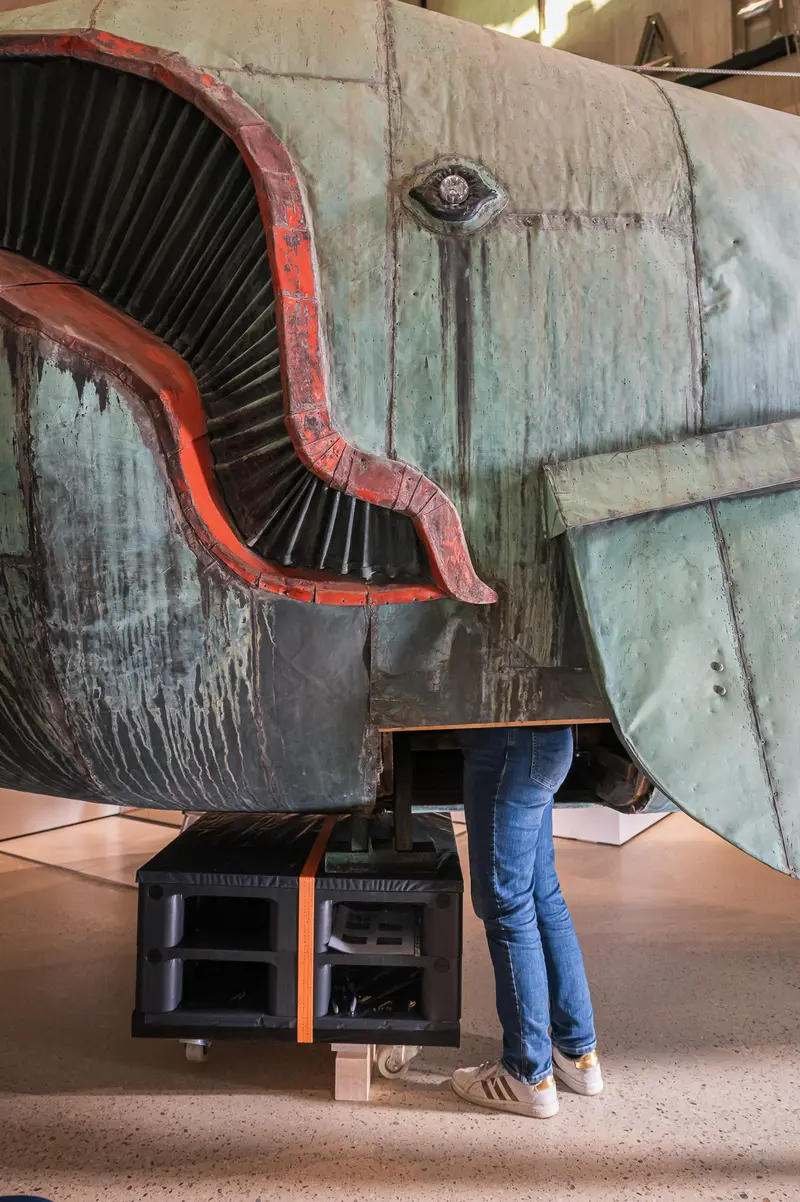 Poldi geht an Land at Wien Museum, October 2024 A visitor in jeans stands beside the 10-meter copper whale sculpture "Poldi," designed by artist Maria Benke, during the Wien Museum's Tage der Restaurierung (Days of Restoration) program in 2024. The weathered patina and red-painted lips of the massive artwork are visible, along with structural details and an orange-trimmed storage unit positioned beneath the sculpture. This piece was salvaged from the demolished Gasthaus zum Walfisch and represents a significant restoration project documenting the conservation process.
 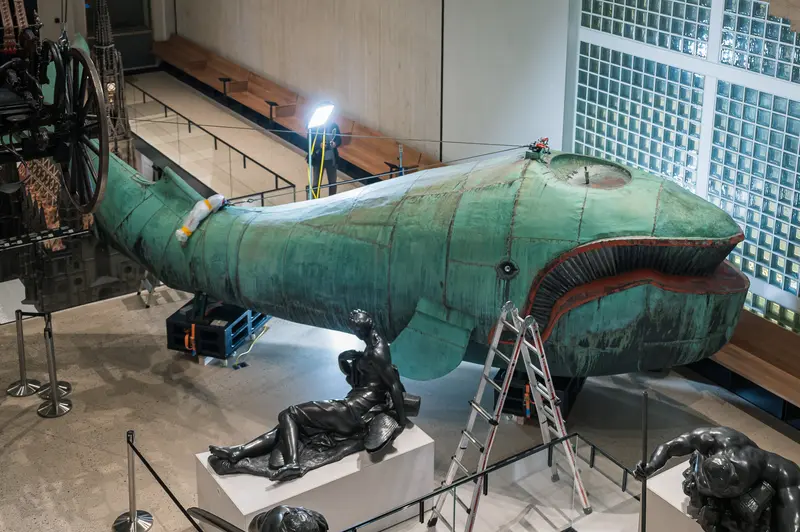 Poldi geht an Land at Wien Museum, October 2024 Maria Benke's 10-meter copper whale sculpture "Poldi" undergoes conservation work during the Wien Museum's 2024 Tage der Restaurierung program, its distinctive green patinated surface and red-painted lips visible as industrial maintenance equipment and ladders support the restoration process. The sculpture, originally salvaged from the demolished Gasthaus zum Walfisch, rests on support structures while museum visitors observe the behind-the-scenes work from upper-level walkways. The wooden frame and copper sheeting construction demonstrates traditional Viennese craftsmanship in this cultural artifact's preservation.
 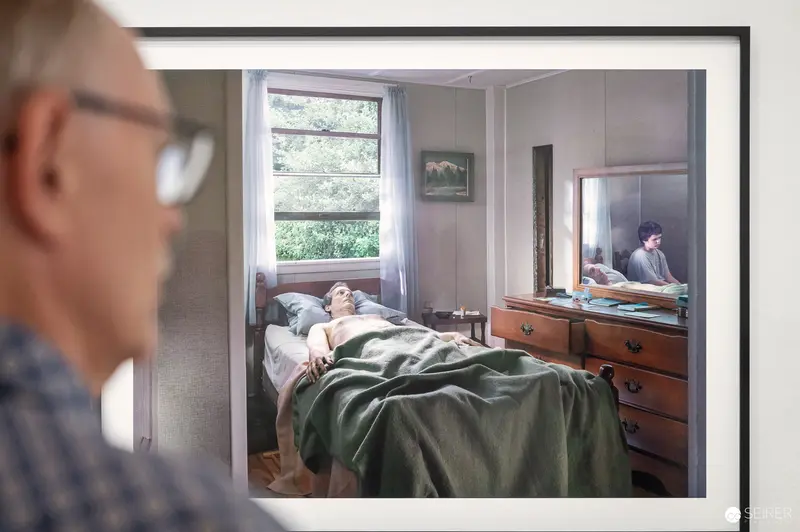 2024-06-12 Gregory Crewdson at Albertina PFS A visitor in glasses observes one of Gregory Crewdson's large-format photographs displayed at the Albertina, Vienna, in 2024, the mounted work depicting a theatrical bedroom scene with two figures - one reclining on a bed beneath a window, another visible in a mirror's reflection. The photograph exemplifies Crewdson's cinematic approach to staged photography, employing controlled lighting and meticulous composition to create a psychologically charged domestic interior that invites multiple interpretations. The gallery installation emphasizes the scale and detailed craftsmanship characteristic of the artist's filmic production methods.
 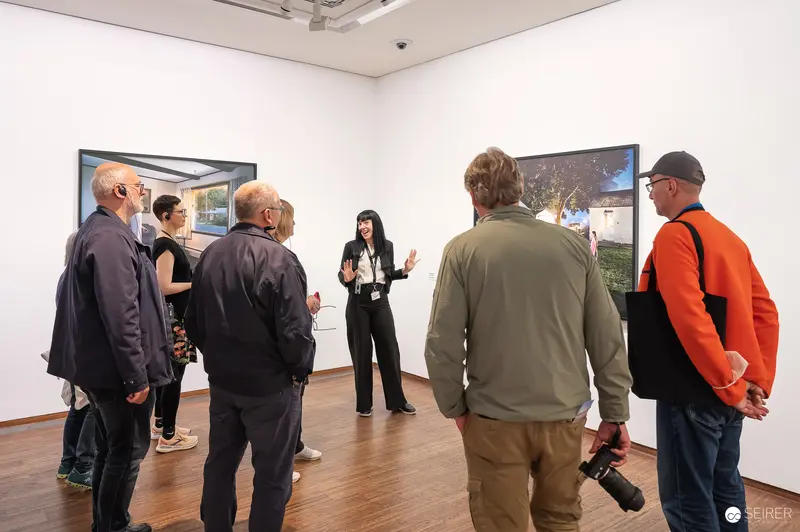 2024-06-12 Gregory Crewdson at Albertina PFS A group of visitors gathers in a white-walled gallery space at the Albertina, Vienna, listening to a docent who stands centrally positioned before two large-format photographic works by Gregory Crewdson mounted on the wall behind her. The scene captures the institutional context of art reception, with attendees arranged in a loose semicircle on polished wooden flooring, their varied casual attire and attentive postures suggesting an informal guided tour or educational presentation. The clean, minimalist gallery architecture provides a neutral backdrop that allows Crewdson's cinematic imagery to command visual attention while facilitating collective viewing and discussion of the work.
 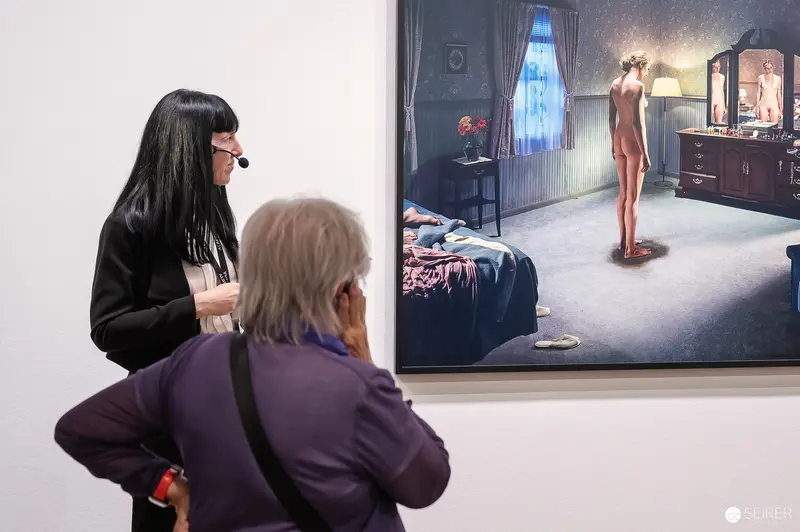 2024-06-12 Gregory Crewdson at Albertina PFS Two visitors examine a large-format photograph displayed on the white gallery wall of the Albertina Museum during Gregory Crewdson's 2024 retrospective exhibition. The artwork depicts a characteristically staged domestic interior scene featuring a nude figure in a bedroom setting, exemplifying Crewdson's cinematic approach to photography with its carefully controlled lighting and meticulously composed spatial arrangement. The viewers' positioning—one standing closer to analyze details while wearing glasses, the other observing from a slight distance—demonstrates the contemplative engagement that Crewdson's psychologically charged imagery typically elicits from gallery audiences.
 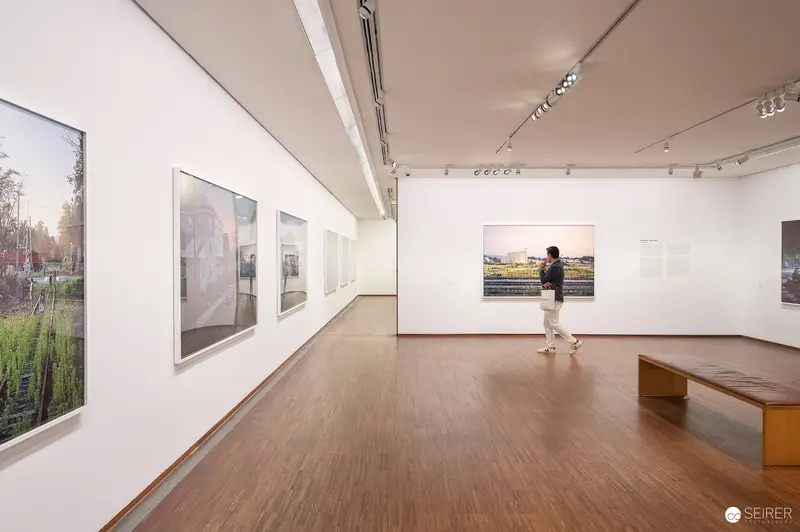 2024-06-12 Gregory Crewdson at Albertina PFS Gallery visitors observe large-scale photographic works mounted on white walls in the Albertina's exhibition space, with Crewdson's characteristic suburban tableaux visible as dark, moody compositions featuring illuminated architectural elements and solitary figures. The installation presents the photographs at substantial scale, allowing viewers to engage with the intricate detail and cinematic staging that defines the artist's constructed narratives of American domestic life. The museum's neutral lighting and spacious layout emphasizes the theatrical quality and meticulous production values evident in Crewdson's staged photography.
 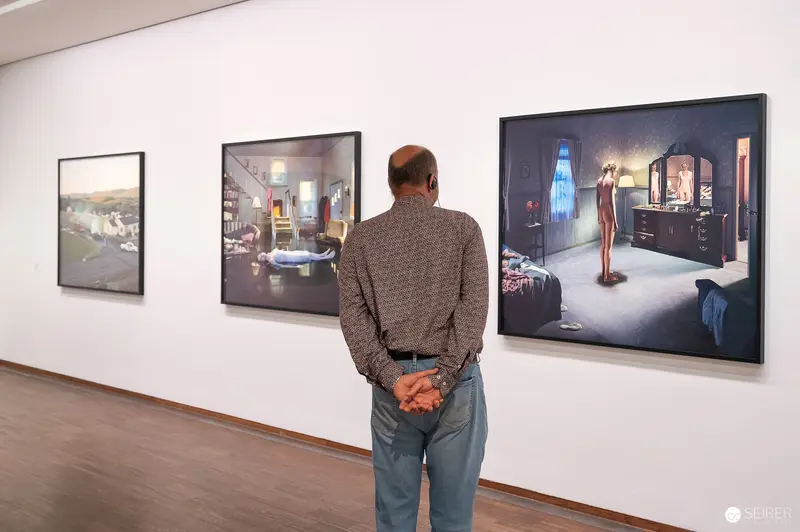 2024-06-12 Gregory Crewdson at Albertina PFS Gallery visitors examine Gregory Crewdson's large-format photographs mounted on white walls in the Albertina's exhibition space, with the museum's characteristic clean, minimalist presentation allowing the works' cinematic scale and detailed compositions to dominate the viewing experience. The installation demonstrates the theatrical impact of Crewdson's meticulously staged suburban tableaux, which appear as illuminated windows into psychologically charged American scenes, their substantial dimensions reinforcing the artist's debt to cinematic visual language. The neutral gallery environment emphasizes the contrast between the controlled artificiality of Crewdson's constructed realities and the contemplative space of museum spectatorship.
 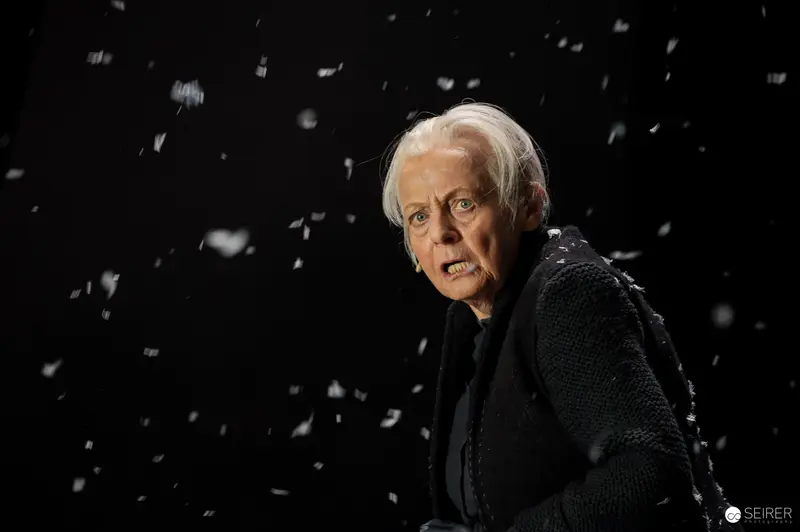 2024-03-04 Josefstadt Leben und Sterben in Wien An older performer in dark woolen garments stands in profile against a black background, their face turned toward the camera with an expression of concern or apprehension. White paper fragments fall through the theatrical space, creating a diagonal pattern across the composition that suggests disintegration or dissolution. The dramatic side lighting emphasizes the subject's features and the texture of the costume, while the stark contrast between figure and void reinforces the production's austere visual aesthetic. This scene from "Leben und Sterben in Wien" at Theater in der Josefstadt, directed by Herbert Föttinger with stage design by Die Schichtarbeiter, employs this falling-paper motif to evoke the fractured social landscape of interwar Vienna.
 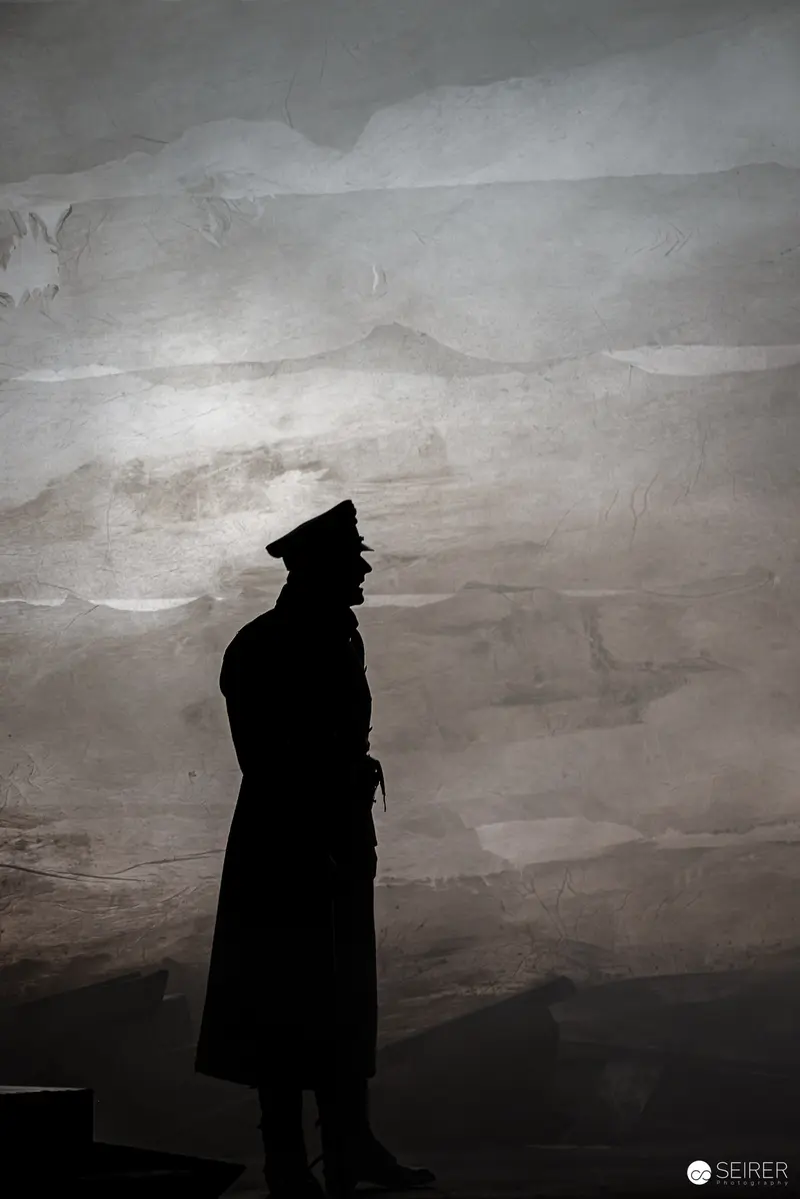 2024-03-04 Josefstadt Leben und Sterben in Wien A silhouetted figure in military uniform and cap stands in profile against a textured, atmospheric backdrop suggesting mountainous terrain rendered in muted grays and whites. The stark contrast between the dark human form and the pale, layered background creates a dramatic chiaroscuro effect, emphasizing the solitary stance of the uniformed figure. The compositional arrangement evokes the visual language of early 20th-century war photography and expressionist theater, appropriate to this 2024 production of Thomas Arzt's *Leben und Sterben in Wien* at Theater in der Josefstadt, directed by Herbert Föttinger. The scenic design by Die Schichtarbeiter employs projected or painted imagery to evoke the volatile political landscape of interwar Vienna.
 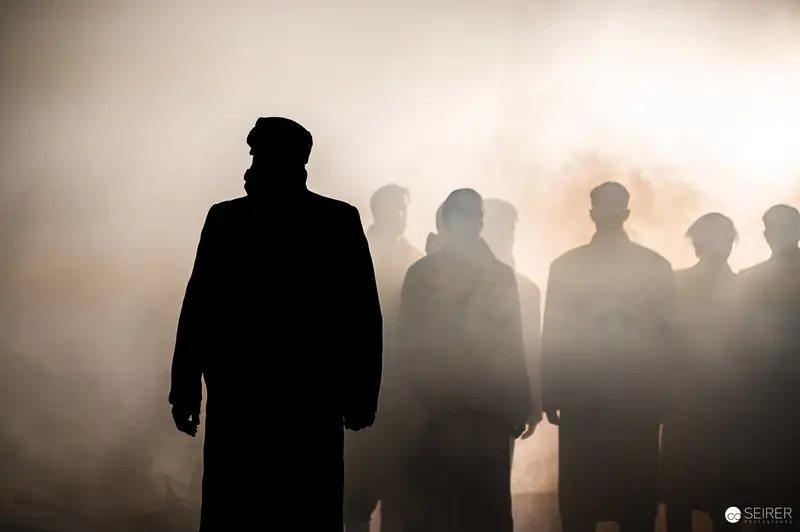 2024-03-04 Josefstadt Leben und Sterben in Wien A solitary figure in silhouette stands in the foreground, isolated from a group of five figures visible through atmospheric haze in the background. The lighting creates a dramatic chiaroscuro effect, with warm, diffused illumination emanating from behind the crowd, while the foreground figure remains completely darkened. This staging technique, part of the scenic design by Die Schichtarbeiter for Herbert Föttinger's production at Theater in der Josefstadt, visually reinforces the thematic separation between individual and collective within Thomas Arzt's interwar Vienna drama. The composition employs theatrical fog and strategic backlighting to create distinct spatial planes, emphasizing psychological and political isolation within the narrative framework.
 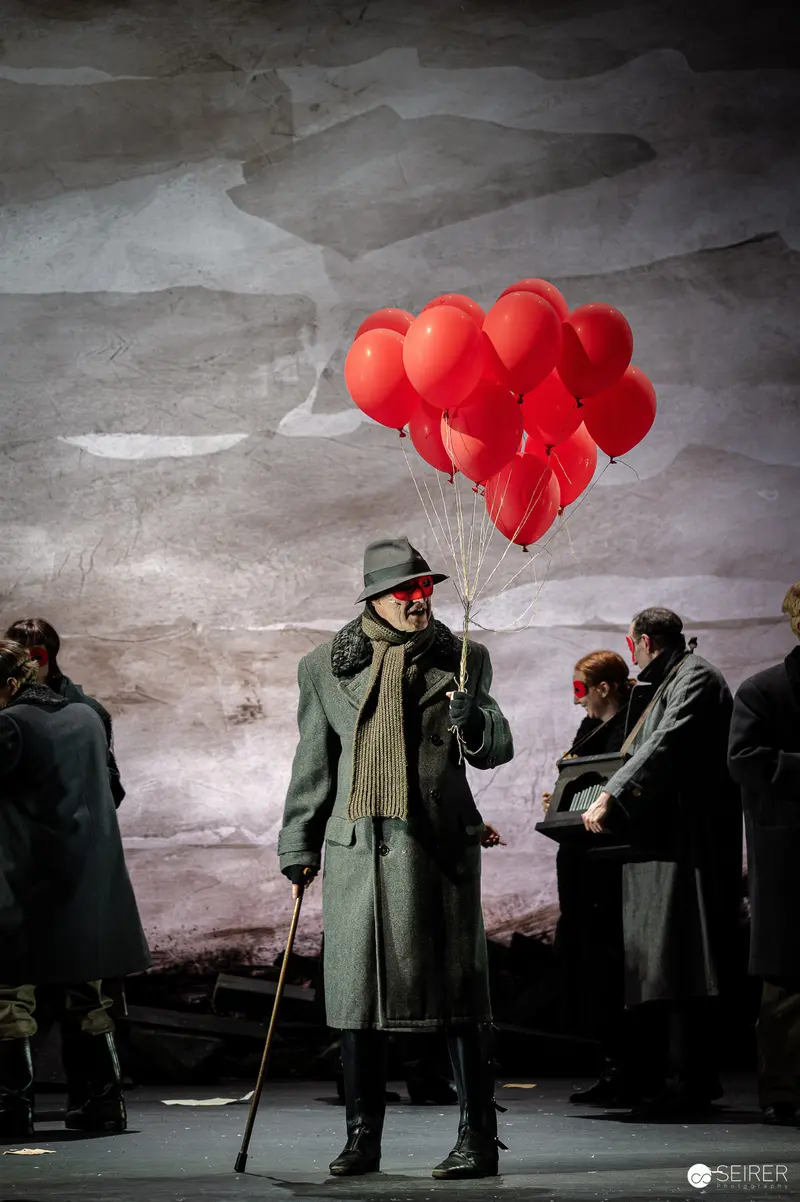 2024-03-04 Josefstadt Leben und Sterben in Wien A male figure in a long gray coat, dark hat, and scarf stands center stage holding a cluster of vibrant red heart-shaped balloons and a walking stick, while other performers in dark overcoats occupy the wings. The scene unfolds against a projected backdrop of dramatic, painterly clouds rendered in monochromatic tones, creating stark chromatic contrast with the saturated red balloons. This moment from Herbert Föttinger's 2024 production of "Leben und Sterben in Wien" at Theater in der Josefstadt employs selective colorization against grayscale scenography, emphasizing symbolic elements within Thomas Arzt's historical drama set in interwar Vienna, with scenic design by Die Schichtarbeiter and costumes by Birgit Hutter.
 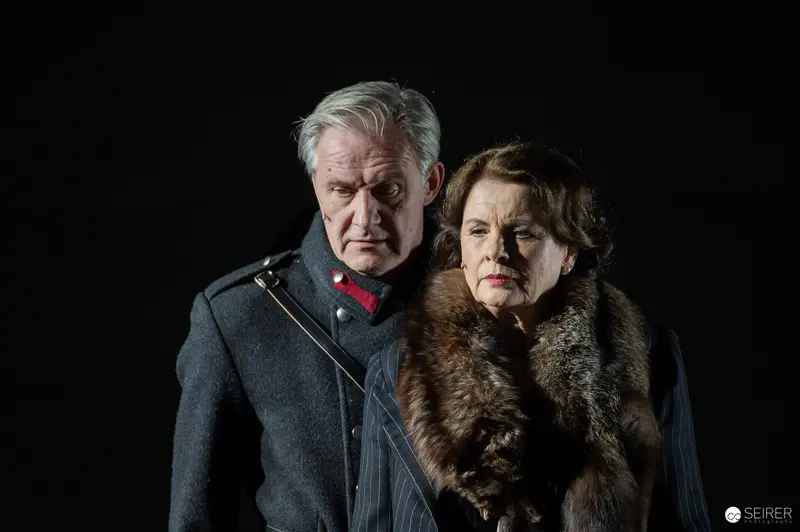 2024-03-04 Josefstadt Leben und Sterben in Wien Two actors pose in three-quarter profile against a black backdrop, their figures sharply defined by directional stage lighting. The male figure, positioned slightly behind and to the left, wears a dark wool coat with pinstripe trousers and a red bow tie, his grey hair swept back; the female figure stands forward right, wrapped in a substantial fur stole over dark attire. Their solemn, forward-directed gazes and close proximity suggest an alliance or shared purpose, their period costumes evoking Vienna's interwar bourgeoisie. The portrait-style composition and dramatic chiaroscuro lighting emphasize characterization in this 2024 Theater in der Josefstadt production of Thomas Arzt's *Leben und Sterben in Wien*, directed by Herbert Föttinger.
 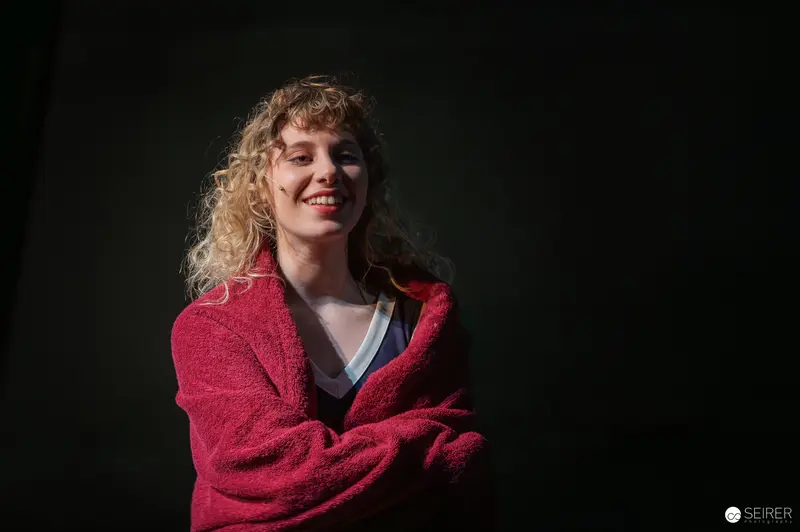 2024-03-04 Josefstadt Leben und Sterben in Wien Portrait photograph showing an actress in three-quarter pose against a black background, wearing a deep red cardigan over a white and navy striped garment. The subject displays an animated, joyful expression with eyes closed and head tilted back, her curly blonde hair falling loosely around her shoulders. The dramatic chiaroscuro lighting creates strong tonal contrast, emphasizing the texture of the knitted outerwear and the spontaneity of the captured moment. This production photograph documents Katharina Klar, who portrayed the protagonist Fanni in Thomas Arzt's "Leben und Sterben in Wien" at Theater in der Josefstadt, 2024, directed by Herbert Föttinger.
 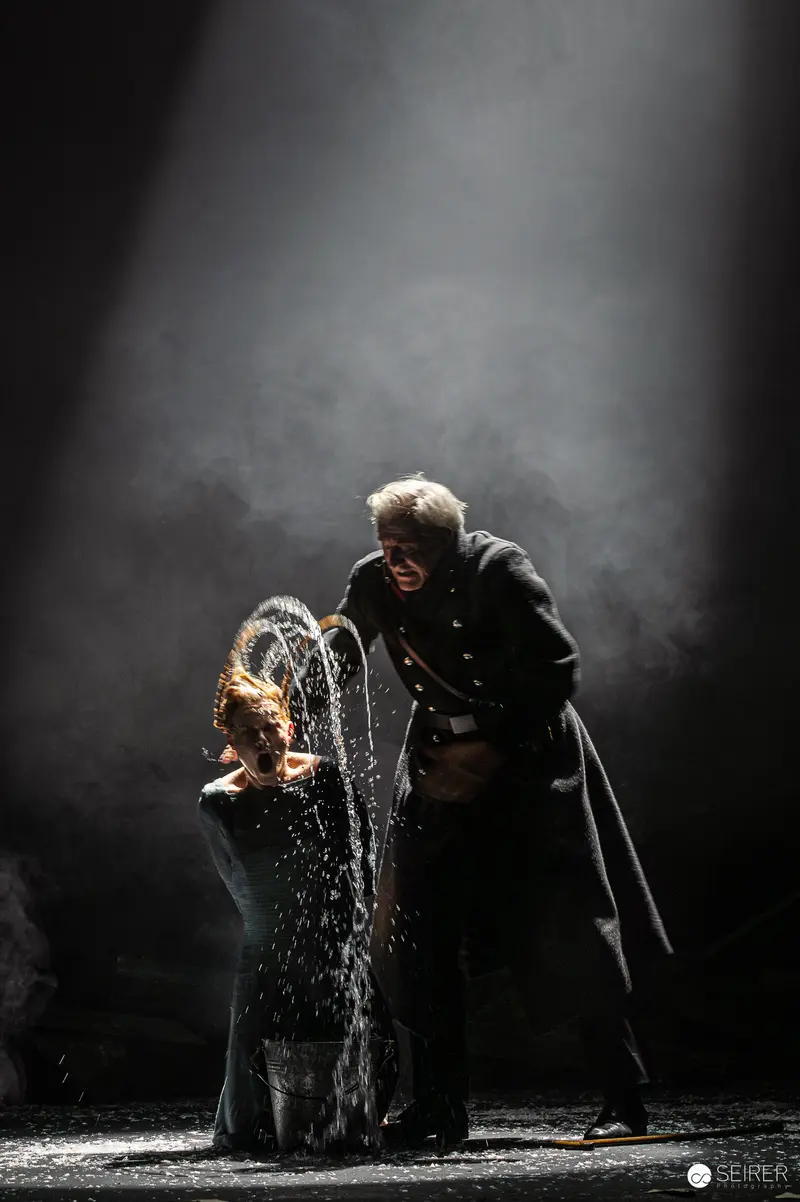 2024-03-04 Josefstadt Leben und Sterben in Wien A dramatically lit scene shows two figures in stark chiaroscuro lighting against a dark background. One performer kneels while water cascades over them from above, their posture suggesting vulnerability or supplication, while a second figure in dark clothing stands over them in a position of authority or dominance. The theatrical moment, from Herbert Föttinger's staging of Thomas Arzt's *Leben und Sterben in Wien* at Theater in der Josefstadt, employs vertical light beams and the symbolic use of water to emphasize power dynamics central to the play's exploration of interwar Vienna's social tensions. Stage design by Die Schichtarbeiter creates a minimalist environment that focuses attention on the physical relationship between the characters.
 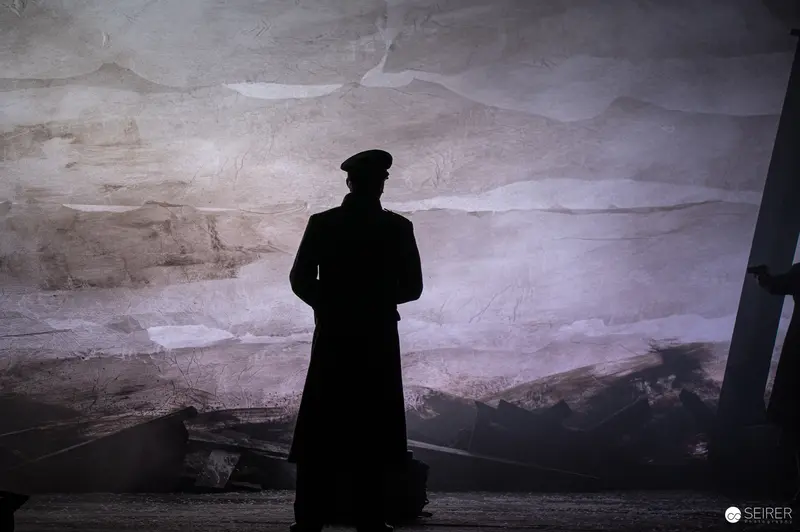 2024-03-04 Josefstadt Leben und Sterben in Wien A silhouetted figure in military or official uniform, identifiable by the characteristic peaked cap and long coat, stands in contrapposto before a large-scale projected backdrop depicting a desolate, monochromatic landscape with geological striations. The theatrical lighting creates a stark chiaroscuro effect, reducing the performer to a dark cutout against the luminous scenographic surface designed by Die Schichtarbeiter for Herbert Föttinger's production. The compositional arrangement emphasizes the isolation of the individual against the vast, inhospitable terrain, visually reinforcing the interwar period's political tensions central to Thomas Arzt's *Leben und Sterben in Wien* at Theater in der Josefstadt.
 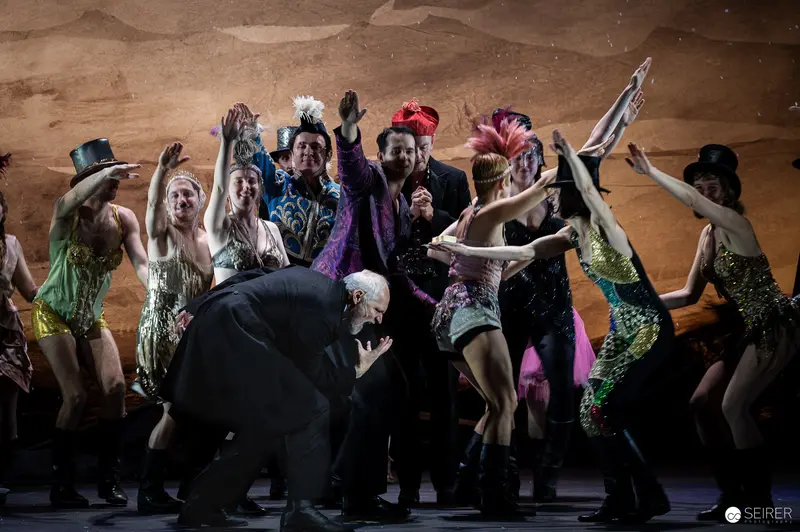 2024-03-04 Josefstadt Leben und Sterben in Wien A theatrical ensemble scene from the Theater in der Josefstadt's 2024 production of "Leben und Sterben in Wien," depicting a cabaret-style chorus configuration against a painted backdrop suggesting urban architecture. The performers, arranged in a semicircular formation, wear costumes of contrasting styles—glittering showgirl attire in green and gold sequins juxtaposed with formal period dress and character headpieces—reflecting the social stratification of interwar Vienna. Central figures include ensemble members in theatrical poses with raised arms, while a suited figure bends forward among dancers, creating dynamic tension between high and low culture within Herbert Föttinger's directorial vision of Thomas Arzt's historical drama.
 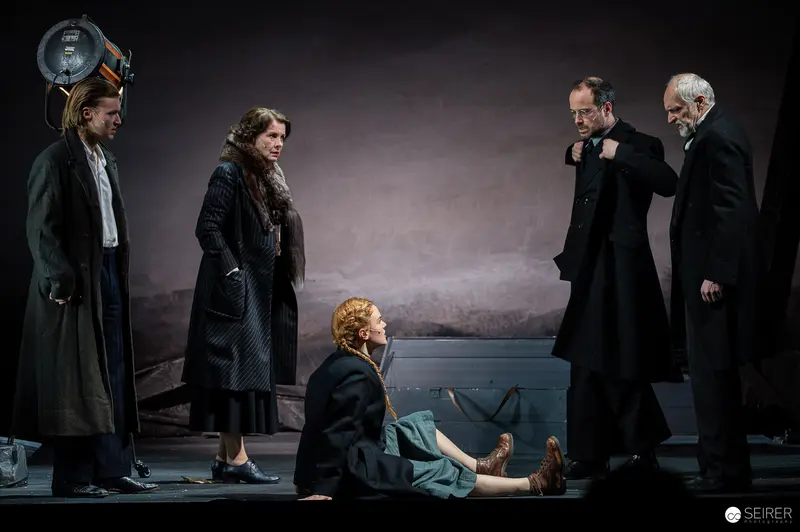 2024-03-04 Josefstadt Leben und Sterben in Wien A theatrical tableau from "Leben und Sterben in Wien" showing six performers arranged around a prone figure on a dark stage platform. The composition divides into two groups: on the left, a figure with an elaborate headdress stands beside Katharina Klar as Fanni in dark period costume; on the right, three men in black coats form a cluster, while a figure with blonde hair lies supine in pale blue-green garments at center. The scene is illuminated against a neutral backdrop, emphasizing the stark spatial geometry and somber palette characteristic of Die Schichtarbeiter's scenic design for Herbert Föttinger's production at Theater in der Josefstadt.
  2023-11-26 Südbahnhotel Semmering (public) Six fan palms in burlap-wrapped root balls stand overwintering in a disused room of the Südbahnhotel in Semmering, Lower Austria, in November 2023. The Südbahnhotel, opened in 1882 alongside the Semmering Railway, has stood largely unused since 1976 and now shelters garden plants in rooms with peeling plaster.
  2023-11-26 Südbahnhotel Semmering (public) A disused glazed connecting corridor runs through the Südbahnhotel Semmering in Semmering, Lower Austria, photographed in November 2023. White-framed casement windows line both sides of the corridor above walls stripped back to bare plaster, with a green emergency exit sign still mounted on the ceiling.
 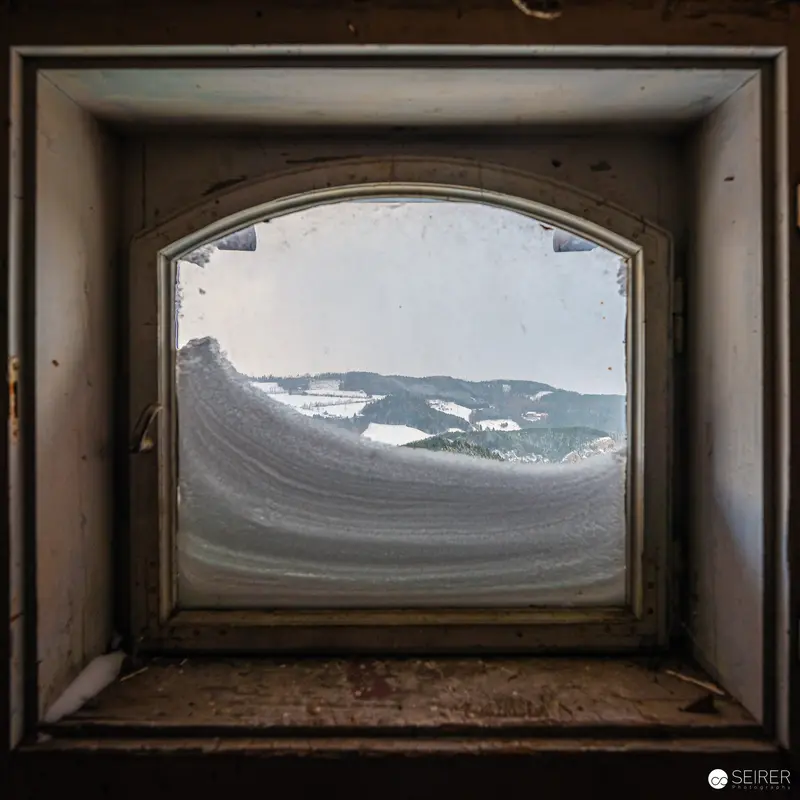 2023-11-26 Südbahnhotel Semmering (public) A frosted, arch-topped window in the disused Südbahnhotel Semmering, Lower Austria, frames snow-covered hillsides and forested slopes of the Semmering pass in November 2023. Ice crystals have formed a curved sweep across the lower half of the single-glazed pane, leaving only the upper section clear enough to see through.
 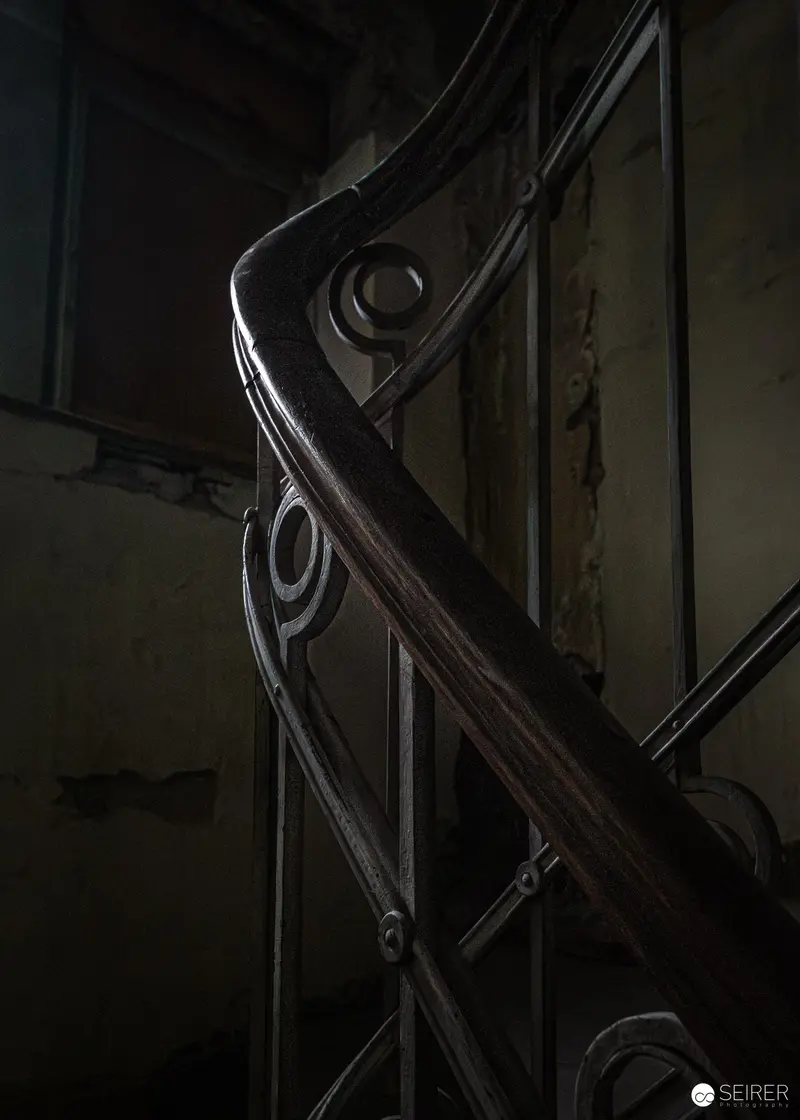 2023-11-26 Südbahnhotel Semmering (public) A wrought-iron staircase balustrade with a dark wooden handrail stands in a service stairwell of the Südbahnhotel in Semmering, Lower Austria, photographed on 26 November 2023. The Südbahnhotel, opened in 1882 alongside the Semmering Railway, has stood largely unused since the 1970s, leaving interior fittings such as this balustrade in place.
 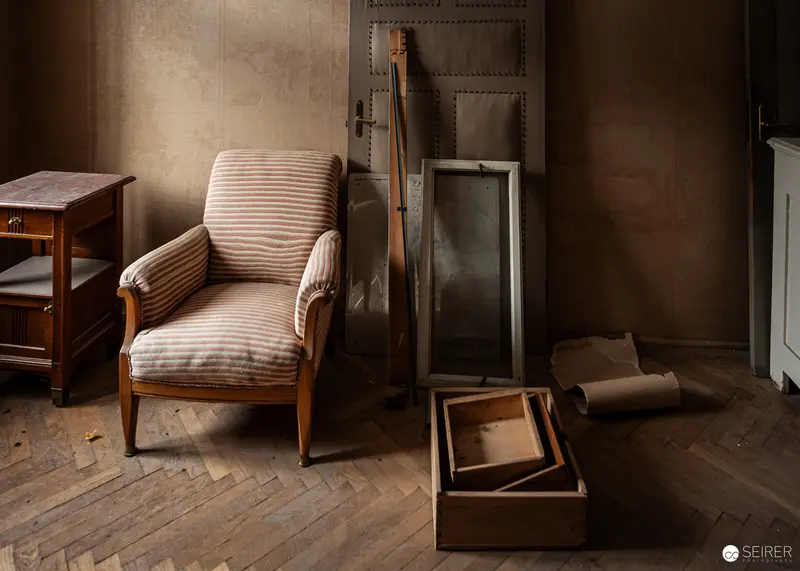 2023-11-26 Südbahnhotel Semmering (public) A striped upholstered armchair, wooden side table, empty drawers and a stripped mirror frame stand abandoned in a guest room of the Südbahnhotel in Semmering, Lower Austria, in November 2023. The Südbahnhotel, opened in 1882 by the Austrian Southern Railway, has been largely closed since the 1970s and retains its original herringbone parquet flooring.
 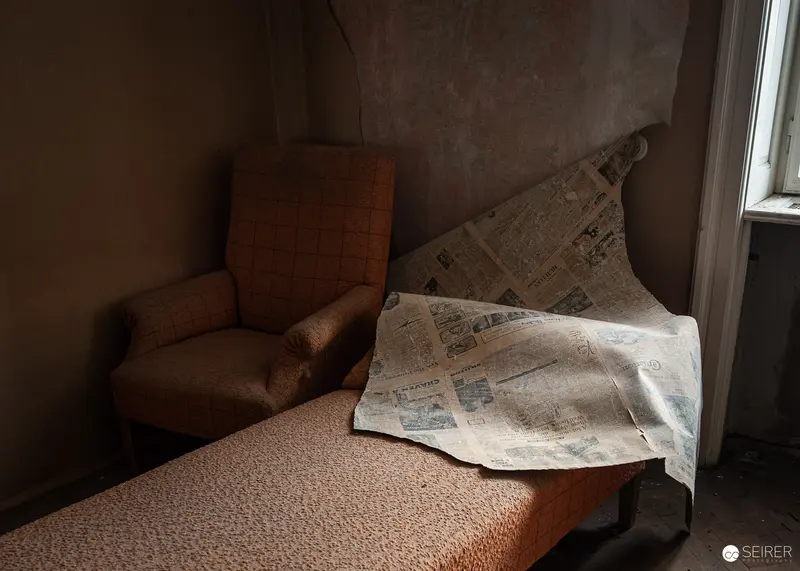 2023-11-26 Südbahnhotel Semmering (public) An abandoned guest room in the Südbahnhotel Semmering, Semmering, Lower Austria, retains a worn upholstered armchair and bench in November 2023. A sheet of wall covering printed with newspaper pages has peeled away from the wall of the Südbahnhotel Semmering and fallen across the bench.
 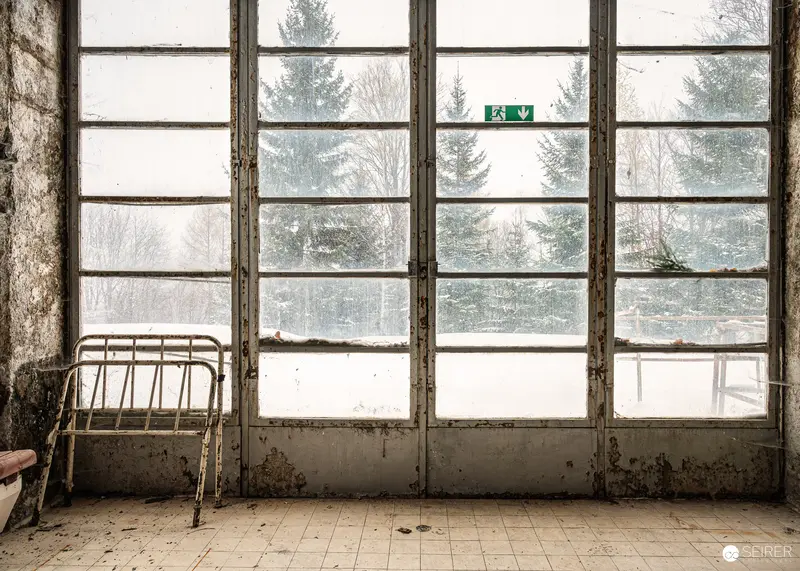 2023-11-26 Südbahnhotel Semmering (public) A rusted metal bed frame stands against the tall glazed window wall of a disused room at the Südbahnhotel in Semmering, Lower Austria, in November 2023, overlooking snow-covered conifers. The Südbahnhotel, opened in 1882 by the Austrian Southern Railway company Südbahn-Gesellschaft, has stood largely unused since the 1970s.
 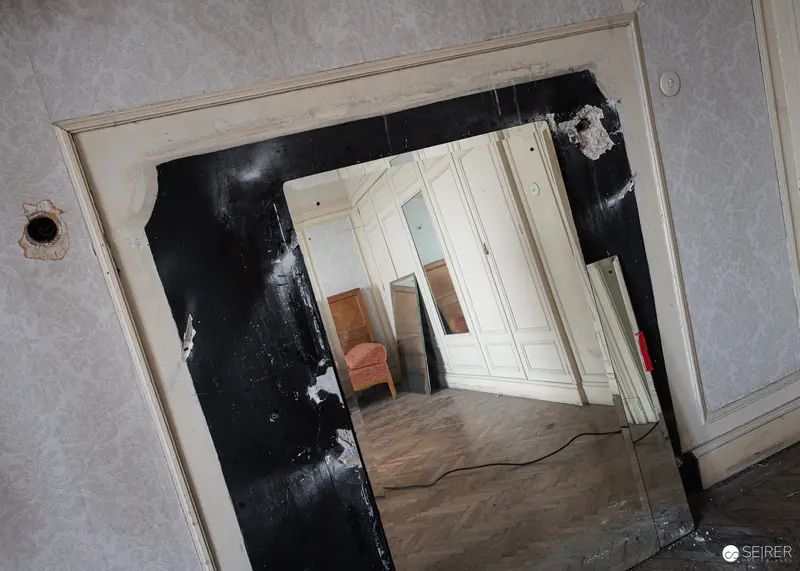 2023-11-26 Südbahnhotel Semmering (public) A cracked wall-mounted mirror in a disused guest room of the Südbahnhotel in Semmering, Lower Austria, reflects a cream-painted fitted wardrobe, an upholstered armchair and a parquet floor in November 2023. The Südbahnhotel opened in 1882 as a resort of the Austrian Southern Railway and has stood largely unused since the 1970s.
 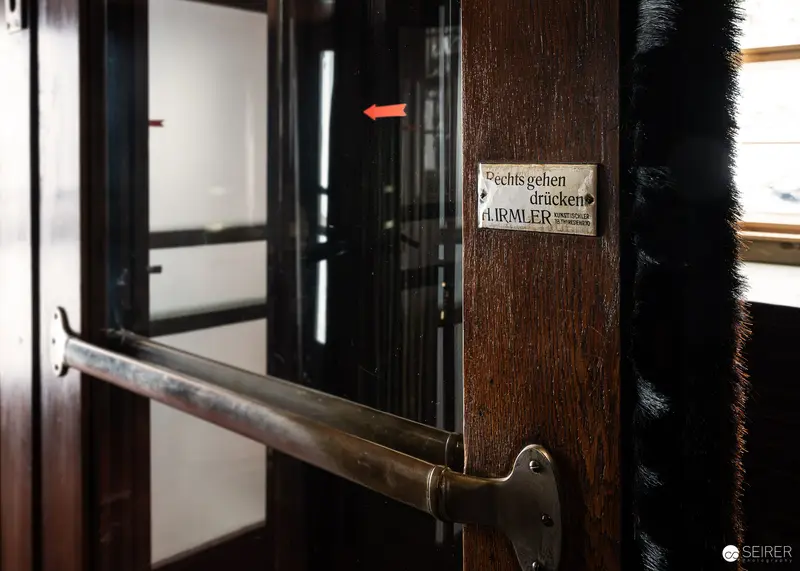 2023-11-26 Südbahnhotel Semmering (public) A dark oak door at the Südbahnhotel in Semmering, Lower Austria, carries a historic enamel sign reading "Rechts gehen drücken" alongside a brass push bar, photographed in November 2023. The sign bears the maker's mark of H. Irmler, a Vienna-based Kunstschlosser (art locksmith), documenting the hotel's original early-20th-century fittings.
 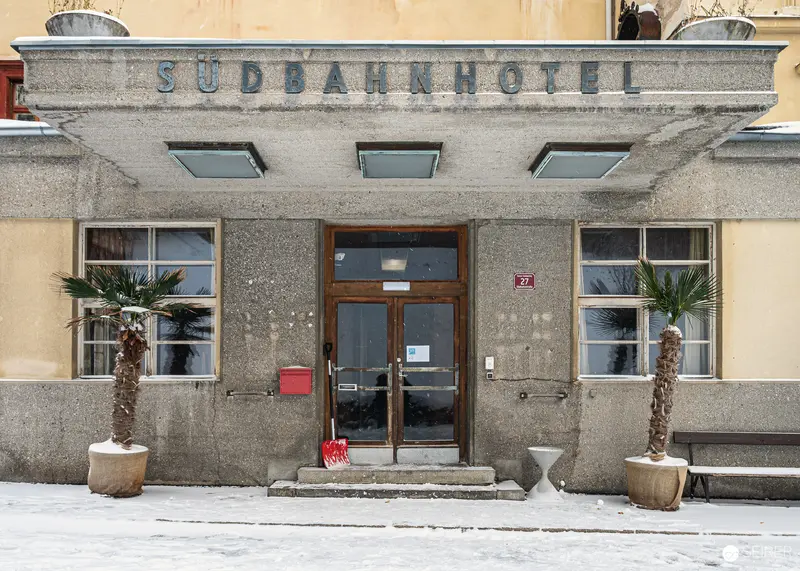 2023-11-26 Südbahnhotel Semmering (public) The main entrance of the Südbahnhotel at Semmering, Lower Austria, stands closed under snow in November 2023, its concrete canopy carrying raised metal letters spelling "SÜDBAHNHOTEL". Two potted palms flank the weathered timber doors at house number 27, a remnant of the grand hotel opened in 1882 for guests of the Semmering Railway.
 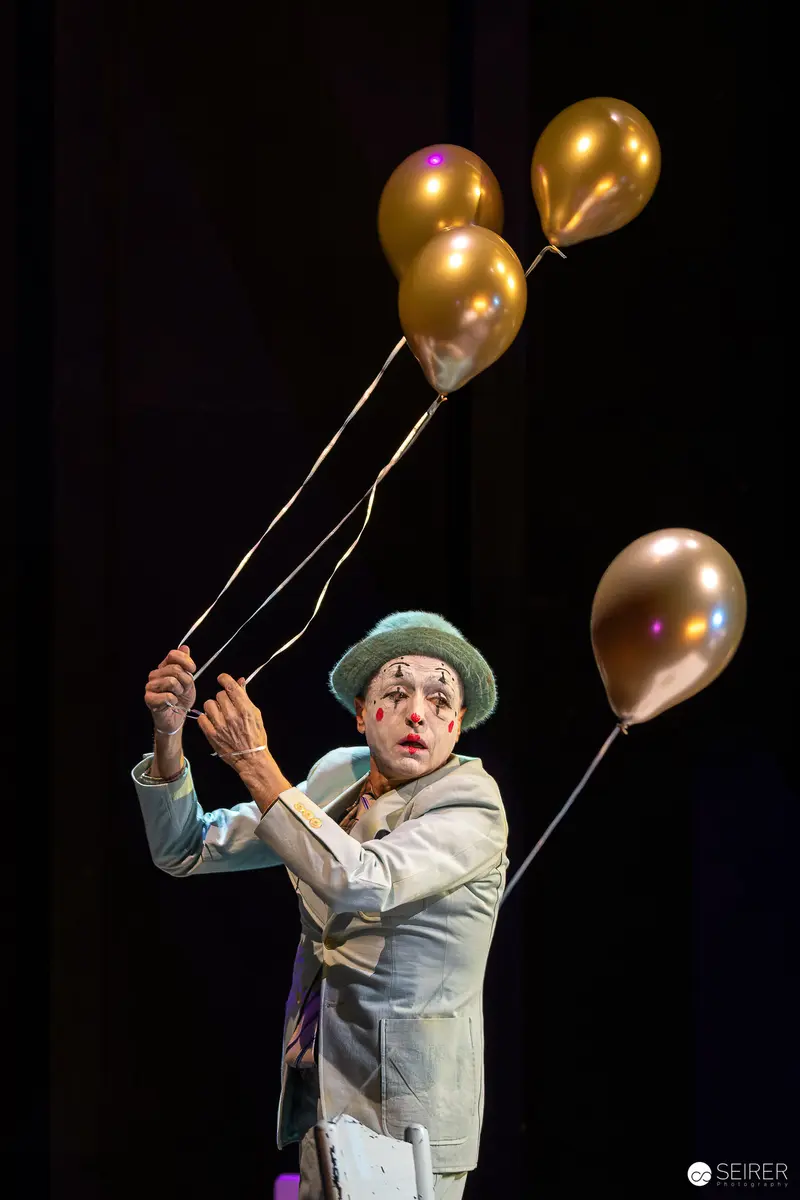 2023-11-14 Bis nächsten Freitag - Peter Turrini - Josefstadt Marcello De Nardo
 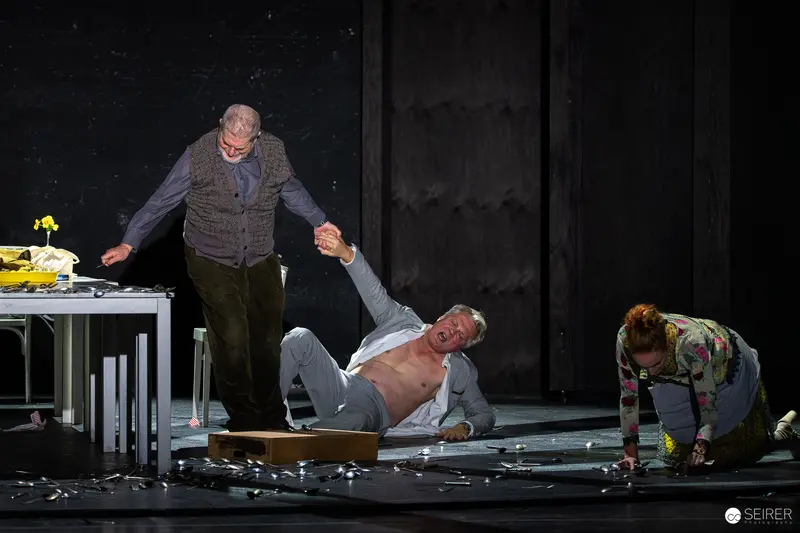 2023-11-14 Bis nächsten Freitag - Peter Turrini - Josefstadt Herbert Föttinger, Erwin Steinhauer und Silvia Meisterle
 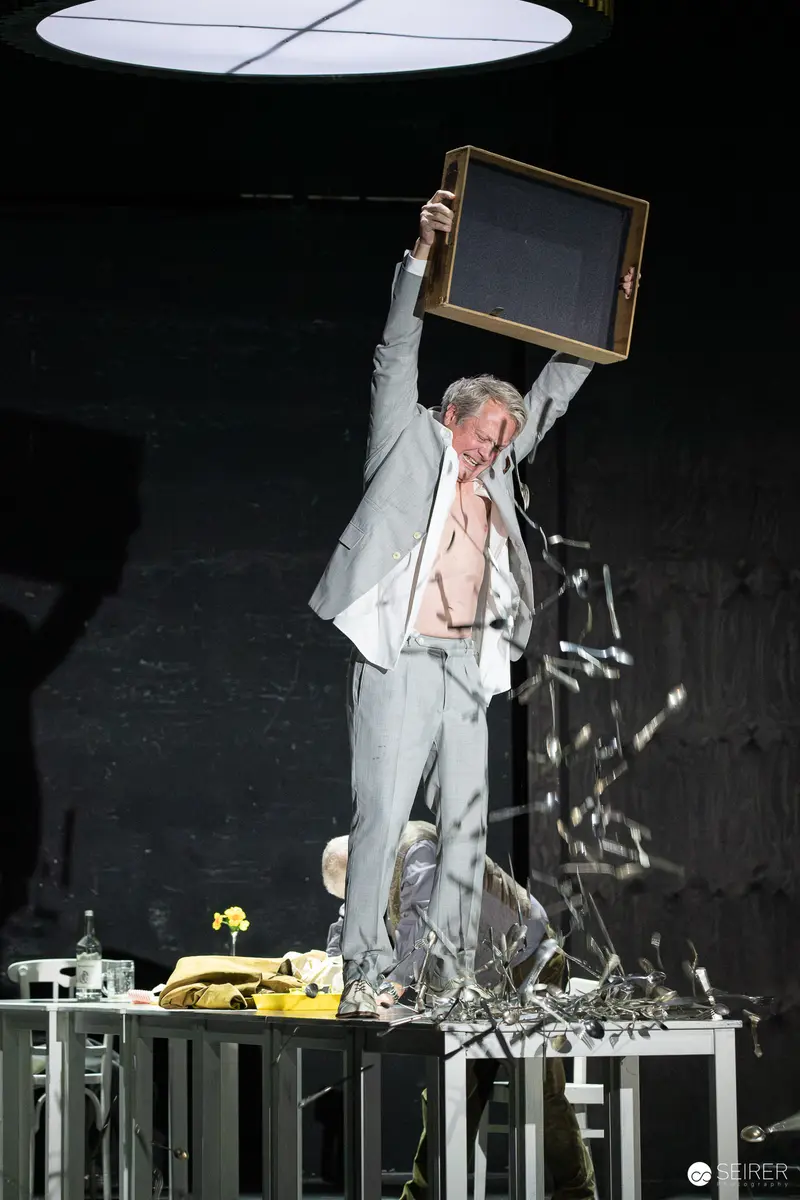 2023-11-14 Bis nächsten Freitag - Peter Turrini - Josefstadt Herbert Föttinger
 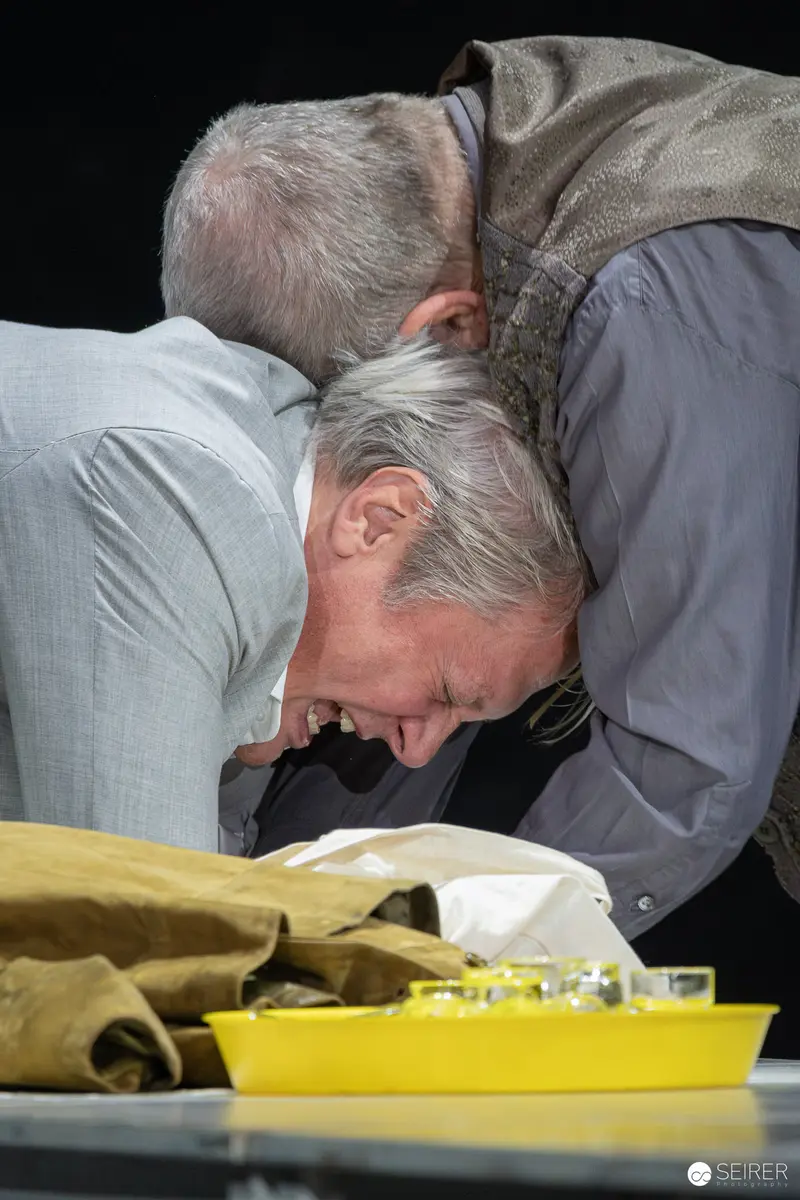 2023-11-14 Bis nächsten Freitag - Peter Turrini - Josefstadt Herbert Föttinger und Erwin Steinhauer
 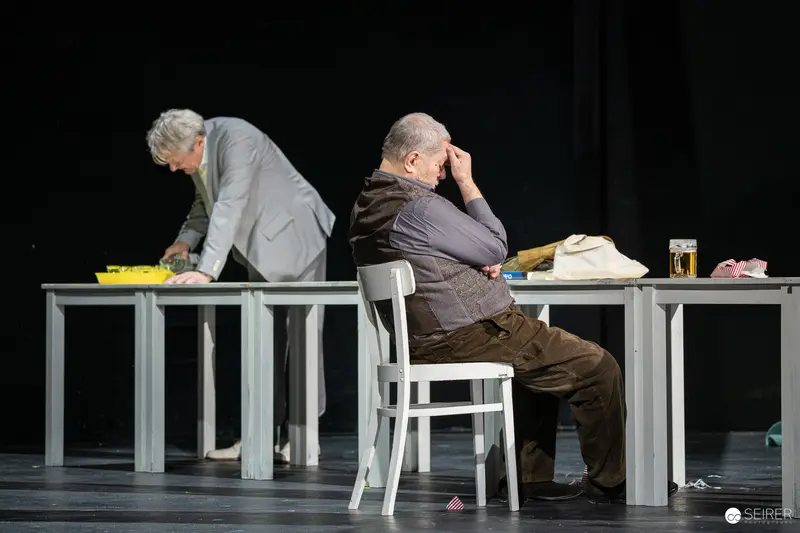 2023-11-14 Bis nächsten Freitag - Peter Turrini - Josefstadt Herbert Föttinger und Erwin Steinhauer
 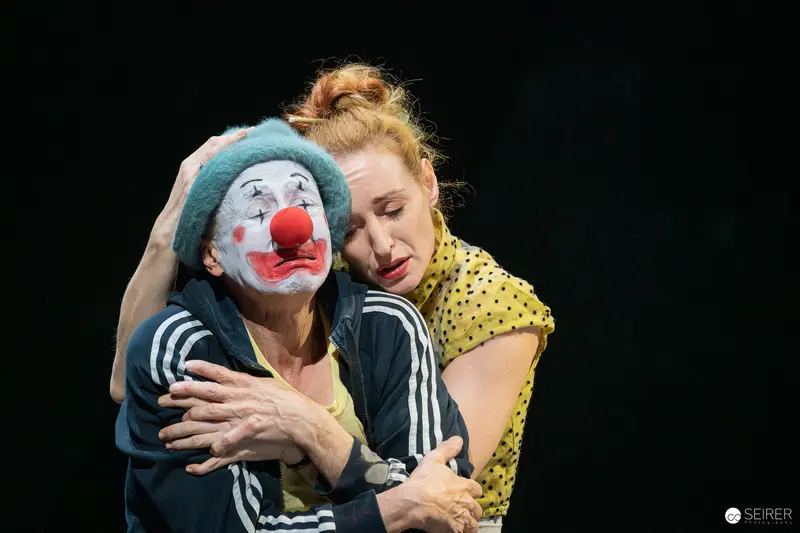 2023-11-14 Bis nächsten Freitag - Peter Turrini - Josefstadt Silvia Meisterle und Marcello De Nardo
 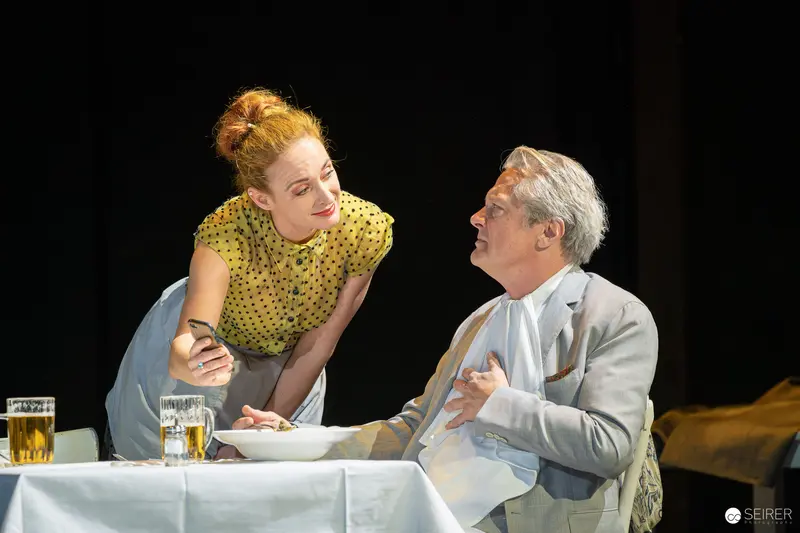 2023-11-14 Bis nächsten Freitag - Peter Turrini - Josefstadt Herbert Föttinger und Silvia Meisterle
 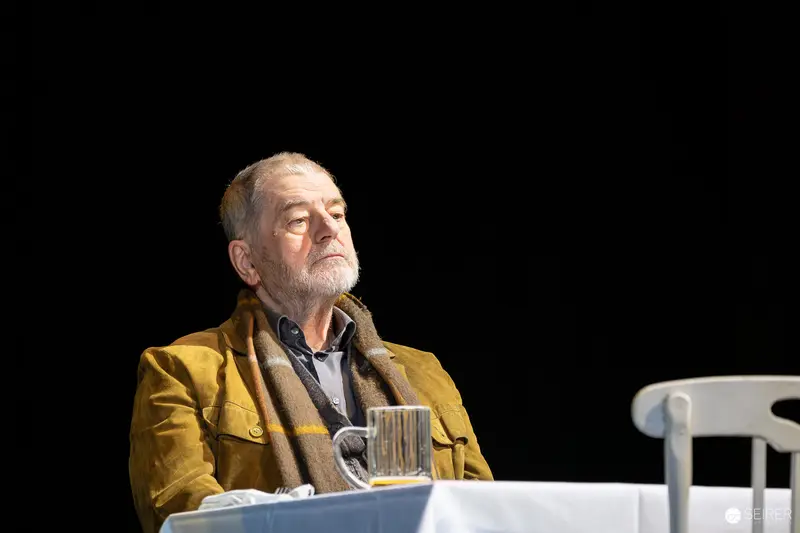 2023-11-14 Bis nächsten Freitag - Peter Turrini - Josefstadt Erwin Stainhauer
 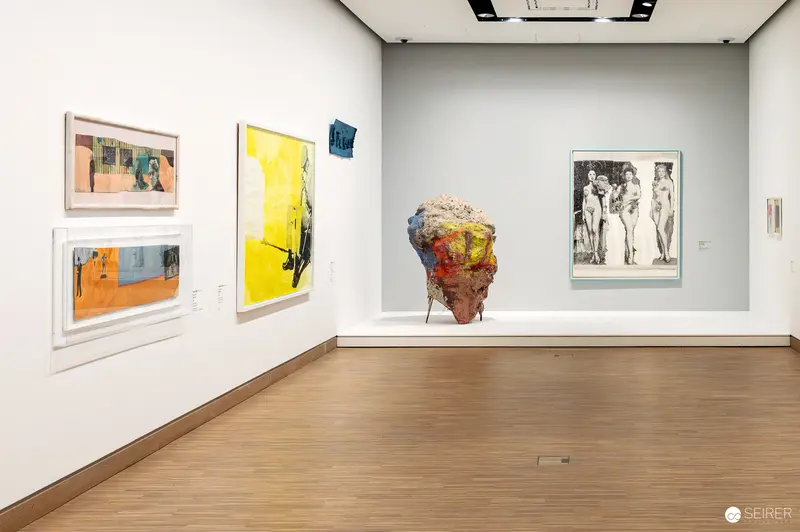 2023-10-30 Albertina Modern Deutschland Österreich The Albertina Modern in Vienna, Austria presented the exhibition "Österreich – Deutschland. Malerei 1970–2020" in October 2023, pairing framed paintings on white walls with a freestanding sculpture on a low plinth. The Albertina Modern opened in 2020 in the Künstlerhaus on Karlsplatz as the contemporary-art venue of the Albertina.
  2023-10-30 Albertina Modern Deutschland Österreich Arnulf Rainer, Untitled, 1995-2000 (Ausschnitt)
  2023-10-30 Albertina Modern Deutschland Österreich Isolde Maria Joham, "The Form of Heroes", 1983
  2023-10-30 Albertina Modern Deutschland Österreich Brigitte Kowanz, "Inspiration" und "Email, 02.08.1984", (Ausschnitt)
 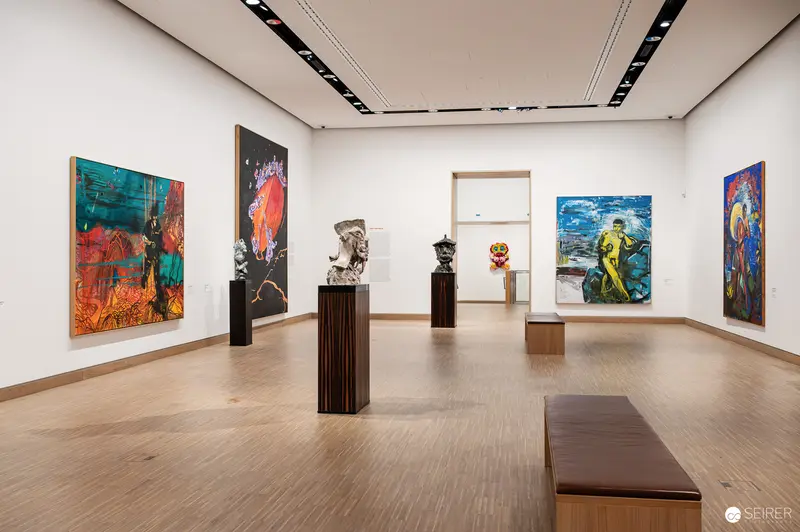 2023-10-30 Albertina Modern Deutschland Österreich Large-format paintings and pedestal-mounted sculptures fill an exhibition room of "Österreich – Deutschland. Malerei 1970–2020" at Albertina Modern in Vienna, Austria, in October 2023. The exhibition surveyed five decades of Austrian and German painting, shown at Albertina Modern in the Künstlerhaus building on Karlsplatz.
  2023-10-30 Albertina Modern Deutschland Österreich The orange-red staircase inside Albertina Modern in Vienna, Austria, photographed on 30 October 2023 during the exhibition "Österreich – Deutschland. Malerei 1970–2020." A stainless-steel handrail turns at the landing above a strip of concealed lighting recessed under the balustrade.
  2023-10-30 Albertina Modern Deutschland Österreich A visitor passes the ticket desk in the entrance foyer of Albertina Modern in Vienna, Austria, during the exhibition "Österreich – Deutschland. Malerei 1970–2020" in October 2023. Red "ALBERTINA modern" lettering is mounted on the stone wall beside a floor sign directing visitors to the concurrent Yoshitomo Nara exhibition.
 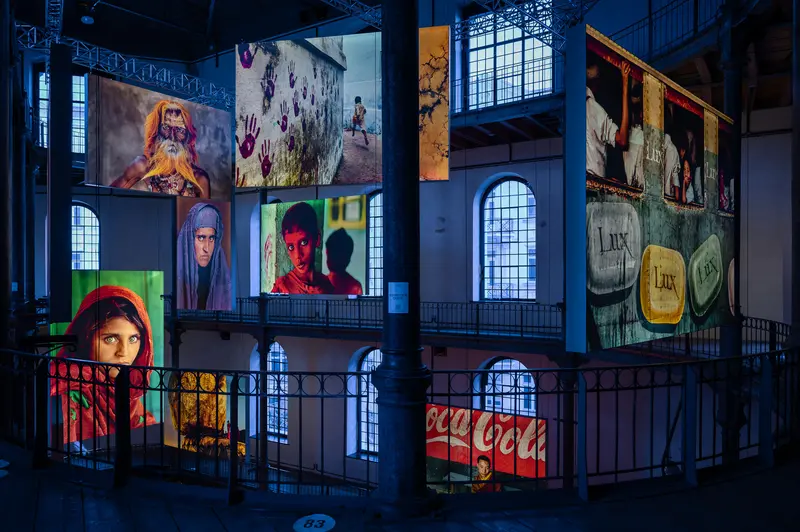 2023-07-11 Steve McCurry Semperdepot This photograph captures a close view of a large-format backlit photographic print displayed in the Steve McCurry exhibition at Semperdepot Vienna in 2023, showing two young subjects in warm-toned clothing against a verdant background, with one figure's direct gaze establishing connection with the viewer. The illuminated lightbox presentation creates luminous color saturation characteristic of McCurry's work, while the darkened gallery environment visible at the frame's edges emphasizes the dramatic contrast between the glowing image and surrounding space. A museum visitor is partially visible in the lower right corner, their silhouette providing scale reference for the monumental print dimensions typical of this exhibition's installation approach.
 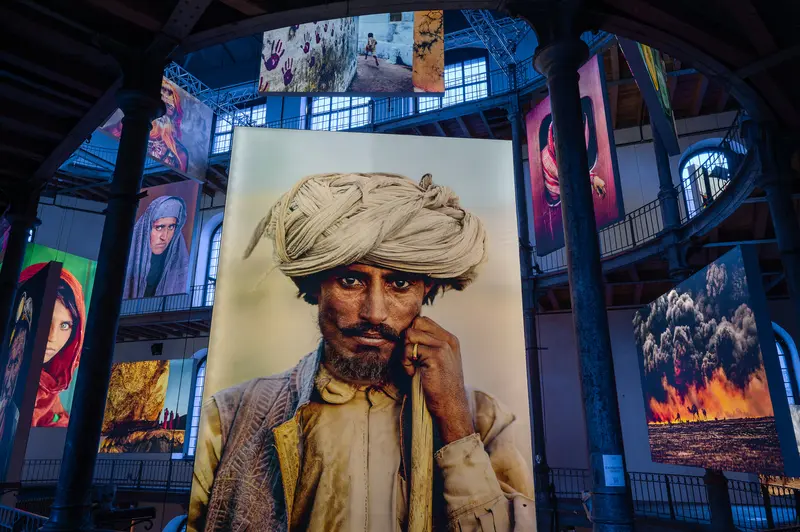 2023-07-11 Steve McCurry Semperdepot This photograph captures a large-scale backlit portrait of a man wearing a cream-colored turban and traditional dress, positioned centrally within the industrial interior of the Semperdepot Vienna during the 2023 Steve McCurry exhibition. The illuminated print dominates the multi-story atrium space, surrounded by additional suspended photographic works visible on multiple levels, with the building's original architectural elements—including steel railings, industrial windows, and structural supports—framing the installation in ambient blue lighting that contrasts with the warm tones of the portrait. The perspective from ground level emphasizes the monumental scale of McCurry's humanitarian documentary imagery within the adaptive reuse of this historic Viennese venue, demonstrating the curatorial strategy of immersive presentation through darkened interiors and dramatically lit large-format prints.
 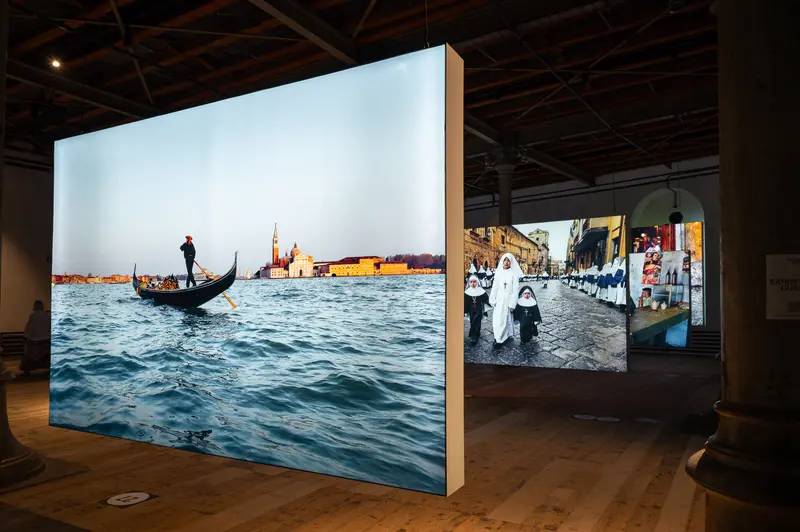 2023-07-11 Steve McCurry Semperdepot This photograph captures a visitor in profile examining one of Steve McCurry's large-format backlit prints at close range within the darkened gallery space of the Semperdepot Vienna in 2023. The silhouetted figure stands before an illuminated portrait photograph featuring warm earth tones of ochre and sienna, demonstrating the exhibition's strategy of using lightbox presentation to enhance color saturation and emotional impact while the surrounding darkness creates an immersive viewing environment. The composition documents the intimate one-to-one encounter between viewer and artwork, with the human scale providing visual context for the monumental dimensions of McCurry's prints suspended throughout the venue's industrial interior.
 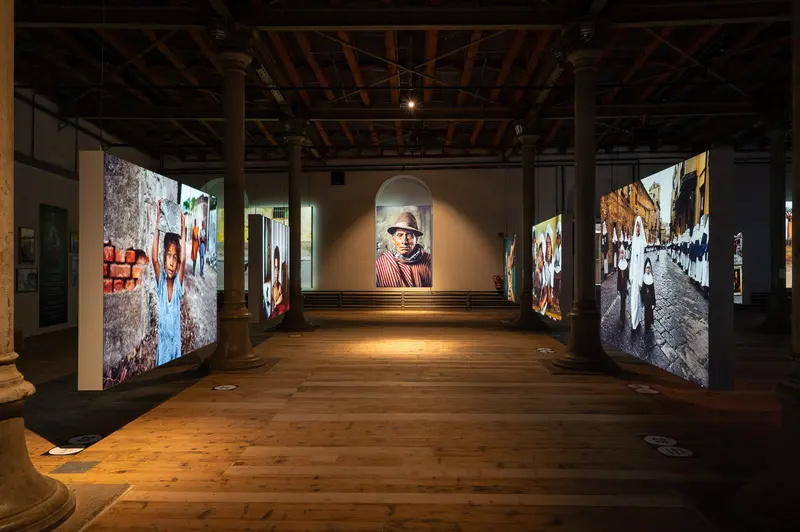 2023-07-11 Steve McCurry Semperdepot This photograph captures a detailed view of a large-format backlit display within the Steve McCurry exhibition at Semperdepot Vienna in 2023, featuring a portrait of an elderly man with a weathered face and white beard set against a vibrant turquoise architectural background characteristic of McCurry's work in South Asia. The illuminated transparency is mounted in a suspended lightbox system, with the exhibition's darkened ambient environment visible in the surrounding space, emphasizing the saturated color palette and tonal contrasts of the print. A silhouetted visitor stands in the lower portion of the frame, providing scale reference for the monumental proportions of the displayed photograph while demonstrating the immersive viewing experience created by the installation design.
 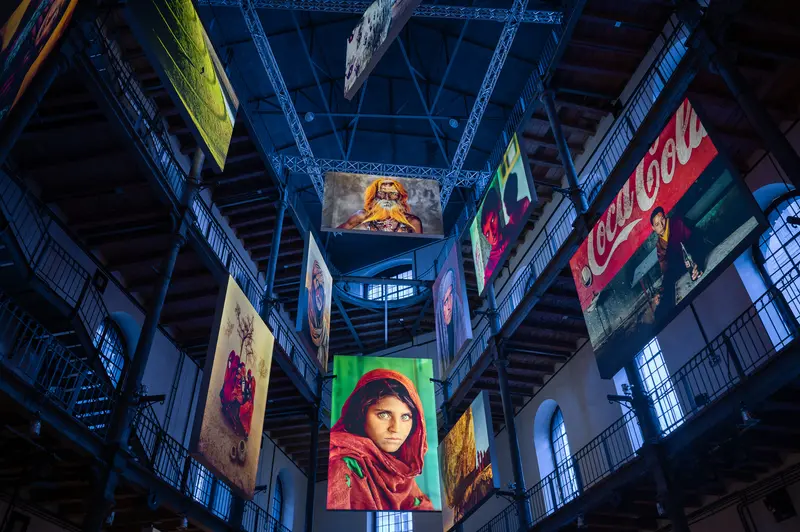 2023-07-11 Steve McCurry Semperdepot This photograph captures a close viewing perspective of illuminated photographic works displayed in the darkened interior of the Steve McCurry exhibition at Semperdepot Vienna in 2023, with multiple large-format backlit prints arranged vertically along the gallery walls. Visible in the composition are at least three distinct images including what appears to be a portrait of a woman in yellow and red garments in the upper register, and documentary photographs positioned below, all mounted as luminous light boxes that emit a warm glow against the surrounding darkness. Several exhibition visitors are silhouetted in the foreground and middle ground, their positions indicating engaged observation of the suspended prints, while the architectural framework of the converted industrial space remains partially visible through the controlled lighting scheme.
 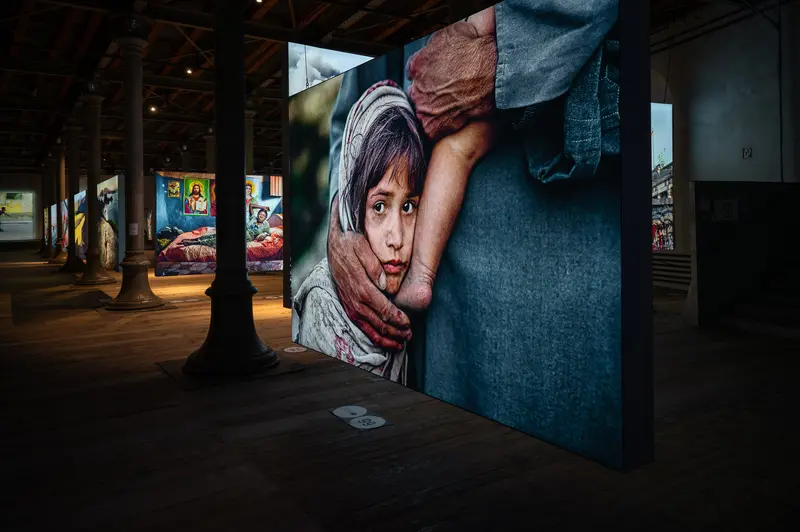 2023-07-11 Steve McCurry Semperdepot This photograph captures the central atrium of the Semperdepot Vienna during the 2023 Steve McCurry exhibition, showing the architectural volume of the converted industrial space with its exposed structural columns and multi-story arrangement of large-format backlit photographic prints. Visitors occupy the ground floor viewing area beneath suspended lightbox displays featuring McCurry's portraiture work, including recognizable images from his global documentary practice, while the darkened environment enhances the luminous quality of the illuminated transparencies mounted at various heights across the interior facades. The composition emphasizes the exhibition's immersive spatial design, where the historic building's utilitarian framework serves as infrastructure for the contemporary photographic installation, with ambient blue lighting accentuating the contrast between the architectural elements and the warmly lit imagery.
 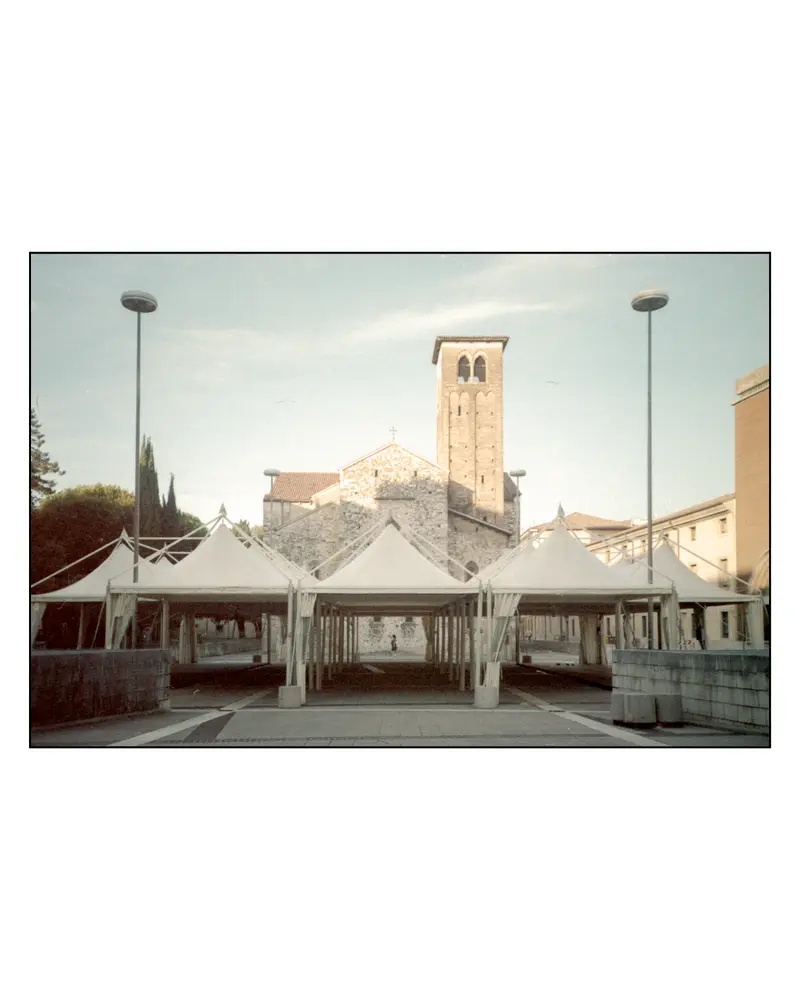 Villach - Grado White peaked event marquees stand on the square in front of the Basilica of Sant'Eufemia in Grado, Friuli-Venezia Giulia, Italy. The Basilica of Sant'Eufemia was consecrated in 579 AD and retains a detached stone bell tower built in the 15th century.