

July 2026
2026-07-03 Amalienbad
The Amalienbad at Reumannplatz 23, 1100 Vienna, is an Art Deco indoor public bath built 1923–1926 by the City of Vienna as a Red Vienna social project, hosting "100 Jahre Amalienbad" (REMEDY / Heilmittel) by Michael Rathmayr for FOTO ARSENAL WIEN (3 July – 6 September 2026). Photographs document the turquoise mosaic tilework, competition pool, wrought-iron balustrades, glazed wooden doors, stone fountain masks, and ornate facade with allegorical sculptures. Rathmayr's large-format prints are installed on the central diving tower and pool hall staircase.
26 photos
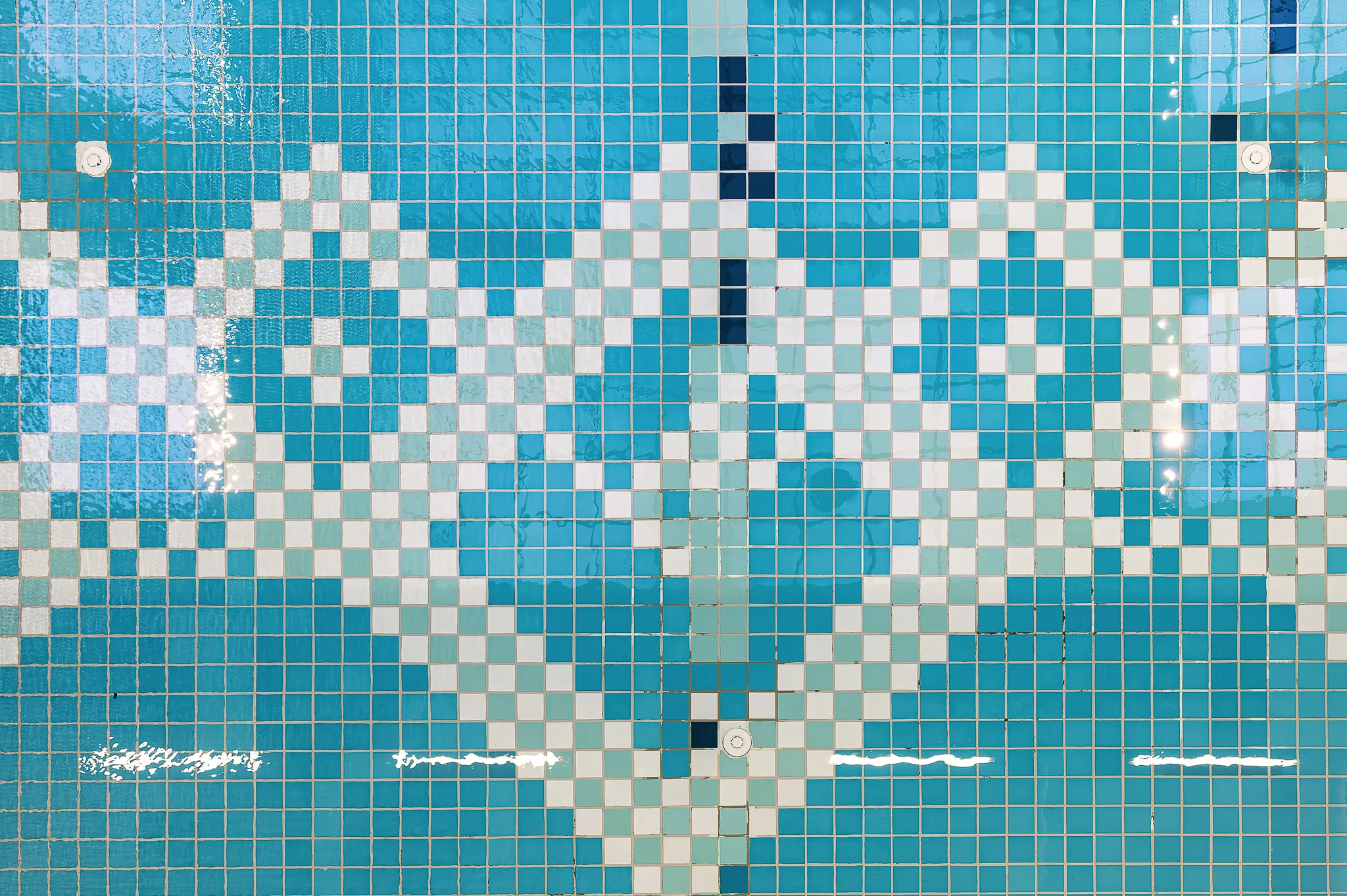
Art Deco Mosaic Tilework on Pool Wall, Amalienbad Vienna The pool interior of the Amalienbad at Reumannplatz 23, Vienna, features a geometric Art Deco mosaic pattern composed of turquoise, white, and navy square tiles arranged in a symmetrical chevron motif. The grout lines show the original 1926 craftsmanship of this Red Vienna municipal bathhouse. (Image X of Y) 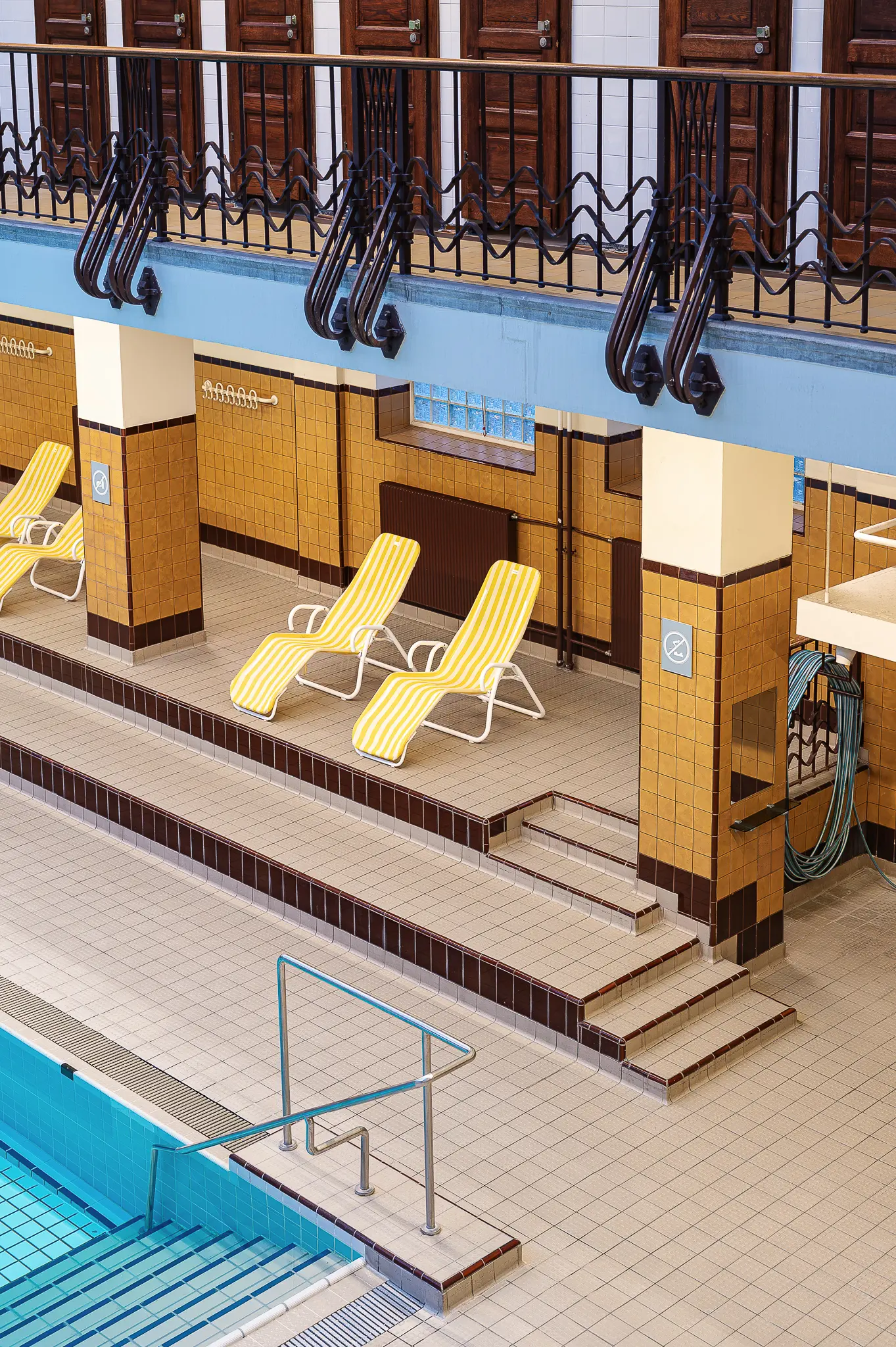 Amalienbad Main Pool Deck with Art Deco Tilework and Loungers The poolside terrace of the Amalienbad in Vienna's 10th district shows the stepped pool entry with chrome handrails, yellow-and-white striped loungers on yellow and dark-brown Art Deco tilework, and a gallery level with dark-stained wooden doors and wrought-iron balustrade above. The Amalienbad was constructed 1923–1926 as a Red Vienna municipal welfare project. ()
 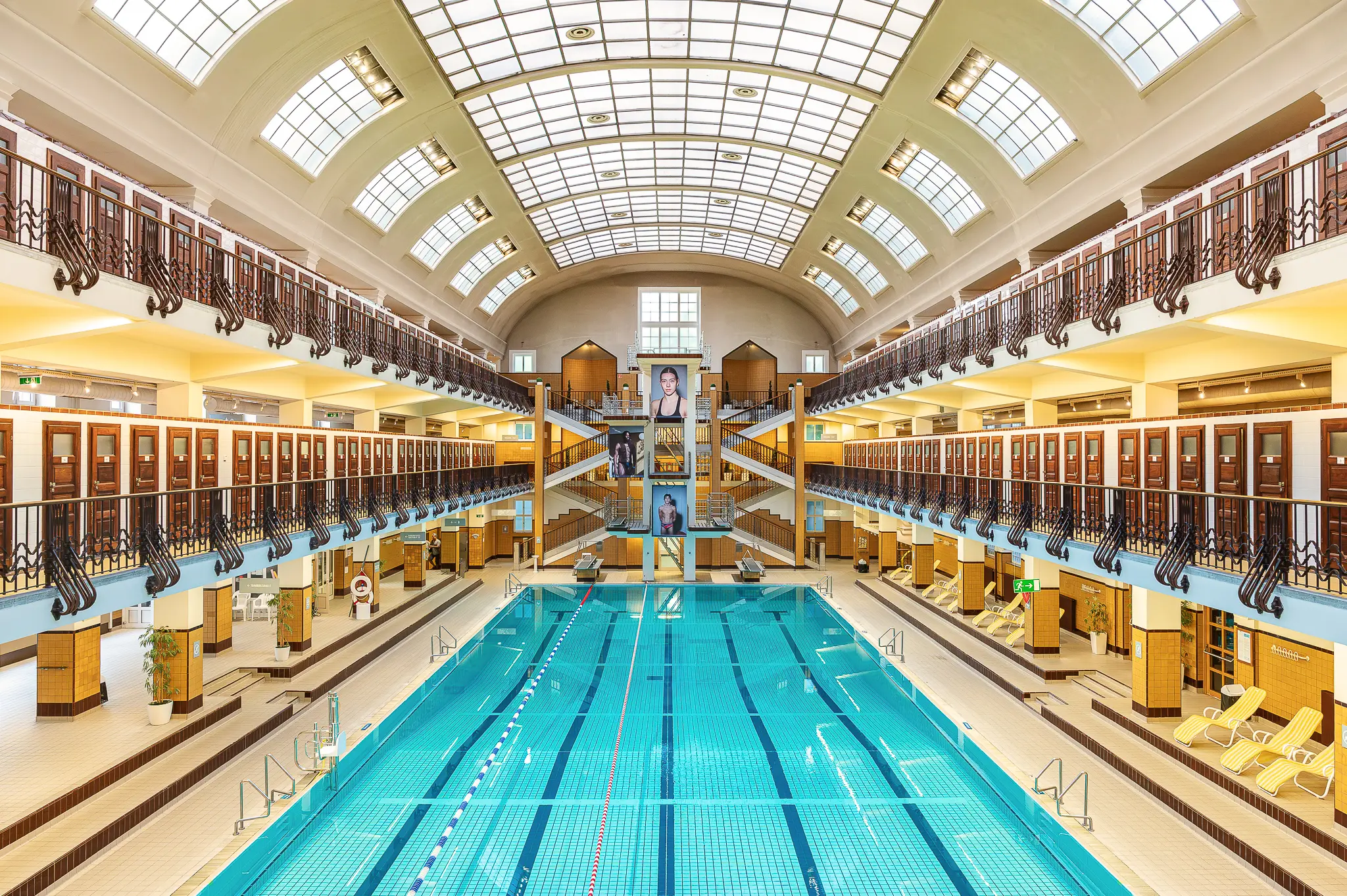 Amalienbad Main Pool Hall with Art Deco Galleries and Exhibition Prints The main pool hall of the Amalienbad, Vienna 1100, shows the full-length competition pool beneath a large glazed skylight roof, flanked by two levels of changing cabin galleries with wooden doors and wrought-iron railings. At the far end, large-format exhibition prints from the "100 Jahre Amalienbad" show by Michael Rathmayr for FOTO ARSENAL WIEN are mounted on the central staircase structure. The hall was built by the City of Vienna between 1923 and 1926. (Image X of Y)
 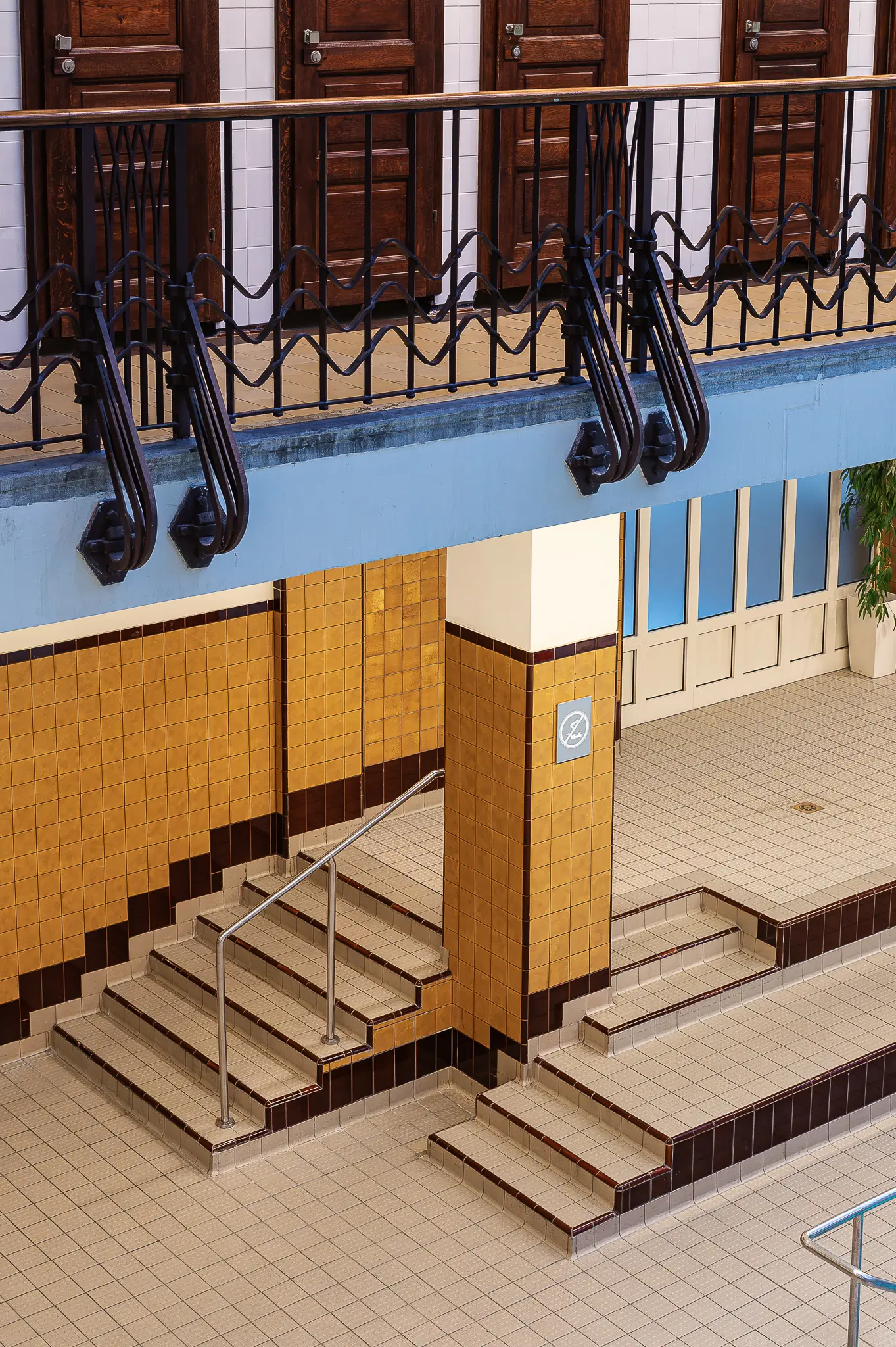 Amalienbad Interior Staircase with Art Deco Tilework and Wrought-Iron Balcony A tiled staircase at Amalienbad, Vienna, leads to a mezzanine level framed by yellow and brown Art Deco wall tiles and white floor tiles. Above, a wrought-iron balcony railing with scrolled detailing runs in front of glazed wooden doors. The Amalienbad was built by the City of Vienna between 1923 and 1926 as part of the Red Vienna social infrastructure program. ()
 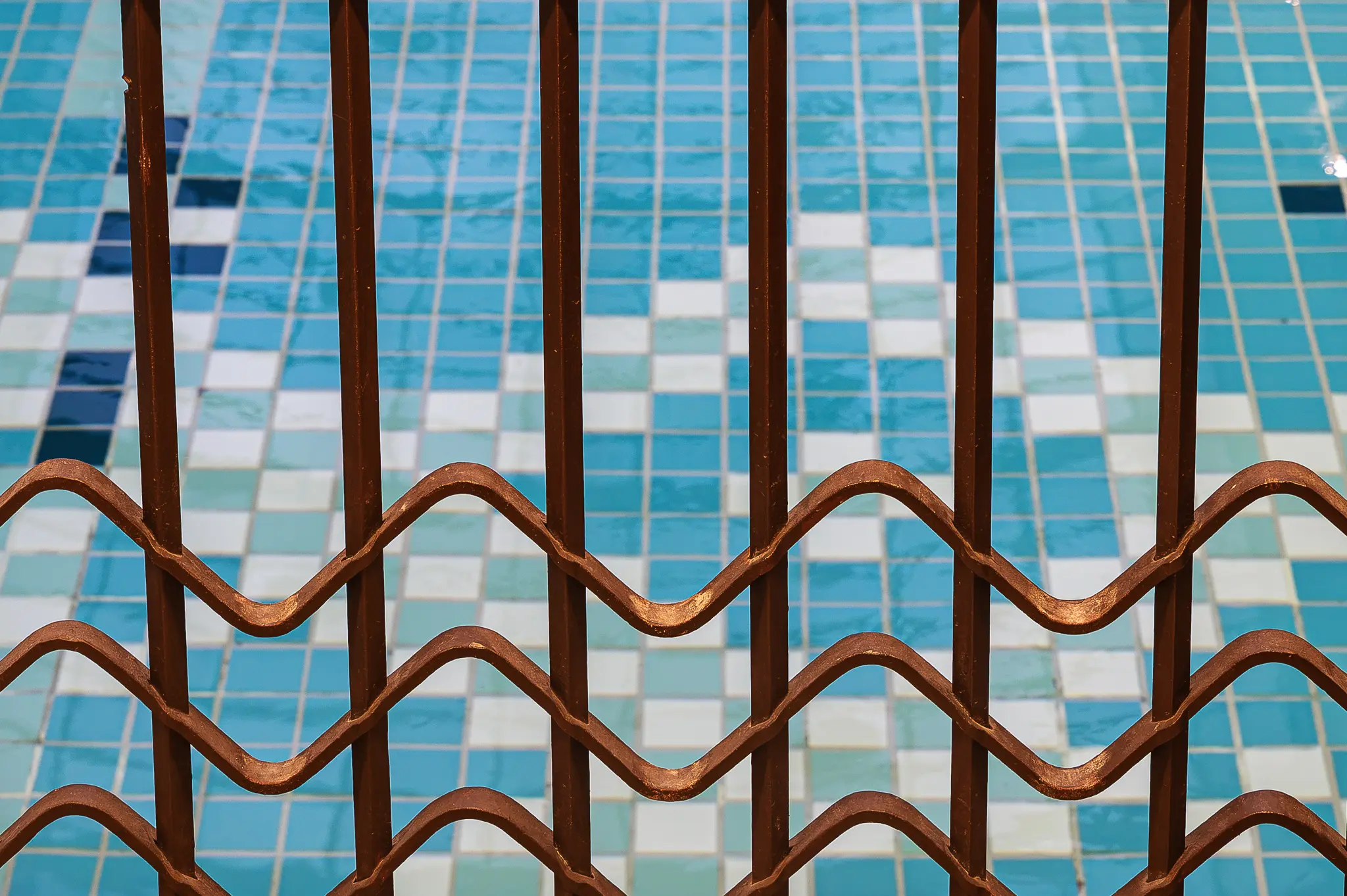 Art Deco Iron Railing and Turquoise Pool Tilework, Amalienbad Vienna A close-up view of an iron railing with wave-pattern metalwork at the Amalienbad, Vienna, set against the pool's turquoise and white checkerboard tile surround. The railing's zigzag profile reflects the Art Deco design language applied throughout the 1923–1926 facility at Reumannplatz 23, 1100 Vienna. ()
 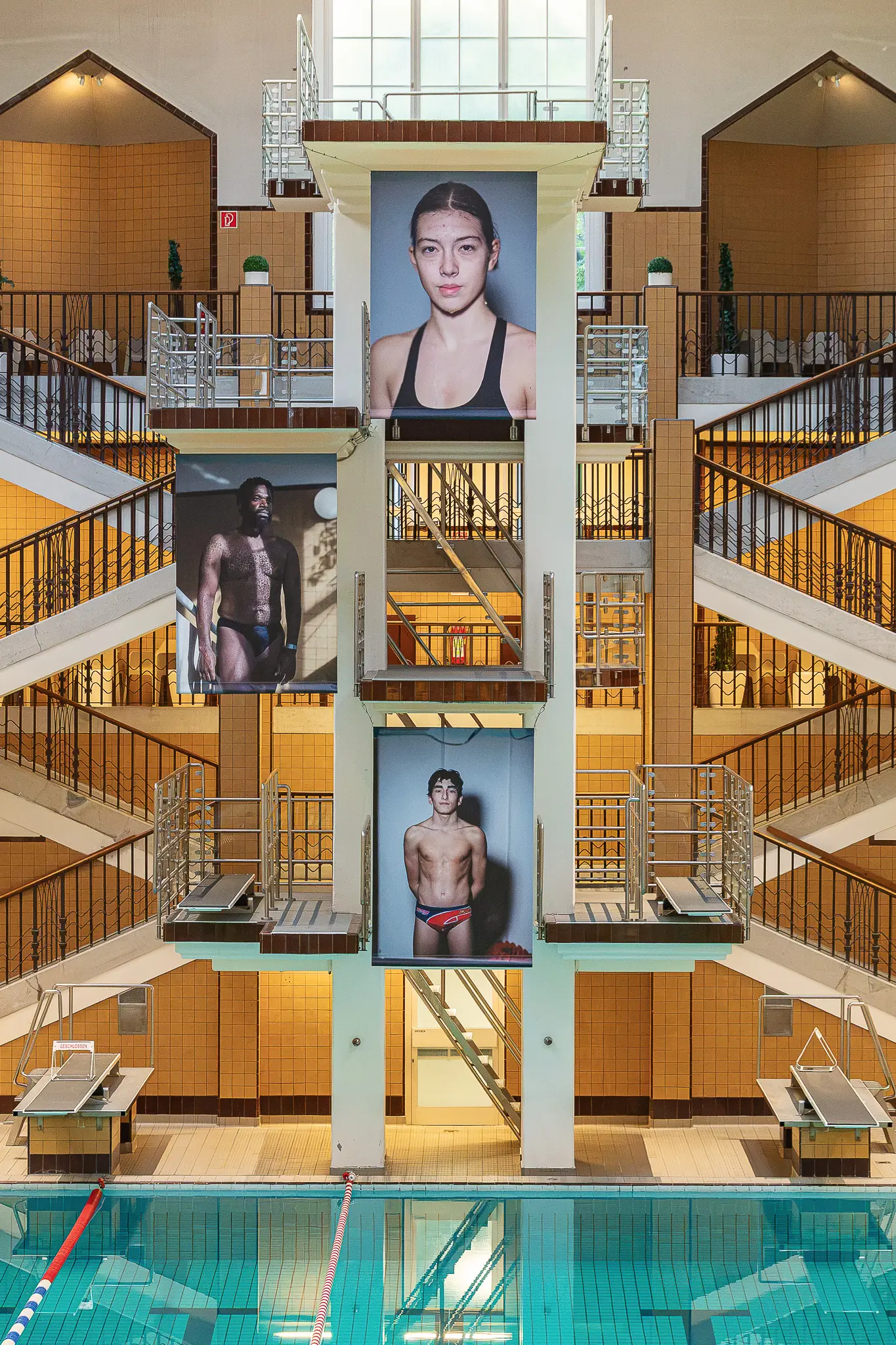 Michael Rathmayr Exhibition Portraits on Amalienbad Diving Tower Three large-format portrait photographs from Michael Rathmayr's exhibition "100 Jahre Amalienbad" (REMEDY / Heilmittel), presented by FOTO ARSENAL WIEN, hang on the central diving tower of the Amalienbad, Vienna 1100. The Art Deco interior shows the main pool, symmetrical multi-level gallery balconies with steel railings, and warm-toned tiled walls characteristic of the 1923–1926 Red Vienna social construction. ()
 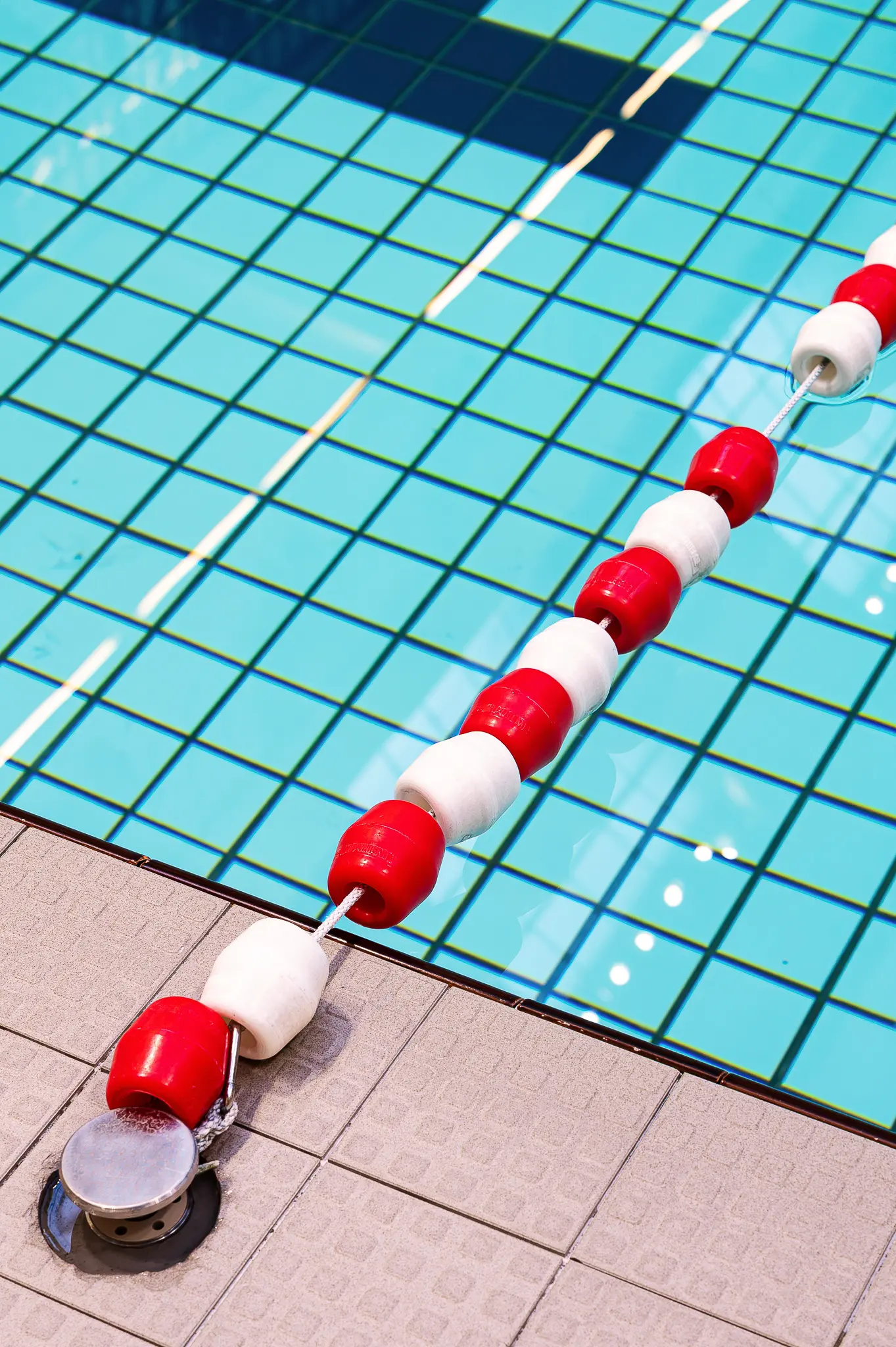 Lane Divider and Turquoise Tile at Amalienbad Main Pool A red-and-white lane divider floats at the edge of the main pool at Amalienbad, Vienna, anchored to the pool deck with a metal clip. The turquoise ceramic tilework lining the pool floor and walls is characteristic of the building's Art Deco interior, constructed by the City of Vienna between 1923 and 1926. (Image X of Y)
 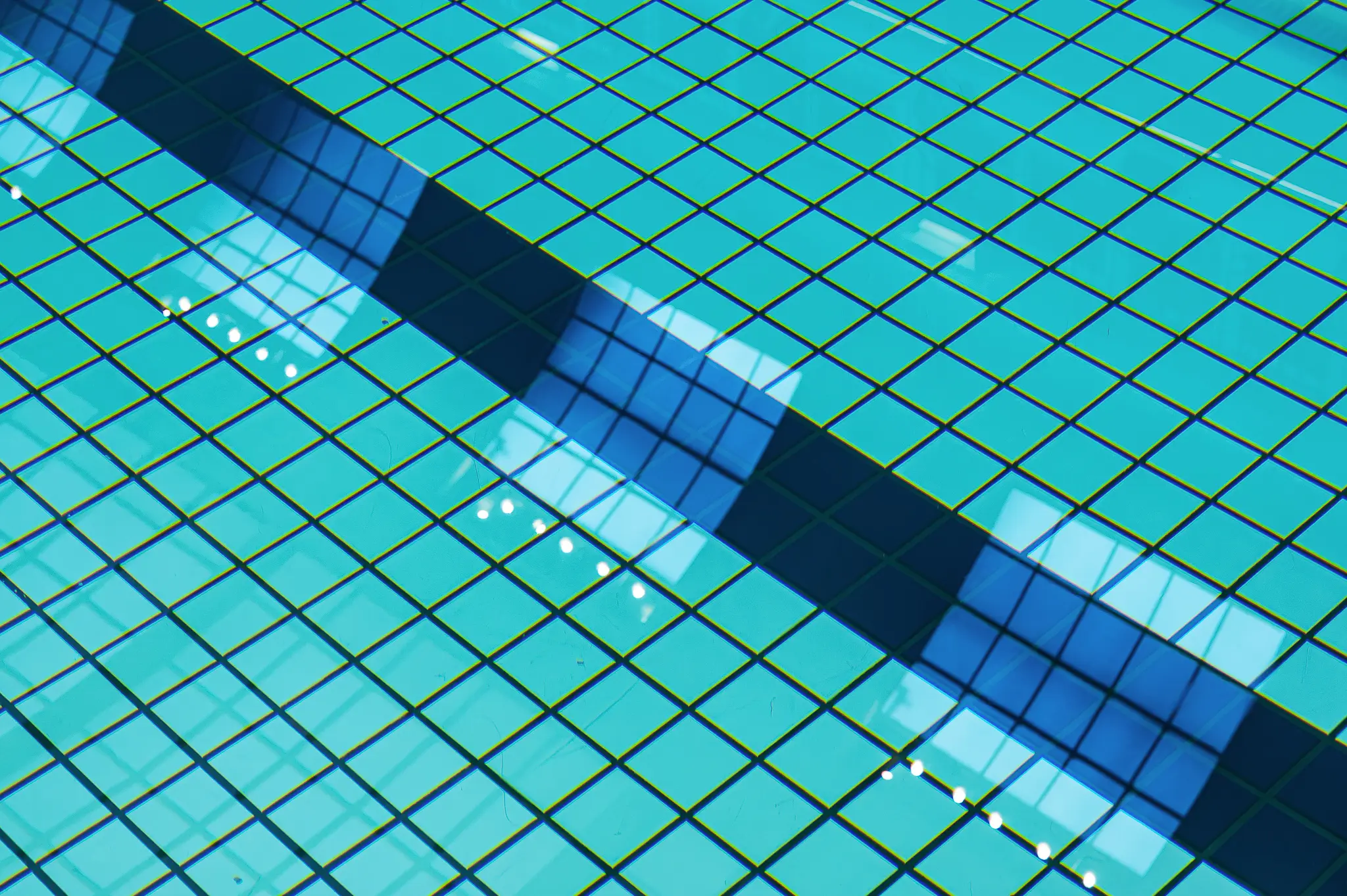 Turquoise Pool Tiles with Lane Divider Shadow, Amalienbad Vienna The floor of the main pool at Amalienbad, Vienna 1100, is covered in characteristic turquoise Art Deco tilework, seen here through the water with a lane-divider shadow cutting diagonally across the surface. Amalienbad was constructed by the City of Vienna between 1923 and 1926 as a Red Vienna municipal welfare project. (Image X of Y)
 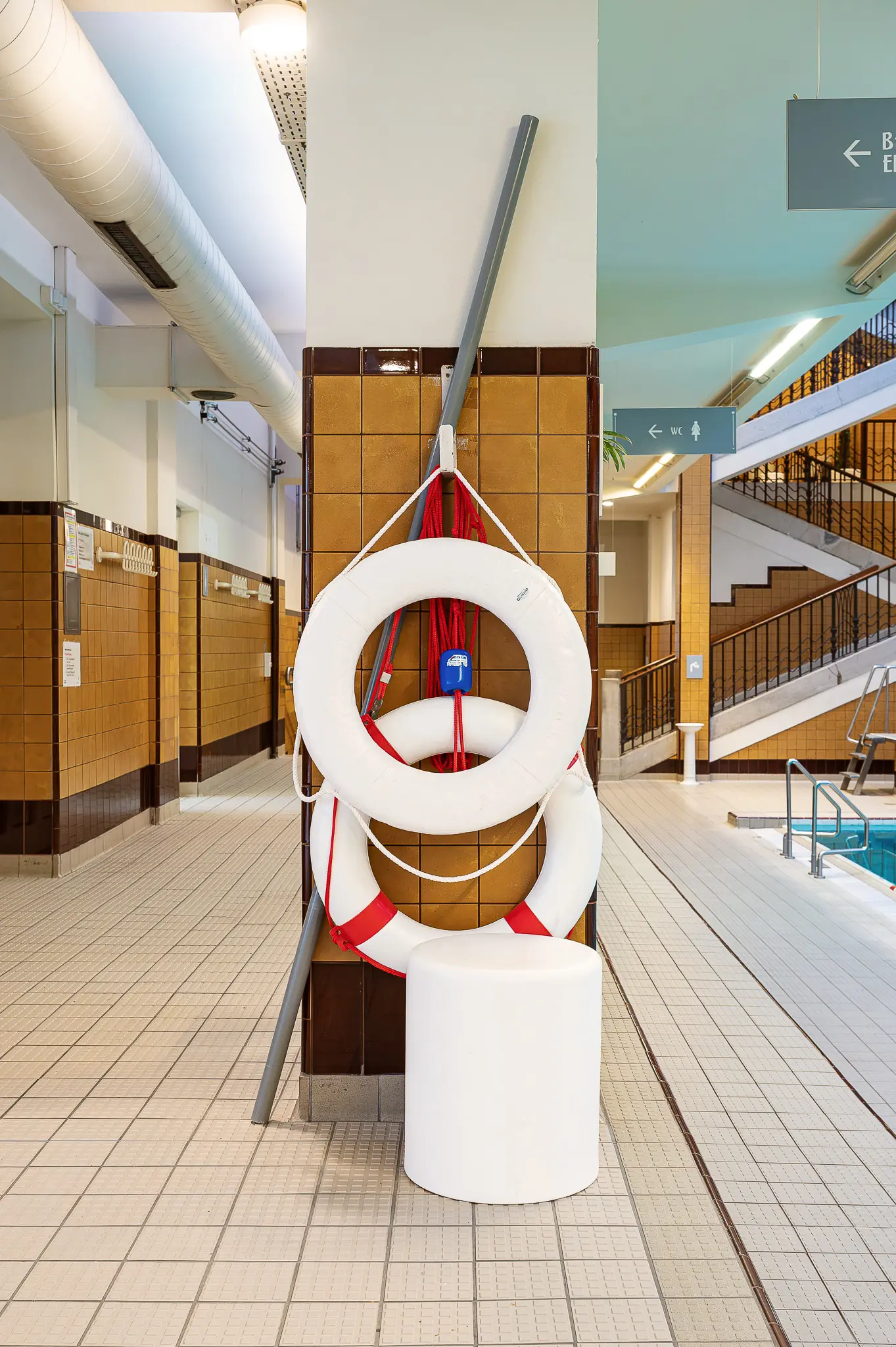 Life Rings and Poolside Interior of the Amalienbad, Vienna Two white life rings with red straps hang from a pillar clad in brown Art Deco tilework at the Amalienbad, 1100 Vienna. The main pool is visible to the right, with the interior staircase and gallery level in the background. The tile and concrete construction reflects the 1923–1926 Red Vienna civic architecture.
 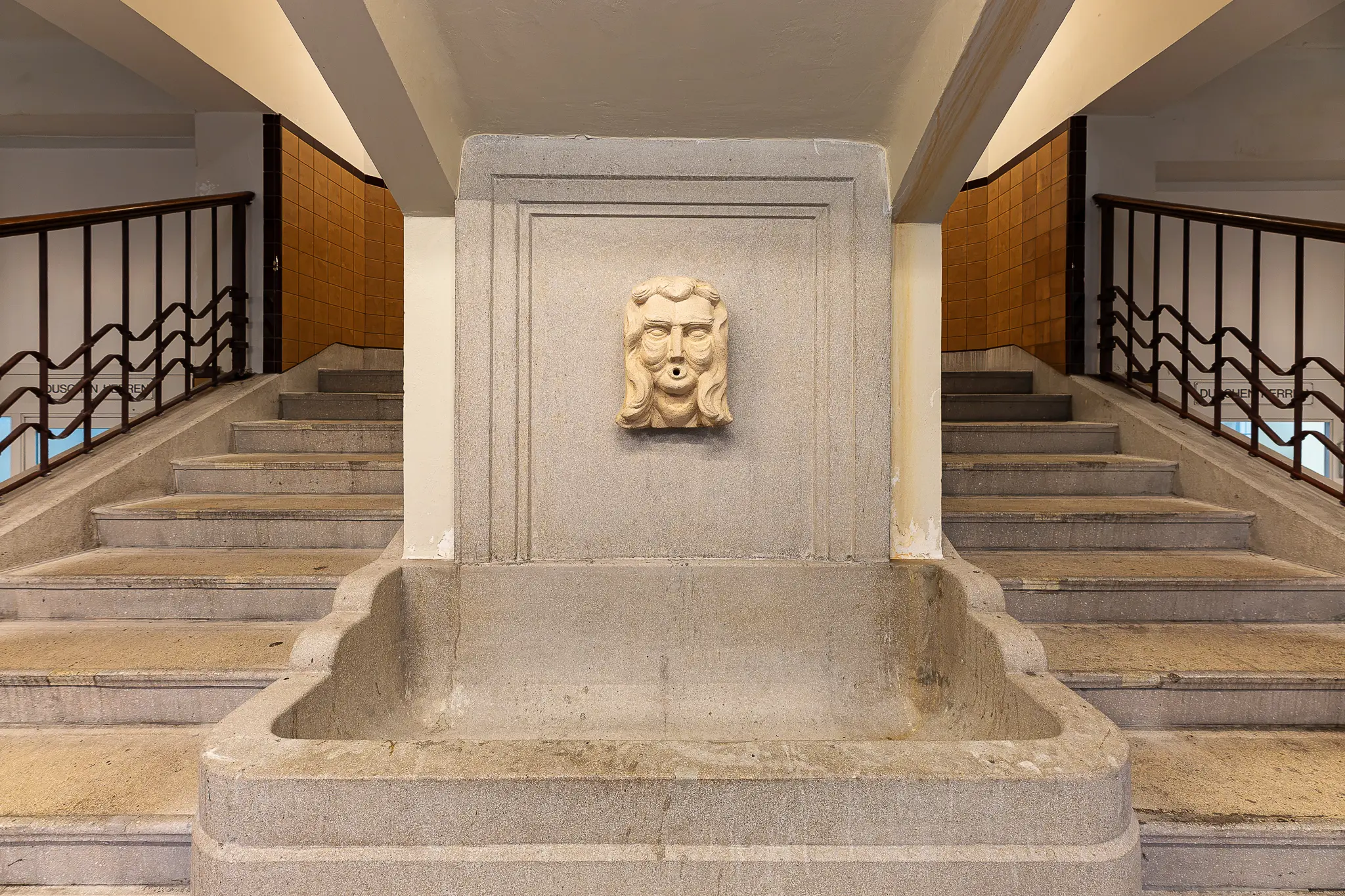 Stone fountain mask at the foot of the Amalienbad staircase, Vienna A stone drinking fountain at the Amalienbad, Reumannplatz 23, 1100 Vienna, features a sculpted face mask as its spout, flanked by two symmetrical staircases with Art Deco wrought-iron railings. The fountain is set into a stone basin in the landing between the two stair flights. The Amalienbad was built by the City of Vienna between 1923 and 1926 as a Red Vienna public welfare project. ()
 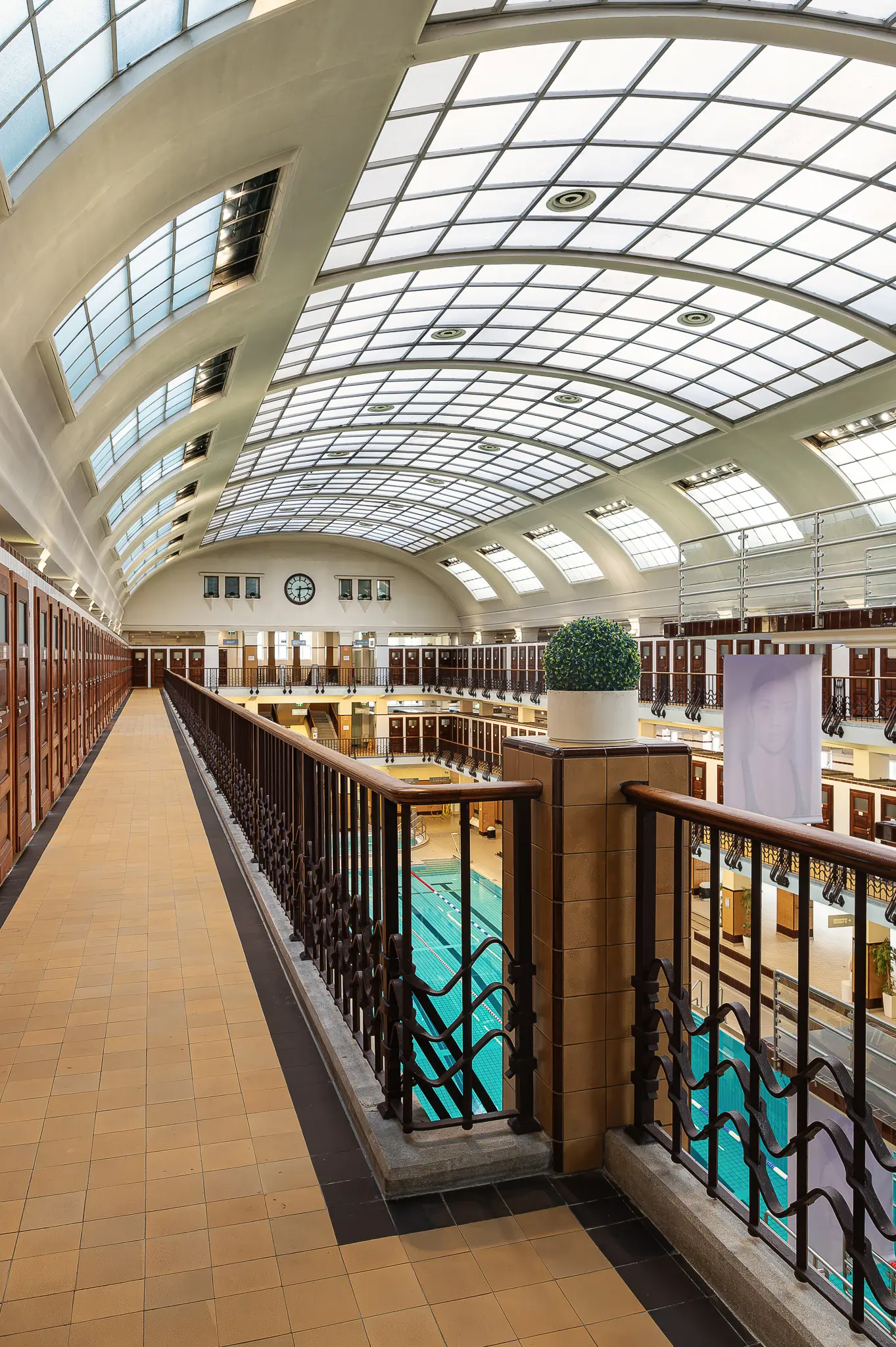 Amalienbad Upper Gallery Overlooking Main Pool and Skylight Roof The upper gallery of the Amalienbad, Vienna, runs along a wrought-iron balustrade overlooking the turquoise main pool below. Glazed wooden changing room doors line the gallery wall, and the characteristic barrel-vaulted skylight roof spans the full length of the hall. The Amalienbad was constructed by the City of Vienna between 1923 and 1926 as part of the Red Vienna social housing and welfare programme. (Image X of Y)
 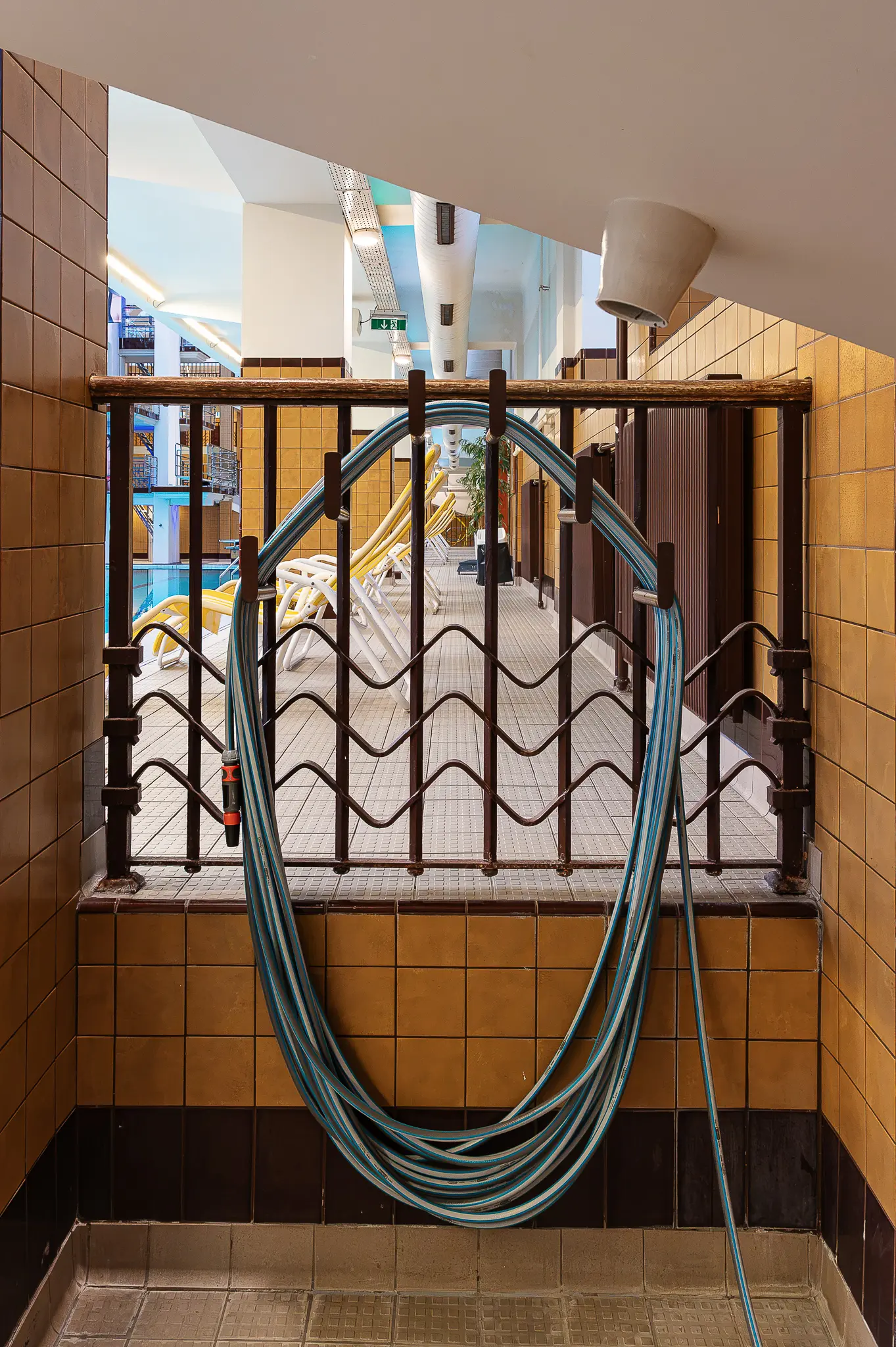 Garden Hose Coiled on Art Deco Iron Railing, Amalienbad Pool Deck Beyond A blue garden hose hangs coiled on a wrought-iron railing with a decorative wave pattern at the Amalienbad, Vienna. Yellow-ochre ceramic wall tiles line the interior recess, while the main pool area with its turquoise tilework and arched glazing is visible through the opening beyond. The juxtaposition of utilitarian maintenance equipment and the 1923–1926 Art Deco interior documents the bath in active public use. (Image X of Y)
 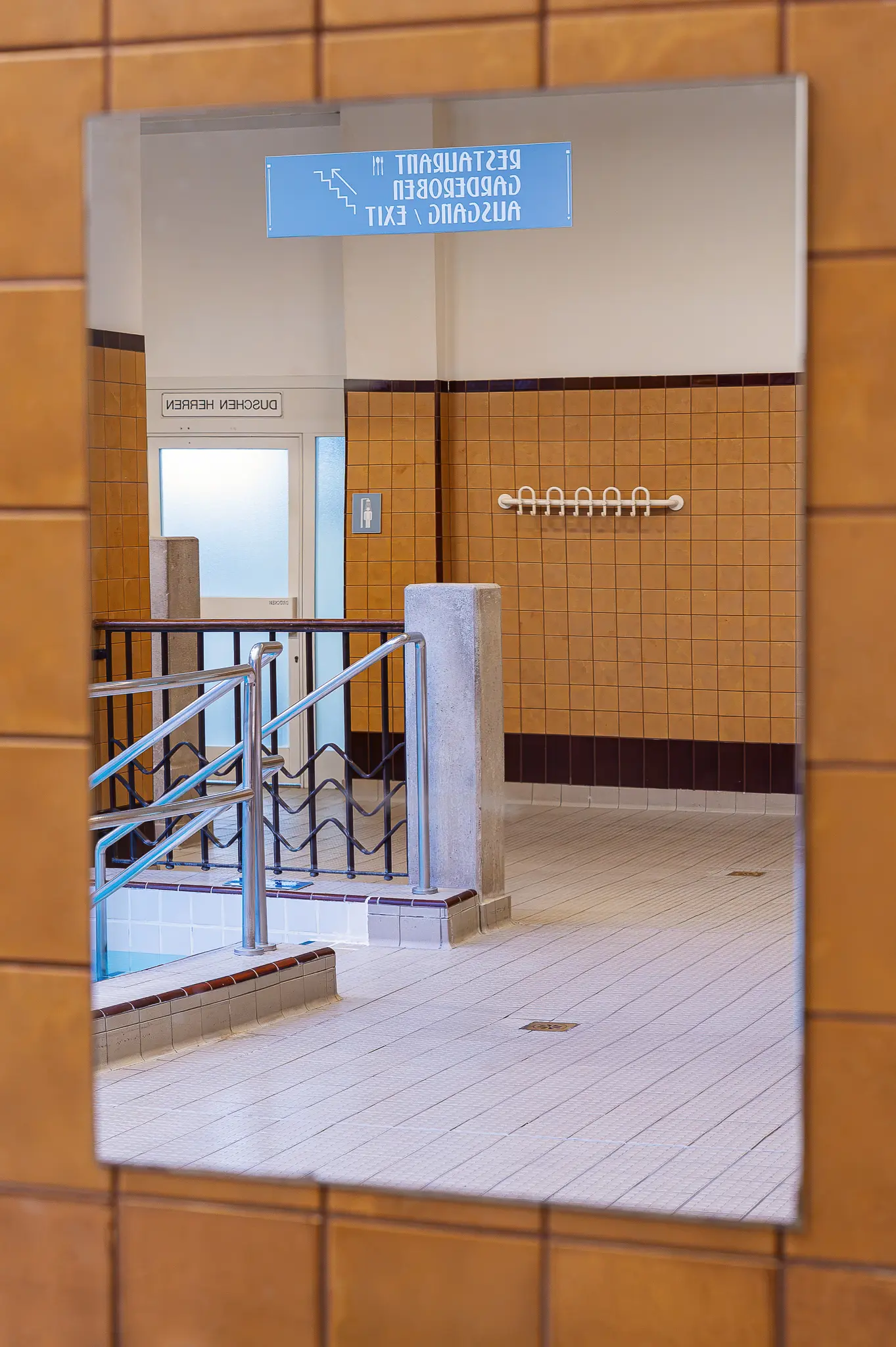 Mirror Reflection of Amalienbad Interior Corridor and Signage A wall-mounted mirror in the Amalienbad, Vienna, reflects a tiled interior corridor featuring a metal staircase railing, yellow ceramic wall tiles, and a blue directional sign indicating "Restaurant, Garderobe, Ausgang" in mirror-reversed text. A row of coat hooks is visible on the tiled wall in the reflection. ()
 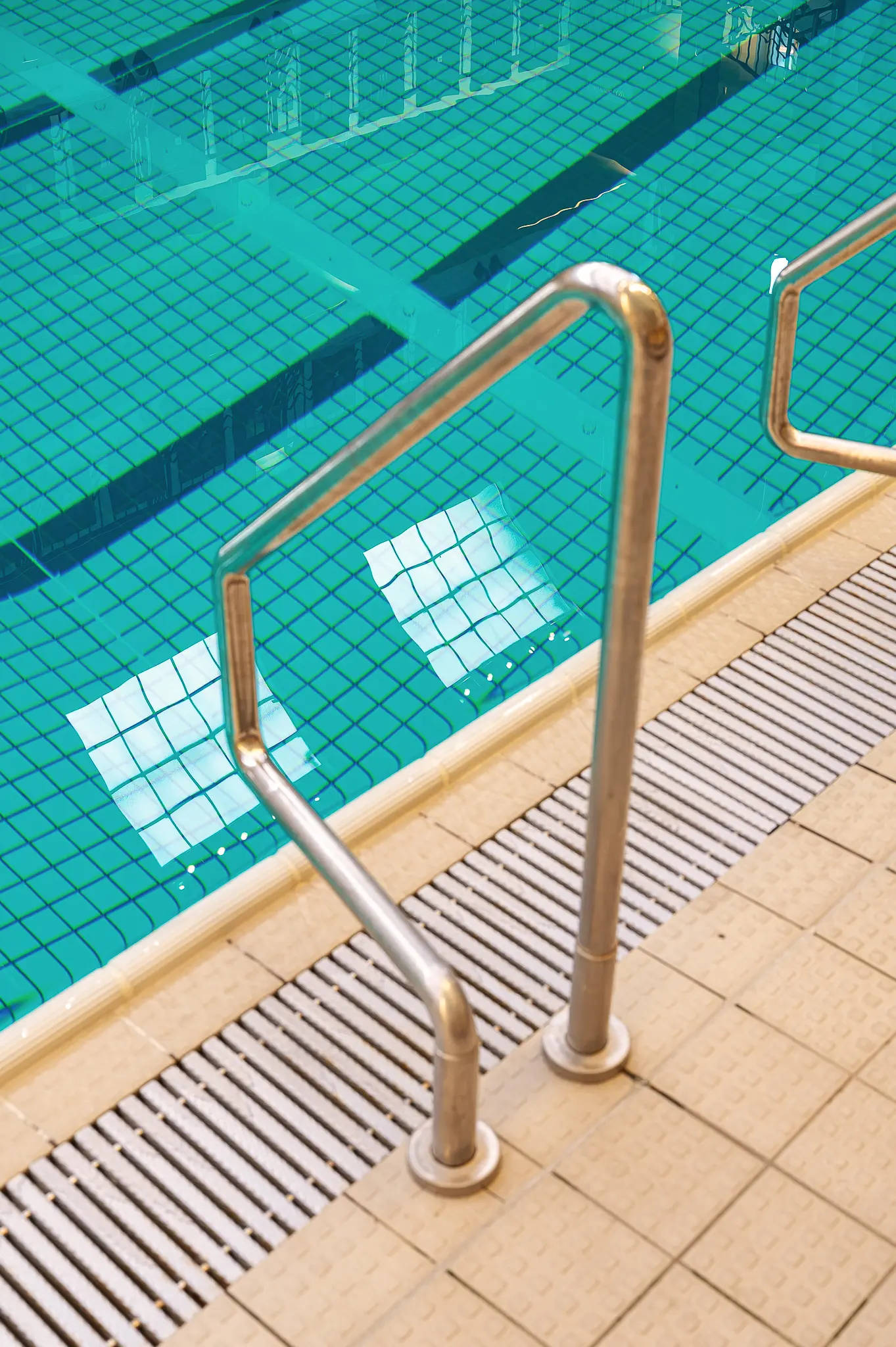 Pool Entry Handrail and Turquoise Tiled Pool, Amalienbad Vienna A stainless steel entry handrail stands at the edge of the main pool at Amalienbad, Vienna, with a floor-level drainage gutter and beige pool surround tiles visible in the foreground. The pool water reflects light across the characteristic turquoise tilework, a defining material feature of the 1923–1926 Art Deco municipal bath built by the City of Vienna as part of the Red Vienna social welfare programme.
 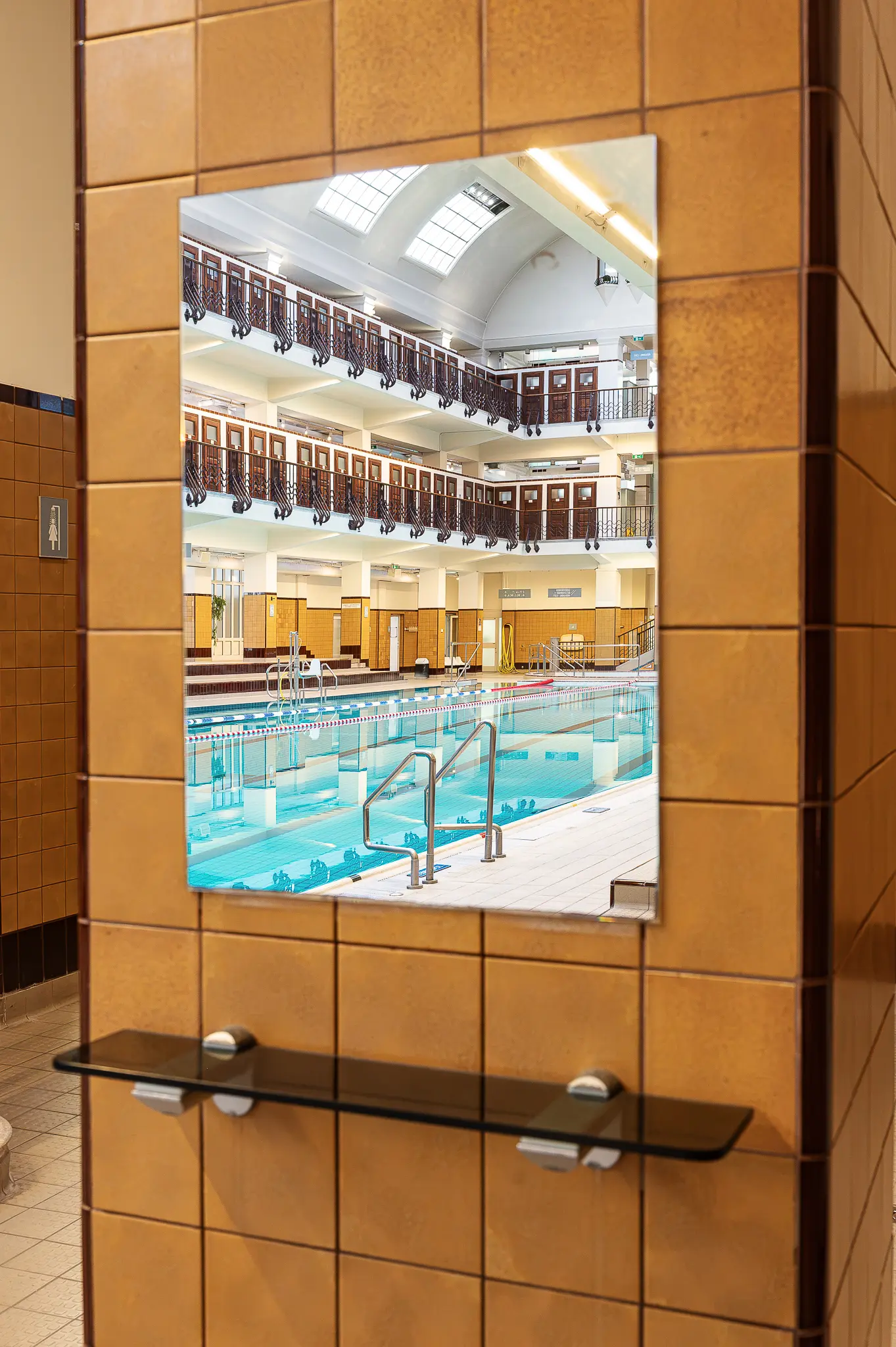 Exhibition Print Showing Amalienbad Main Pool Hung on Tiled Wall A framed exhibition photograph by Michael Rathmayr, part of the "100 Jahre Amalienbad" show for FOTO ARSENAL WIEN, is mounted on the warm ochre-tiled wall of the Amalienbad itself. The print depicts the main pool hall of the Amalienbad, Vienna, with its tiered changing galleries and skylit roof, creating a self-referential display of the 1923–1926 Art Deco bath within its own interior.
 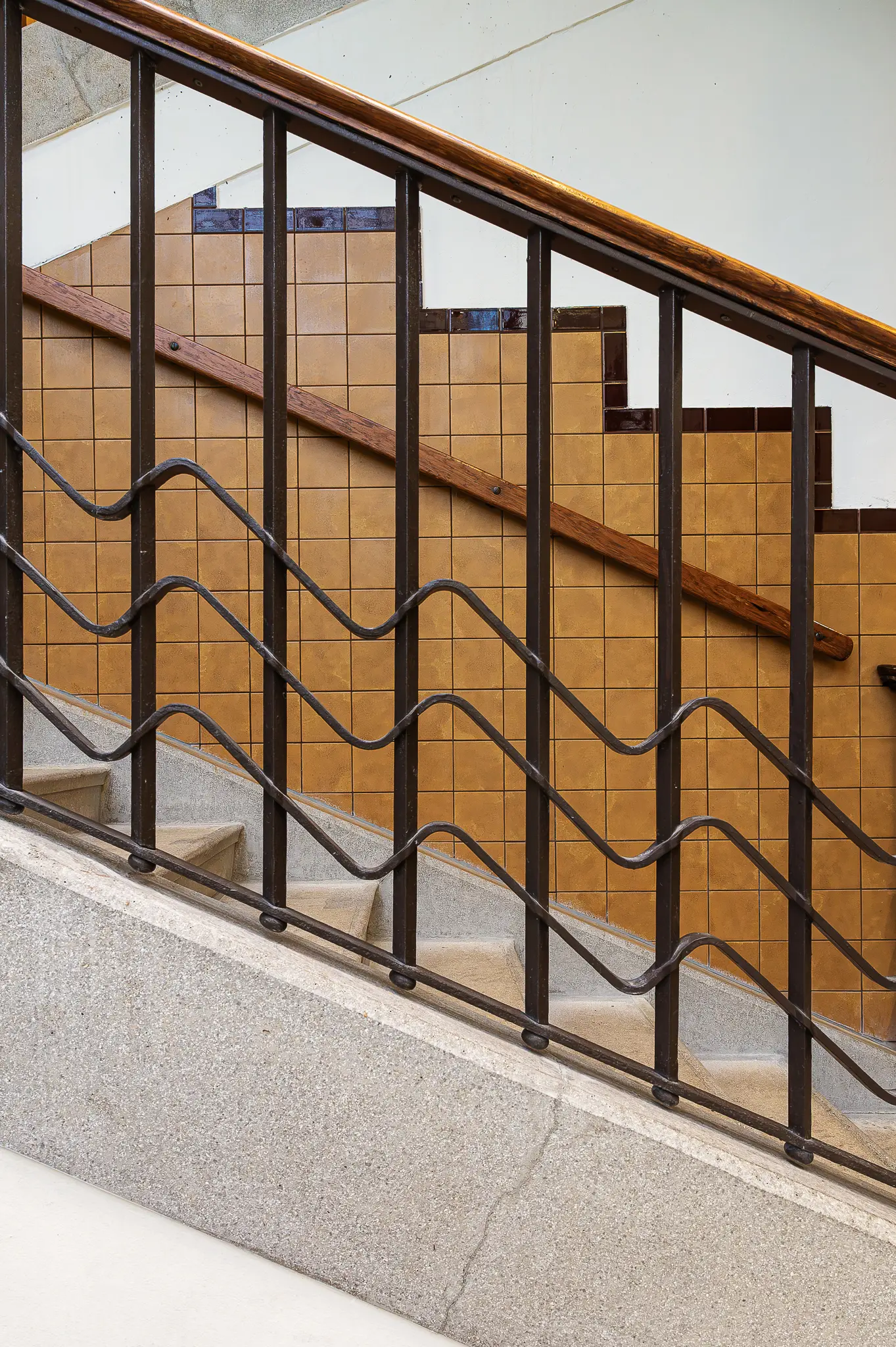 Art Deco Staircase Railing with Wave Ironwork, Amalienbad Vienna A staircase interior at the Amalienbad, Vienna 1100, shows a wrought-iron railing with repeating wave-form balusters alongside ochre ceramic wall tiles and a wooden handrail. Blue accent tiles are visible at the upper landing. The staircase is part of the Art Deco building completed in 1926 by the City of Vienna. ()
 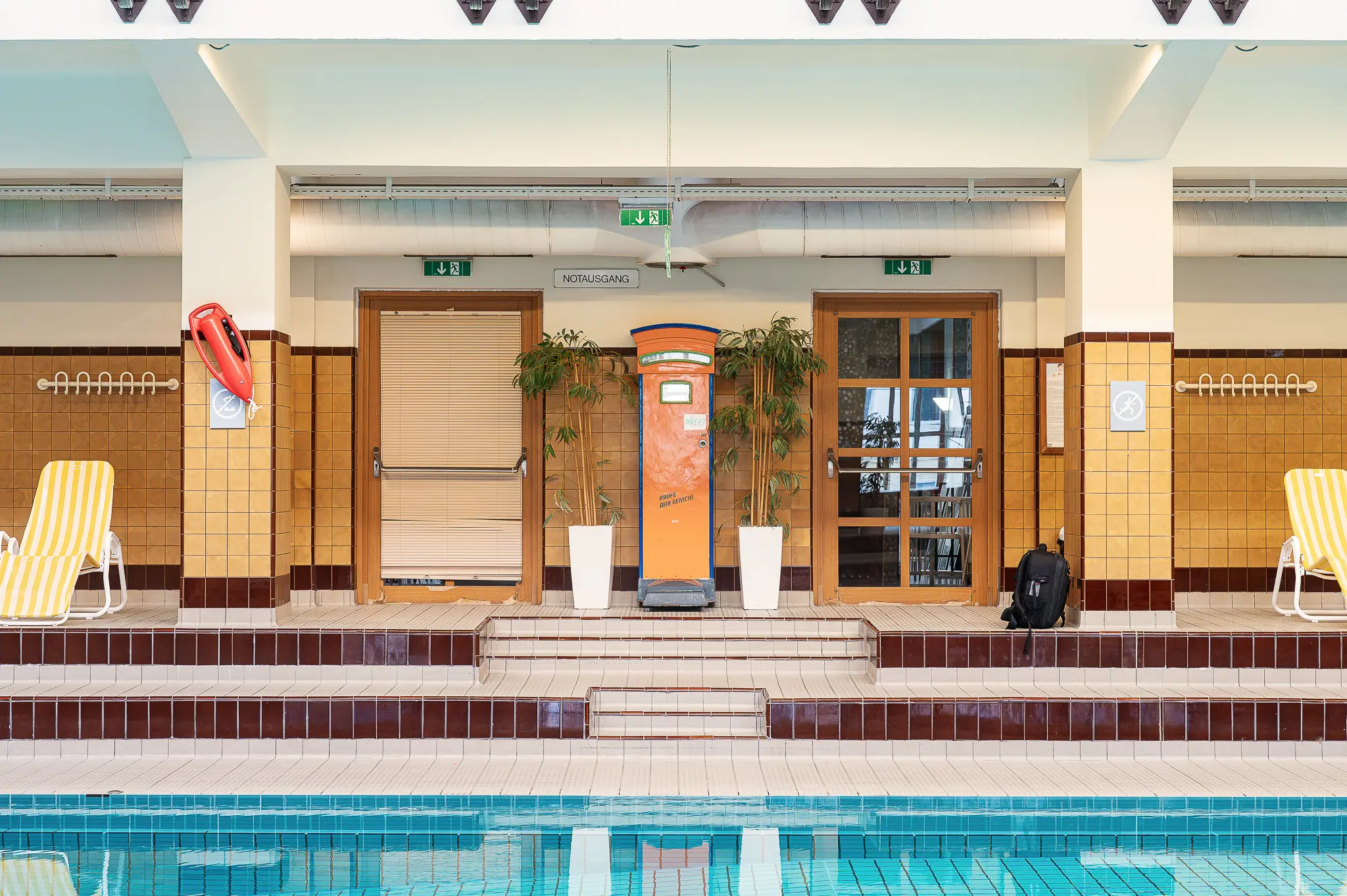 Amalienbad Pool Deck with Art Deco Tilework and Notausgang Doors The poolside level of the Amalienbad, Vienna 1100, shows the original Art Deco ceramic wall tiles in yellow and dark red-brown bands framing two glazed wooden doors, one labelled "Notausgang." Yellow-and-white striped loungers flank the poolside steps, and a vintage orange vending machine stands between two potted plants on the tiled landing. The turquoise water of the main pool fills the foreground. (Image X of Y)
 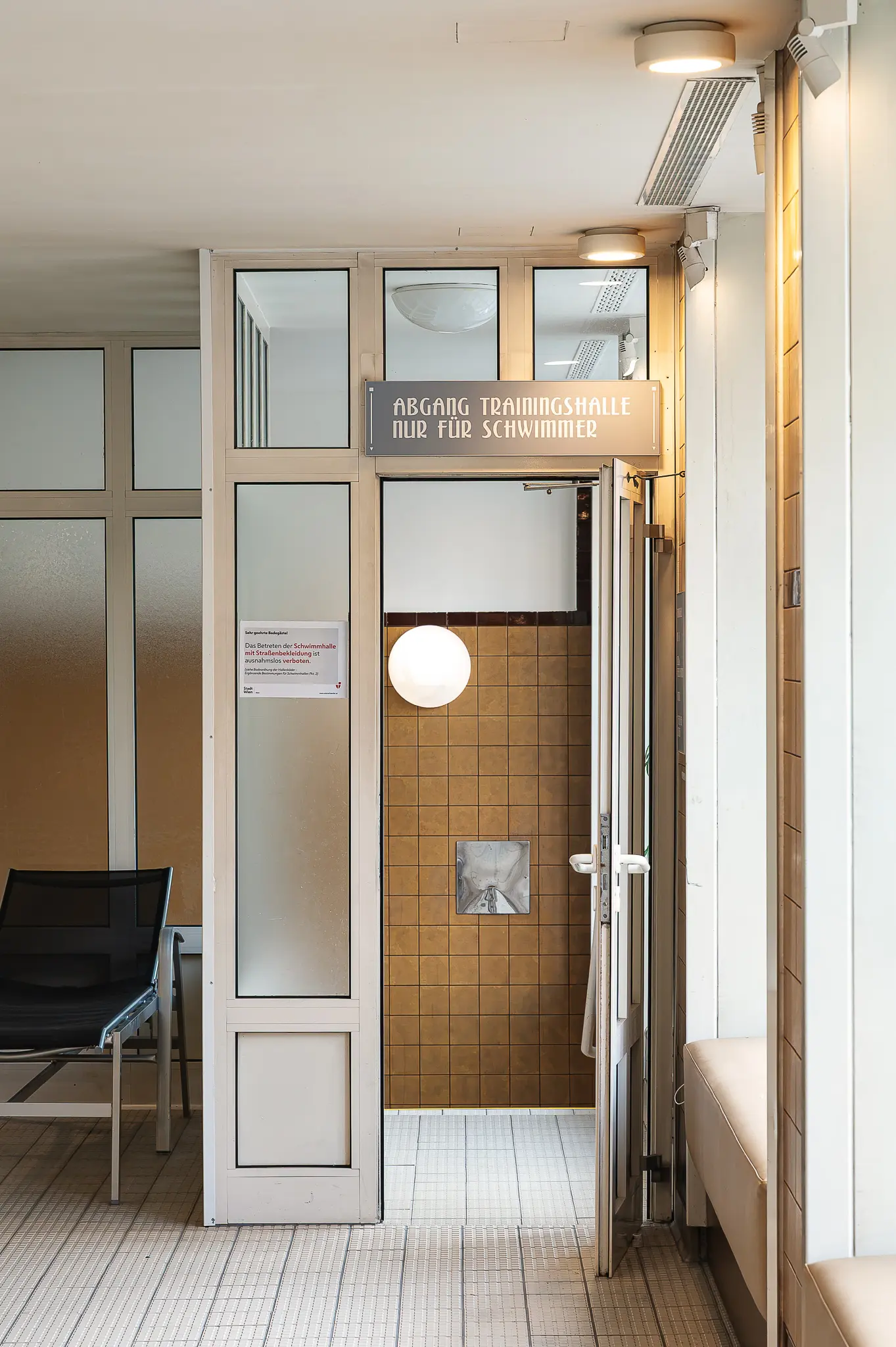 Glazed Door to Training Pool Corridor, Amalienbad Vienna A glazed wooden door at the Amalienbad stands open to reveal a corridor with ochre-yellow tilework and a spherical pendant light. A sign above the door reads "Abgang Trainingshalle — Nur für Schwimmer" (Exit Training Hall — Swimmers Only). A folding chair is positioned beside the door frame in the poolside area.
 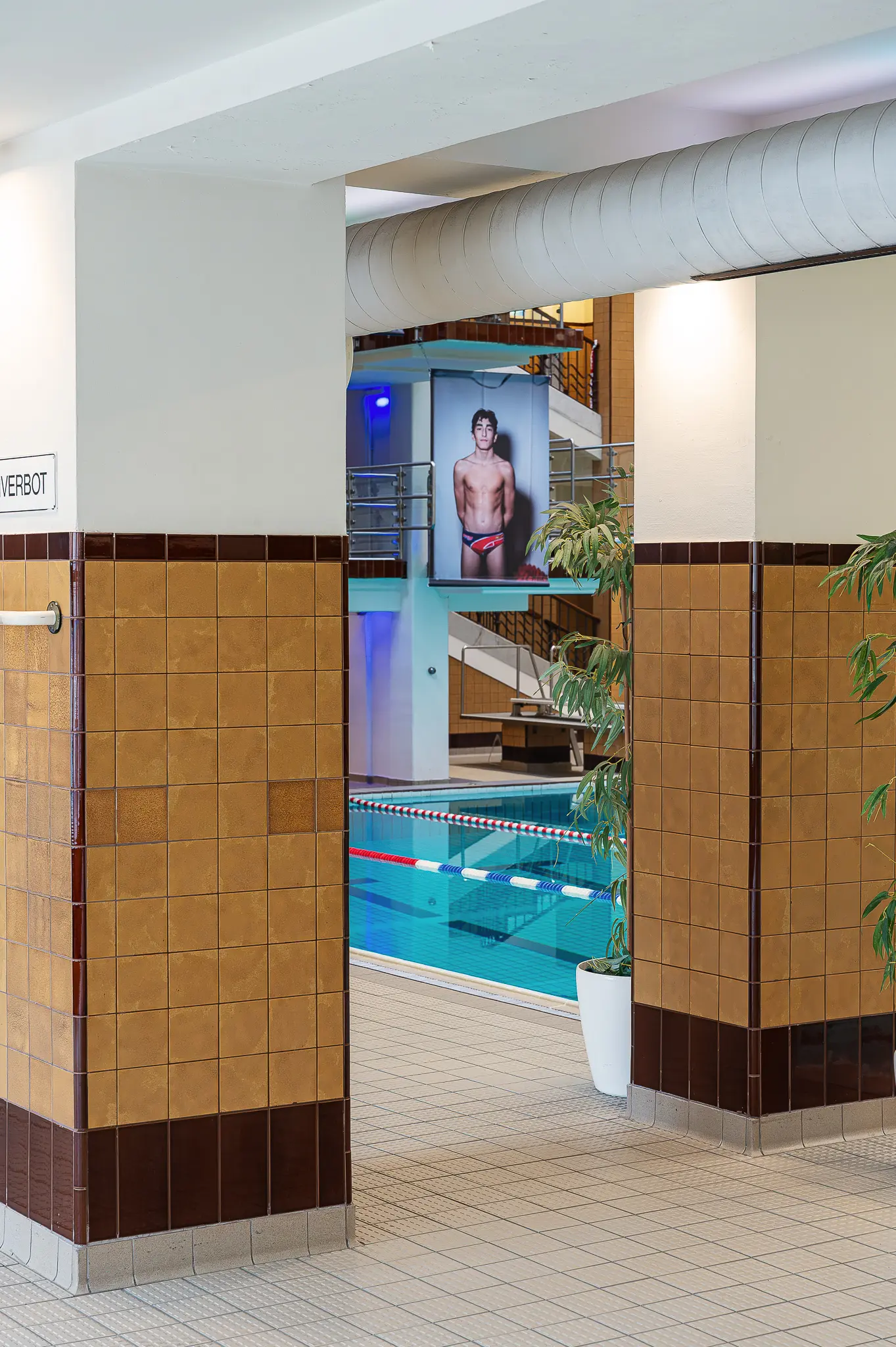 Pool Entrance Passage with Exhibition Portrait, Amalienbad Vienna A tiled passageway at Amalienbad, Vienna, frames a view into the main pool hall, where the water lanes and a potted plant are visible in the background. A large-format exhibition photograph from Michael Rathmayr's "100 Jahre Amalienbad" series — depicting a standing male swimmer in red trunks — is mounted on the wall at the far end. The passage columns feature the bath's characteristic warm-toned ceramic tilework with dark brown accent bands. ()
 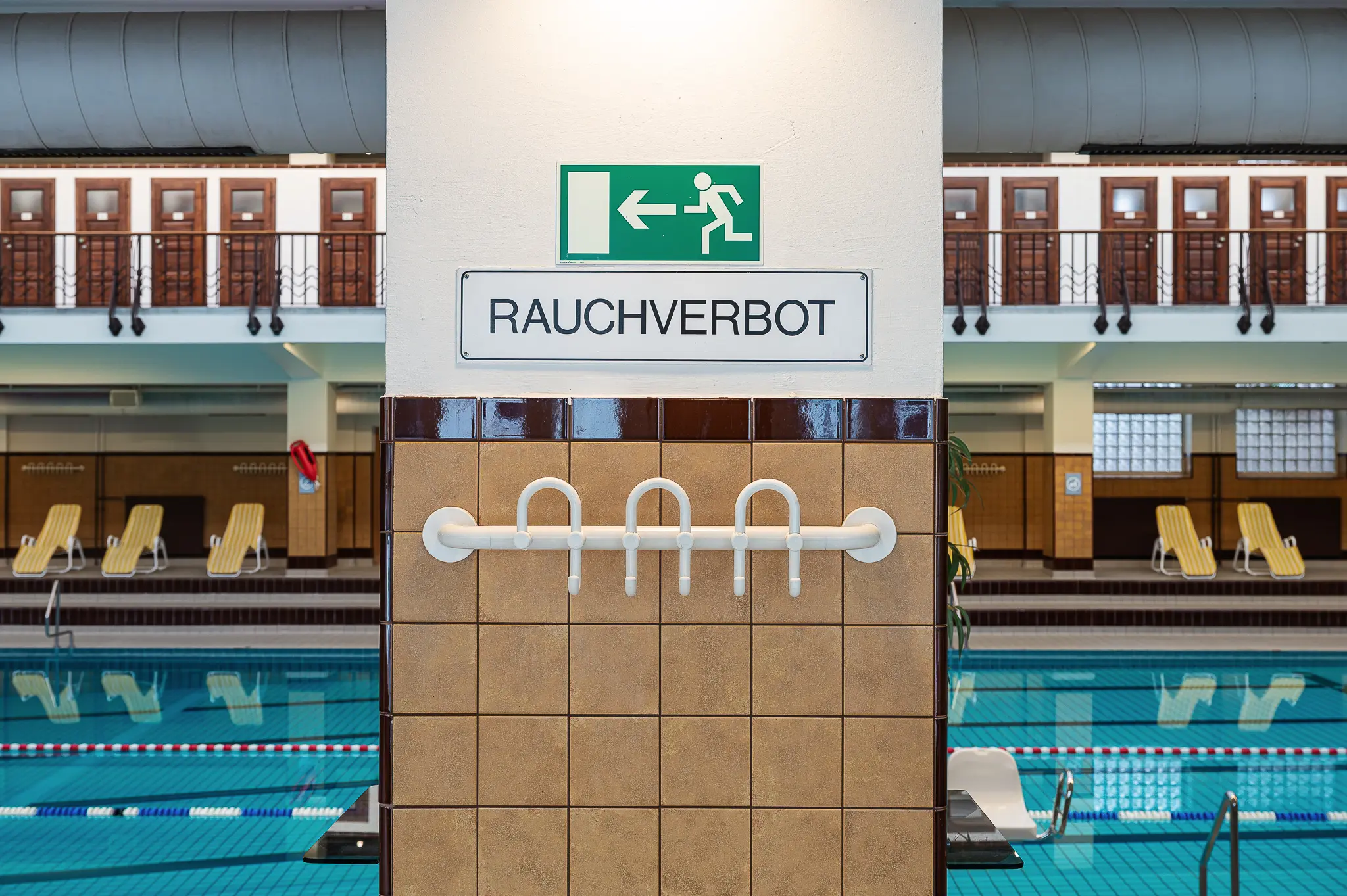 Amalienbad Main Pool Hall with Tiled Pillar and Upper Gallery The main pool hall of the Amalienbad, Vienna 1100, shows a central tiled pillar bearing a "Rauchverbot" (no smoking) sign and an emergency exit marker. The pool with lane ropes is flanked by yellow sun loungers at poolside level, while two tiers of glazed wooden changing cabin doors are visible on the upper gallery balconies. The Art Deco ceramic tilework in beige and dark brown bands covers the pillar surfaces throughout. (Image X of Y)
 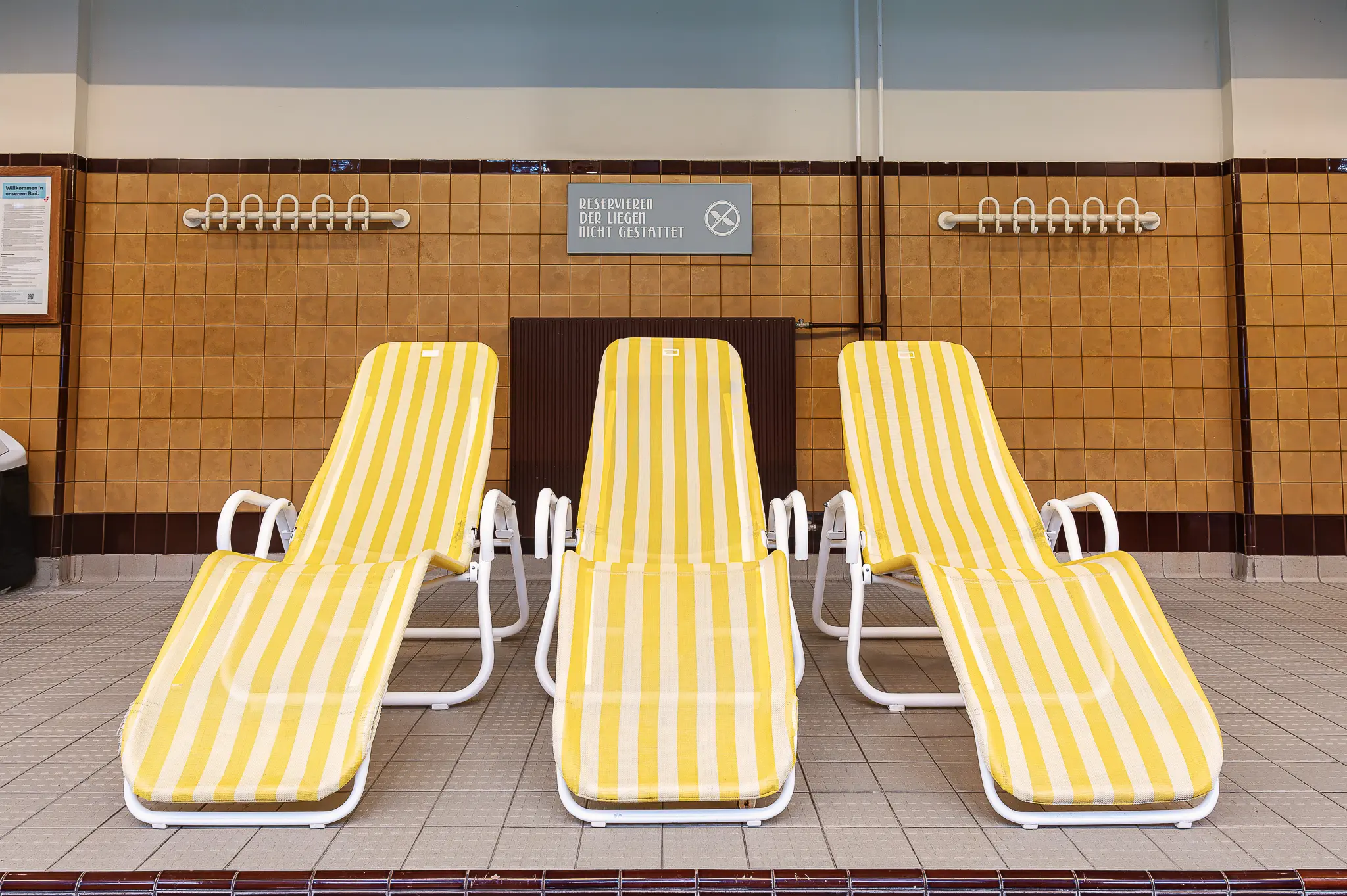 Yellow-striped sun loungers on the poolside terrace of Amalienbad Vienna Three yellow-and-white striped sun loungers stand on the tiled poolside floor of the Amalienbad, 1100 Vienna. The wall behind shows the original terracotta and cream tilework dating to the 1923–1926 construction, with a German-language sign reading "Reservieren der Liegen nicht gestattet" (reserving loungers not permitted). ()
 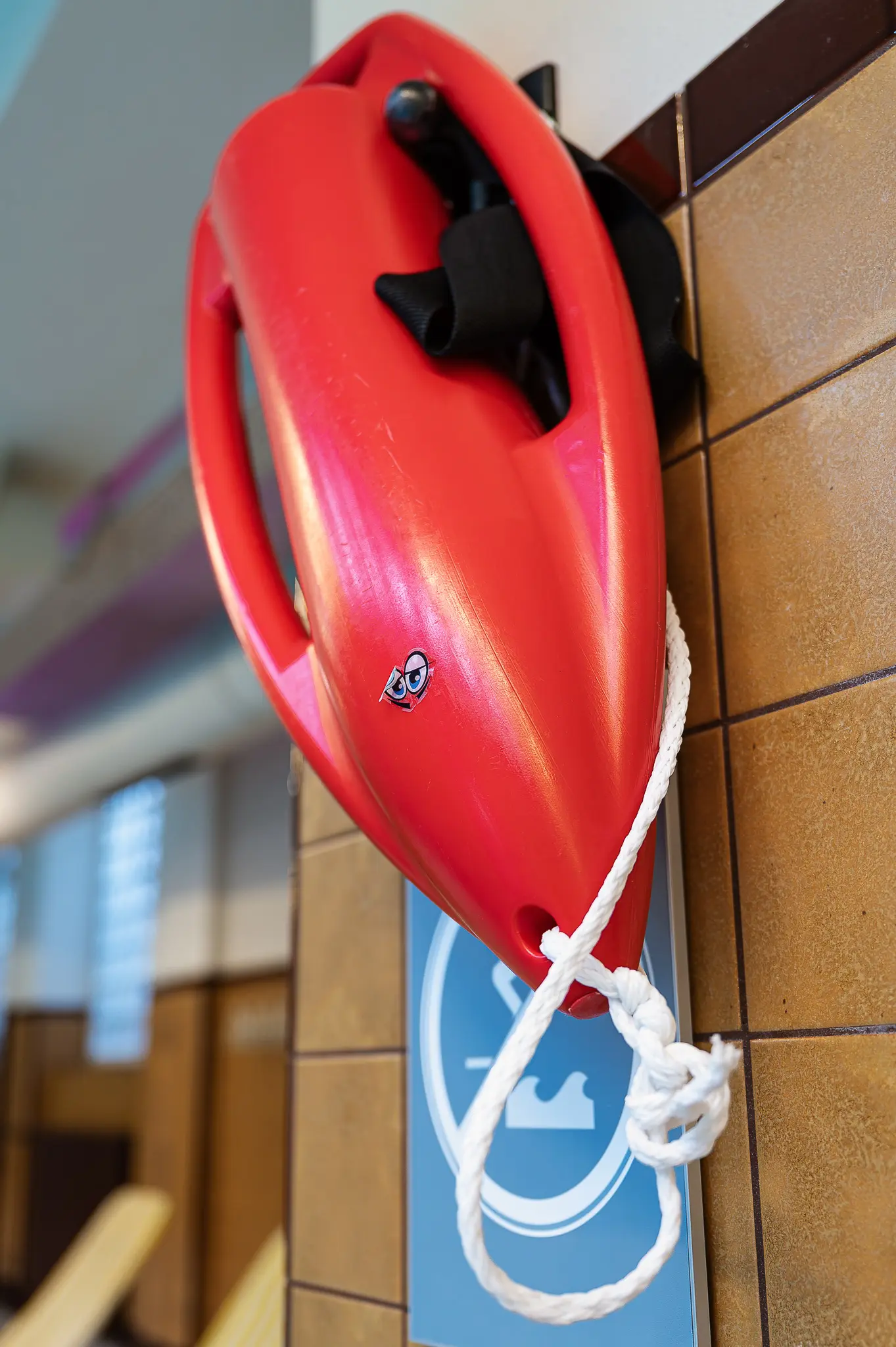 Red rescue buoy mounted on brown-tiled wall at Amalienbad A red rescue buoy with a white rope is mounted on a bracket fixed to the brown ceramic tile wall at Amalienbad, Vienna. A blue safety pictogram sign is visible on the tile below the buoy. The Amalienbad, built 1923–1926 at Reumannplatz 23, 1100 Vienna, remains an operational public swimming facility. (Image X of Y)
 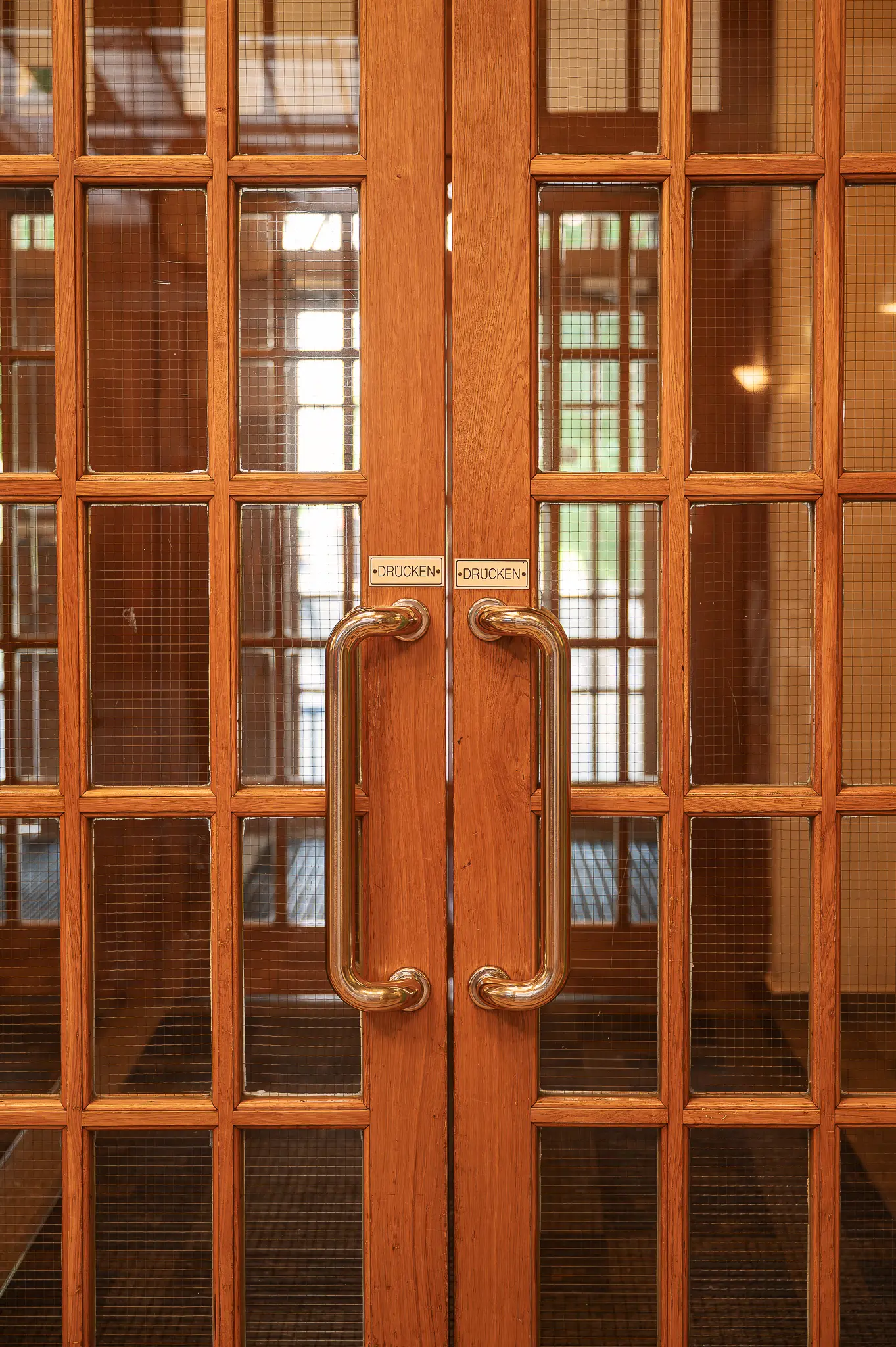 Glazed Wooden Double Doors with Brass Handles, Amalienbad Vienna A pair of original glazed wooden double doors at the Amalienbad, 1100 Vienna, fitted with curved brass pull handles and small label plates reading "DORCCASTAR." The doors are divided into a grid of wire-glass panes set in warm-toned timber frames, a characteristic interior fitting of the 1923–1926 Art Deco public bath built by the City of Vienna. (Image X of Y)
 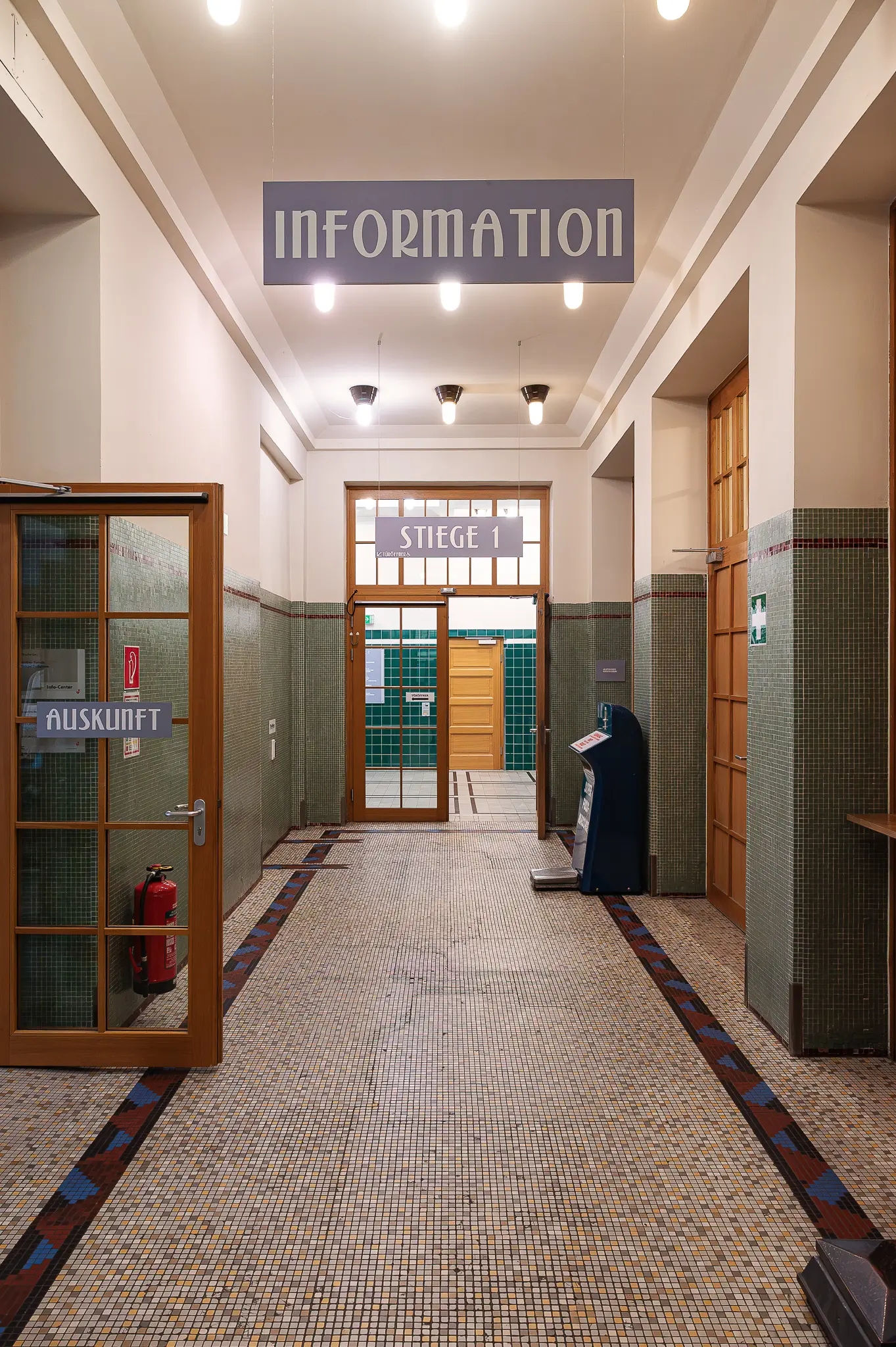 Amalienbad Entry Corridor with Information Desk and Tiled Floor The entrance corridor of the Amalienbad, Vienna, features an original Art Deco mosaic tile floor with geometric border inlay, flanked by a glazed wooden information booth labelled "Auskunft" and an overhead sign reading "Information." A second glazed wooden door at the far end opens toward a staircase landing with green wall tiling. ()
 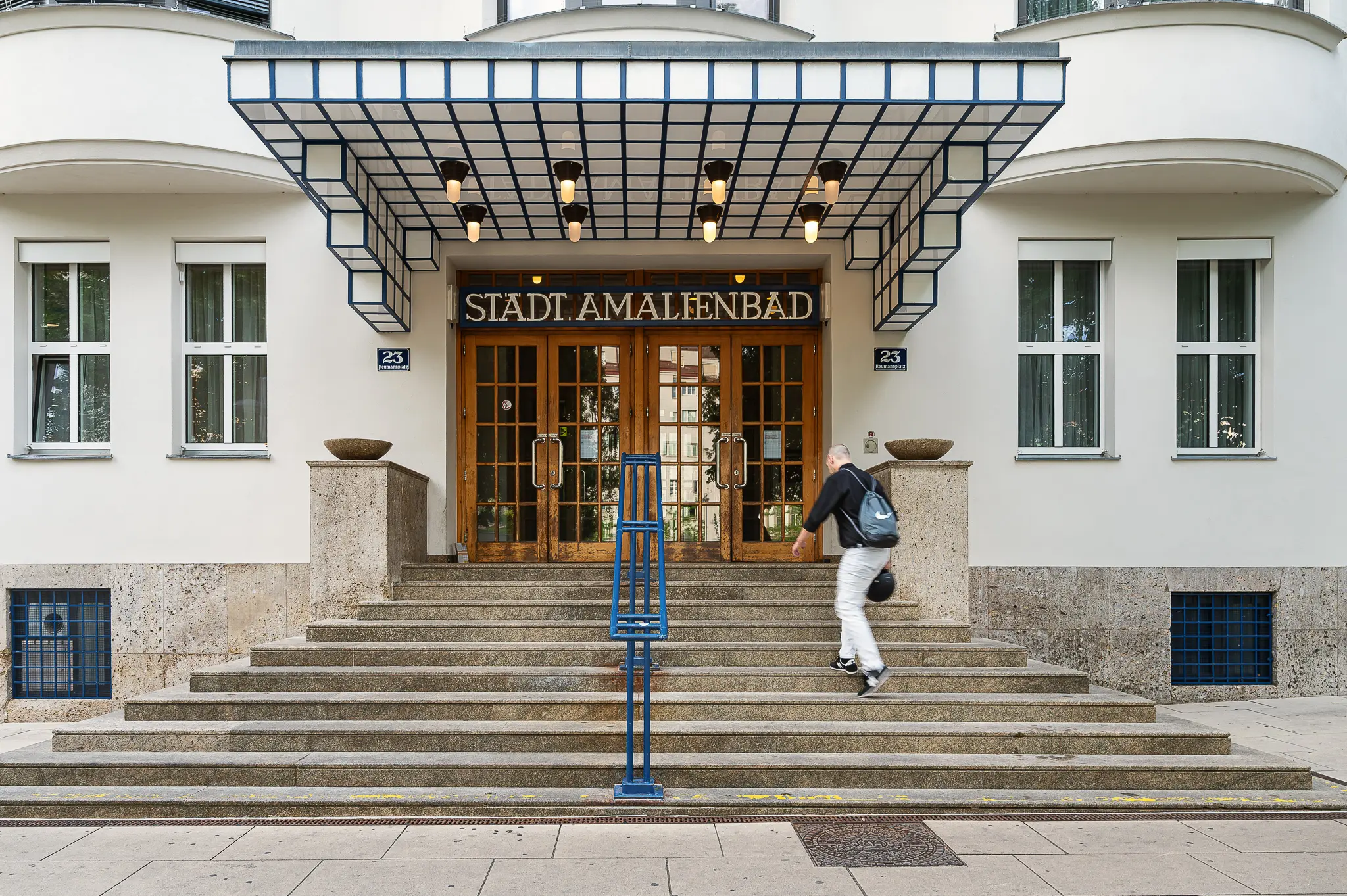 Amalienbad Art Deco Main Entrance, Reumannplatz 23, Vienna The street-level main entrance of the Amalienbad at Reumannplatz 23, 1100 Vienna, showing the glazed wooden entrance doors below a geometric Art Deco canopy with blue-and-white grid detailing and the lettering "Stadt Amalienbad." A visitor ascends the granite entry steps. The building was constructed by the City of Vienna between 1923 and 1926 as part of the Red Vienna social housing and public infrastructure program. (Image X of Y)
 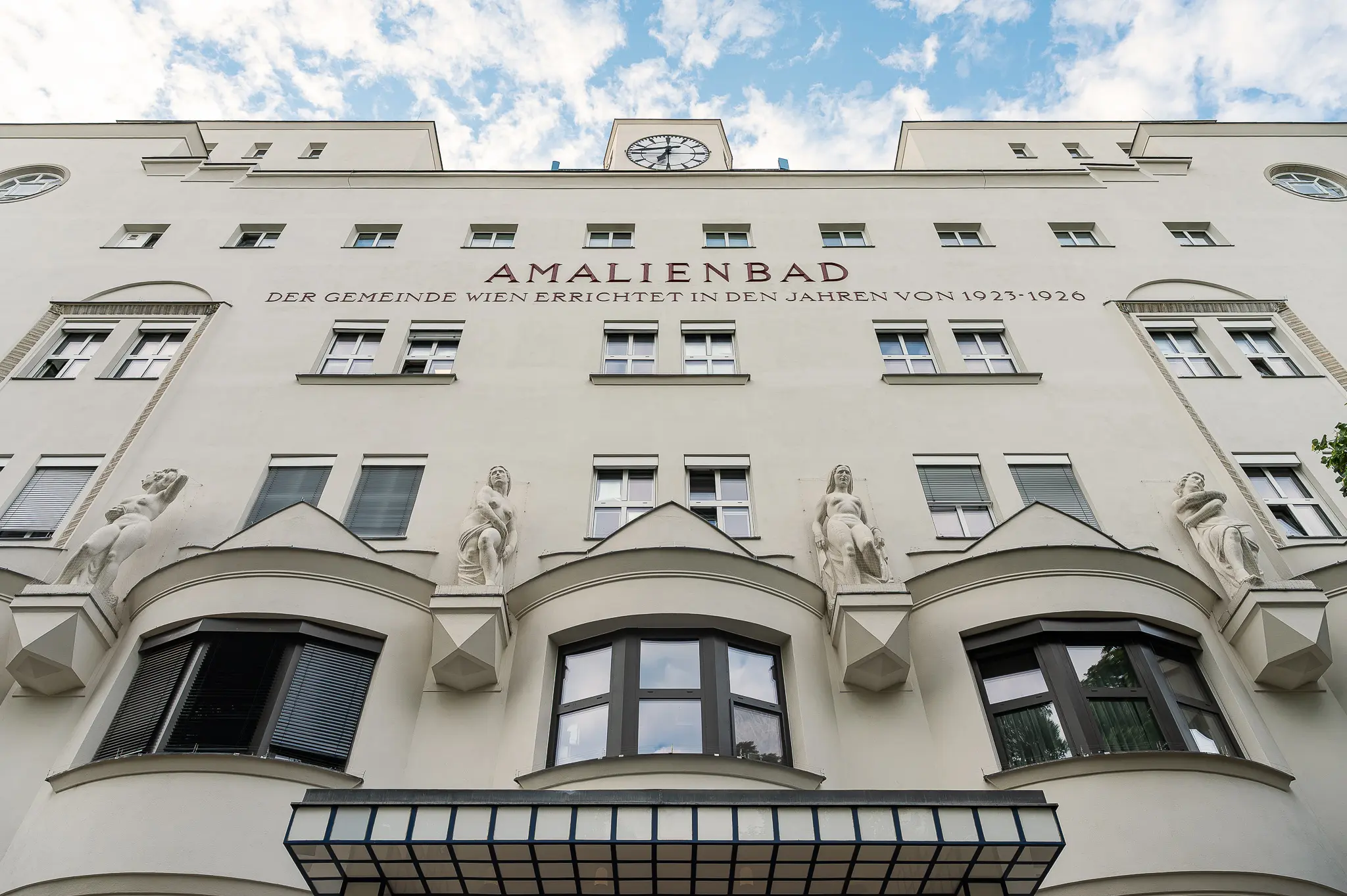 Amalienbad exterior facade with inscription and allegorical sculptures, Vienna The upper facade of the Amalienbad at Reumannplatz 23, 1100 Vienna, displays the building's name and the inscription "DER GEMEINDE WIEN ERRICHTET IN DEN JAHREN VON 1923–1926," documenting its construction by the City of Vienna as a Red Vienna social project. Four allegorical sculptural figures are mounted on the curved bay elements below the inscription, and a clock is visible at the roofline.
 You might also like
- Event Photography: The Strategic Advantage You Didn't Know You Needed Blog
- Staring at Strangers in Black and White: Experiencing the Vienna Vintage Photo Fair Blog
- Stylianos Schicho im Strabag Kunstforum: Another point of YOU (Eventfotografie) Blog
- Catch "Motion" While You Can - A Limited-Time Exhibition by Leica Blog
- Foto Wien 2023 - Pressekonferenz und Eröffnung Blog