

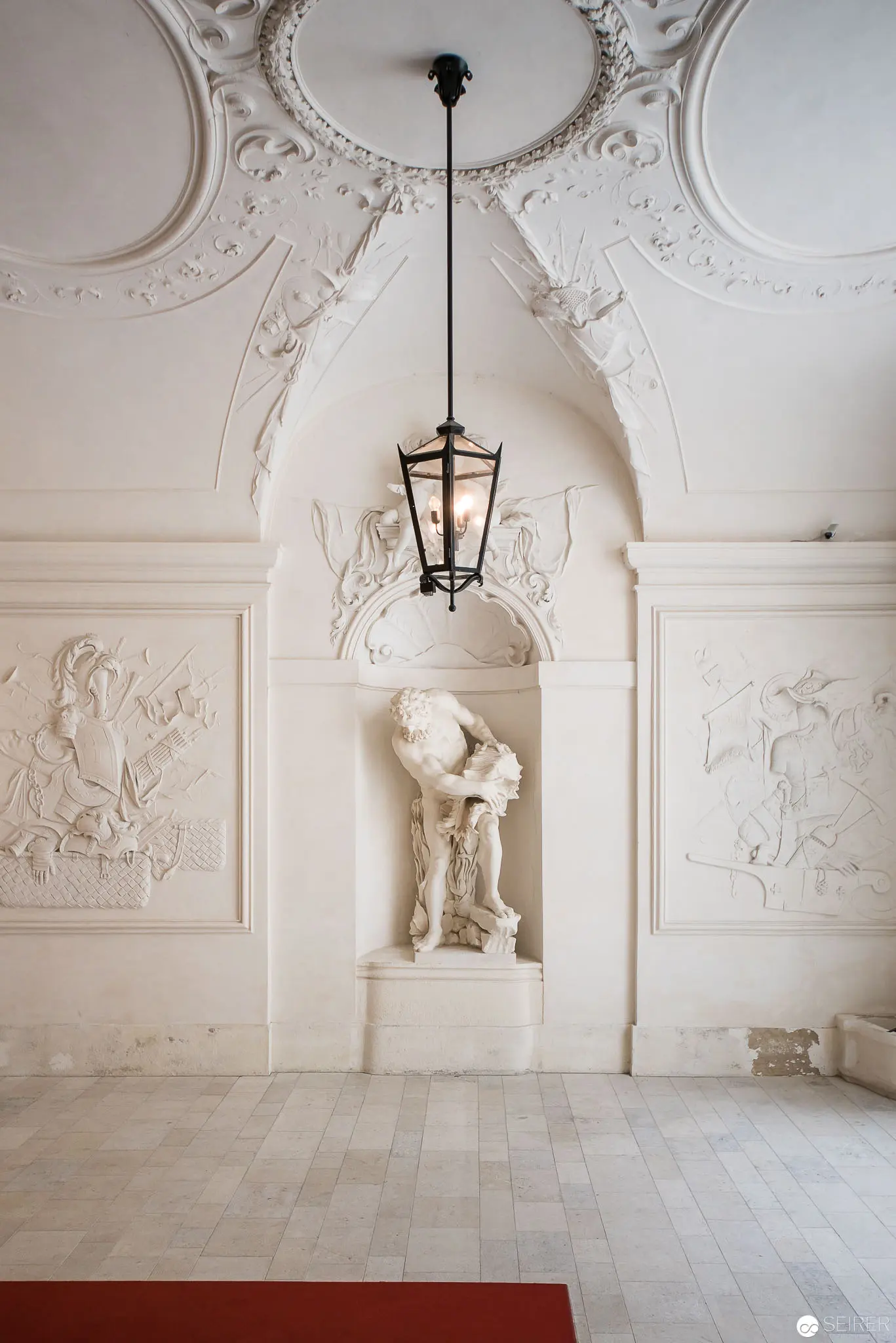
Winterpalais Prinz Eugen Interior, Vienna, November 2017
The Winter Palace of Prince Eugene (Winterpalais Prinz Eugen) is a high-Baroque palace located in Vienna, Austria, constructed between 1695 and 1724 by architects Johann Bernhard Fischer von Erlach and Johann Lukas von Hildebrandt. These architectural photographs document the palace's meticulously preserved interior spaces, showcasing ornate Baroque design elements including elaborate ceiling frescoes, crystal chandeliers, gilded architectural details, and historically significant sculptures and artworks from Prince Eugene of Savoy's winter residence.
11 photos
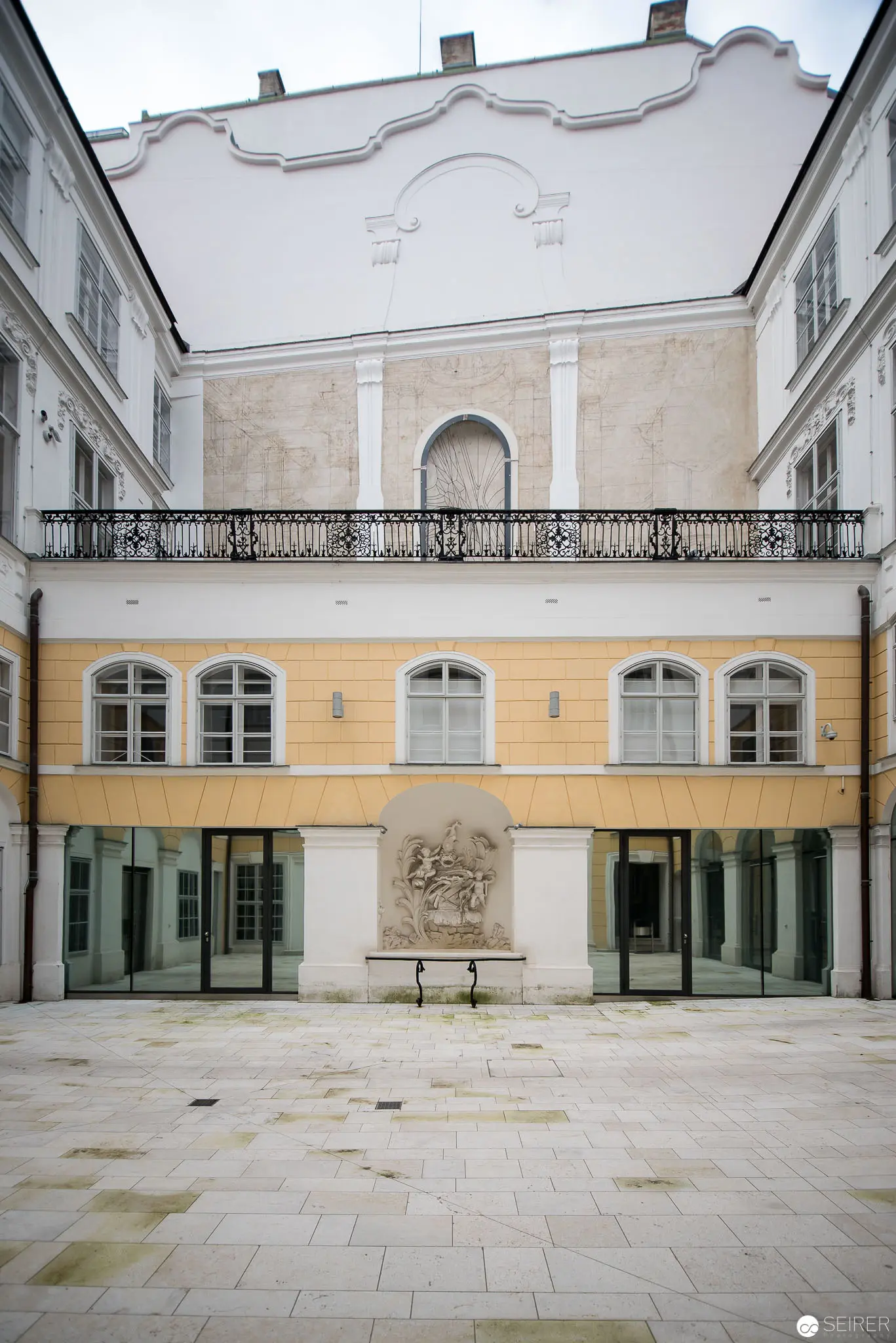 Winter Palace of Prince Eugene: Baroque Architectural Facade in Vienna's Inner City Symmetrical architectural view of the Winter Palace, revealing a meticulously restored Baroque edifice with pale yellow and white tones, featuring ornate wrought-iron balconies and arched windows. The stone-paved courtyard exhibits precise geometric lines, with a central architectural element anchoring the composition, demonstrating the refined architectural principles of Johann Bernhard Fischer von Erlach and Johann Lukas von Hildebrandt's design from the late 17th and early 18th centuries. White Baroque Interior with Classical Statue at Prince Eugene's Winter Palace, Vienna Ornate Baroque interior featuring an elaborately sculpted white plaster ceiling with intricate moldings, an arched architectural niche housing a classical sculpture of a human figure, and a suspended lantern-style pendant light. Decorative wall reliefs frame the central sculptural element, creating a symmetrical composition that exemplifies high Baroque architectural refinement characteristic of Johann Bernhard Fischer von Erlach's design for Prince Eugene of Savoy's Winter Palace in Vienna.
 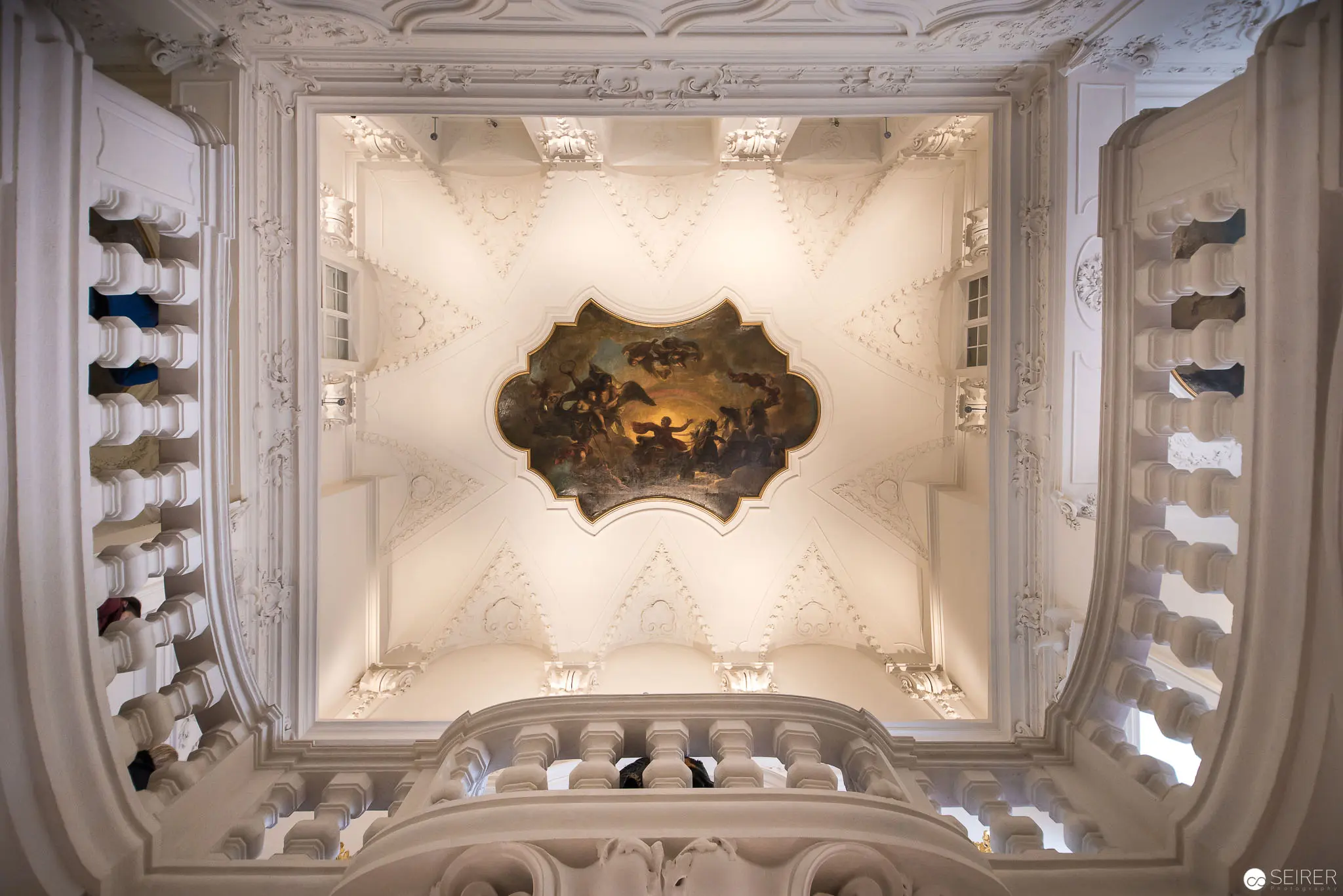 Baroque Ceiling of Prince Eugene's Winter Palace, Illuminated Architectural Detail Intricate Baroque ceiling view from the Winter Palace of Prince Eugene in Vienna, featuring an ornate central painting framed by elaborate white stucco work and architectural moldings. Soft illumination highlights the three-dimensional sculptural qualities of the ceiling, with decorative architectural elements creating a complex interplay of light and shadow across the sophisticated interior space.
 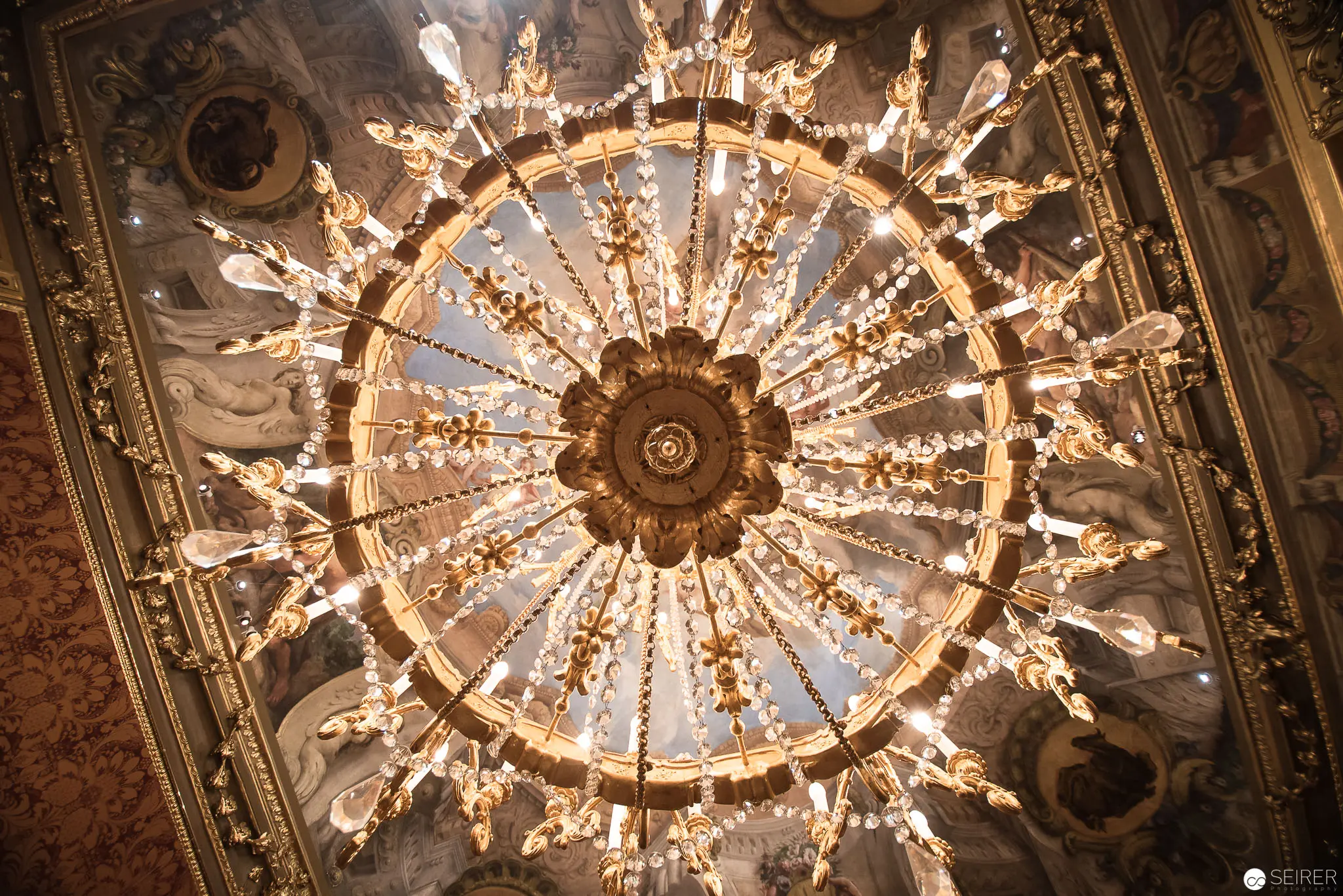 Baroque Crystal Chandelier Illuminating Ornate Ceiling at Vienna's Winter Palace Intricate Baroque chandelier suspended from an elaborately decorated ceiling, radiating golden light through delicate crystal elements and ornamental metalwork. The circular fixture features concentric rings of illumination, casting intricate shadows and highlights across the surrounding architectural surfaces, revealing the luxurious interior design characteristic of 18th-century Viennese palatial architecture.
 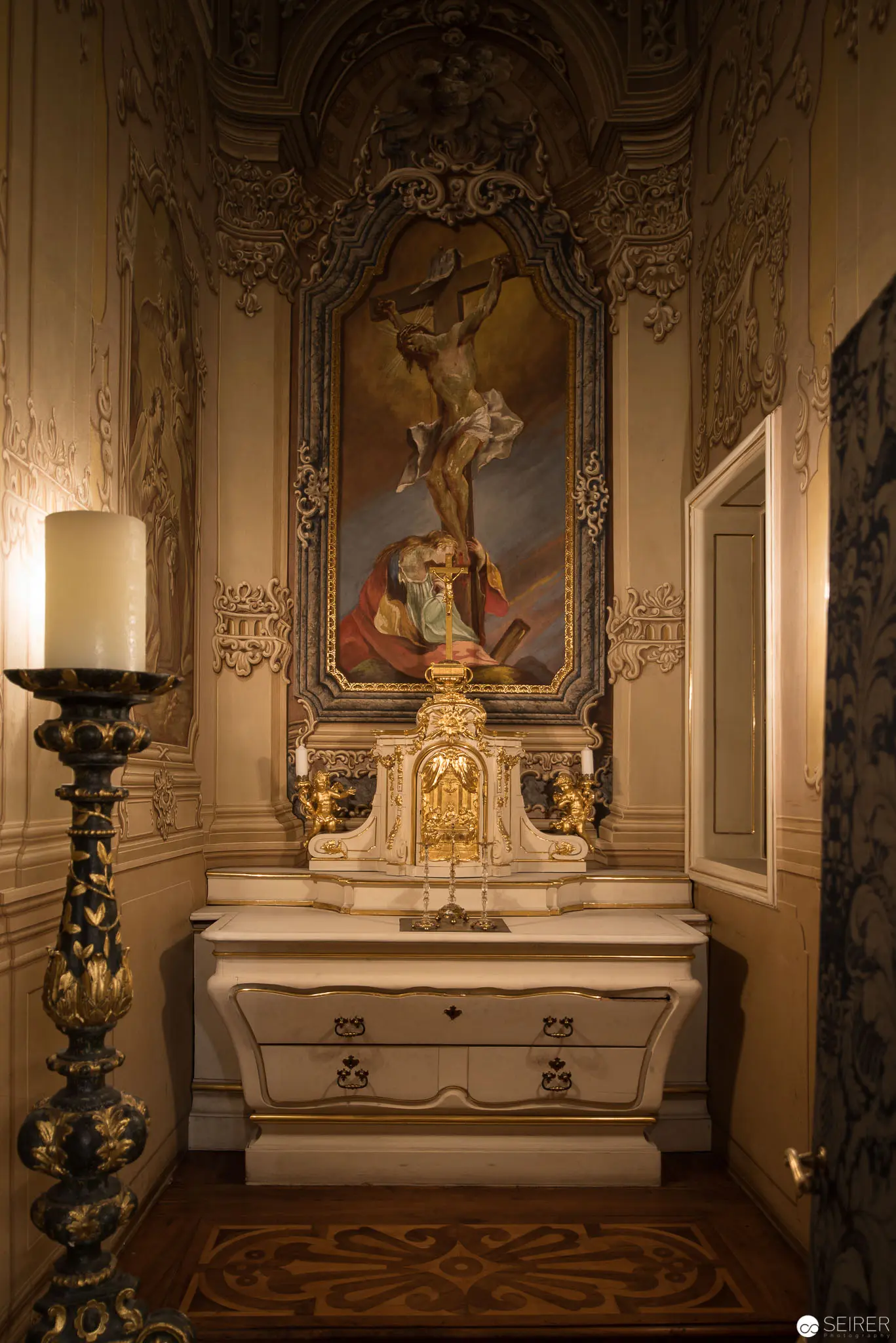 Baroque Sanctuary: Intimate Altar Illumination in Prince Eugene's Winter Palace Dramatic chiaroscuro bathes an ornate Baroque interior featuring an elaborately carved white console table beneath an emotive religious painting within an intricate gilded frame. A substantial candle-bearing ornamental floor stand with intricate detailing stands sentinel, casting warm illumination across the richly textured wooden floor and creating a contemplative atmosphere within the refined architectural space of Prince Eugene of Savoy's Winter Palace.
 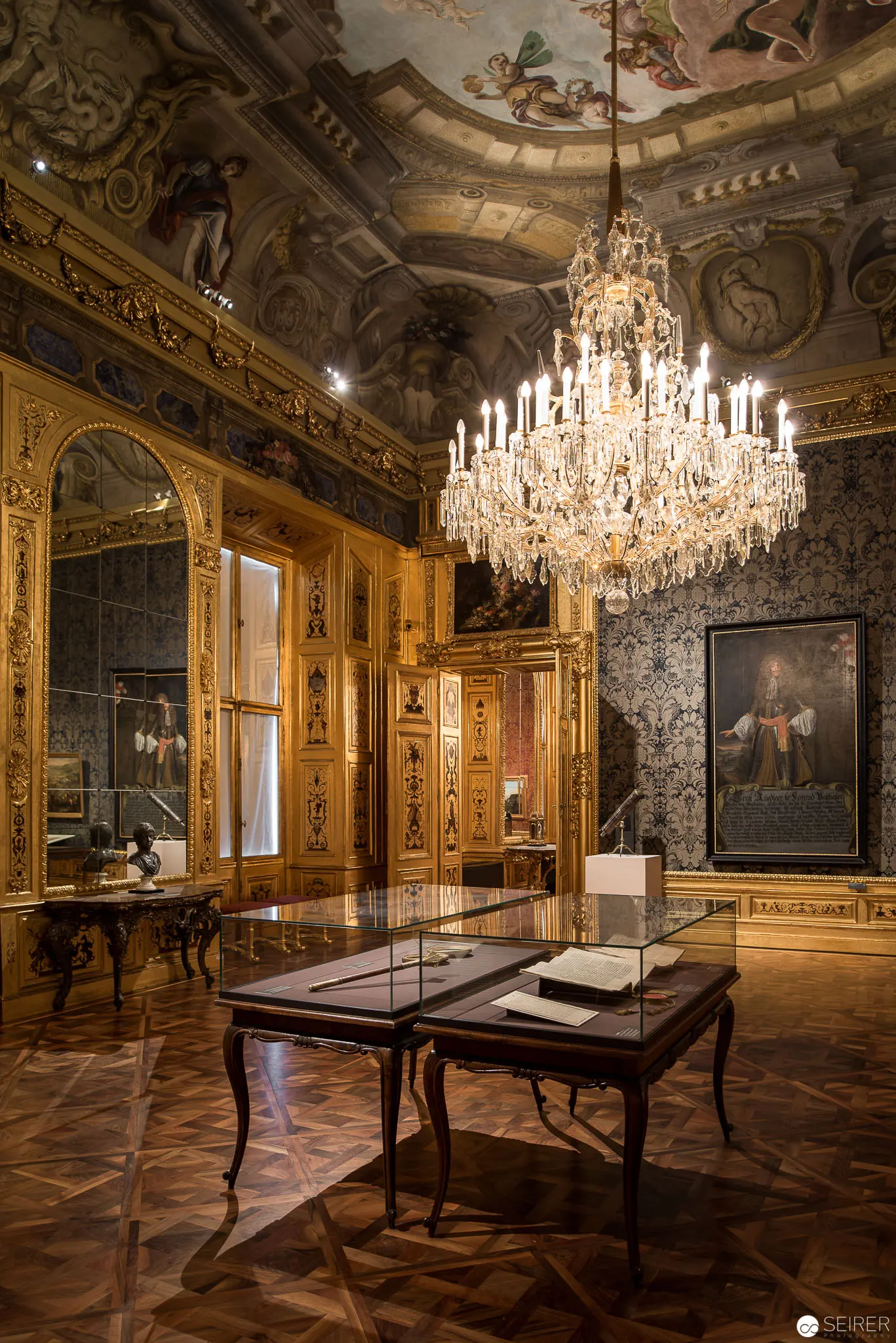 Elaborate Baroque Interior of Prince Eugene's Winter Palace in Vienna Ornate Baroque chamber illuminated by a massive crystal chandelier, featuring intricate parquet flooring and wood-paneled walls adorned with gilded architectural details and large framed artwork. Elegant display tables with glass vitrines occupy the center of the room, set against a richly decorated interior that exemplifies high Baroque architectural and decorative aesthetics of early 18th-century Viennese aristocratic design.
 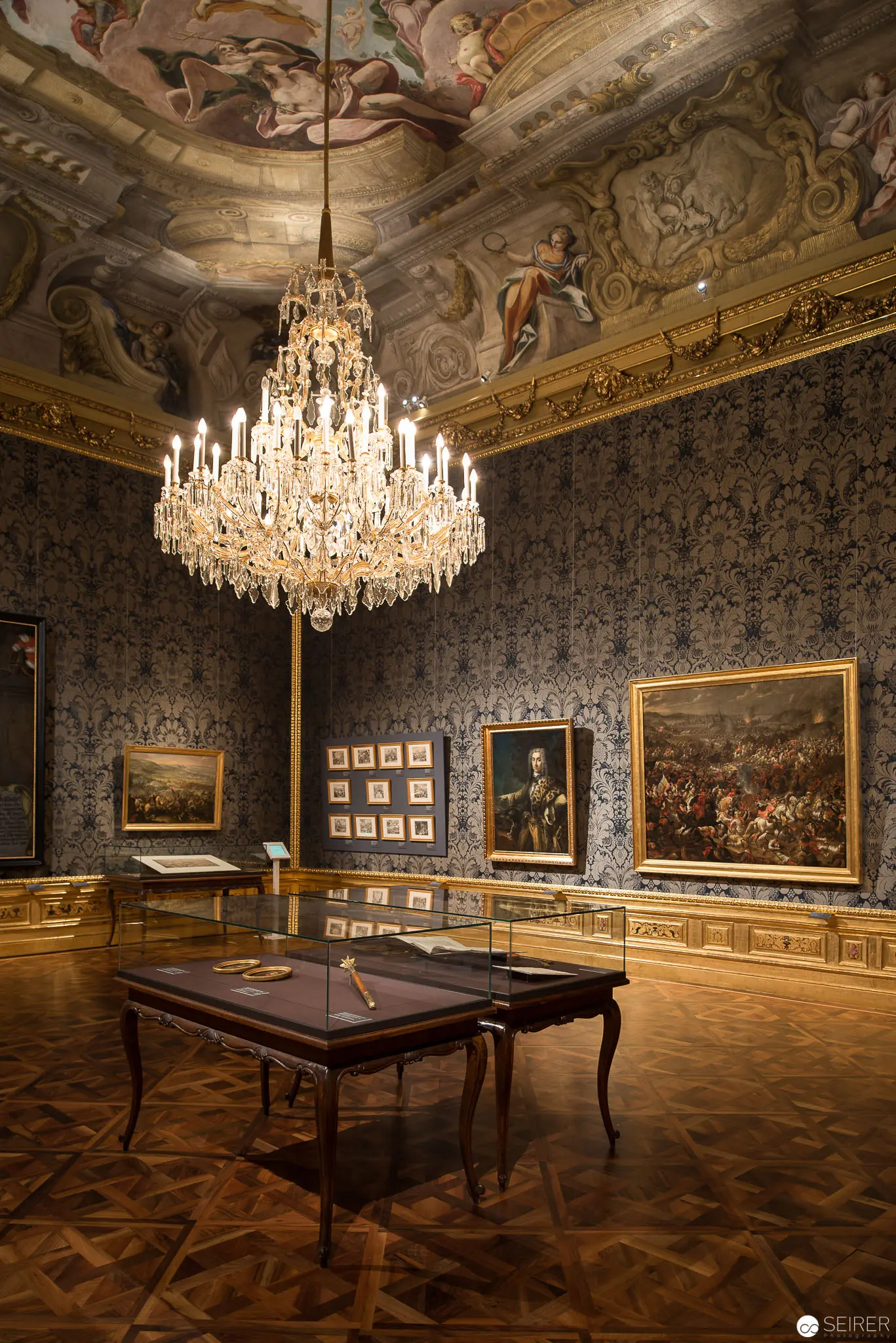 Baroque Interior of Winter Palace, Vienna, with Crystal Chandelier and Art Collection Ornate salon featuring an elaborate crystal chandelier suspended from a frescoed ceiling, illuminating a meticulously arranged interior with dark-toned wallpaper and large-scale paintings. Antique wooden display tables occupy the polished parquet floor, framed by intricate wall decorations and gilded architectural details typical of high Baroque Austrian palace design. The space evokes the refined aesthetic of Prince Eugene of Savoy's winter residence in Vienna's historic Innere Stadt district.
 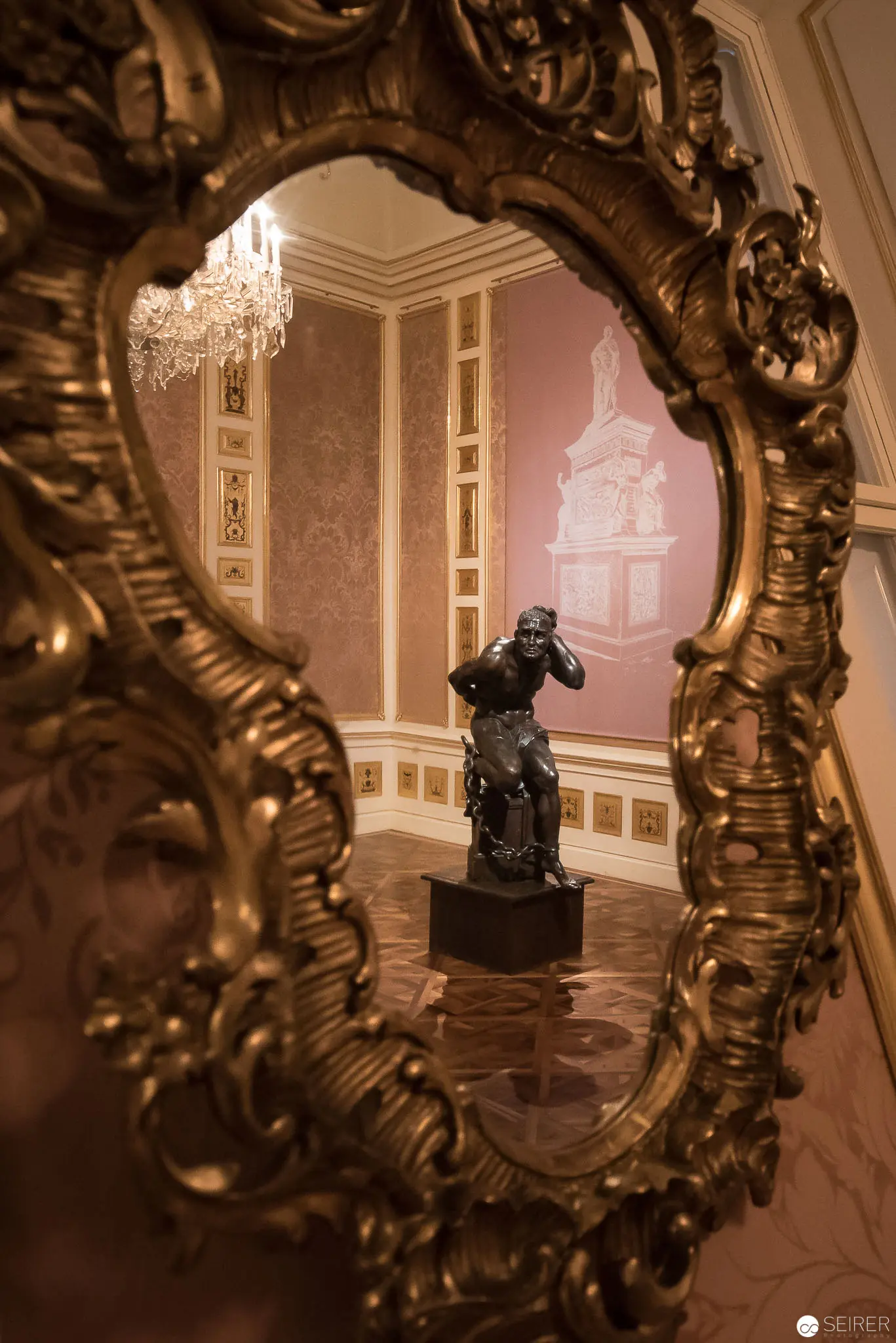 Ornate Baroque Mirror Reflecting Sculptural Tableau in Winter Palace Interior Intricately carved golden mirror frames a meticulously composed interior view of a Baroque palace room, capturing a dark sculptural figure positioned on a pedestal against soft pink and white wall paneling. A crystal chandelier hangs delicately in the background, creating a sense of refined elegance and spatial depth through the mirror's elaborate reflection. The image reveals the sophisticated architectural and decorative details characteristic of Prince Eugene of Savoy's Winter Palace in Vienna.
 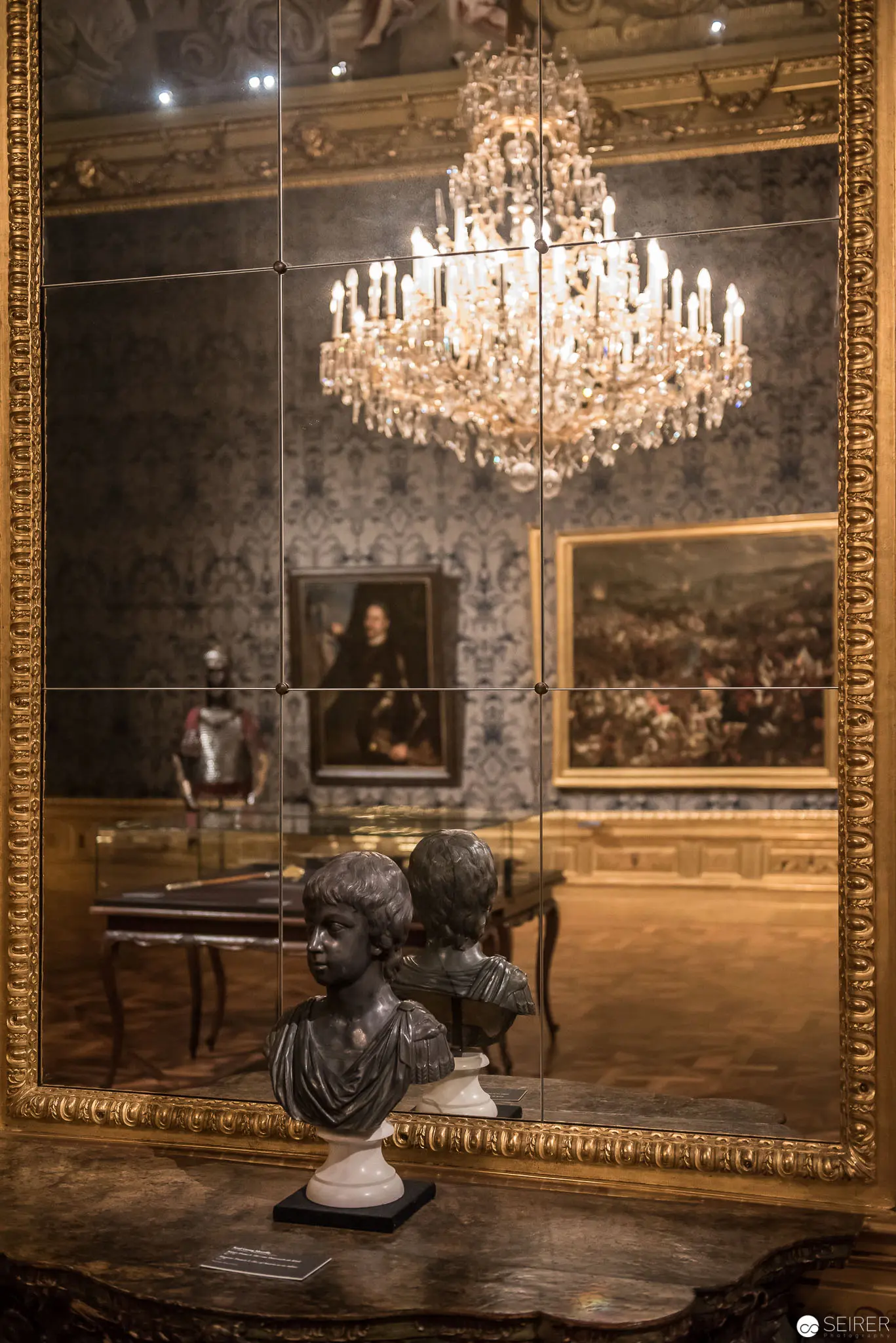 Baroque Chandelier and Sculptural Bust in Ornate Viennese Palace Interior Luminous crystal chandelier suspended above an intricately detailed sculptural bust, positioned within an elaborately gilded frame in a grand Baroque palace interior. Surrounding the focal elements, richly textured walls display classical paintings, creating a layered visual narrative of historical architectural refinement and aesthetic complexity.
 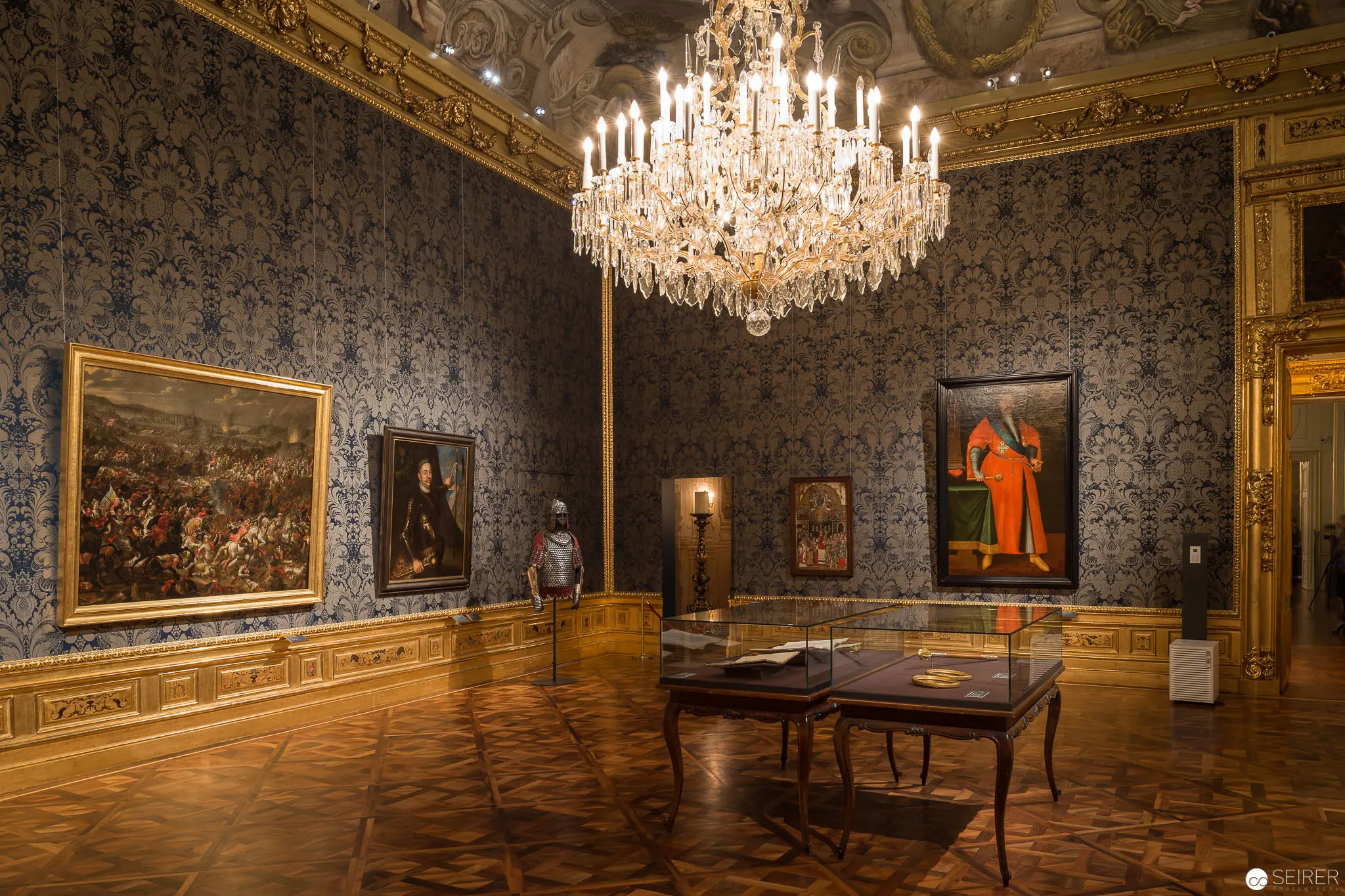 Baroque Gallery Interior with Crystal Chandelier and Historical Paintings at Winter Palace Ornate gallery space featuring an elaborate crystal chandelier suspended from an intricately decorated ceiling, illuminating a richly paneled room with damask wallpaper. Baroque-era paintings in gilded frames line the walls, displaying historical scenes and portraits against a backdrop of polished parquet flooring and an elegant display case in the foreground. The interior exemplifies the opulent architectural and decorative style of Prince Eugene of Savoy's winter residence in Vienna.
 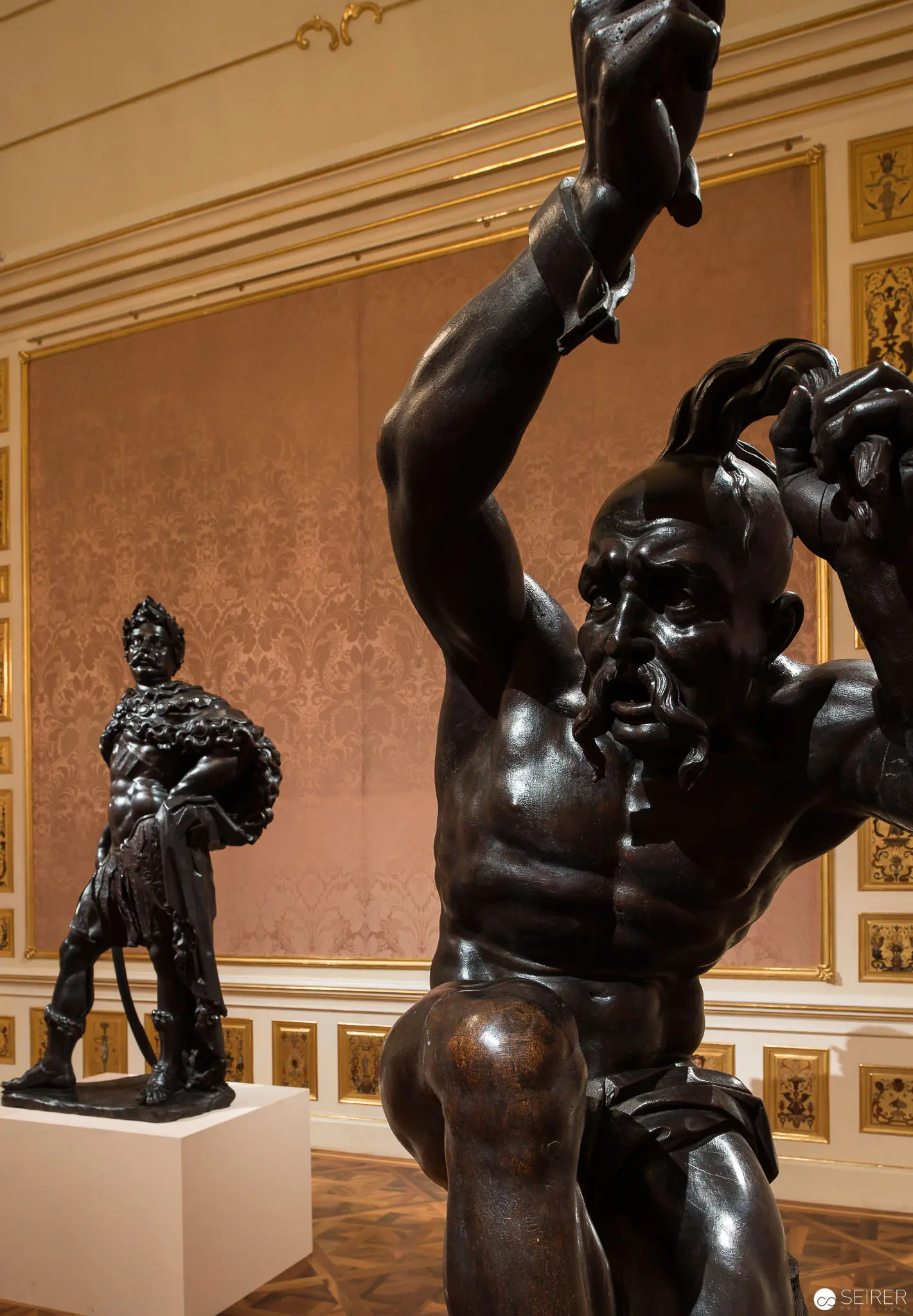 Baroque Bronze Sculptures Displaying Dynamic Muscular Physicality in Ornate Interior Two muscular bronze sculptures positioned within an elaborately decorated Baroque interior space, with ornate wall paneling and gilded architectural details. The foreground sculpture depicts a powerfully built male figure in a dramatically twisted pose, raised arm creating dynamic tension, while a secondary sculpture stands distantly in the background, both rendered with intense anatomical muscularity and expressive physical energy. The dark bronze statues create a striking contrast against the warm, decorative interior architectural setting.